
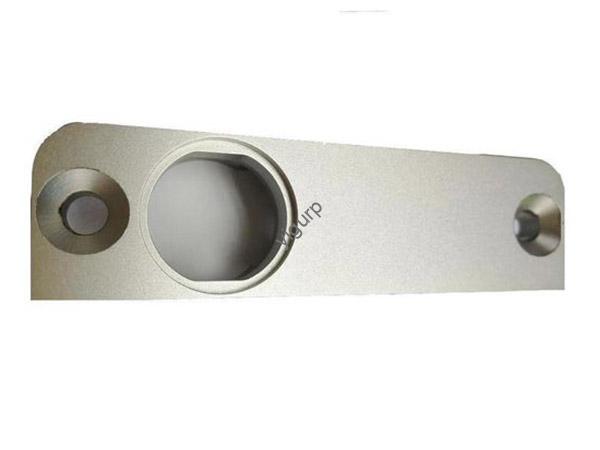
If your project involves structural frameworks, industrial equipment, or custom fabrications where reliability and budget are equally important, choosing the right material is critical. ASTM A36 carbon steel is the most common low-carbon steel in the world. This guide explains its key properties, where it performs best, and how to work with it. You will also learn how it compares to stronger grades, helping you decide if it is the right fit for your next build.
Introduction
When engineers and fabricators need a material that is strong enough for daily use yet easy to shape and weld, they often turn to ASTM A36. This steel grade serves as the backbone for countless structures, from small bridges to residential frames and industrial machinery. Its popularity comes from a simple balance: it offers dependable mechanical properties without the high cost of specialized alloys. Understanding what this steel can and cannot do will help you avoid overspending on unnecessary high-strength materials or risking project delays with the wrong choice.
What Are the Core Properties of ASTM A36?
The value of ASTM A36 lies in its well-balanced material characteristics. It is designed for applications that require good strength but do not face extreme forces or harsh environments.
Chemical Composition
The steel’s performance comes from a controlled mix of elements. The carbon content stays between 0.25% and 0.29%, which is low enough to keep the steel easy to weld and machine but high enough to provide basic strength. Manganese, at 0.80% to 1.20%, adds toughness and tensile strength. Impurities like phosphorus and sulfur are kept below 0.040% and 0.050% respectively to prevent brittleness. No expensive microalloys are added, which keeps the material affordable.
Mechanical and Physical Data
The table below summarizes the key numbers that define this steel’s capability.
| Property | Typical Value | Significance |
|---|---|---|
| Yield Strength | ≥250 MPa (36 ksi) | The stress level where permanent deformation begins. |
| Tensile Strength | 400-550 MPa (58-80 ksi) | The maximum stress the steel can withstand before breaking. |
| Elongation | ≥20% (in 200mm) | A measure of ductility; it shows how much the steel can stretch. |
| Hardness | ≤167 HB | Relatively soft, making it easy to cut and form. |
| Density | 7.85 g/cm³ | Standard density for carbon steel. |
| Magnetic Properties | Ferromagnetic | Attracts magnets, which is common for this type of steel. |
A practical example shows how these numbers work in the real world. A fabrication shop in Ohio was contracted to build steel staircases for a mixed-use development. They chose ASTM A36 for the stringers and handrails. The steel’s yield strength of 250 MPa easily supported the live loads of hundreds of daily users. More importantly, its 20% elongation allowed the fabricators to cold-bend the handrails on-site to match the architect’s curved design. A higher-strength steel, like S355, would have cracked under the same bending process.
Where Is ASTM A36 Commonly Used?
This steel grade is a workhorse for projects where cost-effectiveness and ease of fabrication are top priorities. Its applications span multiple industries.
Construction and Structural Frames
For building frames, small bridge beams, and support columns, ASTM A36 is a standard choice. It is particularly well-suited for spans under 20 meters and buildings up to a few stories tall. A contractor in Austin, Texas, used ASTM A36 for the entire frame of a 4-story apartment complex. The team reported that the steel’s weldability allowed for fast on-site assembly, reducing labor hours by 15% compared to using a less forgiving material.
Machinery and Industrial Equipment
This steel is common in machine bases, gear housings, and conveyor systems. A manufacturer in Illinois produces heavy-duty agricultural augers. They use ASTM A36 for the main housing because its machinability allows them to drill and cut hundreds of precise holes per day without frequent tool changes. The material’s inherent toughness also absorbs the vibration from the rotating auger, ensuring a longer service life for the equipment.
Automotive and Transportation
For light-duty truck frames, trailer hitches, and non-critical structural parts, ASTM A36 offers a good balance. A company in Detroit that builds custom utility trailers selects this grade for the main frame rails. The low carbon content makes MIG welding fast and reliable, and the steel’s strength is more than adequate for the typical loads of landscaping equipment or recreational vehicles.
General Fabrication
From custom railings to storage tanks and workbenches, the steel’s versatility shines. A metal art studio in Oregon uses ASTM A36 for large-scale sculptures. They appreciate its predictable behavior under heat and its ability to accept a variety of finishes, from powder coating to rust patinas.
How Is ASTM A36 Manufactured and Fabricated?
The manufacturing process for ASTM A36 is designed for efficiency, which directly contributes to its low cost.
Production Steps
The steel begins in a basic oxygen furnace (BOF), where molten iron is refined. The alloy composition is carefully adjusted to meet the A36 standard. Next, the molten steel undergoes continuous casting to form slabs or blooms. These are then reheated to over 1100°C and passed through rolling mills to create final shapes like plates, beams, and bars. This hot rolling process is the primary method for shaping the steel, giving it a characteristic mill scale surface.
Fabrication Characteristics
- Machining: The low hardness (≤167 HB) allows for the use of standard high-speed steel (HSS) tools. A job shop in Houston machines ASTM A36 for hydraulic manifold blocks. They use HSS end mills at standard speeds, avoiding the need for expensive carbide tooling, which keeps their operational costs low.
- Welding: This steel is exceptionally easy to weld. For material under 25mm thick, no pre-heating is required. Common methods like MIG, TIG, and stick welding all produce strong, reliable joints. A pipeline contractor in Wyoming uses ASTM A36 for above-ground piping supports. They rely on simple E6013 electrodes with stick welding, creating durable welds without complex procedures.
- Forming: The steel’s ductility makes it suitable for bending, rolling, and forming. However, for tight radii, a simple annealing process can further enhance its formability.
How Does ASTM A36 Compare to Other Steels?
Choosing the right material often comes down to balancing strength against cost. The table below provides a clear comparison.
| Material | Yield Strength (MPa) | Relative Cost | Best Application |
|---|---|---|---|
| ASTM A36 | ≥250 | 100% (Baseline) | Small buildings, machinery, light trailers |
| EN S235JR | ≥235 | ~105% | European construction projects, general fabrication |
| EN S275JR | ≥275 | ~120% | Medium-duty machinery, multi-story buildings (up to 4 stories) |
| EN S355JR | ≥355 | ~150% | Heavy structures, 5-10 story buildings, large bridges |
| EN S420 | ≥420 | ~180% | High-rise buildings, offshore platforms |
A scenario to guide your choice: If you are building a single-story workshop, ASTM A36 is the economical choice. It provides all the strength you need at the lowest cost. If you are designing a 10-story office building in a seismic zone, a higher-strength grade like S355 is necessary to meet the structural demands, even though it costs more.
What Standards Ensure You Get Genuine ASTM A36?
Verifying the material is crucial to avoid project failures. Always request the proper documentation.
- ASTM A36/A36M: This is the core American standard that defines the chemical, mechanical, and manufacturing requirements for the steel.
- Mill Test Report (MTR): This is the most critical document. It certifies that the specific batch of steel meets the required yield strength (≥250 MPa) and tensile strength (400-550 MPa) standards.
- Supplementary Standards: Other relevant norms include ASTM A6/A6M for general requirements for structural steel shapes.
A quality control lesson comes from a warehouse project in Nevada. A supplier provided steel beams labeled as ASTM A36, but the material failed under a test load. A review of the mill test report revealed a yield strength of only 210 MPa. The non-compliant beams were rejected, and the project was delayed by weeks. Always verify the Mill Test Report to confirm the steel’s actual properties.
Conclusion
ASTM A36 carbon steel remains a top choice for a vast range of projects because it successfully balances strength, workability, and cost. Its predictable mechanical properties make it easy to design with, while its excellent weldability and machinability keep fabrication simple and affordable. While it is not the right material for extreme loads or highly corrosive environments, it is the ideal solution for the majority of everyday structural, machinery, and fabrication needs. By understanding its capabilities and limitations, you can confidently select it for your next project, ensuring both reliability and budget efficiency.
FAQ
Can ASTM A36 be used outdoors?
Yes, but it requires a protective coating. The steel will rust if left exposed to moisture. For outdoor applications like bridge beams or signposts, we recommend a paint system or hot-dip galvanizing to provide long-term corrosion protection.
Is ASTM A36 difficult to weld?
No, it is one of the easiest steels to weld. Its low carbon content eliminates the need for pre-heating on most material thicknesses. Standard MIG, TIG, or stick welding processes with common filler metals like ER70S-6 or E6013 electrodes produce strong, defect-free welds.
When should I choose a different steel instead of ASTM A36?
You should avoid ASTM A36 for projects involving extreme loads, such as high-rise buildings over five stories or cranes with heavy lift capacities. It is also not ideal for extremely cold environments where low-temperature toughness is critical. In these cases, consider higher-strength grades like S355 or S460.
Discuss Your Projects with Yigu Rapid Prototyping
Choosing the right material is the first step toward a successful project. At Yigu Rapid Prototyping, we combine deep material expertise with advanced manufacturing capabilities. Whether you need custom-fabricated structural components, machined parts, or guidance on material selection for your next build, our team is ready to help. We provide full documentation, including mill test reports, to ensure every component meets your specifications. Contact us today to discuss your project requirements and see how we can bring your design to life with efficiency and precision.