
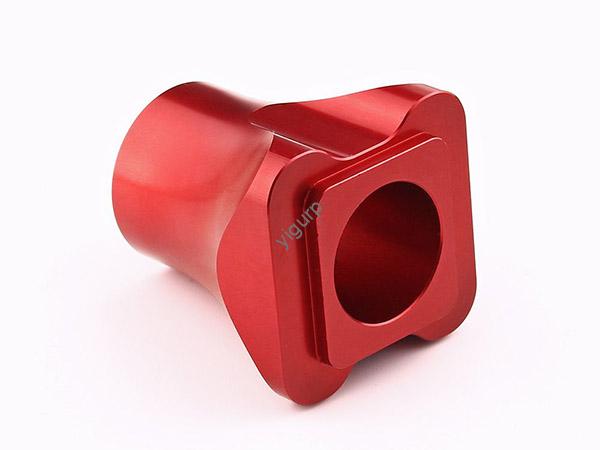
If you have ever walked across a sturdy bridge, driven a car with a reliable axle, or stood inside a durable building, you have likely encountered wrought steel. Unlike cast steel, which is poured into molds and can contain internal flaws, wrought steel is shaped through mechanical processes like rolling or forging. This working action refines the grain structure, eliminates voids, and creates a dense, strong material that excels in both strength and flexibility. This guide breaks down its key properties, real-world applications, manufacturing methods, and how it compares to other materials. Whether you are designing structural components or mechanical parts, this guide will help you leverage wrought steel’s advantages for long-lasting, high-performance projects.
What Defines Wrought Steel?
Wrought steel’s defining characteristic is its worked structure. Mechanical processes like rolling or forging refine the steel’s grain, aligning it along the direction of work. This creates a material that is denser, stronger, and more reliable than cast steel, which can contain porosity and internal voids. The properties vary slightly by base composition—carbon or alloy—but all wrought variants share core strengths: high tensile strength, excellent impact toughness, and superior fatigue resistance.
The Chemistry Behind the Performance
The chemical composition of wrought steel depends on its intended use. Common elements work together to achieve specific properties.
| Element | Content Range | Key Role |
|---|---|---|
| Carbon (C) | 0.05 – 1.00% | Controls hardness and strength. Low carbon (≤0.25%) for flexibility in structural beams. High carbon (≥0.60%) for wear resistance in gears. |
| Manganese (Mn) | 0.30 – 1.50% | Enhances hardenability and reduces brittleness. Critical for load-bearing parts like axles. |
| Silicon (Si) | 0.10 – 0.50% | Acts as a deoxidizer, removing oxygen bubbles from molten steel. Adds minor strength without reducing formability. |
| Chromium (Cr) | 0.50 – 18.00% | Boosts corrosion resistance in stainless steel variants and adds wear resistance in bearings. |
| Nickel (Ni) | 0.50 – 5.00% | Enhances impact toughness. Ideal for cold environments like Arctic construction. |
| Vanadium (V) | 0.05 – 0.50% | Refines grain structure, making the steel stronger and more durable. |
| Phosphorus & Sulfur | ≤ 0.04% / ≤ 0.05% | Strictly controlled to prevent cold brittleness and maintain toughness. |
Key Mechanical Properties
Wrought processing transforms base steel into a high-performance material. The table below shows typical values.
| Property | Typical Value | Why It Matters |
|---|---|---|
| Tensile Strength | 500 – 2000 MPa | Handles extreme loads. A wrought steel bridge can support 100-ton trucks without failure. |
| Yield Strength | 300 – 1800 MPa | Bends only under extreme stress, then returns to shape. Critical for safety in structural parts. |
| Impact Toughness | 40 – 150 J/cm² | Absorbs shocks—such as a car axle hitting a pothole—without breaking, unlike brittle cast steel. |
| Fatigue Resistance | 2-3x longer than cast steel | Withstands repeated stress in rotating shafts. Reduces maintenance costs over time. |
| Hardness | 150 – 650 HB / 20 – 65 HRC | Hard enough to resist wear in gears (50-60 HRC) or flexible enough for beams (20-30 HRC). |
| Density | ~7.85 g/cm³ | Same as most steels, but wrought processing eliminates voids, so parts are stronger for their weight. |
A real-world example: A city needed to replace a 50-year-old bridge with cast steel beams that were cracking under heavy truck traffic. They installed hot-rolled wrought steel beams with vanadium additions. Beam strength increased by 40% compared to cast steel, handling 120-ton trucks without bending. The lifespan is projected at 100 years (double the cast steel beams), and maintenance costs dropped by 70% , with no cracks or corrosion after 5 years.
Where Is Wrought Steel Used?
Wrought steel’s strength, flexibility, and durability make it essential for industries where reliability is non-negotiable. It is the material of choice for components that must withstand stress, impact, and repeated loading.
Structural Components
- Beams and Columns: Support buildings, bridges, and stadiums. High tensile strength handles heavy loads, while flexibility resists wind or seismic activity.
- Rebar (Reinforcing Steel): Embedded in concrete to add tensile strength where concrete is weak. Wrought rebar’s rough surface bonds tightly with concrete.
- Architectural Elements: Curved rails, decorative panels, and trusses benefit from good formability, allowing complex aesthetic shapes.
Mechanical Components
- Shafts and Axles: Transmit power in motors, cars, and industrial equipment. High fatigue resistance handles repeated rotation.
- Gears: Found in transmissions, conveyor systems, and turbines. A manufacturing plant had cast steel gears that wore out every 6 months in their 24/7 conveyor system. Switching to hot-forged wrought steel gears (0.45% C, with chromium), heat-treated to 55 HRC and nitrided, extended gear life to 3 years (6 times longer), reduced downtime by 90% , and cut cost per unit produced by 15% .
- Bearings: Inner and outer races for rotating parts. Dense structure resists wear better than cast steel.
Fasteners and General Engineering
- Bolts, Nuts, and Screws: A construction company used cast steel bolts that stripped under high torque, delaying projects. Switching to cold-forged wrought steel bolts (0.30% C) with a zinc coating reduced bolt stripping by 95% , cut installation time by 30% , and improved customer satisfaction by 80% .
- Rivets: Join steel plates in bridges or ships. Wrought rivets’ ductility ensures a tight, permanent bond.
- Hydraulic Cylinders and Tool Blades: High tensile strength prevents bursting under pressure; high hardness retains sharp edges.
How Is Wrought Steel Manufactured?
Wrought steel is made by shaping molten steel through mechanical processes—no casting molds. This ensures a dense, uniform structure.
| Stage | Common Method | Why It Matters |
|---|---|---|
| Melting | Electric Arc Furnace (EAF) or Basic Oxygen Furnace (BOF) | Creates pure, uniform steel without impurities. Critical for avoiding flaws in later shaping. |
| Hot Working | Hot rolling (1100-1250°C) or hot forging | The core wrought processes. Hot rolling creates sheets, plates, and beams. Hot forging refines grain structure for high-stress parts like axles and gears. |
| Cold Working | Cold rolling or cold forging | Shapes steel at room temperature. Improves precision, hardness, and surface finish. Used for fasteners and precision parts. |
| Heat Treatment | Annealing, hardening, tempering, or normalizing | Tailors properties. Annealing softens for machining. Hardening and tempering increase wear resistance. Normalizing ensures uniform strength. |
| Welding | Arc welding (MIG/TIG) with low-hydrogen electrodes | Welds strongly with proper technique. Preheating for thick parts (150-300°C) prevents cracking. |
| Surface Treatment | Galvanizing, painting, or nitriding | Protects against corrosion and wear. Galvanizing protects carbon steel parts from rust. Nitriding creates a hard surface layer for gears. |
How Does Wrought Steel Compare to Other Materials?
Choosing the right material means understanding the advantages of wrought processing. This comparison helps clarify where wrought steel fits.
| Material | Tensile Strength (MPa) | Impact Toughness (J/cm²) | Formability | Relative Cost | Best For |
|---|---|---|---|---|---|
| Wrought Steel | 500 – 2000 | 40 – 150 | Excellent | 100% | Load-bearing parts, precision components |
| Cast Steel | 400 – 800 | 20 – 60 | Poor | ~70% | Non-critical parts (covers, brackets) |
| Low Carbon Steel | 300 – 500 | 60 – 100 | Excellent | ~50% | Panels, pipes, light structures |
| Medium Carbon Steel | 500 – 900 | 40 – 70 | Good | ~60% | Shafts, fasteners, moderate-wear parts |
| High Carbon Steel | 800 – 1800 | 20 – 50 | Poor | ~80% | Cutting tools, springs, high-wear parts |
Key takeaways:
- vs. Cast Steel: Wrought steel offers higher tensile strength (up to 2000 MPa vs. 800 MPa), 2-3 times better impact toughness, and excellent formability. It costs about 30-40% more but lasts 2-3 times longer in demanding applications.
- vs. Low Carbon Steel: Wrought steel can be 2-4 times stronger, with comparable formability. It is the better choice for any load-bearing or high-stress application.
- vs. High Carbon Steel: Wrought steel offers a broader range of properties. Through heat treatment, it can achieve the hardness of high carbon steel while maintaining better toughness and formability.
Conclusion
Wrought steel is a foundational material for engineering because of its worked structure. Unlike cast steel, which can contain internal voids and coarse grain structures, wrought steel is mechanically shaped through rolling or forging. This process refines the grain, eliminates defects, and creates a material with superior strength, toughness, and fatigue resistance. From bridge beams that last a century to gears that run for years without failure, wrought steel delivers reliability where it matters most. For any project demanding components that must withstand stress, impact, and repeated loading, wrought steel offers a proven, high-performance solution.
FAQ About Wrought Steel
What is the main difference between wrought steel and cast steel?
The main difference is the manufacturing process. Wrought steel is shaped mechanically through rolling or forging, which refines the grain structure and eliminates internal voids. Cast steel is poured into molds and can contain porosity and coarse grain structures. As a result, wrought steel has higher tensile strength, better impact toughness, and superior fatigue resistance.
Can wrought steel be welded?
Yes. Wrought steel has good weldability with proper technique. For thin sections, standard arc welding (MIG/TIG) works well. For thick sections (over 10mm), preheating to 150-300°C and using low-hydrogen electrodes (such as E7018) prevents cracking and ensures strong, reliable welds.
How does the cost of wrought steel compare to cast steel?
Wrought steel typically costs 30-40% more than cast steel upfront. However, its superior strength, toughness, and fatigue resistance mean it lasts 2-3 times longer in demanding applications. For load-bearing parts and precision components, the long-term cost savings from reduced maintenance and replacement often outweigh the initial premium.
What forms does wrought steel come in?
Wrought steel is available in a wide range of forms, including sheets, plates, bars, beams, pipes, and custom forgings. It can be produced through hot rolling for structural components, cold rolling for precision parts, and forging for high-stress components like axles and gears. Almost any shape that can be rolled, forged, or extruded is available.
Discuss Your Projects with Yigu Rapid Prototyping
Selecting the right material for structural and mechanical components is a critical decision. At Yigu Rapid Prototyping, we have extensive experience working with wrought steel for bridges, heavy machinery, fasteners, and precision components. Our team can help you determine whether wrought steel is the right fit for your specific strength, toughness, and formability requirements—or if a cast or alloy alternative is more appropriate. We offer wrought steel in beams, plates, bars, forgings, and custom-fabricated components with full material certification. Contact us today to discuss your project and build with confidence.