
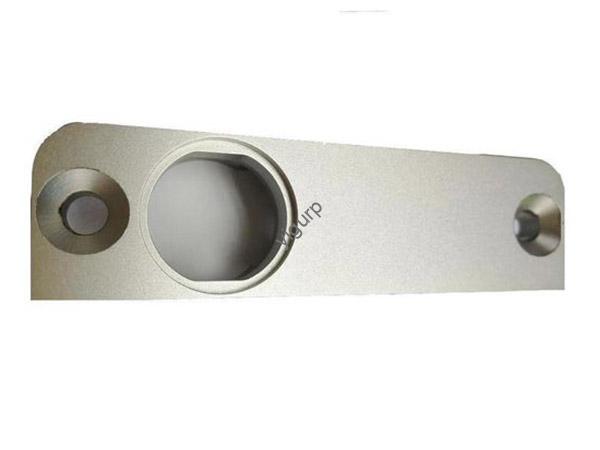
When your project demands reliable strength for medium-to-heavy stress—think naval ships, mid-span bridges, or military vehicles—you need a material that balances power with practicality. HY 80 high strength structural steel offers exactly that. This alloy steel is designed to handle significant loads while remaining workable and weldable. It provides a cost-effective solution for applications where safety and durability are critical. This guide will walk you through its key properties, real-world applications, manufacturing processes, and how it compares to other materials, so you can confidently tackle your next demanding project.
What Defines HY 80 High Strength Steel?
HY 80’s reputation comes from a carefully engineered balance of elements. It delivers high strength without sacrificing the ability to be formed and welded, making it a versatile choice for complex structures.
Chemical Composition
The chemical makeup of HY 80 is precisely controlled to achieve its signature strength and toughness. The table below outlines the key elements and their roles.
| Element | Content Range (%) | Key Function |
|---|---|---|
| Carbon (C) | 0.18 – 0.23 | Provides core strength while keeping carbon low enough to maintain good weldability. |
| Nickel (Ni) | 1.80 – 2.30 | Significantly enhances low-temperature toughness, which is vital for marine and cold-climate applications. |
| Manganese (Mn) | 0.70 – 1.00 | Improves ductility and overall strength without making the steel brittle. |
| Chromium (Cr) | 0.40 – 0.65 | Boosts wear resistance and the steel’s ability to be hardened through heat treatment. |
| Molybdenum (Mo) | 0.15 – 0.25 | Increases fatigue resistance and stability at higher temperatures. |
| Vanadium (V) | 0.03 – 0.08 | Refines the grain structure, leading to better impact resistance. |
Mechanical Properties You Can Trust
The mechanical properties of HY 80 are what make it a go-to material for structural applications. The “80” in its name refers to its minimum yield strength of approximately 80 ksi.
| Property | Typical Value | Why It Matters for Your Project |
|---|---|---|
| Yield Strength | ≥ 552 MPa (80 ksi) | This is twice as strong as standard carbon steel. It allows for lighter, thinner structures that can still handle heavy loads. |
| Tensile Strength | 758 – 896 MPa | It can withstand extreme pulling forces without failing, a key requirement for load-bearing components. |
| Impact Toughness | ≥ 70 J at -40°C | It remains tough and resists cracking in freezing temperatures, making it ideal for northern bridges or arctic vessels. |
| Elongation | ≥ 18% | This level of ductility allows the steel to absorb sudden impacts, such as waves hitting a ship’s hull, without fracturing. |
| Fatigue Resistance | ~380 MPa | It can endure millions of repeated stress cycles, which is critical for components like railway supports and suspension parts. |
Where Is HY 80 Steel Used in Practice?
HY 80’s balanced properties make it a versatile material across several demanding industries. Its combination of strength, toughness, and weldability is valued in applications where failure is not an option.
Shipbuilding and Marine Applications
This is arguably the most famous application for HY 80. Its ability to withstand saltwater and heavy impacts is essential.
- Naval Vessels: The U.S. Navy used HY 80 for the hulls of its Oliver Hazard Perry-class frigates. These ships operated in harsh saltwater conditions for over 30 years. The steel’s corrosion resistance, combined with an epoxy coating, and its high toughness kept the hulls intact with 25% less maintenance than standard shipbuilding steel.
- Propulsion Components: Ship rudder shafts and other critical components benefit from HY 80’s ability to resist torque and corrosion over long periods.
Infrastructure and Construction
In infrastructure projects, HY 80 offers a way to build stronger, more resilient structures without excessive weight.
- Bridges: A French transportation authority used HY 80 for a 70-meter highway bridge in Normandy. The bridge had to handle over 500 trucks daily and endure winter temperatures as low as -40°C. HY 80’s impact toughness prevented cold cracking, and its fatigue resistance withstood the constant vibrations from traffic. After 12 years, the bridge showed no signs of wear, saving an estimated $1.5 million in potential maintenance costs.
- Structural Frameworks: A German manufacturing plant used HY 80 for its heavy-duty crane frames. The cranes, which lift 50–80 ton loads, operated daily for 10 years without any fatigue issues in the steel.
Automotive and Heavy Equipment
The automotive and railway industries use HY 80 for components that must be both strong and durable.
- Truck Chassis: A Canadian truck manufacturer switched to HY 80 for the chassis frames of its medium-duty delivery trucks. The higher yield strength allowed for a lighter frame, improving fuel efficiency, while the steel’s toughness helped the trucks withstand the stress of rough rural roads.
- Tractor Axles: A Brazilian farm equipment brand used HY 80 for its tractor axles. The steel’s high tensile strength and ability to handle plowing stress reduced breakdowns by 30% compared to their previous alloy steel.
- Railway Supports: A Russian railway company used HY 80 for rail supports on its Siberian freight line. The steel’s proven impact toughness at -40°C ensured the supports remained reliable under the weight of 80+ ton trains in extreme cold.
How Is HY 80 Steel Manufactured and Formed?
Creating reliable HY 80 components requires a precise manufacturing process, with a focus on maintaining its mechanical properties.
Rolling and Heat Treatment
The steel is first shaped and then heat-treated to achieve its final balance of strength and toughness.
- Hot Rolling: This is the primary method. The steel is heated to 1150–1250°C and rolled into plates, beams, and other shapes. This process retains the material’s maximum strength.
- Quenching and Tempering: This critical heat treatment involves heating the steel to 830–860°C, quenching it in oil to harden it, and then tempering it at 550–600°C. This creates a tough core with a hard surface, which is ideal for wear-prone parts like axles and gears.
- Annealing: When complex machining is required, the steel is first annealed (heated to 800–850°C and cooled slowly) to soften it, making it easier to cut and shape.
Welding and Fabrication
HY 80 is valued for its good weldability, but it requires proper procedures to ensure joint strength.
- Welding Techniques: Common methods like arc welding are used, especially for on-site construction like shipbuilding or bridges. To avoid cracking, preheating to 150–200°C is mandatory for sections thicker than 10 mm, and low-hydrogen welding electrodes must be used.
- Quality Control: Rigorous testing ensures the material meets strict standards. Ultrasonic testing checks for internal defects, while tensile testing verifies that the yield strength meets the required ≥552 MPa. HY 80 is typically certified to standards like ASTM A723 and MIL-DTL-16212G for military applications.
HY 80 vs. Other Materials
Choosing the right material often means balancing strength, cost, and workability. This comparison shows where HY 80 fits best.
| Material | Yield Strength (MPa) | Impact Toughness (J at -40°C) | Weldability | Relative Cost | Best Application |
|---|---|---|---|---|---|
| HY 80 Steel | ≥552 | ≥70 | Good | Medium | Naval ships, mid-span bridges, medium-duty trucks |
| HY 100 Steel | ≥690 | ≥80 | Fair | High | Deep-sea submarines, extreme high-stress components |
| Carbon Steel (A36) | ≥250 | ≤20 | Excellent | Low | Light structural framing, low-stress components |
| Stainless Steel (304) | ≥205 | ≥100 | Good | High | Applications where corrosion resistance is the top priority |
| Aluminum Alloy | 200–300 | Varies | Good | Medium | Lightweight applications where strength is not the primary need |
Conclusion
HY 80 high strength structural steel provides a proven, reliable solution for projects that demand significant strength without the complexities and higher costs of specialty steels. Its minimum yield strength of 552 MPa, combined with excellent impact toughness down to -40°C and good weldability, makes it an ideal choice for naval ship hulls, mid-span bridges, medium-duty military vehicles, and heavy equipment frames. Real-world examples, from U.S. Navy frigates lasting over 30 years to French highway bridges withstanding decades of heavy traffic, demonstrate its long-term durability. While it requires proper preheating during welding and a protective coating for long-term marine use, HY 80 offers a balanced, cost-effective path to building structures and machines that are both strong and resilient.
FAQ About HY 80 High Strength Structural Steel
Is HY 80 suitable for long-term use in marine environments?
Yes, with proper protection. Its nickel content provides good inherent corrosion resistance, but for long-term marine applications like ship hulls or offshore components, it must be paired with a protective coating such as epoxy or a zinc-nickel system. With this coating, HY 80 structures can last 20 years or more in saltwater.
How does welding HY 80 compare to welding HY 100?
HY 80 is generally easier to weld. It requires a lower preheating temperature (150–200°C compared to 200–250°C for HY 100) and is more forgiving during the welding process. This makes it a better choice for on-site fabrication projects like bridge construction where welding conditions can be less controlled.
When should I choose HY 80 over standard carbon steel or HY 100?
Choose HY 80 when your project requires a yield strength of at least 552 MPa and good weldability, such as for medium-duty truck frames, mid-span bridges, or naval ship structures. Standard carbon steel is only suitable for low-stress applications. HY 100 is designed for higher stress levels, like those found in deep-sea submarines, but it comes at a higher cost and is more difficult to weld.
Can HY 80 be used for armor plating?
Yes, it is used for light armor applications. Its high strength and toughness make it effective for applications like military jeep armor, where it can stop small-arms fire while balancing protection with vehicle weight. For heavier armor requirements, specialized armor steels would be considered.
Discuss Your Projects with Yigu Rapid Prototyping
Selecting the right material is a critical first step, but successful fabrication requires deep expertise. At Yigu Rapid Prototyping, we have extensive experience working with high-strength structural steels like HY 80. We understand the specific requirements for welding, heat treatment, and forming to ensure your components meet the highest standards of strength and durability. Whether you are building a naval component, a heavy-duty vehicle frame, or a critical infrastructure project, our team can help you optimize your design for manufacturing. Contact us today to discuss your project requirements.