
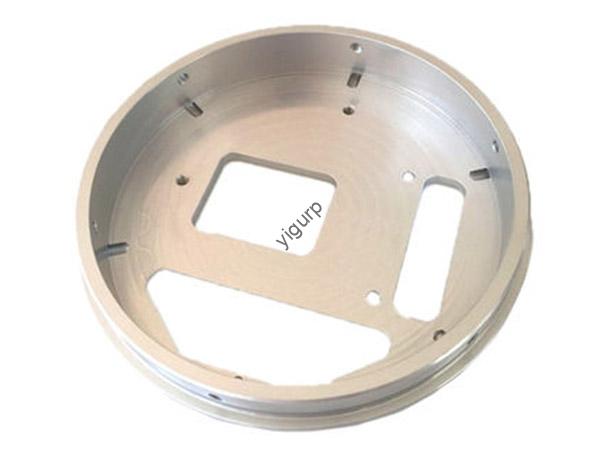
When you are working on medium-stress projects—like small commercial buildings, lightweight automotive parts, or general machinery—you need a material that offers reliable strength without the high cost of specialized alloys. R260 structural steel is a practical, versatile solution for these everyday applications. As a low-carbon structural steel aligned with European EN standards, it balances basic mechanical performance with easy fabrication. This guide breaks down its key properties, real-world uses, and how it compares to other materials, helping you make informed decisions for cost-effective, durable projects.
What Defines R260 Structural Steel?
R260’s value lies in its simplicity. Its low carbon content ensures excellent workability, while trace alloying elements provide just enough strength for medium-stress needs. It is designed to be a workhorse material for projects where performance and budget must be balanced.
The Chemistry of Simplicity
The chemical composition of R260 is optimized for balanced strength and workability, following EN standards like EN 10025.
| Element | Content Range (%) | Key Function |
|---|---|---|
| Carbon (C) | 0.18 – 0.24 | Provides core strength while avoiding brittleness for bending and welding. |
| Manganese (Mn) | 0.50 – 1.00 | Enhances tensile strength and ductility, preventing cracking during forming. |
| Silicon (Si) | 0.15 – 0.35 | Improves heat resistance during rolling and prevents oxide buildup on surfaces. |
| Sulfur & Phosphorus | ≤ 0.040 each | Minimized to eliminate weak points and balance strength with cold ductility. |
| Trace Elements | ≤ 0.30 (Cr, Ni, Mo) | Minor additions that boost mild corrosion resistance, low-temperature toughness, and high-temperature stability. |
Key Mechanical Properties
R260’s mechanical traits are tailored for medium-stress tasks. It is strong enough for load-bearing yet flexible enough for fabrication.
| Property | Value Range | Why It Matters |
|---|---|---|
| Yield Strength | ≥ 260 MPa | The safe working limit for structural design. Provides reliable support for medium loads. |
| Tensile Strength | 410 – 540 MPa | Withstands pulling forces without breaking, suitable for beams, frames, and brackets. |
| Elongation | ≥ 24% | Highly ductile. Can be bent into shapes like brackets or rebars without cracking. |
| Impact Toughness | ≥ 30 J at 0°C | Remains tough in cool weather, suitable for temperate climates. |
| Fatigue Strength | ~160 MPa | Handles repeated stress well, good for parts like engine mounts or machine guards. |
| Hardness | 115 – 145 HB | Soft enough for easy machining with standard tools, reducing fabrication costs. |
A real-world example: A Polish construction firm used R260 for a 3-story grocery store. The steel frame needed to support 7 kN/m² floor loads from inventory and customers. R260’s excellent weldability let crews assemble the frame in 35 days (compared to 45 days for higher-grade steel). After 6 years, the store showed no structural issues, and the project saved $80,000 in material costs.
Where Is R260 Used?
R260’s balanced performance and low cost make it a staple in small-to-medium construction, automotive, and machinery applications.
Construction
- Small Commercial Buildings: Ideal for 2–4 story structures like small offices, retail shops, and light industrial units. Its strength handles typical floor loads without over-engineering.
- Pedestrian and Light-Vehicle Bridges: A Czech city used R260 for a 12-meter road bridge. It withstood 5-ton vehicle loads (cars and small trucks) and required minimal maintenance over 9 years.
- Reinforcement Bars: Used in residential foundations, balcony slabs, and retaining walls. A Hungarian builder used R260 rebars for 30+ townhouses. The steel handled 400 kg/m² floor loads and cost 20% less than high-strength rebars.
- Industrial Frames: Suitable for small factories, such as textile or electronics plants. A Romanian firm used R260 for a 2-story factory frame that supports 3-ton overhead crane loads and remains easy to modify for future expansion.
Automotive
- Vehicle Subframes: Used for non-critical subframes in compact cars. A Slovakian automaker uses R260 for a small hatchback’s rear subframe. It is lightweight, cheap to stamp, and provides enough strength for daily driving.
- Suspension Components: Spring brackets and control arms made from R260 have been tested to last 160,000 km, outperforming lower-grade steel which failed at 120,000 km.
- Engine Mounts: Basic rubber-to-metal mounts for small gasoline engines (1.0–1.5L). A Serbian automaker uses R260 for these mounts because it resists mild engine vibration and heat while costing 10% less than alloy steel alternatives.
Mechanical Engineering and Agriculture
- Machine Guards and Covers: Lightweight covers for packaging machines and small lathes. A Bulgarian machinery firm uses R260 for machine guards because it is soft enough to cut into custom shapes and cheap to replace if damaged.
- Low-Torque Gears: Used in household appliances like washing machines. A Slovenian appliance brand uses R260 for these gears because its ductility ensures smooth rotation and costs 25% less than alloy steel.
- Agricultural Hand Tools: A Lithuanian farm equipment brand used R260 for manual rake tines. The steel’s ductility allowed the tines to be bent into shape without cracking, and its low cost kept the final rake affordable at $4 each. The rakes sold 2 times more than competitors using brittle steel.
How Is R260 Manufactured?
R260’s simple composition keeps manufacturing straightforward and low-cost, making it ideal for mass production.
| Stage | Common Method | Why It Matters |
|---|---|---|
| Steelmaking | Basic Oxygen Furnace (BOF) or Electric Arc Furnace (EAF) | Allows precise control of carbon and manganese levels. BOF is used for high-volume production of beams and rebars; EAF is used for smaller batches of sheets or bars. |
| Hot Rolling | Heating to 1100-1200°C, rolling into sheets, bars, or beams | The primary forming method. Enhances ductility and strength for load-bearing use. |
| Cold Rolling | Rolling at room temperature | Used for thin sheets (≤3mm) like automotive panels, providing smooth surface finish and tight tolerances. |
| Heat Treatment | Annealing or normalizing (optional) | Rarely needed for basic use. Annealing softens steel for precision machining; normalizing improves strength uniformity for specific parts. |
| Surface Treatment | Galvanizing or painting | Galvanizing (zinc coating) protects outdoor parts like bridge beams. Painting provides aesthetics and minor corrosion protection for indoor components. |
How Does R260 Compare to Other Materials?
Choosing R260 often comes down to balancing its moderate strength, excellent workability, and low cost against other options.
vs. Other Steels
| Feature | R260 | Q235 (Chinese) | A36 (U.S.) | Stainless Steel (304) |
|---|---|---|---|---|
| Yield Strength | ≥ 260 MPa | ≥ 235 MPa | ≥ 250 MPa | ≥ 205 MPa |
| Elongation | ≥ 24% | ≥ 26% | ≥ 20% | ≥ 40% |
| Weldability | Excellent | Excellent | Excellent | Good |
| Corrosion Resistance | Fair | Poor/Moderate | Poor | Excellent |
| Cost (per ton) | $800 – $900 | $700 – $800 | $800 – $900 | $4,000 – $4,500 |
| Best For | Medium-stress, balanced projects | Low-medium stress | General construction | Corrosion-prone parts |
The key takeaway: R260 offers a moderate strength upgrade over basic grades like Q235 or A36 at a comparable cost. Its excellent weldability and ductility make it easier to fabricate than higher-strength steels. For corrosion-prone environments, coatings are needed, as stainless steel is significantly more expensive.
vs. Other Material Classes
- R260 vs. Aluminum (6061-T6): R260 has about 1.9 times higher yield strength and costs 60% less. Aluminum is lighter but less suitable for load-bearing structural parts like building frames or car subframes.
- R260 vs. Carbon Fiber Composites: Carbon fiber is lighter but costs roughly 10 times more and is brittle. For mass-produced, medium-stress parts like machine guards or rake tines, R260 is far more practical.
- R260 vs. Plastics: Plastics are cheaper but have 15 times lower strength and melt at low temperatures. For any load-bearing application, steel is the reliable choice.
Conclusion
R260 structural steel is a practical, cost-effective material designed for the vast middle ground of engineering projects. It is not the strongest steel available, nor the cheapest, but it offers the best of both worlds: reliable strength (≥260 MPa yield), excellent workability (≥24% elongation), and easy fabrication (excellent weldability). For small commercial buildings, lightweight automotive components, and general machinery, R260 provides a dependable, budget-friendly solution that has been proven in projects from Polish grocery stores to Lithuanian farm tools. If your project demands moderate strength without the cost of high-alloy steels, R260 is a versatile and smart choice.
FAQ About R260 Structural Steel
Can R260 be used for outdoor structures like small bridges?
Yes, but it requires protection. R260 has only fair corrosion resistance. For outdoor use, it should be galvanized or painted to prevent rust. A Czech city successfully used galvanized R260 for a 12-meter road bridge with minimal maintenance over 9 years.
Is R260 easy to weld?
Yes. R260 has excellent weldability. For sections up to 20mm thick, no preheating is needed. It works with standard arc welding equipment (MIG, TIG, stick), making it ideal for on-site construction and fabrication shops.
What is the difference between R260 and higher-strength steels like S355?
The main difference is strength and cost. R260 has a yield strength of ≥260 MPa, while S355 has ≥355 MPa. R260 is generally 15–20% cheaper and has better ductility (≥24% elongation vs. ≥22% for S355), making it easier to form. Use R260 for medium-stress projects where the extra strength of S355 is not needed.
What thicknesses and forms are available for R260?
R260 is commonly available as hot-rolled sheets (1–15mm thick), bars (8–30mm diameter), rebars, and structural beams. Cold-rolled sheets (≤3mm) are also available for automotive and precision applications. Custom cuts and sizes can be ordered for specific project needs.
Discuss Your Projects with Yigu Rapid Prototyping
Selecting the right structural steel for medium-stress projects is about finding the best balance of strength, workability, and cost. At Yigu Rapid Prototyping, we have extensive experience supplying R260 for construction, automotive, and machinery applications across Europe. Our team can help you determine if R260 is the right fit for your specific load requirements, fabrication methods, and budget. We offer R260 in a variety of forms—sheets, bars, beams, and custom-fabricated components—with optional galvanizing or painting for outdoor use. Contact us today to discuss your project and find a reliable, cost-effective material solution.