
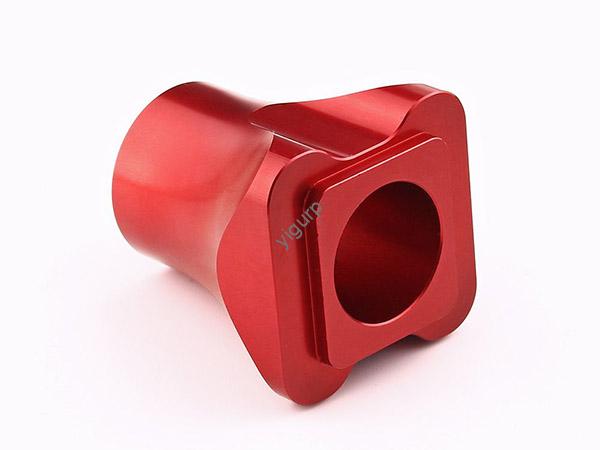
When your project demands a material that combines high strength, good toughness, and moderate corrosion resistance, MS 1400 martensitic steel offers a compelling solution. As a chromium-based martensitic grade, it delivers tensile strength up to 1500 MPa while maintaining sufficient ductility for demanding applications. This guide covers its key properties, real-world applications across aerospace, automotive, and tool manufacturing, manufacturing processes, and how it compares to alternative materials—giving you the practical knowledge needed to select the right steel for high-stress components.
Introduction
Engineers working in aerospace, automotive, and tool manufacturing face a recurring challenge: finding a steel that is strong enough to handle extreme loads yet tough enough to resist cracking under impact. Many high-strength materials sacrifice ductility to achieve their mechanical properties, making them prone to brittle failure. Others offer good toughness but lack the strength required for critical components. MS 1400 martensitic steel was developed to address this trade-off. Through a precise combination of chromium, molybdenum, and vanadium, along with carefully controlled heat treatment, it achieves a balance of strength, hardness, and toughness that makes it suitable for some of the most demanding engineering applications.
What Defines MS 1400 Martensitic Steel?
The performance of MS 1400 is rooted in its martensitic microstructure, which is created through a specific heat treatment process. Understanding its composition and resulting properties explains why this material performs so well under stress.
Chemical Composition
The alloying elements in MS 1400 work together to create its characteristic balance of strength, hardness, and corrosion resistance.
| Element | Content Range (%) | Functional Role |
|---|---|---|
| Carbon (C) | 0.35–0.45 | Provides the base hardness and tensile strength essential for high-stress applications. |
| Chromium (Cr) | 11.5–13.5 | Enhances corrosion resistance and wear resistance, and contributes to hardenability. |
| Molybdenum (Mo) | 0.80–1.20 | Improves high-temperature strength and fatigue resistance, critical for engine and transmission components. |
| Manganese (Mn) | 0.50–1.00 | Increases hardenability and contributes to ductility without sacrificing strength. |
| Silicon (Si) | 0.30–0.60 | Acts as a deoxidizer and enhances strength during heat treatment. |
| Vanadium (V) | 0.10–0.20 | Refines grain structure, improving toughness and resistance to fatigue. |
Mechanical Properties
The mechanical characteristics of MS 1400 are what make it suitable for high-stress applications. The values below are typical after proper heat treatment.
| Property | Typical Value | Practical Significance |
|---|---|---|
| Tensile Strength | 1,200–1,500 MPa | Provides the load capacity needed for aircraft landing gear, high-performance engine parts, and structural components. |
| Yield Strength | 1,000–1,300 MPa | Resists permanent deformation under pressure, ensuring components maintain their shape under load. |
| Hardness | 37–45 HRC (350–420 HB) | Offers good wear resistance while remaining machinable with proper tooling. |
| Impact Toughness | 25–40 J at 20°C | Absorbs shock and impact without brittle failure, essential for safety-critical components. |
| Fatigue Strength | 550–650 MPa | Withstands repeated stress cycles, making it ideal for rotating parts like gears and shafts. |
| Elongation | 10–15% | Provides sufficient ductility for forming and for absorbing energy before fracture. |
Why Is It Suited for High-Stress Applications?
MS 1400 has become a trusted material in demanding industries because its properties align well with the requirements of high-stress components.
High Tensile and Yield Strength
With tensile strength reaching 1500 MPa, MS 1400 can handle the extreme loads found in aircraft landing gear, heavy-duty transmission components, and structural parts. Its yield strength of over 1000 MPa ensures that these components do not permanently deform under operating stresses.
Good Fatigue Resistance
The combination of molybdenum addition and refined grain structure gives MS 1400 excellent fatigue strength. Components like gears, shafts, and suspension parts that experience millions of stress cycles over their service life benefit from this property.
Moderate Corrosion Resistance
The chromium content of 11.5–13.5% provides better corrosion resistance than carbon steel, making MS 1400 suitable for applications exposed to moisture or mild corrosive environments. When additional protection is needed, surface treatments like plating or nitriding can enhance its corrosion performance.
Adjustable Hardness and Toughness
Through tempering at different temperatures, the hardness and toughness of MS 1400 can be tailored to specific applications. Lower tempering temperatures (200–300°C) preserve higher hardness for wear-resistant tools, while higher tempering temperatures (400–600°C) increase toughness for structural components.
Where Is MS 1400 Commonly Used?
The combination of strength, toughness, and moderate corrosion resistance makes MS 1400 suitable for a wide range of demanding applications.
- Aerospace:
- Aircraft landing gear components that must absorb the impact of landing while supporting the full weight of the aircraft.
- Structural brackets and fittings that require high strength-to-weight ratios.
- High-strength fasteners that hold critical assemblies together under extreme stress.
- Automotive:
- High-performance engine components like camshafts, valve springs, and turbocharger shafts that operate at high temperatures and stress levels.
- Transmission gears and shafts that must withstand repeated torque loading without wear or fatigue failure.
- Suspension components that require both strength and impact resistance for rough road conditions.
- Tool Manufacturing:
- Cutting tools such as drills, end mills, and reamers that need high hardness and wear resistance for machining metals.
- Molds and dies for injection molding and stamping operations that require both hardness and toughness.
- Forming tools that shape metal under high pressure without deforming.
- Industrial Machinery:
- Heavy-duty gears and shafts for construction equipment, mining machinery, and industrial presses.
- Bearings and wear components that operate under high loads and in abrasive environments.
- Defense and Security:
- Military vehicle components that must withstand impact and harsh operating conditions.
- Armor-related applications where high strength and hardness are essential.
- Sports Equipment:
- High-performance golf club heads where strength allows for thinner, faster designs.
- Bicycle frames and components requiring a balance of strength and weight.
How Is MS 1400 Manufactured?
Producing MS 1400 components requires precise control over steelmaking, heat treatment, and fabrication processes.
Steelmaking
MS 1400 is typically produced using an Electric Arc Furnace (EAF) , which allows for precise control over the alloying elements. The steel is cast into billets or slabs, with careful attention to controlling impurities like sulfur and phosphorus that could affect toughness.
Heat Treatment
Heat treatment is critical to unlocking the full potential of MS 1400. The standard process involves:
| Process | Temperature Range | Purpose |
|---|---|---|
| Austenitizing | 950–1050°C | Converts the microstructure to austenite, preparing it for hardening. |
| Quenching | Oil or water quench | Rapid cooling transforms the austenite into hard martensite, achieving high strength and hardness. |
| Tempering | 200–600°C | Reheating reduces brittleness while retaining strength. Lower temperatures preserve hardness; higher temperatures increase toughness. |
| Annealing | 800–900°C, slow cool | Softens the steel for easier machining and forming. |
| Normalizing | 950–1050°C, air cool | Refines grain structure for consistent mechanical properties. |
Forming and Fabrication
Once heat-treated, MS 1400 can be formed using various methods:
- Forging: Hot forging at 1000–1150°C shapes complex components like landing gear parts.
- Rolling: Creates sheets, bars, and plates for further fabrication.
- Machining: In the annealed condition, MS 1400 machines well with carbide tooling. Hardened components require specialized techniques.
Surface Treatment
To enhance corrosion resistance or wear performance, MS 1400 often receives surface treatments:
- Nitriding: Creates a hard surface layer that improves wear resistance while maintaining core toughness.
- Chrome Plating: Provides a corrosion-resistant surface suitable for exposed components.
- Shot Peening: Induces compressive stress at the surface, significantly improving fatigue strength.
How Does It Compare to Other Materials?
Understanding where MS 1400 fits relative to alternatives helps clarify its value for specific applications.
| Material | Tensile Strength (MPa) | Hardness (HRC) | Corrosion Resistance | Relative Cost | Best Applications |
|---|---|---|---|---|---|
| MS 1400 | 1,200–1,500 | 37–45 | Moderate | $$ | High-stress structural, aerospace, automotive |
| 410 Steel | 550–700 | 20–30 | Good | $ | Low-stress, corrosion-prone parts |
| 420 Steel | 700–900 | 30–45 | Good | $$ | Knives, small tools, moderate stress |
| 304 Stainless | 500–700 | 20–30 | Excellent | $$ | Food processing, chemical equipment |
| 316L Stainless | 550–650 | 15–25 | Superior | $$$ | Marine environments, medical implants |
| 6061 Aluminum | 240–300 | 15–20 | Good | $ | Lightweight applications, non-structural |
| Carbon Fiber | 1,200–2,000 | N/A | Excellent | $$$$$ | High-performance, weight-critical parts |
Key takeaways:
- MS 1400 offers significantly higher strength than standard martensitic grades like 410 or 420, making it suitable for structural and high-stress applications.
- While austenitic stainless steels provide better corrosion resistance, MS 1400 delivers 2–3 times higher strength at a lower cost.
- Compared to aluminum, MS 1400 is approximately four times stronger, though heavier. For applications where strength is more critical than weight, it is the better choice.
- Versus carbon fiber composites, MS 1400 is far more affordable and easier to manufacture, with similar specific strength values for many applications.
Case Studies: MS 1400 in Real-World Applications
Case Study 1: Aerospace Landing Gear Performance
A major aircraft manufacturer was experiencing landing gear component failures every 500 flight hours with a standard martensitic steel. The failures were traced to fatigue crack growth from repeated landing cycles. The company switched to MS 1400 for critical landing gear components. After the change, component life increased to 1,200 flight hours—a 140% improvement. The higher fatigue strength (550–650 MPa) and improved toughness (25–40 J) of MS 1400 resisted crack initiation and propagation. Annual maintenance costs per aircraft were reduced by an estimated $300,000.
Case Study 2: High-Performance Turbocharger Shafts
A high-performance automotive manufacturer wanted to improve the durability of turbocharger shafts. These components operate at high temperatures and rotational speeds, subjecting them to both thermal stress and mechanical fatigue. The company tested MS 1400 against 316L austenitic stainless steel. MS 1400’s tensile strength (1,200–1,500 MPa) was more than double that of 316L (550–650 MPa). The MS 1400 shafts lasted 150,000 kilometers without failure, compared to 50,000 kilometers for the 316L shafts. The shafts were also 10% lighter, contributing to improved turbocharger response and fuel efficiency.
Case Study 3: Cutting Tool Life Improvement
A tool manufacturing company compared MS 1400 cutting tools against H13 steel tools in aluminum machining operations. The MS 1400 tools lasted 30% longer, producing 1,500 parts per tool versus 1,150 parts for H13. Additionally, MS 1400 could handle 10% higher cutting speeds (200 m/min vs. 180 m/min), increasing overall productivity. Although MS 1400 tools cost 5% more upfront, the combination of longer tool life and higher cutting speeds reduced per-part tool costs by 12%, delivering significant savings in high-volume production.
Conclusion
MS 1400 martensitic steel offers engineers a reliable combination of high strength, good toughness, and moderate corrosion resistance that makes it suitable for some of the most demanding applications across aerospace, automotive, and tool manufacturing. Its tensile strength of up to 1500 MPa allows for lightweight, efficient designs, while its fatigue resistance ensures long service life under cyclic loading. Through proper heat treatment, its properties can be tailored to specific application needs, balancing hardness and toughness as required. While it does not offer the corrosion resistance of austenitic stainless steels or the weight savings of aluminum, its combination of strength, processability, and cost-effectiveness makes it a practical choice for high-stress components where reliability is critical.
FAQ About MS 1400 Martensitic Steel
Can MS 1400 be used in marine environments?
MS 1400 has moderate corrosion resistance and is not recommended for direct marine use without additional protection. With surface treatments such as chrome plating or nitriding, it can resist saltwater exposure for limited applications. For fully submerged or continuous marine service, austenitic stainless steels like 316L are better suited.
What heat treatment produces the best combination of strength and toughness?
The optimal heat treatment depends on the application. For maximum strength with moderate toughness, temper at 200–300°C after quenching. For a balance of strength and toughness suitable for structural components, temper at 400–500°C. For maximum toughness with reduced hardness, temper at 550–600°C. Double tempering is recommended for critical applications to ensure stability.
How does MS 1400 compare to 17-4 PH stainless steel?
MS 1400 offers comparable tensile strength to 17-4 PH (1,200–1,500 MPa vs. 1,100–1,300 MPa) at a lower material cost. However, 17-4 PH provides better corrosion resistance and maintains strength at higher temperatures. Choose MS 1400 for applications where corrosion resistance is not the primary concern and cost savings are important.
Is MS 1400 difficult to machine?
In its annealed condition, MS 1400 machines well with carbide tooling. Standard speeds and feeds for alloy steels apply. In the hardened condition (37–45 HRC), machining becomes more challenging and requires rigid setups, carbide or ceramic tooling, and reduced cutting speeds. Most machining operations are performed before heat treatment.
Discuss Your Projects with Yigu Rapid Prototyping
Selecting and processing high-performance materials like MS 1400 requires expertise to achieve the right balance of properties for your specific application. At Yigu Rapid Prototyping, we combine deep knowledge of martensitic steels with advanced manufacturing capabilities to deliver components that meet demanding requirements. Whether you need landing gear components for aerospace, transmission parts for automotive, or custom tooling for manufacturing, our team can guide you from material selection through final heat treatment and finishing.
We specialize in working with high-strength martensitic steels, offering services including precision machining, custom heat treatment, surface finishing, and quality testing. If your project demands strength, durability, and reliability under stress, we are ready to help. Contact us today to discuss your requirements and discover how our expertise can support your next high-performance component project.