
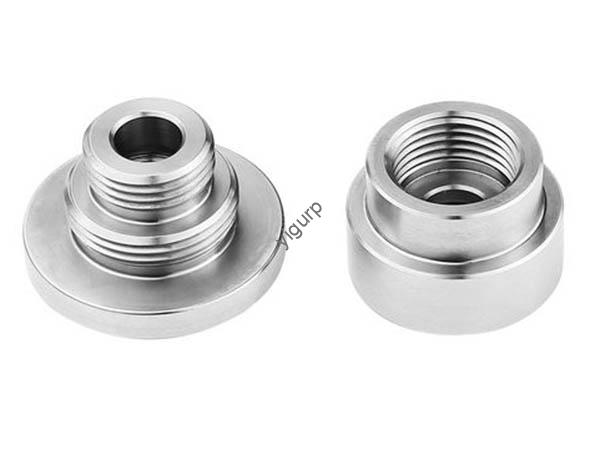
When your project involves chemical processing, desalination, or other harsh environments where standard stainless steels fail, you need a material that delivers exceptional corrosion resistance without compromising strength or fabricability. EN 1.4539 super austenitic stainless steel is engineered for these demanding conditions. With high nickel, chromium, molybdenum, and copper content, it offers outstanding resistance to pitting, crevice corrosion, and stress corrosion cracking—particularly in chloride and sulfuric acid environments. In this guide, I will walk you through its properties, applications, and how to work with it based on real project experience.
Introduction
EN 1.4539 is a super austenitic stainless steel defined by European standard EN 10088. It is equivalent to UNS N08904 and is often compared to the popular 904L grade. Its composition includes approximately 20% chromium, 25% nickel, 4.5% molybdenum, and 1.5% copper. This high alloy content provides a level of corrosion resistance that far exceeds standard austenitic grades such as 316L. The molybdenum enhances resistance to pitting and crevice corrosion in chloride environments, while the copper provides exceptional resistance to sulfuric acid. The low carbon content (≤ 0.02%) prevents carbide precipitation during welding, eliminating the risk of intergranular corrosion. Over the years at Yigu Rapid Prototyping, I have worked with chemical plant engineers, desalination facility operators, and pharmaceutical manufacturers who specify EN 1.4539 for equipment that must perform reliably in the most corrosive environments. Its combination of corrosion resistance, strength, and weldability makes it a trusted material for critical applications.
What Makes EN 1.4539 a Super Austenitic Stainless Steel?
EN 1.4539 achieves its exceptional corrosion resistance through its high alloy content. The combination of chromium, nickel, molybdenum, and copper provides resistance to a wide range of corrosive media.
The Chemistry Behind the Performance
The chemical composition of EN 1.4539 is designed to provide superior corrosion resistance in aggressive environments.
| Element | Content Range (%) | Why It Matters |
|---|---|---|
| Chromium (Cr) | ~20 | Forms the passive oxide layer. Provides general corrosion resistance. |
| Nickel (Ni) | ~25 | Stabilizes the austenitic structure. Provides ductility and toughness. |
| Molybdenum (Mo) | ~4.5 | Enhances resistance to pitting and crevice corrosion in chloride environments. |
| Copper (Cu) | ~1.5 | Provides exceptional resistance to sulfuric acid. |
| Carbon (C) | ≤ 0.02 | Ultra-low carbon prevents carbide precipitation during welding. |
| Nitrogen (N) | Controlled low levels | Improves strength without harming corrosion resistance. |
Key Insight: The combination of 4.5% molybdenum and 1.5% copper gives EN 1.4539 its unique corrosion resistance profile. The molybdenum provides resistance to chlorides, while the copper provides resistance to sulfuric acid—a combination that makes it suitable for both marine and chemical processing applications.
Mechanical Properties That Matter
EN 1.4539 offers good mechanical properties in the annealed condition, with excellent ductility for forming operations.
| Property | Typical Value | Significance |
|---|---|---|
| Yield Strength | ≥ 220 MPa | Provides adequate strength for pressure vessels, piping, and structural components. |
| Tensile Strength | ≥ 520 MPa | Indicates ultimate load capacity before fracture. |
| Elongation | ≥ 35% | High ductility allows forming, bending, and fabrication without cracking. |
| Hardness | 150 – 200 HB | Soft enough for machining and forming in the annealed condition. |
| Corrosion Resistance | Excellent | Resists pitting, crevice corrosion, and stress corrosion cracking in chlorides. |
| Sulfuric Acid Resistance | Excellent | Resists dilute to moderate sulfuric acid (up to 40% concentration). |
Case Study: A Belgian chemical plant used EN 1.4539 for sulfuric acid pipes. The previous 316L pipes required replacement every 18 months due to corrosion. The EN 1.4539 pipes have operated for five years with no signs of corrosion, cutting maintenance costs by 40%.
Where Does EN 1.4539 Deliver the Most Value?
This material is specified for applications where standard stainless steels cannot provide adequate corrosion resistance.
Chemical Processing Equipment
EN 1.4539 is widely used in chemical plants handling sulfuric acid, phosphoric acid, and other aggressive chemicals.
- Sulfuric acid tanks: Storage and process tanks for dilute to moderate sulfuric acid.
- Chemical reactors: Vessels for chemical synthesis involving corrosive media.
- Piping systems: Pipes and fittings for corrosive chemical transport.
- Heat exchangers: Equipment that transfers heat between corrosive fluids.
Case Study: A U.S. battery factory used EN 1.4539 for acid storage tanks. The 316L tanks previously used required replacement after six months due to corrosion. The EN 1.4539 tanks showed no corrosion after two years of service.
Desalination and Marine Applications
Desalination plants and offshore equipment face constant exposure to seawater and chlorides.
- Desalination evaporators: Equipment that removes salt from seawater.
- Seawater cooling systems: Pipes and heat exchangers using seawater as a coolant.
- Offshore platform components: Structural and piping components exposed to salt spray.
- Underwater brackets: Components submerged in seawater.
Case Study: A UAE desalination plant switched to EN 1.4539 for evaporator tubes. Previously, 316L tubes required cleaning quarterly due to scaling and corrosion. The EN 1.4539 tubes now require cleaning only once per year, reducing maintenance downtime and costs.
Pharmaceutical and Food Processing
Pharmaceutical and food equipment require materials that are corrosion-resistant and easy to clean.
- Pharmaceutical reactors: Vessels for drug synthesis.
- Storage tanks: Tanks for pharmaceutical intermediates and finished products.
- Process piping: Piping for corrosive cleaning agents and process fluids.
Case Study: A Swiss pharmaceutical manufacturer uses EN 1.4539 reactors for antibiotic production. The material resists the corrosive cleaning agents used between batches and maintains a smooth, easy-to-clean surface with no contamination issues.
Pulp and Paper Industry
Pulp and paper equipment is exposed to alkaline bleach and other corrosive chemicals.
- Bleach washers: Equipment that removes bleach from pulp.
- Bleach towers: Vessels where bleaching occurs.
- Process tanks: Tanks for chemical storage and mixing.
Case Study: A Finnish pulp mill used EN 1.4539 for bleach washer drums. The previous material lasted two years; the EN 1.4539 drums have been in service for seven years with no signs of corrosion.
Flue Gas Desulfurization
Power plant scrubbers remove sulfur dioxide from flue gas, creating acidic byproducts.
- Scrubber components: Equipment that contacts acidic flue gas.
- Ductwork: Piping that carries corrosive gases.
- Nozzles and spray headers: Components that distribute scrubbing fluid.
Case Study: A Chinese power plant used EN 1.4539 in flue gas desulfurization scrubbers. The material has shown no corrosion despite constant exposure to sulfur dioxide and acidic condensate.
How Is EN 1.4539 Manufactured and Processed?
Working with EN 1.4539 requires attention to its high alloy content and the need to preserve its corrosion resistance.
Forming
EN 1.4539 has excellent formability due to its high ductility (≥ 35% elongation).
- Hot forming: Perform at 1,100–900°C. Avoid working below 900°C to prevent cracking.
- Cold forming: Can be bent, stamped, and formed using standard equipment.
Heat Treatment
Solution annealing is the primary heat treatment for EN 1.4539.
- Solution annealing: Heat to 1,050–1,150°C, then water quench. This restores the austenitic structure and maximizes corrosion resistance.
Machining
EN 1.4539 has good machinability, but its toughness can cause tool wear.
- Use sharp carbide tools.
- Maintain slow cutting speeds.
- Use generous coolant to control heat.
- Avoid work hardening by maintaining consistent feed rates.
Welding
EN 1.4539 has good weldability with proper procedures.
- Recommended processes: TIG, MIG, and SMAW.
- Filler metal: Use AWS ERNiCrMo-3 (matching filler) to maintain corrosion resistance.
- No preheating required: Saves time and simplifies welding.
- Low heat input: Keep heat low to avoid damaging the alloy’s structure.
- Post-weld treatment: Pickling and passivation are required to restore the passive layer in the weld zone.
How Does EN 1.4539 Compare to Other Materials?
Understanding the trade-offs between EN 1.4539 and alternative materials helps in making an informed selection.
| Material | Chloride Resistance | Sulfuric Acid Resistance | Relative Cost | Best For |
|---|---|---|---|---|
| EN 1.4539 (904L) | Excellent | Excellent | 100% | Chemical processing, desalination, sulfuric acid |
| 316L Stainless Steel | Moderate | Poor | 30% | Mild corrosive environments |
| EN 1.4547 (254SMO) | Superior | Moderate | 120% | High-chloride environments |
| Hastelloy C276 | Superior | Superior | 250% | Extreme chemical environments |
| Titanium (Grade 2) | Superior | Moderate | 300% | Seawater applications |
Key Insights:
- Compared to 316L, EN 1.4539 offers far superior resistance to chlorides and sulfuric acid at 2–3 times the cost. For aggressive environments, this premium is essential.
- Compared to Hastelloy C276, EN 1.4539 is significantly less expensive while providing adequate corrosion resistance for most applications. Choose Hastelloy for extreme chemical environments.
- Compared to titanium, EN 1.4539 is less expensive and easier to fabricate. Titanium is preferred for seawater applications where weight is critical.
What About High-Temperature Performance?
EN 1.4539 maintains good strength up to 500°C. Above this temperature, its strength decreases. For applications above 500°C, consider heat-resistant alloys such as Inconel.
Conclusion
EN 1.4539 super austenitic stainless steel is a high-performance material for the most corrosive environments. Its high nickel, chromium, molybdenum, and copper content provides exceptional resistance to pitting, crevice corrosion, and stress corrosion cracking in chlorides, as well as outstanding resistance to sulfuric acid. For chemical processing equipment, desalination plants, pharmaceutical reactors, and flue gas desulfurization scrubbers, EN 1.4539 delivers the corrosion resistance, strength, and fabricability required for long-term service. When you need a material that can withstand the most aggressive environments, EN 1.4539 is a proven, trusted choice.
FAQ About EN 1.4539 Super Austenitic Stainless Steel
Is EN 1.4539 more expensive than 316L?
Yes. EN 1.4539 typically costs 2–3 times more than 316L upfront. However, it lasts 3–5 times longer in harsh environments, so it saves money on replacements and maintenance over time. For aggressive corrosive applications, the higher upfront cost is justified by extended service life.
Can EN 1.4539 be used at high temperatures?
EN 1.4539 works well up to 500°C. Above this temperature, its strength decreases. For applications requiring service above 500°C, consider heat-resistant alloys such as Inconel 625 or 316L stainless steel with higher-temperature capability but lower corrosion resistance.
Does EN 1.4539 need special cleaning?
For industrial use, regular cleaning with mild detergents is sufficient to remove surface dirt. Critical for maintaining corrosion resistance is post-weld acid pickling and passivation after welding or forming. This restores the passive oxide layer and ensures the material performs as designed in corrosive environments.
What is the difference between EN 1.4539 and 904L?
EN 1.4539 and 904L are essentially the same material. EN 1.4539 is the European standard designation, while 904L is the common trade name. Both have the same chemical composition (UNS N08904) and identical performance characteristics. The choice of designation depends on regional standards and supplier terminology.
Discuss Your Projects with Yigu Rapid Prototyping
Selecting the right corrosion-resistant alloy for harsh environments requires balancing corrosion resistance, strength, fabricability, and cost. At Yigu Rapid Prototyping, we help chemical engineers, desalination plant operators, and pharmaceutical manufacturers navigate these decisions with practical, experience-based guidance. Whether you need EN 1.4539 for sulfuric acid tanks, desalination evaporators, or pharmaceutical reactors, we can provide material sourcing, custom fabrication, and welding support. Contact us to discuss your project requirements and find the right solution.