
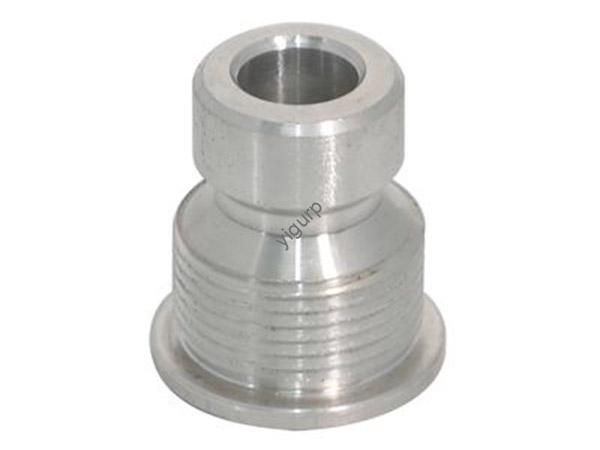
If you’re designing safety-critical automotive parts that need to absorb crash energy without cracking during forming, TRIP 600 steel offers a unique combination of strength and ductility. As a Transformation-Induced Plasticity (TRIP) steel—a key category of Advanced High-Strength Steel (AHSS)—it uses a special microstructural mechanism: during deformation, retained austenite transforms into hard martensite. This process, called the TRIP effect, allows the material to stretch significantly while gaining strength exactly where it’s needed. This guide covers its material properties, manufacturing methods, applications, and how it compares to other high-strength steels.
Introduction
The automotive industry faces a constant challenge: making vehicles lighter to improve efficiency while maintaining or improving crash safety. Traditional high-strength steels often sacrifice formability for strength, making them difficult to stamp into complex shapes. TRIP 600 solves this problem. Its multi-phase microstructure—combining ferrite, bainite, and retained austenite—delivers both high elongation and high tensile strength. This makes it the material of choice for body panels, bumpers, and structural components that must withstand impact while being shaped into intricate designs.
What Are the Material Properties of TRIP 600?
TRIP 600’s performance comes from its carefully designed chemical composition and the resulting multi-phase microstructure. Understanding these properties helps you select the right processing methods.
Chemical Composition and Alloy Design
The composition of TRIP 600 is tuned to stabilize retained austenite at room temperature. This retained austenite is what enables the TRIP effect during forming or impact.
| Element | Content Range (%) | Role in the Alloy |
|---|---|---|
| Carbon (C) | 0.15 – 0.20 | Stabilizes retained austenite; balances strength and ductility |
| Manganese (Mn) | 1.50 – 2.00 | Enhances hardenability; promotes bainite formation |
| Silicon (Si) | 0.80 – 1.20 | Inhibits carbide formation; preserves retained austenite |
| Aluminum (Al) | 0.50 – 0.80 | Works with Si to stabilize austenite; improves impact resistance |
| Chromium (Cr) | 0.30 – 0.50 | Boosts corrosion resistance; refines grain size |
| Titanium (Ti) | 0.02 – 0.06 | Prevents grain growth during heat treatment |
| Sulfur (S) | ≤ 0.015 | Minimized to avoid brittleness and ensure weldability |
| Phosphorus (P) | ≤ 0.025 | Limited to prevent cold brittleness |
The combination of silicon and aluminum is critical. These elements prevent carbide formation during cooling, allowing 5–10% of the austenite to remain untransformed at room temperature. This retained austenite is what drives the TRIP effect.
Physical Properties
These characteristics affect how TRIP 600 behaves during manufacturing and in service.
- Density: 7.85 g/cm³. While similar to mild steel, TRIP 600 allows thinner gauges, reducing part weight by 12–18%.
- Melting point: 1430 – 1460°C. Compatible with standard welding and forming processes.
- Thermal conductivity: 40 W/(m·K) at 20°C. Provides stable heat transfer during stamping, reducing warping risk.
- Coefficient of thermal expansion: 12.5 μm/(m·K). Low enough for precision parts that must hold tight tolerances.
- Magnetic properties: Ferromagnetic. Works with automated magnetic handling systems in production lines.
Mechanical Properties
TRIP 600’s mechanical profile is defined by high tensile strength paired with exceptional elongation. These values are typical for cold-rolled sheet.
| Property | Typical Value | Why It Matters |
|---|---|---|
| Tensile strength | 600 – 700 MPa | Handles crash loads without tearing |
| Yield strength | 300 – 400 MPa | Resists deformation under normal driving conditions |
| Elongation | ≥ 30% | Allows deep stamping of complex shapes without cracking |
| Reduction of area | ≥ 50% | Indicates ductility—material stretches before failure |
| Hardness (Vickers) | 180 – 220 HV | Soft enough for forming, hard enough for durability |
| Impact toughness (at -40°C) | ≥ 60 J | Remains ductile in cold climates—no brittle failure |
| Fatigue strength | ~320 MPa | Withstands repeated road vibrations over vehicle life |
The elongation of 30% or more is what sets TRIP 600 apart from other AHSS grades. Dual-phase (DP) steels of similar strength typically offer only 18% elongation.
The TRIP Effect Explained
When TRIP 600 is formed or subjected to impact, the retained austenite in its microstructure transforms into martensite. This transformation happens locally, in areas experiencing the most deformation. As the steel stretches, it becomes stronger exactly where it’s working hardest. The result is a material that can be stamped into complex shapes without cracking, yet provides high strength in crash zones.
Where Is TRIP 600 Steel Used?
TRIP 600 is primarily used in automotive applications, though its combination of strength and formability makes it suitable for other lightweight structural components.
Automotive Body-in-White (BIW)
The body-in-white is the assembled sheet metal structure before paint and trim. TRIP 600 is used for:
- Floor pans
- Roof panels
- Door inner panels
- Quarter panels
A global automaker switched from mild steel to TRIP 600 for their compact car BIW. The change reduced vehicle weight by 10% while improving Euro NCAP crash test scores. The higher formability also eliminated cracking issues they had with previous high-strength grades.
Outer Body Panels
Door outer panels and fenders require both formability for complex curves and dent resistance for everyday use. TRIP 600 delivers both.
- Its ≥30% elongation allows deep draws and sharp radii
- Its tensile strength of 600–700 MPa provides dent resistance
Crash Management Systems
TRIP 600 is used in parts designed to absorb impact energy.
- Rear bumpers: The material’s impact toughness (≥60 J at -40°C) absorbs low-speed crash energy. A 5 mph parking impact deforms the bumper rather than transferring force to the vehicle structure.
- Side impact beams: Thin-gauge TRIP 600 beams reduce cabin intrusion during side collisions. The material’s ductility allows it to stretch rather than tear, cushioning the impact.
Suspension and Chassis Components
Control arms and other suspension links benefit from TRIP 600’s fatigue strength.
- Withstands road vibrations for 200,000+ km
- Lighter than equivalent mild steel components
Beyond Automotive
- Lightweight frames: Small delivery vans and electric scooters use TRIP 600 to reduce weight while maintaining structural integrity. A 4–5% improvement in energy efficiency is typical.
- Safety barriers: Pedestrian crash barriers use TRIP 600’s ductility to bend on impact, reducing injury risk.
How Is TRIP 600 Manufactured?
The manufacturing process for TRIP 600 is designed to create and preserve the multi-phase microstructure that enables the TRIP effect.
Steelmaking
TRIP 600 is produced in either electric arc furnaces (EAF) or basic oxygen furnaces (BOF).
- EAF: More common for TRIP 600. Scrap steel is melted, and alloying elements are added to hit precise composition targets. EAF is flexible and has lower emissions than BOF.
- BOF: Used for large-scale production. Molten iron is refined with oxygen, then alloyed. Faster but typically used for standard grades.
Heat Treatment: Austempering
The critical step in creating TRIP 600 is a specialized heat treatment called austempering. This process creates the ferrite-bainite-retained austenite structure.
- Cold rolling: Steel is rolled to thin gauges (0.5–2.5 mm) typical for automotive applications.
- Austenitization: The steel is heated to 850–900°C for 5–10 minutes, transforming it entirely into austenite.
- Austempering: The steel is rapidly cooled to 350–400°C and held for 15–30 minutes. During this hold, austenite transforms to bainite, but 5–10% remains untransformed as retained austenite.
- Air cooling: The steel is cooled to room temperature without quenching. This step preserves the retained austenite.
Unlike dual-phase steels, TRIP 600 is not quenched. Quenching would transform all the austenite to martensite, eliminating the TRIP effect.
Forming Processes
TRIP 600’s high elongation makes it suitable for several forming methods.
- Stamping: The most common method. High-pressure presses (800–1500 tons) shape the steel into complex parts. The 30% elongation prevents cracking even in deep draws.
- Cold forming: Used for simpler parts like brackets. Bending or rolling creates shapes without heating.
- Hot forming: Rarely used. TRIP 600 typically does not require hot forming, unlike ultra-high-strength steels (UHSS) such as 22MnB5.
Machining and Welding
- Cutting: Laser cutting is preferred for its clean edges and minimal heat-affected zone. Plasma cutting works for thicker gauges. Oxy-fuel cutting should be avoided—it can damage the retained austenite.
- Welding: MIG/MAG welding is standard. Preheat to 100–150°C to prevent cracking. Use low heat inputs to keep the retained austenite stable. ER70S-6 filler metal works well.
- Grinding: Use aluminum oxide wheels at moderate speeds (1800–2200 RPM) to avoid overheating the material.
What Does a Real-World Application Look Like?
A compact electric vehicle manufacturer faced two problems with their mild steel body panels: they were heavy, reducing battery range, and they cracked during stamping, creating 12% production waste. Switching to TRIP 600 solved both.
The Challenge
The EV needed body panels that:
- Cut weight to extend range (every 1 kg saved adds roughly 1 km of range)
- Reduced stamping waste—mild steel cracked during curved shaping
- Withstood minor impacts like door dings
The Solution
The manufacturer switched to TRIP 600 for all outer body panels.
- Stamping: 1200-ton presses shaped the steel into curved door and fender panels. The ≥30% elongation eliminated cracking entirely.
- Coating: A 10 μm zinc coating was added for corrosion resistance—critical for outer panels exposed to road salt and moisture.
- Welding: Spot welding joined panels to the body-in-white. TRIP 600’s good weldability ensured strong, durable joints.
The Results
- Weight reduction: Panels weighed 1.8 kg less than mild steel equivalents—a 15% reduction that added 1.8 km of EV range.
- Waste reduction: Stamping waste dropped from 12% to 3%, saving $180,000 per year in material costs.
- Durability: The panels withstood minor impacts without denting. Customer complaints related to door dings fell by 40%.
How Does TRIP 600 Compare to Other Materials?
Selecting the right material for a given application means understanding trade-offs in strength, ductility, and cost.
| Material | Tensile Strength | Elongation | Density | Cost (vs. TRIP 600) | Best Application |
|---|---|---|---|---|---|
| TRIP 600 | 600–700 MPa | ≥30% | 7.85 g/cm³ | 100% (baseline) | Complex shapes needing high ductility |
| DP 600 | 600–720 MPa | ≥18% | 7.85 g/cm³ | 95% | High-strength parts with simple shapes |
| HSLA (H340LA) | 340–440 MPa | ≥25% | 7.85 g/cm³ | 75% | Low-stress structural parts |
| UHSS (22MnB5) | 1500–1800 MPa | ≥10% | 7.85 g/cm³ | 200% | Ultra-high-strength safety cells |
| Aluminum 6061 | 310 MPa | ≥16% | 2.70 g/cm³ | 300% | Lightweight parts with low formability needs |
| Carbon fiber composite | 3000 MPa | ≥2% | 1.70 g/cm³ | 1500% | High-end, ultra-light components |
Key comparisons:
- TRIP 600 vs. DP 600: Both have similar tensile strength, but TRIP 600 offers significantly higher elongation. Use TRIP 600 for complex stampings; use DP 600 for simpler shapes where formability is less critical.
- TRIP 600 vs. HSLA: TRIP 600 provides nearly double the tensile strength with comparable elongation. The higher cost is justified when strength is needed.
- TRIP 600 vs. aluminum: TRIP 600 is stronger and costs one-third as much. Aluminum offers weight savings but at a premium price and lower formability.
Conclusion
TRIP 600 steel delivers a combination of strength and ductility that few other materials can match. Its tensile strength of 600–700 MPa, combined with elongation of 30% or more, allows it to be stamped into complex automotive shapes while providing crash energy absorption in service. The TRIP effect—transformation of retained austenite to martensite during deformation—is what makes this possible. For automotive engineers seeking to reduce weight, improve safety, and maintain manufacturability, TRIP 600 offers a proven solution. Its performance in real-world applications, from body panels to bumpers, makes it a reliable choice for modern vehicle design.
FAQ About TRIP 600 Steel
Can TRIP 600 be used for EV battery enclosures?
Yes. Its impact toughness (≥60 J at -40°C) and good corrosion resistance make it suitable for battery protection. Use 2–3 mm thick TRIP 600 with a 12 μm zinc-nickel coating for added corrosion protection. Laser welding creates airtight joints needed for battery enclosures.
What is the difference between TRIP 600 and DP 600?
The main difference is ductility. TRIP 600 offers ≥30% elongation thanks to the TRIP effect, making it suitable for complex shapes like body panels. DP 600 offers only ≥18% elongation—it is stronger in its as-formed state but less formable. Choose TRIP 600 when formability is critical; choose DP 600 for simpler, higher-stress parts.
Does TRIP 600 perform well in cold weather?
Yes. Its impact toughness of ≥60 J at -40°C means it remains ductile in freezing temperatures. This makes it ideal for vehicles used in cold climates (Canada, Northern Europe, Scandinavia) and for outdoor structural components that see winter conditions.
What welding methods work best for TRIP 600?
MIG/MAG welding is standard. Preheat to 100–150°C to prevent hydrogen cracking. Use low heat inputs to preserve the retained austenite in the heat-affected zone. ER70S-6 filler metal provides good strength match. Spot welding is also effective for joining TRIP 600 to other AHSS grades.
Is TRIP 600 more expensive than mild steel?
Yes, TRIP 600 costs more per kilogram than mild steel. However, its higher strength allows the use of thinner gauges, reducing overall material weight. For automotive applications, the weight savings often offset the higher per-unit material cost through improved fuel efficiency or battery range.
How is TRIP 600 different from ultra-high-strength steel (UHSS)?
UHSS grades like 22MnB5 offer tensile strength up to 1800 MPa but with elongation below 10%. They are used for safety cells and A-pillars where strength is the only priority. TRIP 600 provides lower strength but much higher ductility, making it suitable for parts that must both stretch during forming and absorb impact energy in service.
Discuss Your Projects with Yigu Rapid Prototyping
Selecting the right advanced high-strength steel for your automotive or structural project requires balancing formability, strength, and cost. At Yigu Rapid Prototyping, we help engineers and product teams specify materials like TRIP 600 for applications where traditional grades fall short. We provide guidance on material selection, stamping parameters, and welding procedures to ensure your components meet performance targets. Contact us to discuss your specific requirements.