
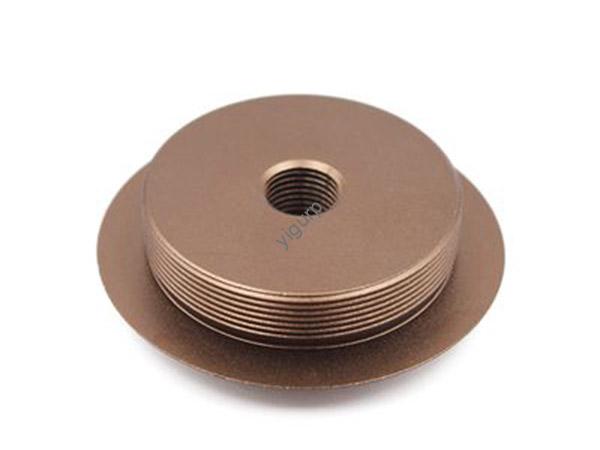
Vanadis 10 structural steel is a premium powder metallurgy (PM) tool steel renowned for its exceptional combination of wear resistance, toughness, and red hardness. Unlike conventional cast tool steels, which can suffer from large, irregular carbide formations, Vanadis 10 is manufactured using advanced powder metallurgy. This process produces a material with an extremely fine, uniform distribution of hard vanadium and tungsten carbides. This unique microstructure provides a balance of properties that is difficult to achieve in cast steels: very high hardness (60-64 HRC) for exceptional wear resistance, good toughness to resist chipping, and excellent red hardness to maintain its properties at elevated temperatures. For demanding applications such as high-speed cutting tools, cold work dies, and precision stamping tools, Vanadis 10 offers a superior level of performance and reliability.
Introduction
For decades, the performance of tool steels has been limited by the manufacturing process. Cast tool steels, such as D2 or M2, often contain large, irregular carbides that can act as initiation points for cracks and can make the material prone to chipping. As industries demand higher productivity, longer tool life, and the ability to machine harder materials, the limitations of conventional tool steels become increasingly apparent. Vanadis 10 was developed to overcome these limitations. Its powder metallurgy production creates a steel with a uniform, fine-grained structure, free from the large carbide clusters that plague cast steels. This results in a material that is simultaneously harder, tougher, and more wear-resistant than conventional grades. For toolmakers and manufacturers seeking the highest level of performance, Vanadis 10 offers a proven and superior solution.
What Are the Key Properties of Vanadis 10?
The performance of Vanadis 10 is defined by its unique chemical composition and the uniform microstructure achieved through powder metallurgy.
Chemical Composition
The high carbon, vanadium, and tungsten content are the defining features, creating extremely hard and stable carbides.
| Element | Content Range (%) | Its Role in Performance |
|---|---|---|
| Carbon (C) | 1.50 – 1.60 | Provides high hardness and forms hard carbides. |
| Vanadium (V) | 4.00 – 4.50 | The key element. Forms ultra-hard vanadium carbides for exceptional wear resistance. |
| Tungsten (W) | 1.80 – 2.20 | Aids in carbide formation and enhances thermal stability. |
| Chromium (Cr) | 8.00 – 9.00 | Provides corrosion resistance and enhances hardenability. |
| Molybdenum (Mo) | 1.20 – 1.50 | Boosts red hardness and high-temperature strength. |
| Manganese (Mn) | ≤ 0.50 | Improves hardenability. |
| Silicon (Si) | ≤ 0.80 | Aids in deoxidation during manufacturing. |
| Sulfur (S) | ≤ 0.030 | Minimized to maintain toughness. |
Mechanical and Physical Properties
After proper heat treatment (quenching and tempering), Vanadis 10 achieves the properties required for demanding applications.
| Property | Typical Value | Why It Matters |
|---|---|---|
| Hardness | 60 – 64 HRC | Provides exceptional wear resistance for long tool life. |
| Tensile Strength | 2200 – 2400 MPa | Withstands high cutting and stamping forces. |
| Yield Strength | 2000 – 2200 MPa | Resists permanent deformation under extreme loads. |
| Impact Toughness | 30 – 45 J/cm² | Provides excellent toughness for a steel of this hardness, resisting chipping. |
| Fatigue Strength | 900 – 1000 MPa | Withstands repeated stress cycles, critical for high-speed tools. |
| Red Hardness | ~58 HRC at 600°C | Retains hardness at elevated temperatures for high-speed cutting. |
| Wear Resistance | 5-8x better than conventional tool steel | Significantly extends tool life. |
| Density | ~7.85 g/cm³ | Standard for steel. |
- Microstructure: The powder metallurgy process creates a uniform distribution of fine vanadium carbides, eliminating the large, irregular carbides found in cast steels. This is the key to its superior toughness.
- Machinability: It has fair machinability in the annealed state (HB 280-320). Carbide tools are required for efficient machining.
- Weldability: It is not recommended for welding due to its high carbon and alloy content.
Where Is Vanadis 10 Used in the Real World?
Vanadis 10 is used in the most demanding tooling and component applications where wear resistance and toughness are critical.
High-Performance Cutting Tools
Vanadis 10 is used for end mills, drills, reamers, and lathe tools for machining hard materials.
- Case Study: A tool shop was using M2 high-speed steel for end mills machining hardened steel (50 HRC). The tools were dulling after 250 parts .
- They switched to Vanadis 10 end mills .
- Tool life extended to 800 parts , a 220% increase .
- Regrinding time was cut by 65% , saving $60,000 annually in labor and tool costs.
Cold Work and Stamping Dies
Vanadis 10 is used for cold-heading dies, stamping dies, and extrusion dies that must withstand high wear and impact.
- Case Study: A fastener manufacturer was using D2 tool steel for cold-heading dies for M10 bolts. The dies were wearing out after 150,000 stampings .
- They switched to Vanadis 10 dies .
- Die life extended to 550,000 stampings , a 267% increase .
- This saved $45,000 annually in die replacement costs.
Aerospace and High-Performance Automotive Components
Vanadis 10 is used for high-wear aerospace components like landing gear bushings and for high-performance engine parts like camshafts and valve lifters.
How Is Vanadis 10 Manufactured?
The powder metallurgy process is the key to Vanadis 10’s unique properties, creating a uniform, fine-grained structure.
Powder Metallurgy Process
- Atomization: Molten steel is atomized into a fine powder. Each powder particle has the exact composition of the final steel.
- Consolidation: The powder is compacted into a solid billet under high pressure and temperature. This process results in a material with a uniform distribution of fine carbides, free from the large, irregular carbide clusters that form in cast steels.
Forming and Heat Treatment
- Hot Rolling: The powder metallurgy billets are hot rolled into bars and plates.
- Annealing: Before machining, the steel is annealed to a softer state (HB 280-320) to make it easier to shape.
- Heat Treatment: This is critical to achieving final properties.
- Quenching: Heated to 1020-1060°C and rapidly cooled in oil to harden the steel.
- Tempering: Reheated to 500-550°C to reduce brittleness while maintaining high hardness (60-64 HRC).
Finishing
- Machining: In the annealed state, Vanadis 10 is machined using carbide tools .
- Grinding: After heat treatment, precision grinding with CBN (cubic boron nitride) or diamond wheels is used to achieve final dimensions and sharp edges.
- Coating: For cutting tools, a PVD coating such as TiAlN (titanium aluminum nitride) is often applied to reduce friction and further extend tool life.
Vanadis 10 vs. Other Tool Steels
Comparing Vanadis 10 to other tool steels helps clarify its position as a premium wear-resistant material.
| Material | Hardness | Wear Resistance | Toughness | Red Hardness | Relative Cost | Best For |
|---|---|---|---|---|---|---|
| Vanadis 10 | 60 – 64 HRC | Excellent | Excellent | Very Good | High | High-wear tools, precision dies, cutting tools |
| D2 Tool Steel | 58 – 62 HRC | Good | Fair | Poor | Medium | General tooling, moderate wear applications |
| M2 High-Speed Steel | 60 – 65 HRC | Good | Moderate | Good | Medium-High | High-speed cutting tools |
| CPM M4 | 62 – 66 HRC | Excellent | Good | Very Good | Higher | Ultra-high-wear cutting tools, aerospace tooling |
Key Takeaway: Vanadis 10 offers a unique combination of excellent wear resistance, good toughness, and good red hardness that is superior to conventional cast tool steels like D2 and M2. Its powder metallurgy structure provides a level of toughness and wear resistance that allows it to significantly outperform conventional steels in demanding applications.
Conclusion
Vanadis 10 structural steel is a high-performance material engineered for the most demanding tooling and wear applications. Its powder metallurgy production and high vanadium content create a unique microstructure of fine, uniformly distributed carbides, providing an exceptional combination of wear resistance, toughness, and red hardness. For high-speed cutting tools, precision stamping dies, and high-wear components, it offers a level of performance that conventional tool steels cannot match. While it requires specialized processing and is more expensive, its long service life and consistent performance make it a cost-effective investment for applications where durability and reliability are paramount.
FAQ About Vanadis 10 Structural Steel
What is the main advantage of Vanadis 10 over conventional tool steels like D2?
The main advantages are superior wear resistance and better toughness. Vanadis 10’s powder metallurgy process creates a uniform distribution of fine carbides, eliminating the large, irregular carbides that make D2 prone to chipping. This allows Vanadis 10 to achieve a better balance of high hardness and toughness, resulting in significantly longer tool life in demanding applications.
Can Vanadis 10 be used for hot work applications?
Yes, it has good red hardness, retaining approximately 58 HRC at 600°C. This makes it suitable for hot work applications such as hot extrusion dies and hot stamping tools. However, for extremely high-temperature applications (over 700°C), a dedicated hot work tool steel like H13 may be a better choice.
Is Vanadis 10 difficult to machine?
In its annealed state (HB 280-320), Vanadis 10 has fair machinability. It requires carbide tools and appropriate cutting speeds. The powder metallurgy structure provides a more consistent machinability compared to cast steels of similar hardness. After heat treatment, it is finished by grinding.
Discuss Your Projects with Yigu Rapid Prototyping
At Yigu Rapid Prototyping, we have extensive experience working with Vanadis 10 and other premium powder metallurgy tool steels. We understand that for high-performance tooling, material selection and precision processing are critical. We supply Vanadis 10 in bars and plates, and we offer custom machining and heat treatment services. Our team can provide guidance on achieving the optimal hardness and toughness for your specific application, as well as on finishing techniques like grinding and coating. Whether you are manufacturing high-speed cutting tools, precision stamping dies, or high-wear components, we are here to help. Contact us today to discuss your project requirements.