
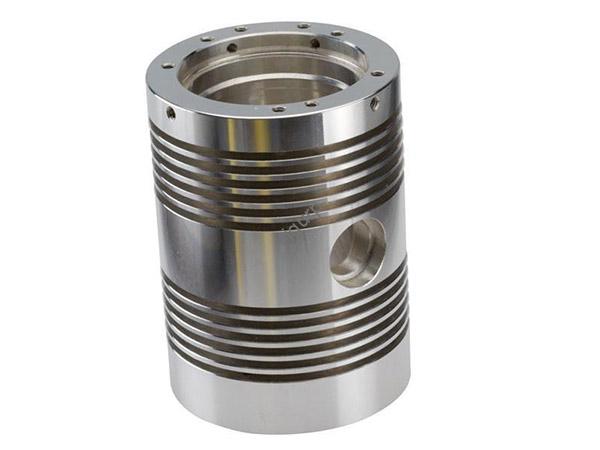
When your project involves extreme high temperatures—such as in aerospace engines or industrial furnaces—you need a material that stays strong and resists corrosion. UNS N06200 Hastelloy X is a nickel-based superalloy built for exactly these conditions. It balances exceptional heat resistance with durability, making it a top choice for the most demanding tasks. This guide will break down its key properties, real-world uses, and how it compares to other materials, helping you pick the right solution for your project.
What Makes Hastelloy X a Top High-Temperature Alloy?
The performance of Hastelloy X comes from its carefully blended composition and robust characteristics. It is engineered to maintain its strength and resist oxidation at temperatures where most metals would soften and fail.
Chemical Composition
Every element in Hastelloy X works together to boost heat resistance and strength. The combination of nickel, chromium, and molybdenum is key to its high-temperature performance.
| Element | Content Range (%) | Key Role |
|---|---|---|
| Nickel (Ni) | 47 – 50 | The base metal, providing high-temperature stability and ductility. |
| Chromium (Cr) | 18 – 22 | Enhances oxidation resistance, critical for furnace and engine parts. |
| Molybdenum (Mo) | 8 – 10 | Boosts strength and corrosion resistance in high-heat environments. |
| Iron (Fe) | 17 – 20 | Adds structural strength and helps reduce material cost. |
| Cobalt (Co) | 0.5 – 2.5 | Improves creep resistance, stopping deformation under long-term heat. |
| Tungsten (W) | 0.2 – 1.0 | Enhances high-temperature hardness and wear resistance. |
| Carbon (C) | 0.05 – 0.15 | Strengthens the alloy without sacrificing ductility. |
Mechanical Properties at High Temperatures
Hastelloy X stays strong even at extreme temperatures. This ability to retain strength is its defining characteristic.
| Property | Value (Room Temperature) | Value at 800°C | Why It Matters |
|---|---|---|---|
| Tensile Strength | Min 700 MPa | 420 MPa | Maintains significant strength even at high operating temperatures. |
| Yield Strength | Min 350 MPa | 280 MPa | Resists permanent deformation under load, even when red-hot. |
| Elongation | Min 30% | 35% | Becomes more ductile at high temperatures, reducing the risk of brittle failure. |
| Creep Resistance | N/A | Excellent up to 1090°C | Can withstand long-term stress at extremely high temperatures without slowly deforming. |
| Oxidation Resistance | N/A | Resists scaling up to 1090°C | Maintains its surface integrity in air at 2000°F, preventing material loss. |
Where Is Hastelloy X Used?
Hastelloy X’s ability to perform at extreme temperatures makes it essential for industries where component failure is not an option.
Aerospace Components
This is one of the most critical applications for Hastelloy X. Jet engine components operate at temperatures that would quickly destroy standard steels.
- Jet Engine Exhaust Systems: A U.S. aerospace company used Hastelloy X for jet engine exhaust systems. These parts handle 950°C temperatures continuously. They have lasted 8 years, compared to just 4 years for the Inconel 625 parts they replaced.
- Combustion Chambers and Turbine Blades: The alloy’s high-temperature strength and oxidation resistance are essential for components inside the hottest sections of the engine.
Heat Treatment and Industrial Furnaces
In metal processing and heat treatment, equipment must withstand constant, intense heat.
- Furnace Heating Elements: A metal processing plant in Germany switched from stainless steel to Hastelloy X for its furnace heating elements. The elements operate daily at 1000°C. The Hastelloy X elements have run for 5 years, while the previous stainless steel elements lasted only 2 years.
- Furnace Liners and Annealing Baskets: These components rely on the alloy’s ability to resist scaling and maintain shape over years of service.
Oil, Gas, and Chemical Processing
Downhole and chemical processing environments often combine high temperatures with corrosive media.
- Wellhead Valves: An offshore oil rig in the North Sea uses Hastelloy X for wellhead valves. The alloy resists high-pressure natural gas and 600°C temperatures, cutting maintenance costs by 35% compared to previous materials.
- High-Temperature Reactor Vessels: A chemical plant in China uses Hastelloy X for reactor vessels handling 750°C processes. The vessels have lasted 6 years, twice the lifespan of the carbon steel vessels they replaced.
How Is Hastelloy X Manufactured?
Working with Hastelloy X requires specialized manufacturing techniques to achieve its full potential without compromising its properties.
Forming and Welding
The alloy can be shaped using standard techniques, but some care is needed.
- Casting: Investment casting is ideal for creating complex shapes like engine combustion chambers. The alloy’s low sulfur content prevents defects during this process.
- Forging: Hot forging at 1150–1250°C is used to shape the alloy into strong parts like turbine blades. This process refines the grain structure, boosting high-temperature strength.
- Welding: Gas Tungsten Arc Welding (GTAW) is recommended. Use matching filler metals like ERNiCrMo-10 to maintain corrosion resistance. Pre-weld cleaning to remove oils is critical for strong, defect-free welds.
- Machining: Hastelloy X work-hardens rapidly. It is best machined with carbide tools and plenty of coolant to prevent overheating and tool wear.
Heat Treatment
Proper heat treatment ensures the alloy’s properties are optimized.
- Annealing: Heating to 1050–1100°C and cooling rapidly softens the alloy for forming and restores its ductility.
- Stress Relieving: Heating to 760–815°C and cooling slowly reduces internal stresses that can build up after welding or cold working, preventing distortion.
Hastelloy X vs. Other High-Temperature Materials
Choosing the right material for high-temperature service involves balancing maximum operating temperature, strength, and cost. This comparison shows where Hastelloy X fits best.
| Material | Max Service Temp (°C) | Tensile Strength (MPa) | High-Temp Corrosion Resistance | Relative Cost | Best Application |
|---|---|---|---|---|---|
| Hastelloy X | 1090 | 700 | Excellent | High | Jet engine exhausts, furnace components up to 1090°C |
| Stainless Steel 316 | 870 | 515 | Good | Low | Moderate heat applications where cost is critical |
| Inconel 625 | 980 | 930 | Excellent | High | High strength at slightly lower max temperature |
| Titanium Alloy (Ti-6Al-4V) | 400 | 860 | Very Good | Very High | Aerospace parts below 400°C |
| Carbon Steel | 425 | 400 | Poor | Very Low | Low-temperature, non-corrosive applications |
Conclusion
UNS N06200 Hastelloy X is a premier nickel-based superalloy engineered for the most demanding high-temperature environments. Its carefully balanced composition—featuring nickel, chromium, and molybdenum—provides the foundation for exceptional oxidation resistance up to 1090°C and excellent creep strength at extreme temperatures. Real-world case studies from the aerospace and heat treatment industries demonstrate its ability to double the service life of critical components like jet engine exhausts and furnace elements compared to alternatives like Inconel 625 and stainless steel. While it requires specialized manufacturing techniques, including hot forging and careful welding, its unmatched combination of high-temperature strength, oxidation resistance, and good fabricability makes it the ideal, reliable choice for critical components in aerospace engines, industrial furnaces, and high-temperature chemical processing equipment.
FAQ About UNS N06200 Hastelloy X
What is the maximum service temperature for Hastelloy X?
Hastelloy X is designed for continuous service in air at temperatures up to 1090°C (2000°F) . At this temperature, it maintains excellent oxidation resistance and good mechanical strength. For short-term exposure, it can withstand even higher temperatures, but long-term creep strength may begin to decrease.
How does Hastelloy X compare to Inconel 625?
Both are high-performance nickel-based superalloys, but they have different strengths. Hastelloy X is optimized for higher-temperature service, with a maximum operating temperature of 1090°C compared to Inconel 625’s 980°C. Inconel 625 has higher tensile and yield strength at room and intermediate temperatures. Choose Hastelloy X for applications where the peak operating temperature is the primary concern; choose Inconel 625 for applications requiring higher strength at slightly lower temperatures.
Is Hastelloy X difficult to machine?
Yes, it is considered to have fair to difficult machinability because it work-hardens rapidly. To machine it successfully, you should use sharp carbide tools with a positive rake angle, maintain slow, consistent cutting speeds, and apply high-pressure coolant to prevent heat build-up and work hardening.
Can Hastelloy X be welded without special procedures?
Welding is possible, but it requires proper procedures. The alloy has good weldability, but to maintain its corrosion and heat resistance, you must use matching filler metals like ERNiCrMo-10. Pre-weld cleaning to remove all surface contaminants is critical. Post-weld heat treatment (stress relieving) is often recommended for heavy sections to restore properties and reduce residual stress.
Discuss Your Projects with Yigu Rapid Prototyping
Selecting the right high-temperature alloy is a critical decision. At Yigu Rapid Prototyping, we specialize in working with advanced materials like Hastelloy X. We understand the demanding requirements of the aerospace, heat treatment, and energy industries. Our team can provide the material, custom machining, and expert guidance on fabrication and heat treatment to ensure your components deliver reliable, long-lasting performance at the highest temperatures. Contact us today to discuss your project requirements.