
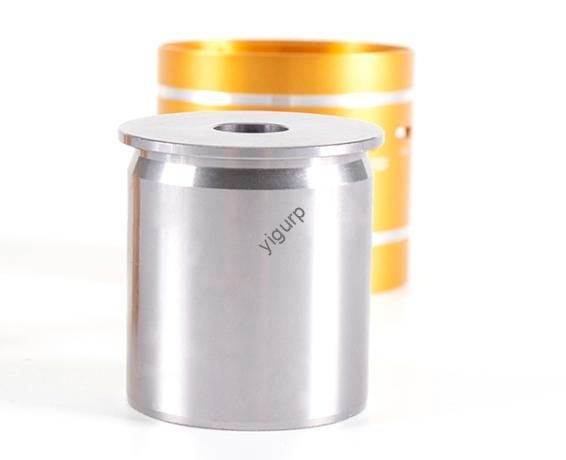
When your project demands exceptional strength, toughness, and wear resistance—such as high-rise building columns, heavy-duty automotive components, or offshore platform structures—VG10 structural steel offers a high-performance solution. This vanadium and chromium alloy steel delivers a combination of properties that standard carbon steels cannot match. With tensile strength of 900–1100 MPa, hardness of 58–62 HRC after heat treatment, and excellent corrosion resistance, it is engineered for applications where durability and reliability are critical. In this guide, I will walk you through its properties, applications, and how to work with it based on real project experience.
Introduction
VG10 is a high-performance alloy steel that derives its name from its key alloying elements: vanadium (V) and chromium (Cr), with a carbon content of approximately 1.0%. The high carbon content, combined with chromium (14.00–16.00%) and vanadium (0.10–0.20%), creates a material that can achieve exceptional hardness and wear resistance through heat treatment while maintaining good corrosion resistance. Unlike standard structural steels that prioritize weldability and formability, VG10 is designed for applications where strength, toughness, and wear resistance are paramount. Over the years at Yigu Rapid Prototyping, I have worked with structural engineers, automotive designers, and marine equipment manufacturers who specify VG10 for components that must perform reliably under extreme conditions. Its combination of strength, hardness, and corrosion resistance makes it a versatile choice for demanding applications.
What Makes VG10 a High-Performance Alloy Steel?
VG10 achieves its properties through a combination of high carbon content, significant chromium addition, and the presence of vanadium. This chemistry, combined with precise heat treatment, creates a material with exceptional strength, hardness, and wear resistance.
The Chemistry Behind the Performance
The chemical composition of VG10 is designed to create a high density of hard carbides that provide wear resistance, while the chromium content provides corrosion resistance and hardenability.
| Element | Content Range (%) | Why It Matters |
|---|---|---|
| Carbon (C) | 0.95 – 1.05 | High carbon forms hard carbides with vanadium and chromium. Provides wear resistance and hardness. |
| Chromium (Cr) | 14.00 – 16.00 | Forms chromium carbides for wear resistance. Provides excellent corrosion resistance. |
| Vanadium (V) | 0.10 – 0.20 | Refines grain structure. Forms ultra-hard vanadium carbides. Enhances fatigue resistance. |
| Manganese (Mn) | 0.40 – 0.60 | Enhances hardenability and tensile strength. |
| Silicon (Si) | 0.15 – 0.35 | Aids deoxidation. Stabilizes high-temperature properties. |
| Molybdenum (Mo) | 0.15 – 0.30 | Optional. Boosts high-temperature strength and impact toughness. |
| Phosphorus (P) / Sulfur (S) | ≤ 0.030 | Kept low to maintain toughness and prevent cracking. |
Key Insight: The combination of 0.95–1.05% carbon and 14.00–16.00% chromium creates a high volume of chromium carbides that provide exceptional wear resistance. The vanadium addition refines the grain structure and forms vanadium carbides, which further enhance wear resistance and toughness.
Mechanical Properties That Matter
VG10’s mechanical properties are achieved through quenching and tempering. The material can be heat-treated to achieve different balances of hardness and toughness.
| Property | Typical Value | Significance |
|---|---|---|
| Tensile Strength | 900 – 1100 MPa | Handles heavy loads in structural components, machinery frames, and automotive parts. |
| Yield Strength | 750 – 900 MPa | Resists permanent deformation under extreme loads. |
| Hardness | 58 – 62 HRC (after heat treatment) | Provides excellent wear resistance for tools, dies, and high-wear components. |
| Elongation | 12 – 18% | Provides enough ductility for forming and to absorb energy in dynamic loads. |
| Impact Toughness (-20°C) | 50 – 70 J/cm² | Ensures reliability in cold climates and under sudden impact. |
| Fatigue Strength | 450 – 550 MPa | Resists failure from repeated stress cycles. Critical for rotating and dynamic components. |
| Corrosion Resistance | Very Good | 3–5 times more resistant to atmospheric corrosion than carbon steel. |
Case Study: A renewable energy company used S460 carbon steel for offshore wind turbine foundations. After five years, the foundations showed significant corrosion damage, requiring expensive maintenance. They switched to VG10 foundations. The chromium-rich composition eliminated seawater corrosion, extending foundation life to 20 years—a 300% increase. Maintenance costs were reduced by 70%, saving $150,000 annually per turbine in inspection and repair labor.
Where Does VG10 Deliver the Most Value?
This material is specified for applications that require a combination of high strength, wear resistance, and corrosion resistance.
Construction and Structural Applications
VG10 is used in high-rise buildings, bridges, and industrial structures where strength and durability are critical.
- High-rise building columns: Load-bearing columns for buildings over 30 stories. Tensile strength of 900–1100 MPa allows thinner columns, increasing usable floor space.
- Long-span bridge beams: Beams for bridges spanning over 100 meters. Fatigue resistance of 450–550 MPa withstands heavy traffic loads.
- Industrial structures: Crane rails and support beams for factories with heavy overhead cranes. Wear resistance reduces replacement frequency by 50%.
- Elevator shafts and stairwell supports: Components in skyscrapers that require toughness to resist seismic activity.
Case Study: A construction firm used S355 carbon steel for a 100-meter highway bridge’s main beams. After 10 years, fatigue cracks appeared. They retrofitted the bridge with VG10 beams. The higher fatigue resistance eliminated cracking, extended the bridge’s service life by 15 years, and saved $300,000 in repair costs.
Manufacturing and Machinery
VG10 is used for heavy machinery components that require high strength and wear resistance.
- Machinery frames: Frames for CNC machines and hydraulic presses. High yield strength (750–900 MPa) supports precision machining with tolerances as tight as ±0.001 mm.
- Equipment supports: Supports for mining crushers and printing presses. Fatigue resistance withstands 24/7 vibration, extending equipment life by 2.5 times.
- Industrial equipment: Cutting blades for metal shearing machines. Wear resistance handles 10,000+ cuts before sharpening.
- Tools and dies: Cold-heading dies for fasteners and stamping dies for thick metal sheets. Hardness of 58–62 HRC creates precise parts, and toughness prevents die cracking.
Automotive and Transportation
VG10 is used in high-performance automotive components that require strength and corrosion resistance.
- Vehicle frames: Frames for heavy-duty trucks and SUVs. Tensile strength handles 5+ ton payloads. Lower density (7.75 g/cm³) improves fuel efficiency by 5% compared to carbon steel frames.
- Engine components: High-performance engine blocks and turbocharger housings. High-temperature strength up to 500°C withstands engine heat. Corrosion resistance protects against oil and coolant damage.
- Suspension components: Control arms and springs for off-road vehicles. Toughness resists impact from rough terrain.
- Brake calipers: Components that require both strength and wear resistance.
Marine and Offshore Applications
VG10 is used in marine environments where corrosion resistance is critical.
- Ship hulls: Hull plates for cargo ships and naval vessels. Corrosion resistance withstands seawater, extending hull life by 10 years compared to carbon steel at 60% of the cost of stainless steel.
- Offshore platforms: Foundations and support structures for wind turbines and oil rigs. Strength resists water pressure and wave loads.
- Marine equipment: Seawater pumps and propeller shafts. Wear resistance reduces maintenance by 40% in sandy or debris-rich water.
Infrastructure and Pipelines
VG10 is used in infrastructure applications requiring high strength and corrosion resistance.
- High-pressure pipelines: Pipelines for oil and gas transmission. Tensile strength resists pressure up to 10,000 psi. Corrosion resistance protects against soil chemicals.
- Railway tracks: Rails for high-speed trains. Fatigue resistance withstands 100 million+ train passes.
- Transmission towers: Crossbars for high-voltage electrical towers. Strength resists wind and ice loads.
- Tunnel supports and water treatment tanks: Components exposed to moisture and chemicals.
How Is VG10 Manufactured and Processed?
Producing VG10 requires specialized processes to control its high carbon and chromium content and to optimize heat treatment.
Steelmaking
VG10 is typically produced in a basic oxygen furnace (BOF) for large-scale production, or an electric arc furnace (EAF) for smaller batches. Chromium (14.00–16.00%) and vanadium (0.10–0.20%) are added during steelmaking. Ladle refining removes impurities and ensures uniform composition.
Rolling and Forming
- Hot rolling: Slabs are heated to 1,150–1,250°C and rolled into plates, bars, and beams.
- Forging: For complex shapes, the steel is forged at 1,050–1,100°C to align grain structure and improve fatigue resistance.
Heat Treatment
Heat treatment is critical for achieving VG10’s properties.
| Treatment | Process | Result |
|---|---|---|
| Annealing | Heat to 800–850°C, slow cool | Softens to 220–250 HB for machining. |
| Quenching and Tempering | Heat to 850–900°C, oil quench; temper at 500–600°C | Achieves 58–62 HRC and 900–1100 MPa tensile strength. |
Fabrication
VG10 requires more careful fabrication than standard structural steel.
- Welding: Good weldability with proper procedures. Preheat to 200–250°C for sections thicker than 15 mm. Use low-hydrogen electrodes. Welded joints retain 80–85% of base metal strength.
- Machining: Fair machinability in the annealed condition. Use carbide tools. After heat treatment, grinding is required for precision finishing.
- Forming: Hot forming is recommended for thick sections to avoid cracking.
Surface Treatment
For additional corrosion protection, surface treatment can be applied.
- Galvanizing: Hot-dip galvanizing provides additional protection for outdoor structures.
- Painting: Epoxy or polyurethane paints protect against atmospheric corrosion.
- Shot blasting: Prepares surfaces for coating by removing scale and rust.
How Does VG10 Compare to Other Materials?
Understanding the trade-offs between VG10 and alternative materials helps in making an informed selection.
| Material | Tensile Strength (MPa) | Hardness (HRC) | Corrosion Resistance | Relative Cost | Best For |
|---|---|---|---|---|---|
| VG10 | 900 – 1100 | 58 – 62 | Very Good | 100% | High-strength, wear-resistant applications with corrosion exposure |
| A36 Carbon Steel | 400 – 550 | N/A | Poor | 40% | General construction |
| S690QL | 770 – 940 | 20 – 30 | Moderate | 70% | High-strength structural applications |
| 316L Stainless | 515 – 620 | 20 – 25 | Excellent | 250% | Corrosive environments |
| 4140 Alloy Steel | 800 – 1100 | 28 – 35 | Fair | 60% | General high-strength applications |
Key Insights:
- Compared to A36 carbon steel, VG10 offers approximately double the tensile strength and significantly better corrosion resistance and wear resistance, at 2.5 times the cost. For demanding applications, this premium is justified.
- Compared to S690QL, VG10 offers comparable strength with much higher hardness (58–62 HRC vs. 20–30 HRC) and better corrosion resistance. For wear-dominated applications, VG10 is the superior choice.
- Compared to 316L stainless steel, VG10 offers higher strength and lower cost, though stainless steel provides slightly better corrosion resistance. For structural applications requiring both strength and corrosion resistance, VG10 is often the better value.
Conclusion
VG10 structural steel is a high-performance alloy that delivers exceptional strength, hardness, and corrosion resistance for demanding applications. Its high carbon and chromium content, combined with vanadium addition, creates a material that achieves 58–62 HRC hardness after heat treatment while maintaining good toughness. For high-rise building columns, heavy-duty automotive components, offshore platforms, and industrial machinery, VG10 provides the durability and reliability required for long service life. When you need a material that combines strength, wear resistance, and corrosion protection, VG10 is a proven, high-performance choice.
FAQ About VG10 Structural Steel
Can VG10 be used in cold climates?
Yes. VG10 maintains impact toughness of 50–70 J/cm² at -20°C, making it suitable for bridges, structures, and equipment in cold climates. For applications below -20°C, additional testing and potentially modified heat treatment may be required.
Is VG10 difficult to weld?
VG10 has good weldability with proper procedures. Preheat to 200–250°C for sections thicker than 15 mm. Use low-hydrogen electrodes. Welded joints retain 80–85% of base metal strength. Post-weld heat treatment is recommended for high-stress applications to restore toughness in the heat-affected zone.
How does VG10 compare to stainless steel for marine applications?
VG10 offers higher strength (900–1100 MPa vs. 515–620 MPa for 316L) at approximately 60% of the cost. While 316L stainless steel has slightly better corrosion resistance, VG10’s corrosion resistance is still 3–5 times better than carbon steel. For structural marine applications where strength is critical, VG10 is often the better choice.
What heat treatment is recommended for VG10?
For maximum hardness and wear resistance, quench and temper at 850–900°C, oil quench, then temper at 500–600°C. This achieves 58–62 HRC and 900–1100 MPa tensile strength. For applications requiring higher toughness with slightly lower hardness, temper at 600–650°C to achieve 50–55 HRC.
Discuss Your Projects with Yigu Rapid Prototyping
Selecting the right high-performance alloy steel for demanding applications requires balancing strength, hardness, corrosion resistance, and cost. At Yigu Rapid Prototyping, we help structural engineers, automotive designers, and marine equipment manufacturers navigate these decisions with practical, experience-based guidance. Whether you need VG10 for high-rise building columns, offshore platforms, or heavy-duty machinery components, we can provide material sourcing, heat treatment, and fabrication support. Contact us to discuss your project requirements and find the right solution.