
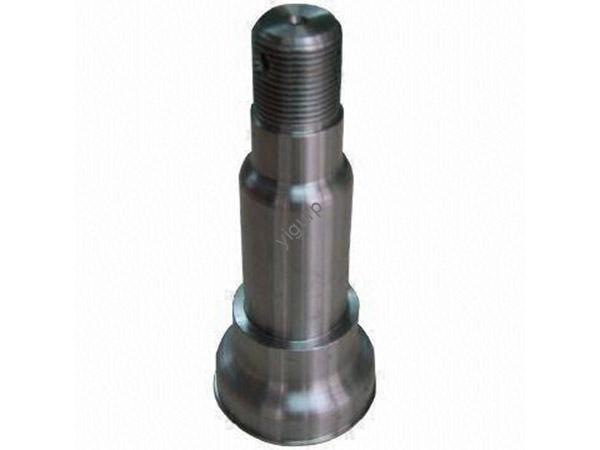
If you work with steel for construction, industrial equipment, or custom fabrication, you know that picking the right grade is about more than just strength. Sometimes, how the material behaves in your workshop is just as important as how it performs on the job site. EN1A structural steel is a prime example. It’s a material built for workability, offering a sweet spot of moderate strength, excellent machinability, and high ductility. This guide will walk you through what makes EN1A unique, where it shines, how it’s made, and how to decide if it’s the right fit for your next project.
Introduction
Imagine you’re fabricating a complex bracket with multiple holes and bends. You want a steel that won’t fight your tools, won’t crack when you bend it, and won’t require special welding procedures. That’s the promise of EN1A. Often called a “free-machining” steel, it’s engineered to be cooperative. But its value goes beyond just ease of use. It offers a reliable combination of ductility and tensile strength for light to medium-duty structural roles. For engineers and fabricators who need to balance performance with production speed and cost, understanding EN1A is essential. We’ll explore its core properties, typical applications, and how it compares to other common materials.
What Makes EN1A Stand Out?
EN1A’s reputation is built on a few key characteristics. It’s not the strongest steel, but it is one of the most cooperative. Let’s break down the details that matter.
What’s Inside the Steel?
The secret to EN1A’s workability lies in its precise chemistry. A small, controlled amount of sulfur is the key ingredient, which changes how the material behaves under a cutting tool.
| Element | Content Range (%) | Its Role in the Steel |
|---|---|---|
| Carbon (C) | 0.08 – 0.13 | Keeps the steel ductile and easy to weld. Lower carbon prevents it from becoming brittle. |
| Manganese (Mn) | 0.30 – 0.60 | Boosts strength and toughness while preserving the material’s flexibility for forming. |
| Sulfur (S) | 0.04 – 0.09 | The key element. It creates tiny chips during machining, which means smoother cuts and less tool wear. |
| Silicon (Si) | 0.10 – 0.35 | A deoxidizer that helps with heat resistance during fabrication processes. |
| Phosphorus (P) | ≤ 0.045 | Kept very low to prevent the steel from becoming brittle. |
How Strong and Flexible Is It?
For a material so easy to machine, EN1A still holds its own in terms of mechanical properties. It’s designed for parts that see moderate, consistent loads, not extreme stress.
| Property | Typical Value | What It Means in Practice |
|---|---|---|
| Tensile Strength | 340 – 450 MPa | Strong enough for light beams, brackets, and frames. It won’t stretch or break under normal operating loads. |
| Yield Strength | ≥ 210 MPa | The point where it starts to permanently bend. This is a good safety margin for structural supports. |
| Elongation | ≥ 28% | This is high ductility. You can bend it into tight angles or complex shapes without cracking. |
| Hardness | 100 – 130 HB | Very soft on the Brinell scale. This is what makes it so easy to drill, cut, and mill. |
| Impact Resistance | ≥ 35 J at 20°C | It can handle mild shocks and vibrations, making it suitable for moving machinery parts. |
What About Weldability and Corrosion?
Two other factors are crucial for any structural steel: how well it welds and how it stands up to the elements.
- Weldability: Good. Because of its low carbon content, EN1A welds easily. For most applications, no preheating is required, which saves significant time on the fabrication floor.
- Corrosion Resistance: Moderate. This is not a stainless steel. In outdoor or humid environments, EN1A needs protection. A simple coat of paint or a galvanized coating is standard practice to prevent rust.
Where Is EN1A Typically Used?
Because of its workability, EN1A is a favorite in many industries where fabrication speed and precision are key. It’s often the unsung hero in structures and components you see every day.
Construction and Architecture
In the construction world, EN1A is used where custom shapes and ease of assembly are priorities.
- Light Framing: It’s ideal for support beams and brackets in small commercial buildings or mezzanine floors.
- Architectural Elements: Its smooth surface and ability to take a good finish make it great for decorative railings, wall panels, and modern staircases.
Industrial and Mechanical Components
This is where EN1A truly excels. Its machinability makes it a top pick for parts that need precise holes, threads, or complex shapes.
- Conveyor Systems: A German packaging factory used EN1A to build all its conveyor frames. They needed a material light enough for easy installation but easy to weld so they could modify the line layout in a single day. The steel’s tensile strength (340-450 MPa) was more than enough for the load.
- Machine Parts: It’s commonly used for gears, bolts, and small shafts in household appliances like washing machines.
Automotive and Other Industries
While not for high-stress components like chassis frames, EN1A is perfect for secondary parts.
- Light-Duty Automotive: Door hinges, seat brackets, and fuel line clips are often made from EN1A.
- Shipbuilding (Internal): For interior structures in boats and yachts, like cabinet frames and support brackets, EN1A offers a good balance of weight and strength.
How Is EN1A Structural Steel Manufactured?
Turning raw steel into a finished EN1A product involves a few key processes. Understanding them helps you know what to expect from the final material.
Forming the Basic Shape
The first step is shaping the steel into usable forms like bars, plates, or angles.
- Hot Rolling: This is the most common method. Steel is heated to over 1100°C and passed through rollers. The result is a cost-effective product with a slightly rough surface, perfect for structural shapes.
- Cold Rolling: This is done at room temperature on steel that has already been hot-rolled. It produces a smooth, precise finish with tighter dimensional tolerances, ideal for smaller, high-precision parts.
Adjusting Properties with Heat
While EN1A doesn’t require complex heat treatment, a few processes can refine its properties for specific uses.
- Annealing: The steel is heated to 800-850°C and then cooled slowly. This process reduces hardness even further, making it even easier to machine if needed.
- Normalizing: A similar process to annealing, but the steel is cooled in air. This slightly improves strength while maintaining ductility.
Cutting, Welding, and Forming
This is where EN1A’s workability pays off.
- Cutting: It cuts easily with plasma, laser, or oxy-fuel cutters. Its low carbon content prevents excessive melting or hardening at the cut edge.
- Welding: Simple arc welding (MIG or stick) is standard. No preheating is needed for sections under 10mm, a huge time-saver for fabricators.
- Bending: With its high elongation, EN1A can be bent into sharp 90-degree angles or complex curves using a press brake without cracking.
Ensuring Quality
Before EN1A leaves the mill, it undergoes testing to meet international standards like ISO 683-1 and EN 10087.
- Non-Destructive Testing: Methods like ultrasonic testing check for internal flaws, while magnetic particle inspection finds surface cracks. This ensures the material is sound and reliable.
How Does EN1A Compare to Other Materials?
Choosing a material often comes down to a comparison. Here’s how EN1A stacks up against its most common alternatives.
EN1A vs. Other Types of Steel
| Feature | EN1A Structural Steel | Carbon Steel (A36) | Alloy Steel (EN19) |
|---|---|---|---|
| Tensile Strength | 340 – 450 MPa | 400 – 550 MPa | 620 – 780 MPa |
| Machinability | Excellent | Good | Good |
| Typical Cost | $700 – $900 / ton | $600 – $800 / ton | $800 – $1,000 / ton |
| Best Use | Parts needing complex machining | General structural work | High-stress, heavy-duty parts |
Analysis: EN1A is the clear winner for machinability. While it’s slightly weaker than A36 and significantly weaker than EN19, it makes up for it in fabrication speed. For a project like a community center in France, engineers chose EN1A for its roof trusses because they could machine custom brackets quickly, finishing the project two weeks ahead of schedule.
EN1A vs. Other Materials
| Material | Key Advantage Over EN1A | Key Disadvantage Compared to EN1A |
|---|---|---|
| Aluminum Alloys | Much lighter (2.7 g/cm³ vs. 7.85) | Lower tensile strength (200-300 MPa) and more expensive. |
| Stainless Steel | Excellent corrosion resistance | Costs 3x more and is much harder to machine. |
| Concrete | Cheaper for large foundations | Much heavier and cannot be easily fabricated into complex shapes. |
| Composites (Fiberglass) | Naturally corrosion-resistant | Can be 2x more expensive and lacks the ductility for bending. |
Conclusion
EN1A structural steel is a material designed with the fabricator in mind. Its strength is reliable for light to medium-duty applications, but its true value lies in its exceptional machinability and high ductility. This combination translates directly into faster production, lower tooling costs, and simpler, more forgiving welding and forming processes. While it requires a protective coating for outdoor use, for indoor structural components, mechanical parts, and architectural elements, EN1A offers a compelling balance of performance, workability, and cost. If your project demands precision and efficiency, this is a material that deserves serious consideration.
FAQ
What is EN1A structural steel best used for?
It is best used for applications that require extensive machining, welding, or forming. Common uses include light structural frameworks, conveyor systems, gears, bolts, and architectural elements like railings.
Is EN1A steel hard to weld?
No, it is easy to weld. Its low carbon content means no preheating is required for most thicknesses, which speeds up fabrication time significantly.
Does EN1A rust easily?
It has only moderate corrosion resistance. For outdoor or humid environments, it must be coated with paint, galvanization, or another protective layer to prevent rust.
How does the cost of EN1A compare to standard carbon steel?
EN1A is typically 10-15% more expensive than basic carbon steel like A36. However, this higher material cost is often offset by lower fabrication costs due to its excellent machinability.
Can EN1A be used for heavy structural loads?
For heavy loads, a higher-strength alloy like EN19 or a thicker carbon steel section would be more appropriate. EN1A is best suited for light to medium-duty applications where its yield strength of at least 210 MPa is sufficient.
Discuss Your Projects with Yigu Rapid Prototyping
Selecting the right material is only half the battle. At Yigu Rapid Prototyping, we specialize in turning designs into reality. Whether you’re prototyping a new mechanical component or need a production run of custom fabrications, our team has the expertise to help you get the most out of materials like EN1A. Contact us to discuss your next project.