
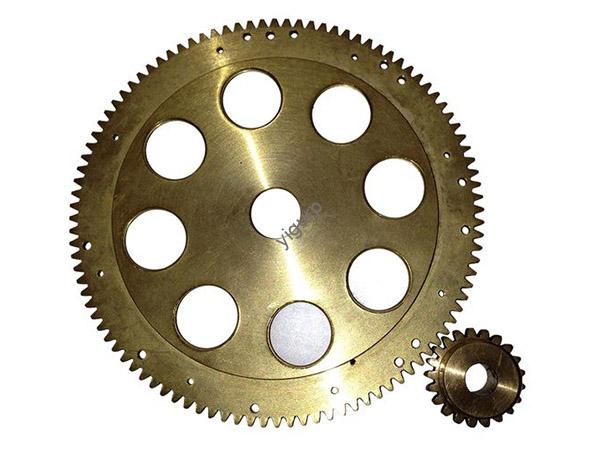
When your project demands a material that can handle heavy loads, resist fatigue, and still be shaped into complex forms, you need a reliable structural steel. 738 structural steel is a high-performance alloy designed for these exact challenges. It offers a balanced mix of strength, ductility, and workability that outperforms standard carbon steels, making it a favorite in construction, automotive, and heavy equipment industries. This guide will walk you through its core properties, real-world applications, manufacturing processes, and how it stacks up against other materials, so you can confidently choose it for your next demanding project.
What Makes 738 Structural Steel So Effective?
The effectiveness of 738 structural steel comes from a carefully engineered chemistry and a precise manufacturing process. It is designed to be strong yet tough, hard yet workable.
Chemical Composition
The properties of 738 start with its chemical makeup. The specific elements and their controlled ranges create the foundation for its performance.
| Element | Content Range | Key Function |
|---|---|---|
| Carbon (C) | 0.20 – 0.25% | Provides a balance of strength and weldability—higher than mild steel but low enough to prevent brittleness. |
| Manganese (Mn) | 1.20 – 1.50% | Boosts tensile strength and hardenability without reducing ductility. |
| Chromium (Cr) | 0.40 – 0.60% | Enhances corrosion resistance and adds to the material’s overall strength. |
| Nickel (Ni) | 0.40 – 0.60% | Improves toughness, especially in low-temperature environments. |
| Molybdenum (Mo) | 0.15 – 0.25% | Increases strength at high temperatures and improves resistance to fatigue. |
Mechanical Properties After Heat Treatment
The mechanical properties of 738 are what make it suitable for load-bearing structures. The following values are typical after standard heat treatment like normalizing or quenching and tempering.
| Property | Typical Value | Why It Matters for Your Project |
|---|---|---|
| Yield Strength | 450 – 550 MPa | This is nearly double that of standard A36 steel. It means you can use thinner, lighter sections to support the same load. |
| Tensile Strength | 650 – 750 MPa | The material can handle immense pulling forces without breaking, critical for crane booms and vehicle frames. |
| Impact Toughness | 60 – 80 J at -20°C | It resists cracking in cold weather, making it suitable for bridges and structures in northern climates. |
| Elongation | 18 – 22% | This ductility allows the steel to bend and deform under extreme stress (like in an earthquake) without fracturing suddenly. |
| Fatigue Strength | 300 – 350 MPa | It can withstand millions of cycles of repeated stress, which is essential for parts like bridge girders and suspension components. |
Where Is 738 Structural Steel Used?
Because it balances high strength with excellent workability, 738 is the material of choice for components that face constant, heavy-duty stress.
Construction and Infrastructure
In the construction world, 738 allows for safer, lighter, and more resilient structures.
- High-Rise Buildings: For a 20-story office building in Tokyo, engineers replaced standard A36 steel with 738 structural steel for the floor beams. The higher yield strength allowed them to use beams that were 20% thinner. This reduced the building’s overall weight by 15% and saved $300,000 in foundation concrete costs. The building also passed rigorous seismic tests with minimal deformation.
- Bridges: Highway and railway bridges use 738 for main girders. Its high fatigue strength resists the stress from thousands of vehicles passing daily, and its ductility helps the structure absorb energy during seismic events.
- Seismic-Resistant Structures: In earthquake-prone areas like California, 738 is used for columns and beams. Its proven impact toughness and ductility prevent sudden, catastrophic failure during tremors.
Automotive and Heavy Equipment
The automotive and heavy equipment industries rely on 738 for components that must be both strong and durable.
- Vehicle Frames: Heavy-duty trucks and SUVs use 738 for chassis frames. Its high strength supports payloads of up to 10 tons, while its ductility prevents the frame from cracking under the stress of rough terrain.
- Crane Booms: A construction equipment manufacturer switched from A572 Grade 50 to 738 structural steel for their mobile crane booms. The switch allowed them to reduce the boom thickness from 20 mm to 17 mm. This made the boom 15% lighter, cutting the crane’s total weight by 1.2 tons. The result was an 8% improvement in fuel efficiency and the ability to access tighter job sites, leading to a 20% increase in orders.
- Excavators and Mining Trucks: The bucket arms on large excavators and the frames of mine haul trucks use 738. Its toughness resists impact from rocks, and with a galvanized coating, it stands up to corrosion from mine water.
How Is 738 Structural Steel Manufactured?
Producing 738 structural steel with consistent, reliable properties requires a multi-step process with strict quality controls.
Steelmaking and Rolling
The process begins with precise control of the alloying elements.
- Steelmaking: The steel is typically melted in an Electric Arc Furnace (EAF) . Sensors constantly monitor the chemistry to ensure carbon, manganese, and other alloys fall within their precise target ranges.
- Hot Rolling: The steel is cast into slabs, heated to 1,100–1,200°C, and then passed through a series of rollers to create the final shape, such as I-beams, plates, or bars. This process refines the grain structure and enhances strength.
Heat Treatment and Forming
Heat treatment is critical to achieving the final balance of strength and ductility.
- Normalizing: This is the most common heat treatment for 738. The steel is heated to 850–900°C and then cooled in air. This process refines the grain structure, providing an excellent balance of strength and ductility.
- Quenching and Tempering: For applications needing maximum strength, like axles, the steel is quenched in water to harden it and then tempered at a high temperature to reduce brittleness. This can boost tensile strength to 750 MPa.
- Forming and Welding: Thanks to its excellent formability, 738 can be bent or pressed into complex shapes. Its weldability is also a major advantage. On construction sites, parts can be welded using standard MIG or stick methods without preheating, saving significant time and labor.
738 Structural Steel vs. Other Materials
Understanding the trade-offs between different materials is key to making the right choice. This comparison highlights where 738 excels.
| Material | Relative Cost | Yield Strength (MPa) | Key Advantage | Best Application |
|---|---|---|---|---|
| 738 Structural Steel | Base (100%) | 450 – 550 | Best balance of strength, cost, and workability | High-rise beams, crane booms, heavy truck frames |
| A36 Carbon Steel | 80% | 250 | Lowest initial cost | Light structural framing, walkways |
| A572 Grade 50 Steel | 90% | 345 | Good strength for general construction | Building frames, bridges |
| HSLA Steel (Grade 65) | 110% | 450 | Slightly better corrosion resistance | Specialized heavy machinery |
| Aluminum Alloy (6061-T6) | 300% | 276 | Lightweight (1/3 the density) | Aerospace, lightweight transport |
| Carbon Fiber Composite | 1000% | 1200 | Extremely high strength-to-weight ratio | High-end racing, specialized aerospace |
Conclusion
738 structural steel is a high-performance, cost-effective material that excels in demanding load-bearing applications. Its carefully balanced composition delivers a yield strength of 450–550 MPa, nearly double that of standard carbon steel, allowing for lighter, more efficient structural designs. Combined with excellent weldability, good ductility, and proven impact toughness down to -20°C, it is a versatile and reliable choice for high-rise buildings, heavy truck frames, crane booms, and seismic-resistant structures. While it requires a protective coating for harsh outdoor environments, its combination of strength, workability, and affordability makes it a superior alternative to both standard carbon steels and more expensive specialty alloys for a wide range of industrial and construction projects.
FAQ About 738 Structural Steel
Is 738 structural steel suitable for welding without special procedures?
Yes, its weldability is excellent. The low carbon content (0.20–0.25%) and controlled alloy levels mean it can be welded using standard MIG, TIG, or stick welding methods. For most thicknesses, no preheating is required, which saves significant time in fabrication and on-site construction.
How does 738 perform in cold weather and seismic zones?
It performs very well. It has a guaranteed impact toughness of 60–80 J at -20°C, meaning it resists cracking in freezing conditions. Its high ductility (18–22% elongation) also allows it to deform under stress without fracturing, making it a preferred material for seismic-resistant building frames in earthquake-prone regions.
Does 738 structural steel need to be coated for outdoor use?
Yes. While it has better corrosion resistance than plain carbon steel thanks to its chromium content, it is not stainless steel. For outdoor applications like bridges or cranes, it requires a protective coating. Galvanizing (hot-dip zinc) is ideal for long-term protection, while epoxy paint is a common and effective choice for most structural applications.
What is the main difference between 738 and A572 Grade 50 steel?
The primary difference is strength. 738 has a yield strength of 450–550 MPa, while A572 Grade 50 has a yield strength of 345 MPa. This higher strength allows engineers to use thinner, lighter structural sections with 738, reducing overall material weight and cost for the same load-bearing capacity.
Discuss Your Projects with Yigu Rapid Prototyping
Choosing the right material is a critical first step, but successfully integrating it into your design requires expertise. At Yigu Rapid Prototyping, we have extensive experience working with high-performance materials like 738 structural steel. We understand its unique properties and how to optimize the manufacturing process—from forming and welding to surface finishing—to meet the specific demands of your industry. Whether you are designing a new crane boom, a heavy-duty truck frame, or a seismic-resistant building component, our team can help you engineer a solution that is both strong and cost-effective. Contact us today to discuss your project requirements.