
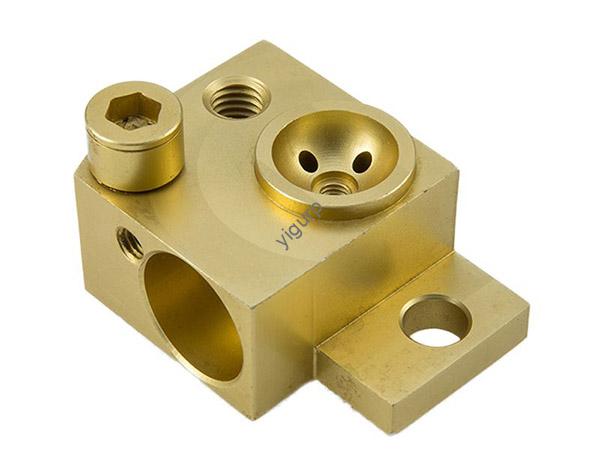
When your work involves medical implant molds, aerospace components, or precision electronics—applications where a dimensional error of even 0.001 mm can mean the difference between success and failure—you need a material that delivers consistent performance and ultra-tight tolerances. Tool steel precision grade is engineered for these exacting requirements. With hardness reaching 60–68 HRC and the ability to maintain tolerances as tight as ±0.0005 mm, this material is the foundation of high-precision tools and components. In this guide, I will walk you through its properties, applications, and how to work with it based on real manufacturing experience.
Introduction
Tool steel precision grade is not a single steel but a category of high-quality tool steels that are processed and certified to meet stringent dimensional stability and consistency requirements. Unlike standard tool steels, precision grades undergo additional processing steps—such as controlled melting, uniform heat treatment, and rigorous inspection—to ensure that every batch behaves predictably. The result is a material that maintains its dimensions during heat treatment, resists wear over millions of cycles, and delivers consistent performance across large production runs. Over the years at Yigu Rapid Prototyping, I have worked with medical device manufacturers, aerospace suppliers, and precision engineering shops who rely on these materials for tools that must produce identical parts day after day. The higher upfront cost is justified by the reduction in rejected parts and extended tool life.
What Defines Tool Steel Precision Grade?
Tool steel precision grade achieves its exceptional performance through a combination of carefully controlled chemistry, specialized processing, and rigorous quality control. The goal is to create a material that is both extremely hard and dimensionally stable.
The Chemistry Behind Precision Performance
The chemical composition of precision-grade tool steel is designed to achieve high hardness while maintaining the stability required for precision applications.
| Element | Content Range (%) | Why It Matters for Precision |
|---|---|---|
| Carbon (C) | 0.80 – 1.50 | Provides hardness and wear resistance. Critical for tools that must maintain sharp edges and tight dimensions. |
| Chromium (Cr) | 0.50 – 2.00 | Enhances toughness and provides moderate corrosion resistance. Prevents dimensional changes from rust. |
| Manganese (Mn) | 0.20 – 0.60 | Improves heat treatment response and reduces brittleness. |
| Silicon (Si) | 0.15 – 0.35 | Strengthens the steel and removes impurities during manufacturing. |
| Molybdenum (Mo) | 0.20 – 1.00 | Boosts strength and hardenability. Contributes to dimensional stability during heat treatment. |
| Vanadium (V) | 0.10 – 1.00 | Refines grain structure. Provides better dimensional stability and wear resistance. |
| Phosphorus (P) / Sulfur (S) | ≤ 0.030 | Kept ultra-low to prevent brittleness and maintain consistency. |
Key Insight: The combination of high carbon and vanadium creates a fine, uniform distribution of carbides. This fine carbide structure is essential for achieving the high hardness (60–68 HRC) needed for wear resistance while maintaining the dimensional stability required for precision applications.
Mechanical Properties That Matter
Precision-grade tool steels are heat-treated to achieve a specific balance of hardness, toughness, and dimensional stability.
| Property | Typical Value | Significance for Precision |
|---|---|---|
| Hardness | 60 – 68 HRC | Ultra-high hardness ensures wear resistance and edge retention. Critical for tools that must maintain dimensions over thousands of cycles. |
| Tensile Strength | 1800 – 2400 MPa | Handles high forces without breaking. Prevents tool failure in high-stress applications. |
| Yield Strength | 1400 – 2000 MPa | Resists permanent deformation. Ensures tools maintain their geometry under load. |
| Elongation | 10 – 15% | Provides enough ductility to avoid brittle fracture while maintaining shape. |
| Fatigue Strength | 700 – 900 MPa | Resists failure from repeated stress cycles. Essential for high-volume production tools. |
| Impact Toughness | Moderate to high | Absorbs small shocks without chipping, protecting precision edges. |
Case Study: A medical device manufacturer was producing titanium hip implants using standard tool steel molds. The molds held tolerance for only 500 implants before parts became too loose, causing a 15% rejection rate. They switched to precision-grade tool steel molds with a nitrided surface. The new molds produced 2,500 implants before requiring maintenance—a 400% improvement. The rejection rate dropped from 15% to 0.5%. Surgeons reported 30% fewer adjustments during implant procedures because the parts fit more precisely.
Where Does Precision-Grade Tool Steel Deliver the Most Value?
This material is specified for applications where tight tolerances (often ±0.001 mm or less) and consistent performance are non-negotiable.
Precision Molds for Medical and Electronics Applications
Medical implants, microchips, and electronic connectors require molds that produce identical parts with exceptional consistency.
- Medical implant molds: Molds for hip implants, knee replacements, and dental components. Dimensional stability ensures each implant fits the patient correctly.
- Microchip molds: Precision molds for semiconductor packaging. Tolerances in the micron range are required.
- Connector molds: Molds for electronic connectors and pins. Consistent dimensions ensure proper electrical contact.
Case Study: An electronics supplier needed punches to create 0.5 mm holes in connector pins with a tolerance of ±0.001 mm. Their previous D2 tool steel punches wore out after 10,000 pins, causing holes to become too small and pins to jam. They switched to precision-grade tool steel punches with a TiAlN coating. The new punches lasted 45,000 pins—a 350% improvement. Hole size remained within tolerance for the entire life of the punch, and downtime from punch changes dropped by 75%.
Precision Cutting Tools
Cutting tools that must maintain sharp edges and precise geometry over thousands of operations rely on precision-grade tool steel.
- Milling cutters: For machining complex aerospace components such as turbine blades.
- Reamers: For finishing holes to ultra-tight tolerances in medical devices and automotive components.
- Broaches: For creating detailed slots and gears with consistent geometry across hundreds of parts.
Forming and Stamping Tools
Forming tools apply high pressure to shape materials and must maintain their geometry to produce consistent parts.
- Punches: For creating holes in precision electronics such as smartphone casings.
- Dies: For forming precision bolts, screws, and fasteners.
- Stamping tools: For producing precision washers, brackets, and small components.
Aerospace and Automotive Components
Critical components in aerospace and automotive applications require materials that maintain tight tolerances under extreme conditions.
- Landing gear brackets: Components that must hold precise dimensions while supporting heavy loads.
- Gear shafts: Transmission components that require perfect gear meshing for quiet, efficient operation.
- Brake caliper components: Parts that must maintain precise clearances for reliable braking.
How Is Precision-Grade Tool Steel Manufactured?
Producing tool steel that meets precision-grade standards requires strict process control at every step.
Melting and Refining
Precision-grade tool steel is typically melted in an electric arc furnace (EAF) to allow precise control of chemistry. For the highest quality, vacuum arc remelting (VAR) or electroslag remelting (ESR) may be used to remove impurities and create a uniform, fine-grained structure. These additional refining steps are critical for achieving the dimensional stability required for precision applications.
Rolling and Forming
- Hot rolling: Steel is heated to 1,100–1,200°C and rolled into rough shapes. This softens the metal for further processing.
- Cold rolling: Done at room temperature to refine shape and surface finish. Cold-rolled precision-grade steel achieves smoother surfaces (Ra ≤ 0.8 μm) and tighter dimensional tolerances (±0.05 mm).
Heat Treatment
Heat treatment is the most critical step for achieving precision-grade properties.
- Annealing: Heat to 800–850°C, hold for 2–4 hours, then cool slowly. Softens the steel for precision machining and reduces internal stresses.
- Quenching: Heat to 1,200–1,250°C, then rapidly cool in oil or air. This hardens the steel but makes it brittle.
- Tempering: Reheat to 500–600°C, hold for 1–2 hours, then cool. This reduces brittleness while maintaining hardness at 60–68 HRC. Multiple tempering cycles (typically three) are used to ensure complete transformation and dimensional stability.
- Stress relief annealing: After machining, heat to 600–650°C to remove stresses that could cause warping during final use.
Precision Machining and Finishing
Precision-grade tool steel is machined in the annealed condition, then heat-treated and finished.
- CNC machining: Computer-controlled machining with step increments as small as 0.0001 mm creates complex precision geometries.
- Grinding: Precision grinding achieves tolerances as tight as ±0.0005 mm and surface finishes suitable for high-precision applications.
- Surface treatment: Nitriding or PVD coatings such as TiAlN and TiCN extend tool life and improve wear resistance without affecting dimensional stability.
Quality Control
Rigorous quality control ensures every batch meets precision-grade standards.
- Hardness testing: Each part is tested at multiple points to ensure uniform hardness (60–68 HRC).
- Microstructure analysis: Examination under a microscope confirms fine, uniform carbide distribution and the absence of defects.
- Dimensional inspection: Coordinate measuring machines (CMMs) scan parts and compare them to 3D designs, verifying tolerances to ±0.0001 mm.
How Does Precision-Grade Tool Steel Compare to Other Materials?
Understanding the trade-offs between precision-grade tool steel and alternatives helps in making an informed selection.
| Material | Hardness (HRC) | Tolerance Capability | Wear Resistance | Relative Cost | Best For |
|---|---|---|---|---|---|
| Precision Grade | 60 – 68 | ±0.0005 mm | Excellent | 100% | Medical molds, electronics punches, precision reamers |
| A2 Tool Steel | 57 – 62 | ±0.005 mm | Good | 30% | Low-stress, lower-precision tools |
| D2 Tool Steel | 58 – 62 | ±0.003 mm | Very Good | 60% | Corrosion-resistant tools, general stamping |
| M2 Tool Steel | 60 – 65 | ±0.002 mm | Good | 50% | General-purpose cutting tools |
| 440C Stainless | 55 – 60 | ±0.005 mm | Good | 75% | Corrosion-resistant precision parts |
| Carbon Fiber | N/A | ±0.01 mm | Poor | 200% | Lightweight non-tool applications |
Key Insights:
- Compared to standard tool steels like A2 or D2, precision-grade material offers significantly tighter tolerance capability (±0.0005 mm vs. ±0.003–0.005 mm) for a 40–70% cost premium. For high-precision applications, this premium is essential.
- Compared to stainless steel, precision-grade tool steel offers higher hardness and better wear resistance, though stainless steel provides superior corrosion resistance. For precision tools that do not require corrosion resistance, precision-grade is the better choice.
- Compared to carbon fiber, precision-grade tool steel is much more stable and wear-resistant, making it suitable for tooling applications where carbon fiber would fail.
What Are the Cost Benefits?
While precision-grade tool steel costs more upfront than standard grades, the total cost of ownership is often lower.
Example: The medical device manufacturer mentioned earlier paid $500 more for precision-grade molds but saved $10,000 in rejected parts over the life of the molds. The longer tool life also reduced downtime for mold changes, increasing production throughput.
Conclusion
Tool steel precision grade is a specialized material for the most demanding precision applications. Its combination of ultra-high hardness (60–68 HRC), excellent wear resistance, and exceptional dimensional stability allows it to maintain tolerances as tight as ±0.0005 mm over millions of cycles. For medical implant molds, electronics punches, precision reamers, and aerospace components, precision-grade tool steel delivers consistent, reliable performance that reduces rejections and extends tool life. While it costs more than standard tool steels, the reduction in rejected parts and increased productivity make it a cost-effective choice for high-precision manufacturing.
FAQ About Tool Steel Precision Grade
What tolerance can tool steel precision grade achieve in finished parts?
With proper heat treatment and precision grinding, tool steel precision grade can achieve tolerances as tight as ±0.0005 mm (±0.00002 inches). This makes it suitable for the most demanding applications such as medical implants, microchip molds, and precision electronics tooling.
How does precision-grade tool steel differ from standard tool steel?
Precision-grade tool steel undergoes additional processing steps—controlled melting, uniform heat treatment, and rigorous inspection—to ensure consistent properties and dimensional stability. Standard tool steel may have more variability in hardness and grain structure, which can lead to warping during heat treatment or inconsistent performance across batches.
What heat treatment is recommended for precision-grade tool steel?
The standard cycle is: anneal at 800–850°C, quench from 1,200–1,250°C in oil or air, and temper at 500–600°C with 2–3 cycles. Stress relief annealing after machining is critical for preventing warping. Multiple tempering cycles ensure complete transformation and dimensional stability.
Is precision-grade tool steel suitable for high-temperature applications?
Yes. Many precision-grade tool steels retain hardness up to 600°C, making them suitable for cutting tools and forming tools that generate heat during operation. For applications above 600°C, consider high-speed steels or hot-work tool steels with higher red hardness.
Discuss Your Projects with Yigu Rapid Prototyping
Selecting the right material for precision applications requires balancing hardness, dimensional stability, wear resistance, and cost. At Yigu Rapid Prototyping, we help medical device manufacturers, aerospace suppliers, and precision engineering shops navigate these decisions with practical, experience-based guidance. Whether you need precision-grade tool steel for medical molds, electronics punches, or aerospace components, we can provide material sourcing, heat treatment, and precision finishing services. Contact us to discuss your project requirements and find the right solution.