
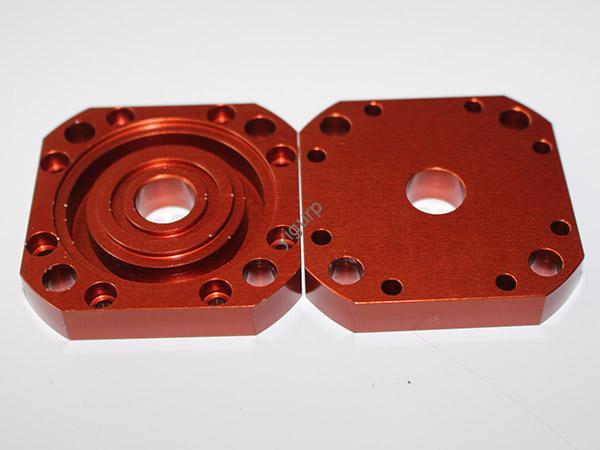
EN 100Cr6 bearing steel is a high-carbon, chromium-alloyed steel that serves as the global standard for rolling element bearings. Defined by the European standard EN 10083-3, it is renowned for its exceptional hardness (60-64 HRC) , wear resistance, and fatigue strength. Its carefully balanced chemistry—with 0.95-1.05% carbon and 1.30-1.65% chromium—allows it to be heat-treated to a very high hardness while maintaining the necessary toughness for demanding rolling contact applications. This combination of properties makes it the material of choice for bearings in everything from automotive engines and industrial gearboxes to high-speed trains and precision medical devices.
Introduction
Bearings are fundamental to almost all rotating machinery. They must support heavy loads, operate at high speeds, and survive millions of stress cycles without failure. The demands on the material are extreme. It must be hard enough to resist wear from rolling contact, strong enough to support the applied loads, and tough enough to avoid cracking under impact or stress. For decades, EN 100Cr6 (and its equivalent grades like AISI 52100) has been the standard solution. Its high carbon content provides the hardness, its chromium content ensures deep hardening, and its clean, controlled chemistry provides the consistency required for critical components. For engineers designing rotating machinery, understanding this material is essential.
What Are the Key Properties of EN 100Cr6?
The performance of EN 100Cr6 is defined by its chemical composition and the mechanical properties achieved through its specialized heat treatment.
Chemical Composition
The high carbon and chromium content are the defining features of this bearing steel.
| Element | Content Range (%) | Its Role in Performance |
|---|---|---|
| Carbon (C) | 0.95 – 1.05 | Provides high hardness and wear resistance after heat treatment. |
| Chromium (Cr) | 1.30 – 1.65 | Improves hardenability and fatigue strength, forming hard chromium carbides. |
| Manganese (Mn) | 0.25 – 0.45 | Enhances tensile strength and helps control grain structure. |
| Silicon (Si) | 0.15 – 0.35 | Aids in deoxidation during steelmaking. |
| Sulfur (S) | ≤ 0.025 | Minimized to prevent brittleness. |
| Phosphorus (P) | ≤ 0.025 | Controlled to prevent cracking. |
Mechanical Properties
After proper heat treatment (quenching and tempering), EN 100Cr6 achieves the properties required for bearing applications.
| Property | Typical Value | Why It Matters |
|---|---|---|
| Hardness | 60 – 64 HRC | Provides exceptional wear resistance for rolling and sliding contact. |
| Tensile Strength | ≥ 2000 MPa | Withstands high compressive and tensile stresses under load. |
| Yield Strength | ≥ 1800 MPa | Resists permanent deformation under high loads. |
| Elongation | ≤ 8% | Low ductility is the trade-off for high hardness; sufficient for bearing applications. |
| Impact Toughness | ≥ 15 J | Provides enough toughness to avoid cracking under impact. |
| Density | 7.85 g/cm³ | Standard for steel, simplifying design. |
- Fatigue Strength: This is a critical property. EN 100Cr6 can withstand millions of stress cycles without failure, which is essential for bearings that rotate continuously.
- Hardenability: It has excellent hardenability, allowing for uniform hardness in sections up to 50mm or more, which is important for larger bearings and races.
- Corrosion Resistance: It has moderate corrosion resistance. For wet or harsh environments, a protective coating like zinc plating is required.
Where Is EN 100Cr6 Used in the Real World?
EN 100Cr6 is used in virtually every application where rolling element bearings are required.
Automotive and Transportation
The automotive industry is a major user. EN 100Cr6 is used for wheel bearings, engine bearings, transmission bearings, and valve train components.
- Case Study: A car manufacturer was experiencing frequent bearing failures in an SUV engine. The original bearings, made from a lower-grade steel, were wearing out after 50,000 km .
- They switched to EN 100Cr6 bearings .
- Failure rates dropped by 80% .
- Bearing life extended to 150,000 km .
Industrial Machinery and Heavy Equipment
EN 100Cr6 is used in gearboxes, electric motors, pumps, and conveyor systems where bearings must handle heavy loads and long operating hours.
High-Speed and Aerospace Applications
The material’s high fatigue strength makes it suitable for demanding applications.
- Case Study: A railway company needed bearings for high-speed trains operating at up to 300 km/h . The bearings had to withstand high vibration and heat.
- They chose EN 100Cr6 bearings for their fatigue resistance.
- To further enhance performance, a ceramic coating was applied.
- The new bearings lasted 2 times longer than the previous stainless steel bearings, cutting maintenance costs by 35% .
How Is EN 100Cr6 Manufactured?
The manufacturing process for EN 100Cr6 is designed to produce a clean, uniform material with consistent properties.
Steelmaking and Forming
- Steelmaking: It is typically made in an Electric Arc Furnace (EAF) , allowing for precise control of the carbon and chromium content. Secondary refining processes ensure a clean steel with low impurity levels.
- Hot Rolling: The steel is hot rolled into bars, which are the starting material for bearing components.
- Cold Rolling: For smaller bearings and precision components, cold rolling is used to improve surface finish and dimensional accuracy.
Heat Treatment
Heat treatment is critical to achieving the high hardness and fatigue strength required for bearings.
- Quenching: The steel is heated to 820-860°C and then rapidly cooled in oil or water. This creates a hard, strong martensitic structure.
- Tempering: The quenched steel is then reheated to 150-200°C. This reduces brittleness while maintaining the high hardness (60-64 HRC) required for bearing applications.
Machining and Finishing
- Turning: Bearing races and other cylindrical components are machined to shape.
- Grinding: This is the critical finishing step. Precision grinding creates the ultra-smooth surfaces and tight tolerances required for low friction and long bearing life.
EN 100Cr6 vs. Other Bearing Materials
Comparing EN 100Cr6 to other materials helps clarify its position as the standard bearing steel.
| Material | Hardness | Wear Resistance | Fatigue Strength | Corrosion Resistance | Relative Cost | Best For |
|---|---|---|---|---|---|---|
| EN 100Cr6 | 60 – 64 HRC | Excellent | Excellent | Moderate | Medium | General-purpose bearings, automotive, industrial |
| AISI 52100 | 60 – 64 HRC | Excellent | Excellent | Moderate | Medium | U.S. standard equivalent |
| Stainless (440C) | 58 – 60 HRC | Good | Good | Excellent | Higher | Wet or corrosive environments |
| Ceramic (Si₃N₄) | 75+ HRA | Excellent | Very High | Excellent | Much Higher | High-speed, extreme applications |
| Plastic | Low | Poor | Poor | Good | Lower | Low-load, low-speed applications |
Key Takeaway: EN 100Cr6 (and its equivalent AISI 52100) is the standard bearing steel for a reason. It offers an exceptional combination of high hardness, wear resistance, and fatigue strength at a reasonable cost. For the vast majority of bearing applications, it provides the optimal balance of performance and cost.
Conclusion
EN 100Cr6 bearing steel is a proven, reliable material that has served as the foundation of the bearing industry for decades. Its combination of high hardness, excellent wear resistance, and superior fatigue strength makes it the ideal choice for the vast majority of rolling element bearing applications. From the wheels on your car to the gears in an industrial gearbox, this material provides the reliability and longevity that modern machinery demands. For engineers designing rotating equipment, EN 100Cr6 is the standard by which all other bearing materials are measured.
FAQ About EN 100Cr6 Bearing Steel
Can EN 100Cr6 be used in wet or corrosive environments?
It has only moderate corrosion resistance. For applications in wet, humid, or corrosive environments (such as marine or food processing), a protective coating like zinc plating, chrome plating, or a ceramic coating is required to prevent rust. For severe corrosive conditions, a stainless bearing steel like 440C would be a better choice.
What heat treatment is required for EN 100Cr6 bearings?
The standard heat treatment is quenching followed by tempering. The steel is heated to 820-860°C, rapidly cooled in oil or water, and then reheated to 150-200°C. This process achieves the required hardness of 60-64 HRC and the necessary fatigue strength.
How does EN 100Cr6 compare to AISI 52100?
They are virtually identical. EN 100Cr6 is the European standard designation, while AISI 52100 is the U.S. standard. Both have the same carbon (0.95-1.05%) and chromium (1.30-1.65%) content and can be used interchangeably in most applications. They are produced to the same high standards of cleanliness and consistency.
Discuss Your Projects with Yigu Rapid Prototyping
At Yigu Rapid Prototyping, we have extensive experience working with EN 100Cr6 and other high-performance bearing steels. We understand that for bearing applications, material cleanliness, precise heat treatment, and tight tolerances are critical. We supply EN 100Cr6 in bars and custom-machined components, with full heat treatment services to achieve the optimal hardness and fatigue strength. Our team can provide guidance on heat treatment cycles, machining parameters, and surface finishing to ensure your bearings achieve the longest possible service life. Whether you are manufacturing wheel bearings for an SUV, gears for an industrial gearbox, or precision components for a high-speed train, we are here to help. Contact us today to discuss your project requirements.