
Monel and stainless steel remain two of the most trusted metals for demanding engineering projects in 2026. While both offer durability, their unique properties lead to vastly different performance outcomes. This guide provides a clear, practical comparison to help you make the right material choice based on your specific application, whether it’s for deep-sea marine components, chemical processing equipment, or general construction. We’ll break down their chemical makeup, corrosion resistance, strength, cost, and real-world suitability, drawing on our experience as a rapid prototyping partner for complex projects.
Introduction
Choosing the right metal is a critical decision that impacts project success, longevity, and budget. In 2026, the debate between Monel and stainless steel remains as relevant as ever. These materials are not interchangeable; each excels in different environments. Understanding their fundamental differences is the first step to avoiding costly failures or over-engineering your solution. This article provides a user-focused guide to navigate this choice, ensuring you select a material that aligns with your project’s performance needs and financial constraints.
What’s the Core Difference in Composition?
The foundation of every material’s performance lies in its chemical makeup. The primary difference between Monel and stainless steel is their base alloy.
Why Does Nickel Content Matter So Much?
Monel is a nickel-copper alloy. Its composition is dominated by nickel, which gives it exceptional resistance to corrosion in harsh environments. For example, Monel 400 typically contains 65-70% nickel and 20-31.5% copper. This high nickel content is the key to its superior performance in seawater and strong acids.
Stainless steel, conversely, is an iron-chromium alloy. Its corrosion resistance comes from a thin chromium oxide layer on its surface. The most common grades, like 304 and 316, contain 16-20% chromium and much less nickel (8-14%). This fundamental difference means stainless steel relies on its surface layer for protection, while Monel’s resistance is inherent to its entire structure.
How Do They Handle Corrosion in 2026?
Corrosion resistance is often the deciding factor for industrial and marine applications. In 2026, Monel and stainless steel still show a dramatic performance gap in aggressive environments.
Where Does Monel Outperform?
Monel remains the gold standard for extreme conditions. Its high nickel and copper content allow it to form a stable passive layer that resists degradation from seawater, hydrofluoric acid, and strong alkalis. A key advantage is its resistance to stress corrosion cracking (SCC) . In a real-world example, Monel pipes in a coastal chemical plant have a service life exceeding 30 years, whereas similar stainless steel pipes might show signs of SCC failure in 10-15 years.
What Are Stainless Steel’s Limitations?
Stainless steel, especially grade 316, is highly resistant to many mild corrosives. However, it has a well-known vulnerability: pitting corrosion in chloride-rich environments, such as salt spray or seawater. For instance, grade 316 stainless steel components used in a near-shore marine structure may develop pitting after 5-7 years of exposure. Monel, in the same setting, would remain largely unaffected. For indoor food processing or general construction, stainless steel performs excellently.
Which Material is Stronger and More Durable?
Strength and durability dictate how a material performs under mechanical stress. Monel and stainless steel serve different strength profiles.
How Does Monel’s Strength Compare?
Monel is known for its high strength, which can be significantly enhanced through heat treatment. The Monel K-500 grade, a precipitation-hardened variant, offers a tensile strength of 140 ksi (965 MPa) . This is nearly double that of standard stainless steel. This makes it ideal for high-stress applications like aerospace turbine blades or fasteners in offshore platforms, where it withstands immense rotational forces and vibration without deforming.
Is Stainless Steel Strong Enough for Most Uses?
For the majority of general applications, stainless steel provides more than adequate strength. Grade 304 has a tensile strength of around 75 ksi (517 MPa) , which is sufficient for structural beams in buildings, automotive parts, and kitchen equipment. Its high ductility also makes it easier to form into complex shapes. While it is not as strong as Monel K-500, its strength-to-cost ratio is far more favorable for high-volume, moderate-stress projects.
What is the Cost Reality in 2026?
Cost is a critical factor. The price difference between Monel and stainless steel is substantial and must be weighed against long-term performance.
How Do Upfront Prices Differ?
As of 2026, the upfront cost gap remains wide. Monel’s price is heavily tied to nickel, which has a high market value. Here is a look at current price estimates:
| Material Grade | Cost per Pound (USD) | Cost per Ton (USD) |
|---|---|---|
| Monel 400 | $18 – $22 | $36,000 – $44,000 |
| Monel K-500 | $25 – $30 | $50,000 – $60,000 |
| Stainless Steel 304 | $3 – $5 | $6,000 – $10,000 |
| Stainless Steel 316 | $5 – $7 | $10,000 – $14,000 |
A 100-pound project in Monel 400 would cost roughly $1,800–$2,200 upfront, compared to $500–$700 for stainless steel 316. This 3-4x price difference is a major consideration for any budget.
Does the Long-Term Cost Favor Monel?
While stainless steel has lower upfront costs, its potential for corrosion in harsh environments can lead to higher long-term expenses. Industry data for a 10-year marine piping project shows:
| Cost Category | Monel 400 System | Stainless Steel 316 System |
|---|---|---|
| Upfront Material Cost | $20,000 | $7,000 |
| Annual Maintenance | $500 – $800 | $2,000 – $3,000 |
| Replacement Cost | None | $12,000 (after 7 years) |
| 10-Year Total Cost | $25,000 – $28,000 | $33,000 – $44,000 |
This demonstrates that for long-term projects in extreme environments, Monel’s durability makes it the more cost-effective choice, despite the higher initial investment.
Can You Machine and Fabricate Them Easily?
The ease of turning raw material into a finished part is crucial for manufacturing timelines and costs. Monel and stainless steel offer very different machining experiences.
Why is Monel Harder to Machine?
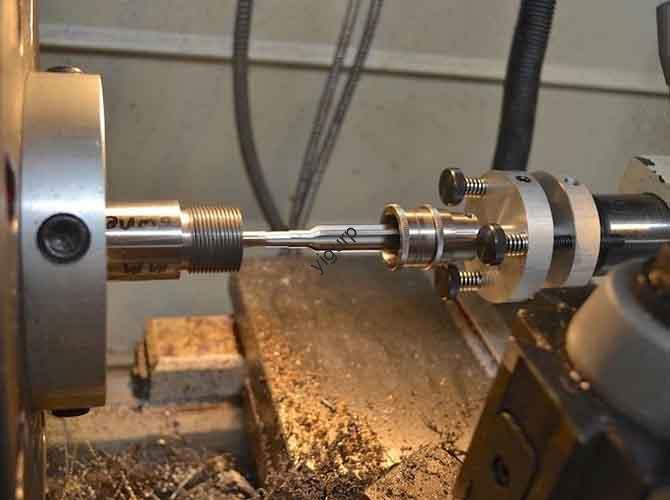
Monel is known for its work-hardening tendency. As you cut it, the surface becomes harder, which can quickly dull tools. Machining Monel requires slower cutting speeds, high-pressure coolant, and more frequent tool changes. A 2026 case study from a precision engineering firm found that machining a 10-inch Monel 400 flange took 4 hours with $200 in tool costs, compared to 1.5 hours and $80 in tool costs for the same part in stainless steel 316.
Is Stainless Steel Easier to Work With?
Yes, stainless steel is generally more machinable. Its lower work-hardening rate allows for faster cutting speeds and longer tool life. For high-volume projects, this difference is massive. For example, an automotive parts manufacturer can produce thousands of stainless steel brackets at a machining cost of $1.20 per unit. Using Monel for the same part would increase the cost to over $3.50 per unit, significantly impacting monthly expenses.
Where Do They Excel in 2026 Applications?
Real-world applications highlight the strengths of each material based on their properties.
Which Industries Still Rely on Monel?
Monel’s unmatched corrosion resistance and strength make it indispensable for critical applications.
- Deep-Sea Marine Engineering: Used for subsea pipelines, propeller shafts, and offshore wind turbine components where seawater corrosion is relentless.
- Chemical Processing: Essential for acid storage tanks, reactor vessels, and equipment handling hydrofluoric or sulfuric acid.
- Aerospace & Defense: Utilized in high-stress components like turbine blades and engine parts that must withstand extreme temperatures and forces.
Where is Stainless Steel the Obvious Choice?
Stainless steel’s combination of performance, cost, and ease of fabrication makes it the default for many industries.
- Construction & Architecture: Used for building facades, handrails, and indoor structural elements where its aesthetics and corrosion resistance are valued at a low cost.
- Food & Beverage Processing: Preferred for conveyor belts, storage tanks, and kitchen equipment due to its ease of cleaning and resistance to mild acids.
- Automotive Manufacturing: Commonly found in exhaust systems, decorative trim, and non-structural components in electric vehicles, where lightweight and cost-effectiveness are key.
Conclusion
Choosing between Monel and stainless steel in 2026 is a matter of matching material properties to project demands. Monel is the superior choice for extreme environments—deep-sea, strong acids, high stress—where its long-term durability justifies its higher upfront cost. Its ability to last 30+ years without failure in these conditions provides unmatched reliability. Stainless steel, particularly grades 304 and 316, is the practical and cost-effective solution for the vast majority of projects. Its excellent corrosion resistance in moderate environments, combined with its lower cost and ease of fabrication, makes it the ideal workhorse for construction, food processing, and general manufacturing.
FAQ
Can I weld Monel to stainless steel?
Yes, it is possible to weld Monel to stainless steel. However, it requires careful procedure, a specific filler metal (often a nickel-based alloy), and skilled welders to avoid cracking and ensure a strong, corrosion-resistant joint. It is not a simple process and should be done by experienced professionals.
Is Monel magnetic?
Monel 400 is generally non-magnetic. However, the high-strength variant, Monel K-500, can become slightly magnetic after precipitation hardening due to the formation of a nickel-aluminum phase in its microstructure.
How do I clean and maintain Monel vs. stainless steel?
For both materials, regular cleaning with mild soap and water is usually sufficient. For stainless steel, avoid chloride-containing cleaners to prevent pitting. Monel is more forgiving but can be cleaned with standard industrial cleaners. The main difference is that Monel typically requires far less maintenance over its lifetime in corrosive environments.
Discuss Your Projects with Yigu Rapid Prototyping
Selecting the right material is a critical first step, but verifying its performance in your specific application is equally important. At Yigu Rapid Prototyping, we leverage our engineering expertise to help clients like you navigate these complex decisions. We don’t just provide materials; we offer material sampling and rapid prototyping services to test Monel, stainless steel, and other high-performance alloys in your exact operating conditions. Contact us today to discuss your project requirements and ensure you choose the material that guarantees success.