
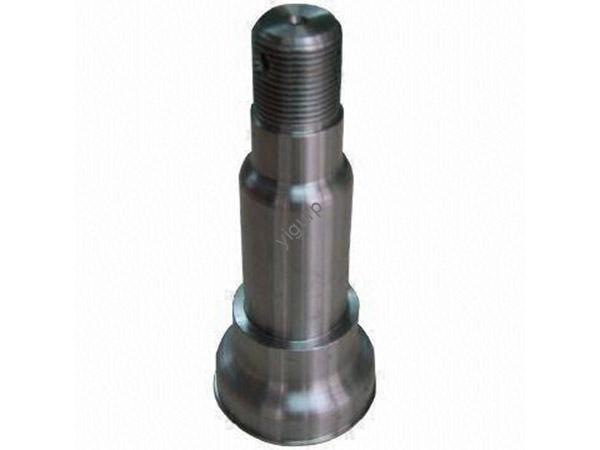
If you are working on deepwater offshore projects—such as oil and gas platforms, subsea pipelines, or drilling equipment—EH40 offshore steel delivers the strength, corrosion resistance, and cold toughness you need. Engineered to withstand extreme ocean pressures, saltwater degradation, and low temperatures, it solves the biggest challenges of offshore engineering, including structural fatigue and premature corrosion. This guide breaks down its properties, applications, and best practices to help you build reliable offshore structures that last.
What Defines EH40 Offshore Steel?
EH40 is a high-strength offshore structural steel that meets strict international standards from classification societies such as ABS, DNV, and Lloyd’s Register. The “40” in its name indicates a minimum yield strength of 400 MPa—a critical metric for withstanding deepwater pressure. Its performance comes from a carefully balanced composition with targeted alloy additions that enhance strength, toughness, and corrosion resistance specifically for marine environments.
The Chemistry of Deepwater Performance
EH40’s composition is optimized for offshore demands. The table below shows typical ranges and the role of each element.
| Element | Content Range (%) | Role in EH40 Offshore Steel |
|---|---|---|
| Carbon (C) | 0.18 – 0.24 | Enhances tensile strength. Kept low to preserve weldability for offshore joints. |
| Manganese (Mn) | 1.20 – 1.70 | Improves impact toughness and hardenability for cold deepwater conditions. |
| Nickel (Ni) | 0.70 – 1.00 | Enhances low-temperature toughness. Enables reliable performance at -40°C. |
| Copper (Cu) | 0.20 – 0.35 | Boosts atmospheric corrosion resistance. Reduces rust on platform decks. |
| Chromium (Cr) | 0.15 – 0.30 | Improves corrosion resistance. Slows degradation from saltwater and marine microbes. |
| Molybdenum (Mo) | 0.08 – 0.15 | Enhances fatigue resistance. Vital for subsea pipelines under cyclic pressure. |
| Vanadium (V) | 0.02 – 0.06 | Refines grain size. Increases fracture toughness and structural stability in deepwater. |
| Phosphorus & Sulfur | ≤ 0.025 each | Strictly controlled to eliminate cold brittleness and prevent weld cracks. |
Key Mechanical Properties
EH40’s mechanical properties are tailored for deepwater offshore conditions. The values below are typical per international classification society standards.
| Property | Typical Value | Why It Matters |
|---|---|---|
| Yield Strength | ≥ 400 MPa | The defining “40” rating. Supports deepwater platforms and subsea structures under extreme pressure. |
| Tensile Strength | 510 – 650 MPa | Handles deepwater pressure and heavy drilling equipment loads. |
| Impact Toughness | ≥ 34 J at -40°C | Avoids brittle failure in cold deepwater regions such as the North Sea. |
| Fatigue Resistance | 230 – 270 MPa | Endures cyclic pressure changes in subsea pipelines and wave loads on platforms. |
| Fracture Toughness | 85 – 95 MPa·m¹/² | Prevents sudden cracking in high-pressure subsea pipelines. |
| Ductility | 20 – 23% elongation | Allows bending into curved riser shapes without cracking. |
A real-world example: BP needed a platform jacket for the Gulf of Mexico that could withstand 2,000m water pressure, -20°C temperatures, and 12m waves. They chose EH40 steel for jacket legs, treated with quenching and tempering and a zinc-rich primer. After 10 years , the jackets showed no fatigue cracks, corrosion was only 1.2% (compared to 8% for standard steel), and maintenance costs dropped by 40% .
Where Is EH40 Used?
EH40 is the workhorse of deepwater offshore engineering. It is used in projects where high strength, corrosion resistance, and cold toughness are non-negotiable.
Offshore Platforms and Jackets
- Platform Jackets: Shell’s North Sea platform jackets use EH40 to withstand 15m waves and -30°C temperatures. The steel’s yield strength and corrosion resistance ensure structural integrity for decades.
- Decks and Superstructures: Supports drilling equipment (100+ tons) and crew quarters while balancing strength and weight.
- Bulkheads: Separates platform compartments and withstands flooding in emergency scenarios.
Subsea Pipelines and Risers
- Subsea Pipelines: Chevron’s West African subsea pipelines use EH40 to transport oil at 1,800m depth. After 8 years , the pipelines show no leaks, minimal corrosion (0.6%), and pressure tests confirm compliance with offshore standards.
- Risers: Connects seabed wells to platforms. Resists freezing seawater and cyclic pressure changes.
Drilling Equipment and Marine Structures
- Drill Pipes: Schlumberger’s offshore drilling rigs use forged EH40 drill pipes that withstand 50,000 psi pressure. Service life extended by 50% (from 2,000 to 3,000 hours), and replacement costs dropped by 35% .
- Offshore Wind Foundations: Resists saltwater corrosion and wave impacts.
- Offshore Supply Vessels: Maersk Supply Service ships use EH40 for hulls that handle rough offshore seas.
How Is EH40 Manufactured?
EH40 requires specialized manufacturing to meet offshore standards. The process ensures consistent properties across all product forms.
| Stage | Common Method | Why It Matters |
|---|---|---|
| Steelmaking | Basic Oxygen Furnace (BOF) or Electric Arc Furnace (EAF) | BOF is used for large-scale production (90% of EH40). EAF is ideal for small batches or custom thicknesses up to 120mm. |
| Heat Treatment | Normalizing (900-950°C) or Quenching and Tempering (850-900°C, then 520-620°C) | Normalizing improves uniformity for decks. Quenching and tempering boosts strength and cold-temperature toughness for subsea pipelines. |
| Forming | Hot rolling (1100-1200°C) or forging | Hot rolling creates plates from 6mm to 120mm thick. Forging enhances fatigue resistance for drilling equipment and riser connectors. |
| Surface Treatment | Zinc-rich primer, offshore-grade epoxy painting, or galvanizing | Critical for corrosion resistance. Zinc-rich primer (60-90μm) and epoxy paint (120-180μm) protect against saltwater and microbial growth for 30+ years. |
How Does EH40 Compare to Other Materials?
Choosing the right offshore steel means balancing strength, toughness, corrosion resistance, and cost. This comparison helps clarify where EH40 fits.
| Material | Yield Strength (MPa) | Impact Toughness (-40°C) | Corrosion Resistance | Relative Cost | Best For |
|---|---|---|---|---|---|
| EH40 | ≥ 400 | ≥ 34 J | Very Good (with coating) | 100% | Deepwater platforms, subsea pipelines, drilling equipment |
| EH36 | ≥ 355 | ≥ 34 J | Good (with coating) | ~90% | Shallow-water platforms, nearshore pipelines |
| Carbon Steel (A36) | ≥ 250 | ≤ 5 J (-20°C) | Poor | ~60% | Inland structures with no saltwater exposure |
| Stainless Steel (316) | ≥ 205 | ≥ 40 J | Excellent (no coating) | ~350% | Small offshore parts like valve bodies and pump components |
| Aluminum (5083) | ≥ 210 | ≥ 15 J | Good | ~280% | Lightweight offshore superstructures, small boats |
Key takeaways:
- vs. EH36: EH40 offers 13% higher yield strength for about 11% more cost. This strength premium is essential for deepwater pressure and justifies the investment.
- vs. Carbon Steel (A36): EH40 is 60% stronger and has 6 times better cold toughness. Carbon steel becomes brittle in deepwater conditions and is not suitable for offshore use.
- vs. Stainless Steel (316): EH40 is 95% stronger and 71% cheaper. It requires coating, but this tradeoff is acceptable for large-scale offshore structures where stainless steel would be prohibitively expensive.
Conclusion
EH40 offshore steel is a specialized material engineered for the most demanding deepwater environments. Its combination of ≥400 MPa yield strength, ≥34 J impact toughness at -40°C, and excellent weldability makes it the material of choice for offshore platforms, subsea pipelines, and drilling equipment. From BP’s Gulf of Mexico platforms to Chevron’s West African pipelines, this steel has proven its reliability in projects spanning decades and depths exceeding 2,000 meters. For any offshore project where structural integrity under extreme conditions is critical, EH40 offers a proven, cost-effective solution.
FAQ About EH40 Offshore Steel
Can EH40 offshore steel be used in the coldest deepwater conditions (-40°C)?
Yes. Its -40°C impact toughness (≥34 J) is specifically designed for cold deepwater regions such as the North Sea and Arctic offshore projects. When paired with a cold-resistant coating, it performs reliably without brittle failure.
What is the maximum depth EH40 can handle in subsea projects?
EH40 is typically used in subsea projects up to 2,500 meters depth. Its yield strength (400 MPa) and fracture toughness (85-95 MPa·m¹/²) withstand the pressure (25 MPa at 2,500 meters). For depths beyond 2,500 meters, custom heat treatment can boost strength for deeper applications.
Is EH40 weldable for on-site offshore fabrication?
Yes. Its low carbon content means no preheating is required for plates up to 35mm thick —ideal for on-site welding of platform jackets and pipeline joints. For thicker plates (35mm+), preheating to 100-150°C is recommended to prevent weld cracks, which is standard practice in offshore fabrication.
How long does EH40 last in offshore environments?
With proper surface treatment (zinc-rich primer and offshore-grade epoxy coating), EH40 structures typically last 30+ years in offshore conditions. The steel’s corrosion resistance, combined with regular inspection and maintenance, ensures long-term structural integrity.
Discuss Your Projects with Yigu Rapid Prototyping
Selecting the right offshore steel for deepwater projects is a critical decision. At Yigu Rapid Prototyping, we have supplied EH40 for over 60 deepwater projects—from Gulf of Mexico platforms to West African subsea pipelines. Our team can help you determine if EH40 is the right fit for your specific water depth, temperature, and corrosion requirements. We offer EH40 in plates, forged components, and custom-fabricated parts with full classification society certification (ABS, DNV, LR) and offshore-grade coating options. Contact us today to discuss your project and build for the deepwater environment.