
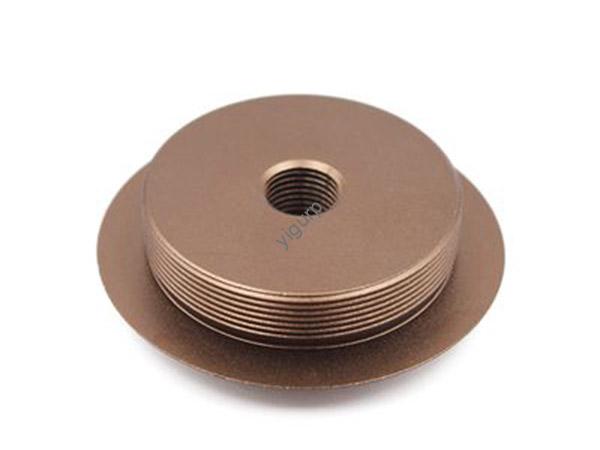
When your workshop needs reliable cold work tools—shear blades for cutting metal sheets, punches for stamping automotive parts, or cold heading tools for forming bolts—you need a tool steel that balances hardness with toughness. W2 tool steel delivers this balance. As a water-hardening (W-group) tool steel, it offers excellent wear resistance for cold work applications while maintaining the toughness needed to resist chipping and cracking. In this guide, I will walk you through its properties, applications, and how to work with it based on real manufacturing experience.
Introduction
W2 is a member of the water-hardening (W-group) tool steel family, defined by its simple composition and ability to achieve high hardness through water quenching. Unlike high-speed steels that prioritize red hardness for high-temperature cutting, or air-hardening steels that minimize distortion, W2 is optimized for cold work applications where sharp edges and impact resistance are required. Its carbon content of 0.80–1.00% provides excellent wear resistance, while its simple chemistry makes it cost-effective and easy to machine in the annealed condition. Over the years at Yigu Rapid Prototyping, I have worked with toolmakers, fastener manufacturers, and metal stamping shops who choose W2 for tools that must perform reliably without the higher cost of more complex alloys. Its combination of wear resistance, toughness, and affordability makes it a practical choice for many cold work applications.
What Makes W2 Tool Steel a Reliable Choice?
W2 achieves its properties through a simple, high-carbon chemistry and a water-quenching heat treatment. The result is a steel that can achieve high hardness while maintaining good toughness.
The Chemistry Behind the Performance
The chemical composition of W2 is defined by ASTM A686. The high carbon content is the primary driver of hardness and wear resistance, while trace elements provide minor benefits.
| Element | Content Range (%) | Why It Matters |
|---|---|---|
| Carbon (C) | 0.80 – 1.00 | Primary hardening agent. Provides wear resistance for cutting and forming tools. |
| Manganese (Mn) | 0.20 – 0.40 | Improves heat treatment response and reduces brittleness. |
| Chromium (Cr) | 0.10 – 0.30 | Enhances hardenability and adds mild corrosion resistance. |
| Tungsten (W) | 0.10 – 0.30 | Boosts red hardness, helping tools retain hardness when they generate moderate heat during use. |
| Silicon (Si) | 0.10 – 0.30 | Strengthens the steel matrix and improves heat treatment response. |
| Phosphorus (P) / Sulfur (S) | ≤ 0.030 | Kept low to maintain toughness and prevent cracking. |
Key Insight: The carbon content of W2 (0.80–1.00%) is significantly higher than structural steels but lower than ultra-hard tool steels like D3. This provides excellent wear resistance for cold work applications while maintaining enough toughness to resist chipping under impact.
Mechanical Properties That Matter
W2’s mechanical properties are achieved through a water-quenching heat treatment followed by tempering.
| Property | Typical Value | Significance for Cold Work Tools |
|---|---|---|
| Hardness | 58 – 62 HRC | Hard enough to resist wear in punches, shear blades, and cold heading tools. |
| Tensile Strength | 1800 – 2100 MPa | Resists breaking under tension. Prevents tool failure in high-pressure applications. |
| Yield Strength | 1500 – 1800 MPa | Prevents permanent deformation. Ensures tools maintain their geometry under load. |
| Impact Toughness | Moderate | Absorbs small shocks such as stamping impacts without cracking. |
| Red Hardness | Moderate (up to 350°C) | Retains hardness during light-duty hot work such as low-temperature forging. |
| Machinability | Good (annealed) | Can be machined into complex shapes using standard tools before heat treatment. |
Case Study: A small automotive parts shop was using carbon steel shear blades to cut aluminum sheets. The blades dulled after 500 sheets, causing rough edges and frequent downtime. They switched to W2 shear blades tempered to 60 HRC. Blade life increased to 2,000 sheets—a 300% improvement. Downtime dropped by 75%, and cut quality improved, eliminating the need for secondary grinding.
Where Does W2 Tool Steel Deliver the Most Value?
This material is specified for cold work applications where wear resistance and toughness are required, but extreme heat resistance or corrosion resistance is not.
Cold Work Tools
W2 excels in tools that shape cold metal through shearing, stamping, or forming.
- Shear blades: Blades for cutting metal sheets such as aluminum and steel. W2’s wear resistance maintains sharp edges for thousands of cuts.
- Cold heading tools: Tools that form bolts, nails, and screws by squeezing metal at room temperature. Toughness prevents cracking under pressure.
- Cold extrusion tools: Tools that push metal through dies to create shapes such as pipes and rods.
- Punches and dies: Stamping dies for creating holes and shapes in metal sheets. Low thermal expansion ensures precision across thousands of parts.
Case Study: A fastener manufacturer was using HSS tools for cold heading steel bolts. The tools cracked after 10,000 bolts, causing costly rejections. They switched to W2 tools with a nitrided surface. Tool life extended to 35,000 bolts—a 250% improvement. Rejection rates dropped from 8% to 1%, and the W2 tools cost 20% less than the HSS tools they replaced.
Cutting Tools for Low-to-Medium Speed Operations
W2 is suitable for cutting tools that operate at low to medium speeds where heat buildup is minimal.
- Handheld cutting tools: Chisels, punches, and woodworking blades. Hardness keeps edges sharp; toughness prevents chipping if the tool hits a nail.
- Machine cutting tools: Small milling cutters and lathe tools for soft metals such as aluminum.
- Woodworking tools: Planer blades and router bits for hardwoods.
Light-Duty Hot Work Tools
While not as heat-resistant as H13 or other hot-work steels, W2 can be used for light-duty hot work applications.
- Low-temperature forging dies: Dies for shaping metals such as brass and copper at 600–800°C.
- Small mold components: Molds for low-volume, low-temperature applications.
Plastic Injection Molds for Small Parts
W2 is used for small plastic injection molds where high volumes and extreme heat are not required.
- Small part molds: Molds for toy parts, connectors, and small housings.
- Prototype molds: Low-volume molds for product development.
How Is W2 Tool Steel Manufactured and Processed?
Producing W2 tools requires careful control of heat treatment to achieve the desired balance of hardness and toughness.
Steelmaking and Forming
W2 is typically produced in an electric arc furnace (EAF) to allow precise control of chemistry. After melting, the steel is cast into ingots or billets.
- Forging: Ingots are heated to 1,100–1,200°C and hammered or pressed into rough tool shapes. Forging aligns the grain structure, boosting toughness.
- Rolling: For flat tools such as shear blades, the steel is passed through hot rollers to reduce thickness and create a smooth surface.
Heat Treatment: The Critical Step
Heat treatment is essential for achieving W2’s properties. Incorrect processing can result in tools that are too soft or too brittle.
- Annealing: Heat to 800–850°C, hold for 2–3 hours, then cool slowly. Softens the steel to approximately 20 HRC for machining.
- Hardening: Heat to 780–820°C, hold until uniform, then quench in water. This hardens the steel to approximately 63 HRC but makes it brittle.
- Tempering: Reheat to 180–220°C, hold for 1–2 hours, then cool. Reduces brittleness while maintaining hardness at 58–62 HRC. For tools requiring higher toughness, temper at 250°C, which reduces hardness to 55–58 HRC but increases impact resistance.
Machining and Finishing
Most machining of W2 is done in the annealed condition, where it is soft and easy to work.
- Machining: Use high-speed steel (HSS) tools for turning, milling, and drilling. Complex cavities for molds and dies can be created before heat treatment.
- Grinding: After heat treatment, grinding is used for final finishing and sharpening.
- Surface treatment: PVD coatings such as TiN (titanium nitride) can extend tool life by 30–50%. Nitriding creates a hard surface layer for punches and dies.
Quality Control
Proper quality control ensures consistent performance.
- Hardness testing: Rockwell tests confirm hardness of 58–62 HRC.
- Dimensional inspection: Calipers and CMMs verify tool dimensions against design specifications.
- Microstructure analysis: Microscopic examination ensures uniform grain structure and the absence of cracks.
How Does W2 Tool Steel Compare to Other Materials?
Understanding the trade-offs between W2 and alternative materials helps in making an informed selection.
| Material | Hardness (HRC) | Toughness | Red Hardness | Relative Cost | Best For |
|---|---|---|---|---|---|
| W2 | 58 – 62 | Good | Moderate | 100% | Cold work tools, low-speed cutting |
| M2 HSS | 60 – 65 | Moderate | Excellent | 150% | High-speed cutting, hot work |
| D2 | 58 – 62 | Moderate | Low | 120% | Heavy wear, cold work |
| A2 | 57 – 62 | Good | Low | 110% | General cold work, air-hardening |
| Carbide | 85 – 90 | Poor | Excellent | 800% | High-speed cutting of hard materials |
| 1095 Carbon | 55 – 60 | Poor | Poor | 70% | Light-duty tools, knives |
Key Insights:
- Compared to M2 HSS, W2 offers similar hardness with better toughness at lower cost, but lacks the red hardness for high-speed operations. For cold work applications, W2 is often the better value.
- Compared to D2, W2 offers better toughness and lower cost, though D2 provides superior wear resistance. For tools that face impact, W2 is the better choice.
- Compared to carbide, W2 is significantly less expensive and much tougher, though carbide offers higher wear resistance and red hardness. For applications requiring impact resistance, W2 is preferred.
What About Corrosion Protection?
W2 has mild corrosion resistance. For workshop environments, it resists light rust but requires oiling or coating for long-term storage in humid conditions. For tools that will be stored between uses, a light coat of oil prevents surface rust.
Conclusion
W2 tool steel is a practical, cost-effective choice for cold work tools that require a balance of hardness and toughness. Its high carbon content provides excellent wear resistance for shear blades, punches, cold heading tools, and stamping dies, while its water-hardening nature and simple chemistry make it affordable and easy to machine. For small to medium manufacturers producing punches, shear blades, and cold heading tools, W2 delivers reliable performance at a price that fits tooling budgets. When you need a versatile tool steel for cold work applications without the complexity or cost of higher-alloy grades, W2 is a proven, reliable choice.
FAQ About W2 Tool Steel
Can W2 tool steel be welded?
Welding W2 is possible but requires caution. Its high carbon content makes it prone to cracking. To weld safely: preheat to 300–400°C, use a low-hydrogen welding rod such as E7018, and perform post-weld annealing at 600°C to relieve stress. For critical tools such as precision dies, machining from a single piece of W2 is more reliable than welding.
What is the best heat treatment for W2 tool steel?
The optimal process is: anneal at 820°C with slow cooling to soften for machining; harden at 800°C with water quenching; then temper at 180–220°C for 1–2 hours. This achieves 58–62 HRC with a balanced combination of hardness and toughness. For tools requiring higher toughness such as cold heading tools, temper at 250°C, which reduces hardness to 55–58 HRC but increases impact resistance.
How does W2 compare to A2 tool steel?
W2 is water-hardening while A2 is air-hardening. A2 offers better dimensional stability during heat treatment and is less prone to distortion. W2 is generally less expensive and offers slightly higher toughness. Choose W2 for cost-sensitive applications where distortion can be managed; choose A2 for tools requiring tight tolerances after heat treatment.
What coatings work well with W2 tool steel?
PVD coatings such as TiN (titanium nitride) can extend tool life by 30–50% for cutting tools and punches. Nitriding creates a hard surface layer that enhances wear resistance for cold heading tools and stamping dies. These coatings are applied after heat treatment and final grinding.
Discuss Your Projects with Yigu Rapid Prototyping
Selecting the right tool steel for cold work applications requires balancing wear resistance, toughness, machinability, and cost. At Yigu Rapid Prototyping, we help toolmakers, fastener manufacturers, and metal stamping shops navigate these decisions with practical, experience-based guidance. Whether you need W2 for shear blades, cold heading tools, or stamping dies, we can provide material sourcing, heat treatment, and precision finishing services. Contact us to discuss your project requirements and find the right solution.