
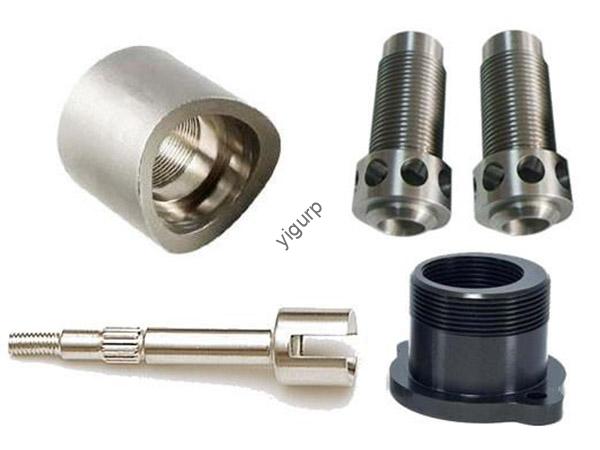
SPCC cold rolled steel is a low-carbon steel that delivers a superior surface finish and consistent mechanical properties, all thanks to its precise chemistry and the cold rolling process. Unlike hot-rolled steel, it is processed at room temperature to achieve tight tolerances and a defect-free surface. This guide will walk you through its key properties, how it is made, where it is used, and how it stacks up against other materials. You will learn how to determine if it is the right fit for your next manufacturing project.
Introduction
Choosing the right material for precision manufacturing can be a challenge. You need a balance of formability, surface quality, and cost. SPCC cold rolled steel often fits that need perfectly. It is a structural steel known for its smooth finish and ability to be shaped without cracking. For engineers and product designers, understanding its specific characteristics is key to optimizing production and ensuring product quality.
What Are the Key Material Properties of SPCC?
The performance of SPCC comes from its controlled chemistry and the cold rolling process. These factors work together to create a material that is both strong enough for structural use and ductile enough for complex forming.
What Is the Chemical Composition?
SPCC’s chemistry is designed to maximize formability and surface quality. The limits on impurities are strict to ensure consistent results across different production batches.
- Carbon (C): ≤0.15%. This ultra-low level ensures high ductility. It allows for complex shaping, such as deep drawing for washing machine drums.
- Manganese (Mn): ≤0.50%. This element adds tensile strength without making the steel too hard to work with.
- Silicon (Si): ≤0.35%. It helps remove oxygen during steelmaking and keeps mechanical properties stable.
- Sulfur (S): ≤0.050%. Keeping sulfur low prevents cracking during manufacturing and ensures uniform forming.
- Phosphorus (P): ≤0.045%. It is strictly limited to prevent the steel from becoming brittle in cold environments.
What Are the Physical and Mechanical Properties?
The cold rolling process enhances SPCC’s mechanical performance, making it suitable for precision parts. The table below outlines its typical values.
| Property | Typical Value for SPCC | Why It Matters |
|---|---|---|
| Tensile Strength | ~320-450 MPa | Sufficient for non-load-bearing parts like appliance panels. |
| Yield Strength | ~200-300 MPa | Low enough for easy cold forming but high enough to hold shape. |
| Hardness (Brinell) | 65-95 HB | Soft material allows for deep drawing without cracking. |
| Elongation | ~25-35% | Exceptional ductility for complex shapes like automotive fenders. |
| Surface Finish (Ra) | 0.1-0.8 μm | A smooth, defect-free surface that often eliminates the need for grinding. |
| Density | ~7.85 g/cm³ | Consistent with standard steel, providing reliable weight calculations. |
These mechanical properties are what make SPCC a top choice for precision stamping and forming.
How Is SPCC Cold Rolled Steel Manufactured?
Understanding the production process helps you appreciate the material’s quality. It begins with molten steel and ends with a precisely finished coil ready for stamping.
From Steelmaking to Cold Rolling
The journey starts in a basic oxygen furnace, where carbon content is precisely controlled. The molten steel is then continuously cast into slabs. These slabs are hot rolled to reduce thickness and then pickled in acid to remove surface scale. The critical step is cold rolling, where the steel is passed through rollers at room temperature. This increases its strength and creates a smooth, uniform surface.
Why Is Annealing and Temper Rolling Important?
After cold rolling, the steel becomes hard and brittle. To restore its ductility, it goes through annealing. The steel is heated and then slowly cooled, softening it for further forming. Finally, temper rolling gives it a light final pass to flatten the surface and ensure uniform thickness. This is why SPCC is so reliable for high-speed stamping operations.
What Are the Real-World Applications of SPCC?
SPCC is a staple in industries where precision and aesthetics are paramount. Its combination of formability, surface quality, and cost-effectiveness makes it incredibly versatile.
Automotive Industry
In automotive manufacturing, SPCC is used for parts that need to look good and form complex shapes.
- Body panels: Door panels, hoods, and fenders. Its excellent formability enables complex curves, and its smooth surface reduces paint usage.
- Structural components: Small brackets and clips. Its low cost suits high-volume production, and its weldability simplifies assembly.
Case Example: A car manufacturer faced high costs grinding surface defects on hot-rolled door panels. By switching to SPCC, they eliminated the grinding step entirely. This saved them $8 per panel and reduced production time by 15%. For a run of 60,000 units, that is an annual saving of $480,000.
Appliance Manufacturing
SPCC is the backbone of many home appliances, from the kitchen to the laundry room.
- Refrigerator bodies: The smooth surface enhances aesthetics and allows for modern curved designs.
- Washing machine drums: Its ductility allows for deep drawing into a seamless cylindrical shape, which is critical for balanced spinning.
Electrical Equipment
The material’s magnetic properties and formability make it ideal for electrical applications.
- Transformer cores: The thin gauges possible with cold rolling reduce core losses by 20% compared to thicker steels.
- Electrical enclosures: Its formability allows for bending into precise box shapes, and its electrical resistivity minimizes interference with internal components.
How Does SPCC Compare to Other Materials?
Choosing the right material often comes down to balancing cost, strength, and workability. SPCC sits in a sweet spot for many applications.
SPCC vs. Hot-Rolled Steel vs. Stainless Steel
The table below highlights the key differences between SPCC and other common materials. This comparison helps in making an informed decision.
| Material | Cost (vs. SPCC) | Formability | Surface Finish | Corrosion Resistance | Best For |
|---|---|---|---|---|---|
| SPCC | Base (100%) | Excellent | Very Smooth (0.1-0.8 μm) | Low (needs coating) | Visible panels, deep-drawn parts |
| Hot-Rolled Steel | 80% | Good | Rough (1.6-6.3 μm) | Low (needs coating) | Structural frames, non-visible parts |
| Stainless Steel (304) | 350% | Good | Smooth (0.1-1.6 μm) | Excellent | Outdoor parts, medical equipment |
| Aluminum (6061) | 280% | Very Good | Smooth (0.1-1.6 μm) | Good | Lightweight components, EVs |
Which Material Should You Choose for Your Project?
- For visible panels on a budget: SPCC is the clear winner. It offers a better surface finish than hot-rolled steel and is much cheaper than stainless steel.
- For deep-drawn parts: SPCC’s formability rivals that of plastic, but it offers significantly more strength and heat resistance.
- For outdoor use: You will need to coat SPCC. If you want to avoid a coating process, stainless steel is the better, though more expensive, choice.
At Yigu Rapid Prototyping, we have seen how SPCC’s properties directly impact production efficiency. For a client making washing machine drums, switching from hot-rolled steel to SPCC reduced their scrap rate from 15% to just 3%. This not only saved material costs but also reduced noise complaints by 30% due to better drum balance from the material’s uniform thickness.
Conclusion
SPCC cold rolled steel is a foundational material for modern manufacturing. Its value comes from a precise balance of low cost, excellent formability, and a superior surface finish. For products like automotive panels, appliance bodies, and electrical enclosures, it provides a reliable and cost-effective solution. While it does require a protective coating for outdoor applications, its performance in indoor and visible applications is outstanding. By understanding its properties and how it compares to other materials, you can make a choice that optimizes both your manufacturing process and your final product’s quality.
FAQ
Is SPCC steel easy to weld?
Yes, its low carbon content makes it excellent for welding. Common methods like MIG and TIG welding work well without preheating for most sheet metal applications.
Can SPCC be used for structural, load-bearing parts?
No. Its tensile strength (320-450 MPa) is not high enough for heavy structural loads. It is best for non-load-bearing parts like panels, brackets, and enclosures.
Does SPCC rust, and how can it be protected?
Yes, it will rust if left uncoated. For protection, it is often galvanized (coated with zinc) for outdoor use or powder coated for indoor appliances and visible parts.
What is the main difference between SPCC and hot-rolled steel?
The main difference is the surface finish and dimensional accuracy. SPCC is cold-rolled to achieve a smooth, precise surface, while hot-rolled steel has a rough, scaly surface and looser tolerances.
Discuss Your Projects with Yigu Rapid Prototyping
Choosing the right material is just the first step. At Yigu Rapid Prototyping, we combine material expertise with advanced manufacturing to bring your designs to life. Whether you need a functional prototype or a full production run using SPCC or other materials, our team is ready to help. Contact us today to discuss your project requirements and get a fast, competitive quote.