
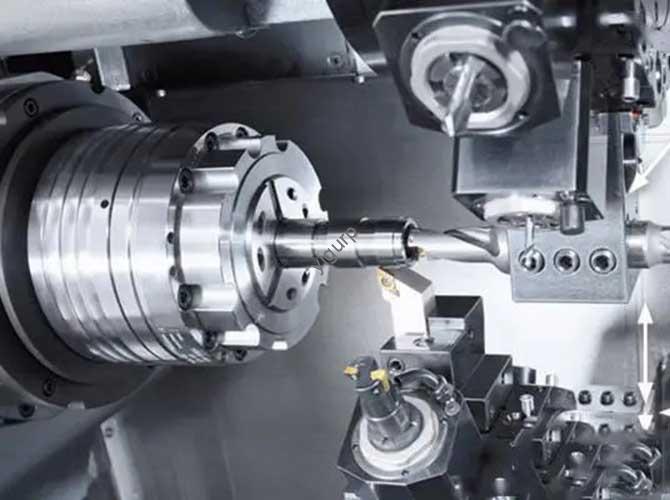
When you are designing precision equipment, the small components often decide the project’s success. Stainless shoulder screws are a perfect example. These fasteners do more than just hold parts together. They provide precise alignment, act as durable pivot points, and maintain consistent spacing. This guide will walk you through their key features, material strengths, and how to select the right one for your application.
Introduction
In the world of mechanical design, a standard bolt often falls short. You need a component that can handle both rotational movement and fixed fastening in one piece. This is where a shoulder screw, also known as a stripper bolt, becomes essential. Its unique design features a precision-machined, unthreaded shoulder. This smooth surface is perfect for guiding moving parts or acting as a spacer. Made from stainless steel, it combines this mechanical function with excellent corrosion resistance. Understanding these fasteners is key to building reliable machines, from simple fixtures to complex robotics.
What Are Stainless Shoulder Screws?
A stainless shoulder screw is a specialized fastener with a distinct three-part design. Unlike a regular bolt with threads running the full length, this screw has a smooth, unthreaded section in the middle.
- The Head: The drive end for installation, often a hex socket for high torque.
- The Shoulder: A precision-ground, unthreaded cylinder. This is the working surface. It acts as a shaft for bearings or a guide for sliding parts.
- The Thread: A standard threaded end designed to secure into a tapped hole or nut.
This design offers unique benefits. It provides a consistent spacing between components. It creates a durable surface for rotational or sliding motion. And it maintains precise alignment thanks to tight tolerances.
Why Choose Stainless Steel?
The material choice is critical. Stainless steel provides the perfect balance of strength, durability, and protection. It ensures the fastener performs well in demanding environments.
The Role of Key Alloying Elements
The performance comes from the metal’s composition. The most common grades offer distinct advantages.
- AISI 304 (18% Chromium, 8% Nickel): This is the standard grade. The chromium forms a protective oxide layer that prevents rust. The nickel adds toughness and formability. It is ideal for general industrial use, electronics, and indoor machinery.
- AISI 316 (with Molybdenum): This grade is less common in standard stock screws but is available for special orders. The addition of molybdenum gives it superior resistance to chlorides and chemicals. It is the best choice for marine environments or medical sterilization processes.
Mechanical Properties and Data
To verify quality, you need to know the expected performance metrics. Here is a look at the key data for a standard AISI 304 stainless shoulder screw.
| Property | Typical Value | Why It Matters |
|---|---|---|
| Tensile Strength | 515-690 MPa | Indicates the maximum stress the screw can handle under tension. |
| Hardness | 150-200 HB | Ensures the shoulder surface resists wear from sliding or rolling contact. |
| Corrosion Resistance | Passive Layer (Cr₂O₃) | Self-healing oxide layer that prevents rust in mild environments. |
| Magnetic Properties | Slightly Magnetic | Cold working during manufacturing can make it mildly magnetic, unlike pure austenitic grades. |
A real-world example: A robotics company in Stuttgart was using hardened steel pins for their robotic arm joints. The pins would rust after a few months in their humid factory environment, causing the arms to seize. They switched to AISI 304 stainless shoulder screws. The smooth shoulder acted as a perfect axle for the arm joint. The stainless steel eliminated the rust issue entirely, and the precise shoulder tolerance reduced play in the arm by 0.05 mm, improving the robot’s repeatability.
Understanding the ISO 7379 Standard
When you specify a shoulder screw, you cannot rely on general dimensions. You need a standard that guarantees interchangeability. ISO 7379 is that standard for metric shoulder screws. It defines all critical dimensions and tolerances.
- Shoulder Diameter (d1): This is the critical fit dimension. ISO 7379 mandates tight tolerances, typically -0.0006/-0.002 inches. This ensures a precise slip fit in a reamed hole.
- Shoulder Length (l1): This determines the spacing between parts. The standard offers a range of lengths, with a tolerance of +0.01 inches.
- Thread Size (d2): The standard thread is slightly smaller than the shoulder, creating a clear transition.
Here is a simplified look at common sizes per ISO 7379:
| Metric Size (Thread) | Shoulder Diameter (d1) | Typical Shoulder Length (l1) Range | Drive Size (A/F) |
|---|---|---|---|
| M3 | 3.98 mm – 4.00 mm | 4 mm – 16 mm | 2 mm |
| M4 | 4.98 mm – 5.00 mm | 5 mm – 25 mm | 2.5 mm |
| M5 | 5.98 mm – 6.00 mm | 10 mm – 60 mm | 3 mm |
| M6 | 7.98 mm – 8.00 mm | 16 mm – 60 mm | 4 mm |
| M8 | 9.98 mm – 10.00 mm | 16 mm – 100 mm | 5 mm |
| M10 | 11.98 mm – 12.00 mm | 16 mm – 100 mm | 6 mm |
A real-world example: A medical device manufacturer was experiencing assembly delays because shoulder screws from different suppliers had inconsistent shoulder diameters. Some were too tight to fit; others were too loose, causing alignment errors. By mandating ISO 7379 compliance in their sourcing, they ensured every screw had the exact same shoulder diameter tolerance. This change cut assembly time by 20% and eliminated field failures related to misalignment.
Types and Variations
Not all shoulder screws are the same. You can choose different styles to match your specific design needs.
Drive Types
The drive type determines how you install the screw.
- Hex Socket (Allen): The industry standard. It allows for high torque transfer and is ideal for recessed or tight spaces.
- Slotted: A simple, low-profile option for light-duty applications where high torque is not required.
- Phillips: Common in consumer goods. It is suitable for manual assembly but can cam out under high torque.
Head Styles
The head style affects the screw’s function and appearance.
- Cylinder Head: The standard choice. It offers a large surface area for clamping and a clean, flat top.
- Button Head: Features a low-profile, rounded top. It is useful where clearance is tight or a smooth external surface is needed to prevent snagging.
- Countersunk Head: Designed to sit flush with the surface. It is essential when the screw head cannot protrude from the assembly.
Common Applications Across Industries
The unique function of these fasteners makes them invaluable across many fields.
Automotive Systems
In cars, reliability is safety.
- Use Case: Door hinges, suspension linkages, and brake caliper guides.
- Why It Works: The smooth shoulder acts as a durable pivot pin. Stainless steel prevents seizing from road salt and moisture. A door hinge using a shoulder screw will swing smoothly for years without lubrication.
Aerospace Interiors
Weight and safety are critical here.
- Use Case: Avionics mounting brackets, seat track assemblies, and interior panel attachments.
- Why It Works: The tight ISO tolerances ensure components do not shift during vibration. The corrosion resistance prevents galvanic corrosion when in contact with aluminum airframes.
Medical Devices
Cleanliness and precision are non-negotiable.
- Use Case: Surgical power tools, adjustable hospital beds, and diagnostic imaging equipment.
- Why It Works: AISI 304 stainless steel is biocompatible and can withstand harsh sterilization chemicals. The smooth shoulder provides a clean, crevice-free surface that is easy to sanitize.
Electronics and Robotics
Miniaturization demands precision.
- Use Case: PCB standoffs, robotic arm joints, and servo mounts.
- Why It Works: The shoulder prevents over-tightening, which could crack delicate circuit boards. In a robotic arm, the shoulder acts as a precise mechanical stop, ensuring repeatable movement.
Installation and Best Practices
Proper installation is key to getting the full benefit of a precision shoulder screw. A few simple steps can prevent failure.
Preparing the Holes
Preparation ensures the screw functions as designed.
- For the Shoulder: Drill a hole that matches the shoulder diameter (d1). For best results, use a reamer to achieve the precise slip fit required for moving parts.
- For the Thread: Drill and tap a hole that matches the thread size (d2). Ensure the tapped hole is deep enough to accommodate the full thread length without bottoming out.
Torque Guidelines
The weakest point is usually the transition between the shoulder and the thread. Over-tightening here can cause breakage.
- M3: Maximum torque around 2.5 Nm (22 in-lbs) .
- M6: Maximum torque around 10 Nm (89 in-lbs) .
- M8: Maximum torque around 24 Nm (212 in-lbs) .
Always use a torque wrench for critical assemblies. This prevents thread stripping and ensures the shoulder is clamped correctly, not twisted.
Using Thread Lockers
In high-vibration environments, screws can loosen.
- Apply a small drop of medium-strength thread locker (like Loctite 243) to the threaded end.
- Avoid applying it near the shoulder. Excess compound can seep into the shoulder area and interfere with the sliding or rotating function.
Maintenance and Care
Stainless steel is durable, but proper care extends its life.
- Cleaning: Use a soft cloth with mild soap and water. Avoid steel wool or abrasive pads. These can scratch the surface and embed iron particles, which can lead to surface rust.
- Lubrication: If the shoulder is used for sliding or rotating applications, apply a dry film lubricant like graphite or PTFE. This reduces friction and wear without attracting dirt like wet oils.
- Inspection: Check screws in high-vibration areas periodically. Look for signs of wear on the shoulder surface or any loosening of the thread.
Sourcing and Cost Considerations
Finding the right supplier is about more than just price. Quality and compliance matter.
Key Certifications to Look For
When sourcing, ask for these credentials.
- ISO 7379 Compliance: This confirms the screw meets the strict dimensional standards for precision work.
- RoHS Compliance: This ensures the material is free from hazardous substances like lead and mercury. It is often required for electronics and medical devices.
- Material Certification: For critical projects, request a certificate (like EN 10204 3.1) that verifies the steel grade and mechanical properties.
Cost Factors and Savings
Pricing is driven by size, quantity, and complexity.
- Standard Sizes: M3 and M4 screws are the most common and cost-effective.
- Quantity Discounts: Bulk orders significantly reduce the per-unit cost. Savings can range from 15% to 30% when ordering in quantities of 500 or more.
- Custom Orders: Non-standard shoulder lengths or thread sizes will incur tooling and setup costs. Lead times typically run 2-4 weeks.
Conclusion
Selecting the right fastener is a fundamental part of reliable engineering. Stainless shoulder screws offer a unique combination of precision alignment, a durable bearing surface, and corrosion resistance that standard fasteners cannot match. By understanding the ISO 7379 standard, choosing the correct grade of stainless steel, and following proper installation practices, you can solve complex design challenges simply and effectively. Whether you are building a surgical robot or a factory conveyor, this small component provides a big return in performance and longevity.
FAQ
What is the difference between a shoulder screw and a standoff?
A shoulder screw is a single piece that combines a spacer (the shoulder) and a fastener (the thread). A standoff is just a spacer; it requires separate screws on both ends to secure components.
Can I use a stainless shoulder screw in a saltwater environment?
A standard AISI 304 screw is resistant to fresh water and mild humidity. For direct exposure to saltwater, you should upgrade to AISI 316 stainless steel for its superior resistance to chloride corrosion.
How do I determine the correct shoulder length?
The shoulder length should equal the total thickness of the material it is spacing or the length of the bearing it is supporting. It should act as a precise stop, allowing the threaded end to clamp without bottoming out.
Why does my stainless screw feel magnetic?
Stainless steel in the 304 grade is normally non-magnetic. However, the cold-forming process used to create the screw’s head and threads can transform some of the structure, making it slightly magnetic. This does not affect its corrosion resistance.
Discuss Your Projects with Yigu Rapid Prototyping
At Yigu Rapid Prototyping, we understand that finding the right fastener is just one part of a complex project. We help engineers source high-quality, ISO 7379 compliant stainless shoulder screws and offer custom machining for non-standard sizes. Our team is ready to provide CAD models, material certifications, and fast quotes to keep your project on track. Contact us today to discuss your specific requirements.