
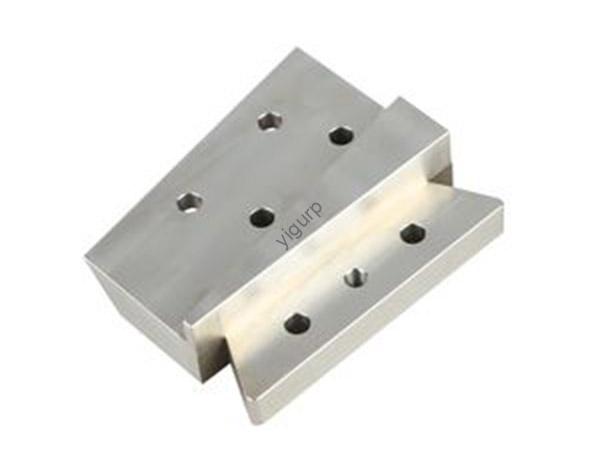
When your project involves medium-strength mechanical components—such as shafts, gears, or automotive parts—you need a steel that balances strength, machinability, and cost. S45C structural steel delivers exactly this balance. As a medium-carbon steel defined by JIS G4051 standards, it offers higher strength than low-carbon grades while maintaining good machinability and the ability to be heat-treated for enhanced properties. In this guide, I will walk you through its properties, applications, and how to work with it based on real manufacturing experience.
Introduction
S45C is a medium-carbon steel with a carbon content of 0.42–0.48%. This places it between low-carbon steels like S10C (0.08–0.12% carbon) and high-carbon steels like S80C (0.78–0.82% carbon). The moderate carbon content provides a balance of strength and ductility, while the addition of manganese (0.60–0.90%) improves hardenability and tensile strength. Unlike alloy steels that require expensive elements such as chromium, nickel, or molybdenum, S45C achieves its properties through carbon and manganese alone, making it cost-effective for volume production. Over the years at Yigu Rapid Prototyping, I have worked with machinery manufacturers, automotive suppliers, and industrial equipment builders who specify S45C for components that require good strength and wear resistance without the complexity or cost of alloy steels. Its combination of strength, machinability, and affordability makes it a versatile choice for a wide range of applications.
What Makes S45C a Reliable Medium-Carbon Steel?
S45C achieves its properties through its medium carbon content and controlled manganese addition. The carbon provides strength and hardenability, while manganese enhances tensile strength and workability.
The Chemistry Behind the Performance
The chemical composition of S45C is specified in JIS G4051. The carbon content is the primary driver of strength, while manganese contributes to hardenability and toughness.
| Element | Content Range (%) | Why It Matters |
|---|---|---|
| Carbon (C) | 0.42 – 0.48 | Provides strength and hardenability. Higher than low-carbon steels, lower than tool steels. |
| Manganese (Mn) | 0.60 – 0.90 | Improves tensile strength and workability. Enhances hardenability. |
| Silicon (Si) | 0.15 – 0.35 | Enhances heat resistance during processing. Acts as a deoxidizer. |
| Phosphorus (P) | ≤ 0.030 | Strictly controlled to prevent cold cracking. |
| Sulfur (S) | ≤ 0.030 | Minimized to avoid brittleness. |
| Chromium (Cr) / Nickel (Ni) | ≤ 0.20 | Trace amounts; no major impact on properties. |
Key Insight: The carbon content of S45C (0.42–0.48%) is approximately four times that of low-carbon steel like S10C. This provides significantly higher strength and the ability to be hardened through heat treatment, while still maintaining good machinability in the annealed condition.
Mechanical Properties That Matter
S45C’s mechanical properties can be tailored through heat treatment. In the annealed condition, it is soft and machinable. After quenching and tempering, it achieves much higher hardness and strength.
| Property | Annealed Condition | Quenched & Tempered | Significance |
|---|---|---|---|
| Tensile Strength | 570 – 700 MPa | 700 – 850 MPa | Handles pulling forces in shafts, gears, and mechanical components. |
| Yield Strength | ≥ 335 MPa | ≥ 500 MPa | Resists permanent deformation under load. |
| Elongation | ≥ 15% | ≥ 10% | Provides enough ductility for forming and to absorb energy. |
| Hardness | 160 – 200 HB | 25 – 55 HRC | In the hardened condition, provides wear resistance for gears and shafts. |
| Impact Toughness | ≥ 30 J at 20°C | Moderate | Suitable for room-temperature applications. |
Case Study: A machinery manufacturer needed shafts for industrial motors that could handle high-speed rotation and resist wear. They used S45C in the quenched and tempered condition (approximately 45 HRC). The shafts achieved the required strength and wear resistance, and the material’s good machinability allowed for efficient production. The shafts have performed reliably for over five years in continuous operation.
Where Does S45C Deliver the Most Value?
This material is specified for applications that require moderate strength, good machinability, and the ability to be heat-treated for enhanced properties.
Mechanical Engineering and Machinery
S45C is widely used for components in industrial machinery and mechanical systems.
- Shafts: Motor shafts, pump shafts, and drive shafts. The material’s tensile strength (570–700 MPa) handles high-speed rotation, and heat treatment boosts wear resistance at bearing surfaces.
- Gears: Small to medium-sized gears for conveyor systems, pumps, and industrial equipment. After quenching and tempering, the gears achieve the hardness needed to resist tooth wear.
- Bearings: Bearing races for low-load machinery. The material’s machinability ensures precise dimensions.
Case Study: A manufacturer of conveyor systems used S45C for the drive gears in their equipment. The gears were quenched and tempered to 40–45 HRC, providing the wear resistance needed for continuous operation. The gears have operated for over 10,000 hours without significant wear.
Automotive Components
S45C is used in automotive applications where moderate strength and wear resistance are required.
- Transmission components: Gears for manual transmissions in compact cars. The material’s strength endures constant gear meshing.
- Engine parts: Camshafts for small engines such as lawnmowers and small industrial engines. Heat treatment improves surface hardness for wear resistance.
- Suspension parts: Shock absorber rods. The yield strength prevents bending under road impacts.
Case Study: A manufacturer of compact car transmissions used S45C for transmission gears. The gears were carburized and hardened to achieve a hard surface with a tough core. The gears met the durability requirements for 150,000 miles of service.
Industrial Equipment
S45C is used for components in various industrial equipment.
- Hydraulic components: Pistons, rods, and cylinder components.
- Fasteners: High-strength bolts and studs for industrial machinery.
- Tooling: Simple jigs, fixtures, and tool bodies.
Agricultural Machinery
Farm equipment components benefit from S45C’s strength and wear resistance.
- Tractor axle pins: Components that handle heavy loads from plowing and tilling.
- Harvester parts: Shafts and linkages for harvesting equipment.
Low-Pressure Piping and Construction (Limited)
S45C has limited use in construction due to its low corrosion resistance, but it is used for:
- Industrial pipe fittings: Low-pressure water and air lines.
- Small structural components: Brackets, pins, and supports in indoor industrial buildings.
How Is S45C Manufactured and Processed?
Producing S45C requires careful control of carbon content and processing to achieve consistent properties.
Steelmaking and Rolling
S45C is typically produced in an electric arc furnace (EAF) for smaller batches or a basic oxygen furnace (BOF) for large-scale production. After melting, the steel is continuously cast into billets, blooms, or slabs.
- Hot rolling: Slabs are heated to 1,100–1,200°C and rolled into bars, rods, and plates. This improves strength and workability.
- Cold rolling: For precision parts such as thin shafts, cold rolling increases surface smoothness and hardness.
Heat Treatment
Heat treatment is critical for achieving S45C’s full potential. The material can be used in the annealed condition for easy machining, or heat-treated for enhanced properties.
| Treatment | Process | Result |
|---|---|---|
| Annealing | Heat to 820–860°C, slow cool | Softens the steel for machining. Produces 160–200 HB. |
| Normalizing | Heat to 860–900°C, air cool | Refines grain structure and improves uniformity. |
| Quenching and Tempering | Heat to 820–860°C, quench in water or oil; temper at 500–600°C | Produces high hardness (up to 55 HRC) with good toughness. |
Fabrication
S45C requires more careful fabrication than low-carbon steel due to its higher carbon content.
- Welding: Moderate weldability. Preheat to 150–250°C to prevent hydrogen cracking. After welding, post-weld heat treatment (annealing at 600–650°C) is recommended to relieve residual stress.
- Machining: Good machinability in the annealed condition. Standard carbide or high-speed steel tools work well.
- Forming: Moderate ductility. Can be bent or forged but is less flexible than low-carbon steels.
Surface Treatment
S45C has low corrosion resistance and requires protection for outdoor or moist environments.
- Galvanizing: Hot-dip galvanizing provides corrosion protection for outdoor components.
- Painting: Epoxy or polyurethane paints protect against moisture.
- Oiling: For moving parts such as gears and shafts, oil coating provides temporary protection and lubrication.
How Does S45C Compare to Other Materials?
Understanding the trade-offs between S45C and alternative materials helps in making an informed selection.
| Material | Tensile Strength (MPa) | Hardness (Annealed) | Relative Cost | Best For |
|---|---|---|---|---|
| S45C | 570 – 700 | 160 – 200 HB | 100% | Gears, shafts, medium-strength mechanical parts |
| S10C Low-Carbon | 320 – 450 | 100 – 140 HB | 80% | Welded parts, brackets, low-stress components |
| S690QL High-Strength | 770 – 940 | 200 – 240 HB | 220% | Heavy-load structures, offshore platforms |
| 304 Stainless | 515 – 620 | 150 – 200 HB | 350% | Corrosive environments |
| 6061-T6 Aluminum | 310 | 95 HB | 250% | Lightweight applications |
Key Insights:
- Compared to low-carbon steel like S10C, S45C offers approximately 50% higher tensile strength for a 20% cost premium. For applications requiring strength, this upgrade is often justified.
- Compared to high-strength steel like S690QL, S45C is significantly less expensive and easier to machine, but has lower strength. For medium-strength applications, S45C is the more cost-effective choice.
- Compared to stainless steel, S45C offers higher strength at approximately one-third the cost, though stainless steel provides superior corrosion resistance.
What About Cold Climate Applications?
S45C has impact toughness of at least 30 J at 20°C, but its toughness decreases at lower temperatures. For applications below -10°C, S45C may become brittle and is not recommended. For cold climates, use steels with nickel additions or low-temperature grades such as S355JR.
Conclusion
S45C structural steel is a practical, cost-effective material for medium-strength mechanical components. Its carbon content of 0.42–0.48% provides good strength and hardenability, while its manganese content enhances tensile strength and workability. For shafts, gears, automotive components, and industrial machinery parts, S45C delivers reliable performance at a price that fits production budgets. When properly heat-treated and protected with appropriate surface treatments, S45C components can achieve long service lives in indoor and protected environments. For applications requiring a balance of strength, machinability, and cost, S45C is a proven, versatile choice.
FAQ About S45C Structural Steel
Can S45C be used in cold climates?
No, not recommended. S45C’s impact toughness is ≥ 30 J at 20°C, but it decreases significantly at temperatures below -10°C. In cold climates, the material may become brittle and crack under impact or stress. For cold-climate applications, use cold-resistant steels such as S355JR or alloy steels with nickel additions.
Do I need to preheat S45C before welding?
Yes. S45C’s medium carbon content makes it prone to hydrogen cracking. Preheat to 150–250°C before welding. Use low-hydrogen electrodes such as E7018. After welding, perform post-weld annealing at 600–650°C to relieve residual stress and restore toughness in the heat-affected zone.
How does S45C differ from S45C-Mn?
S45C-Mn has a higher manganese content (1.00–1.30% vs. 0.60–0.90% for S45C). This provides higher tensile strength (620–750 MPa vs. 570–700 MPa) and better hardenability. Choose S45C-Mn for parts requiring extra strength; choose S45C for standard applications where the additional strength is not required.
What heat treatment is recommended for S45C gears?
For gears requiring wear resistance, quench and temper to achieve 40–50 HRC. The process is: heat to 820–860°C, quench in oil or water, then temper at 500–600°C. For gears requiring maximum surface hardness with a tough core, carburizing followed by quenching and tempering is recommended.
Discuss Your Projects with Yigu Rapid Prototyping
Selecting the right steel for medium-strength mechanical components requires balancing strength, machinability, heat treatment response, and cost. At Yigu Rapid Prototyping, we help machinery manufacturers, automotive suppliers, and industrial equipment builders navigate these decisions with practical, experience-based guidance. Whether you need S45C for shafts, gears, or automotive components, we can provide material sourcing, heat treatment, and fabrication support. Contact us to discuss your project requirements and find the right solution.