
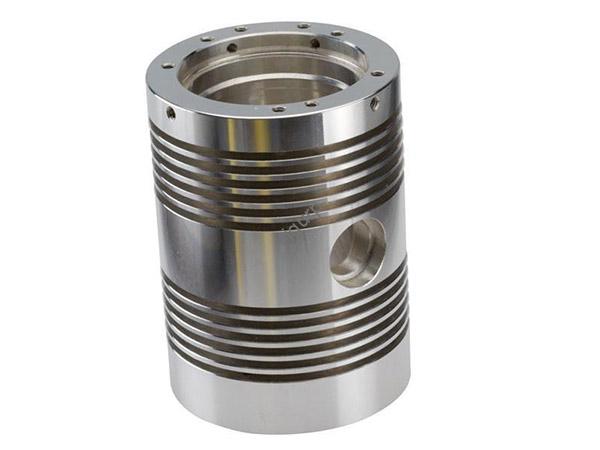
Introduction
When you are designing critical components for industries like oil and gas, desalination, or chemical processing, the material selection can make or break your project. You need a metal that offers exceptional strength to handle high pressure, outstanding corrosion resistance to withstand harsh chemicals, and long-term reliability to avoid costly downtime. UNS S32750 super duplex steel is engineered to deliver all three. Its unique dual-phase microstructure—a balanced mix of austenite and ferrite—provides a combination of properties that outperform standard stainless steels. This guide will explore its key traits, real-world applications, and how it compares to other materials.
What Makes UNS S32750 So Powerful?
The exceptional performance of UNS S32750 is rooted in its unique duplex microstructure and carefully balanced chemical composition.
What Is Its Chemical Composition?
The alloy is rich in elements that enhance both strength and corrosion resistance.
| Element | Content Range | Key Role |
|---|---|---|
| Chromium (Cr) | 24.0 – 26.0% | Forms a robust oxide layer for exceptional oxidation and corrosion resistance. |
| Molybdenum (Mo) | 3.0 – 5.0% | Dramatically improves resistance to pitting and crevice corrosion. |
| Nickel (Ni) | 6.0 – 8.0% | Stabilizes the austenite phase, contributing to ductility and toughness. |
| Nitrogen (N) | 0.24 – 0.32% | Enhances tensile strength and stabilizes the duplex structure. |
| Copper (Cu) | 0.5 – 1.0% | Adds extra resistance to corrosion in acidic environments. |
What Is the Duplex Microstructure?
This is the defining feature of UNS S32750. Its microstructure is a carefully controlled mixture of approximately 50% austenite and 50% ferrite. This dual-phase structure provides the best of both worlds:
- Ferrite contributes high strength and excellent resistance to stress corrosion cracking.
- Austenite provides good ductility, toughness, and workability.
This combination results in a material that is roughly twice as strong as common austenitic stainless steels like 316L, while maintaining comparable or better corrosion resistance.
What Are Its Mechanical Properties?
These properties define a material built for high-stress, corrosive environments.
| Property | Typical Value | Why It Matters |
|---|---|---|
| Yield Strength | ≥450 MPa | 2x higher than 316L (205 MPa); allows for thinner, lighter components. |
| Tensile Strength | ≥750 MPa | Handles high loads and pressures in demanding applications. |
| Elongation | ≥25% | Good ductility for forming and fabrication. |
| Hardness | ≤290 HB | Provides good wear resistance while remaining machinable. |
| Pitting Resistance (PREN) | ≥42 | Exceptional resistance to pitting; far higher than 304 (18) or 316 (25). |
Real-World Example: A Norwegian oil company used UNS S32750 for offshore pipeline brackets. The material’s high yield strength (450 MPa) meant the brackets could support heavy pipes without bending—even in strong ocean winds—outperforming the carbon steel brackets they previously used.
Where Is UNS S32750 Used?
The combination of high strength and exceptional corrosion resistance makes UNS S32750 the material of choice for the world’s most demanding industries.
Oil and Gas Industry
This is a primary application area. Components face high pressure, saltwater, and corrosive hydrocarbons.
- Offshore Platforms: Used for wellheads, risers, and structural brackets that must withstand ocean storms and saltwater corrosion.
- Subsea Pipelines: Its high strength allows for thinner walls, reducing installation costs, while its corrosion resistance ensures long-term integrity.
Real-World Example: A Brazilian offshore platform replaced carbon steel parts with UNS S32750. The new components lasted 15 years, compared to just 5 years for the old material, dramatically reducing maintenance and replacement costs.
Desalination and Marine Applications
- Desalination Plants: Used for reverse osmosis membranes, brine pumps, and high-pressure piping that handle concentrated saltwater (up to 70,000 ppm chloride).
- Marine Components: Ship hulls, propeller shafts, and seawater cooling systems benefit from its resistance to pitting and crevice corrosion, often eliminating the need for protective coatings.
Real-World Example: A desalination plant in Dubai reported zero corrosion on UNS S32750 components after 8 years of continuous operation in saltwater. A South Korean shipyard used UNS S32750 for a cargo ship’s hull, saving $50,000 per vessel by eliminating the need for anti-corrosion coating.
Chemical and Food Processing
- Chemical Reactors: Handles strong acids like hydrochloric and sulfuric acid, resisting degradation far better than standard stainless steels.
- Food Processing Equipment: Used for storage tanks for acidic foods like fruit juices. It is safe for food contact and resists cleaning chemicals.
Real-World Example: A U.S. beverage factory used UNS S32750 tanks to store fruit juices. After 6 years, there was no rust contamination, ensuring product purity. A German chemical firm cut maintenance costs by 35% after switching to UNS S32750 for its acid reactors.
How Is UNS S32750 Manufactured and Fabricated?
Producing and working with UNS S32750 requires precise control to preserve its unique duplex structure.
Key Manufacturing Steps
- Hot Rolling: The alloy is heated to 1150-1200°C and rolled into plates or sheets. This step shapes the material while preserving its strength.
- Annealing: This is the most critical step. The material is heated to 1020-1080°C, held for 30-60 minutes, and then water-quenched. This process restores the balanced 50/50 duplex structure. Skipping this step can lead to the formation of brittle phases.
- Pickling: The material is dipped in a mix of nitric and hydrofluoric acid to remove oxide scales formed during hot working. This step can improve corrosion resistance by up to 20% .
- Welding: Requires careful control. Use matching filler metals like ER2594, maintain low heat input, and use argon with 2-5% nitrogen for shielding. Post-weld annealing is highly recommended to restore corrosion resistance in the heat-affected zone.
How Does UNS S32750 Compare to Other Materials?
Choosing UNS S32750 is a strategic decision. It offers a unique balance of properties that other materials cannot match.
| Material | Corrosion Resistance (PREN) | Yield Strength (MPa) | Relative Cost | Best Application |
|---|---|---|---|---|
| UNS S32750 | ≥42 | 450 | Base (100%) | Harsh environments (offshore, desalination, acids). |
| SUS316 (316L) | 25 | 205 | ~60% | Moderate corrosion, low-stress applications. |
| SUS304 | 18 | 205 | ~40% | Mild indoor environments. |
| Super Austenitic (S31254) | 42 | 310 | ~120% | High-purity environments (pharmaceuticals). |
| Titanium Alloy | 50+ | 860 | ~300% | Lightweight, extreme corrosion, aerospace. |
| Carbon Steel | 5 | 250 | ~20% | Low-cost, non-corrosive structural parts. |
Key Takeaways:
- vs. 316L: UNS S32750 offers 2x higher strength and significantly better pitting resistance (PREN 42 vs. 25). It is the clear choice for seawater and chemical applications.
- vs. Titanium: UNS S32750 is far more cost-effective (about 1/3 the price) while offering sufficient corrosion resistance for most marine and chemical applications. Titanium is reserved for weight-critical or extreme corrosion needs.
- vs. Carbon Steel: UNS S32750 offers excellent corrosion resistance and significantly higher strength, but at a higher cost. It is chosen for applications where carbon steel would fail due to corrosion.
Conclusion
UNS S32750 super duplex steel represents the pinnacle of stainless steel engineering. Its unique 50/50 austenite-ferrite microstructure, combined with a chemistry rich in chromium, molybdenum, and nitrogen, delivers an exceptional balance of high strength and outstanding corrosion resistance. For demanding applications in oil and gas, desalination, chemical processing, and marine engineering, it provides a level of reliability and performance that standard stainless steels cannot match. While it requires skilled fabrication and has a higher upfront cost, its ability to prevent failures, eliminate the need for coatings, and extend service life makes it a wise and cost-effective long-term investment for critical projects.
FAQ
Can UNS S32750 be used at high temperatures?
It maintains its strength and corrosion resistance up to 300°C. For applications above 300°C, the duplex structure can begin to transform into brittle phases. For high-temperature applications like furnace parts, testing or a different heat-resistant alloy is recommended.
How does UNS S32750 compare to UNS S32760 (Zeron 100)?
They are very similar. UNS S32760 has a small addition of tungsten (1.0-2.0%), which can provide slightly better corrosion resistance in some environments. However, UNS S32760 is typically 15-20% more expensive. For most offshore and desalination applications, UNS S32750 offers the best balance of performance and value.
Do I need to apply a coating to UNS S32750?
No, it is generally not recommended. UNS S32750 relies on its natural chromium oxide layer for corrosion resistance. Applying a coating can trap moisture against the surface, potentially leading to crevice corrosion. The material is designed to be used in its uncoated state.
What is the most critical factor when welding UNS S32750?
The most critical factor is controlling heat input and performing post-weld heat treatment. Excessive heat can disrupt the balanced 50/50 duplex structure, reducing strength and corrosion resistance. Using the correct filler metal (ER2594), maintaining low heat input, and performing a post-weld anneal at 1050°C followed by water quenching are essential for restoring the material’s properties in the weld zone.
What are the most common applications for UNS S32750?
Its most common applications are in the oil and gas industry (offshore platform components, subsea pipelines), desalination plants (piping and pressure vessels), marine engineering (propeller shafts, hulls), and chemical processing (reactors and heat exchangers). Any application involving high stress, chlorides, or acids is a candidate for this material.
Discuss Your Projects with Yigu Rapid Prototyping
Selecting and fabricating super duplex stainless steel requires specialized expertise. At Yigu Rapid Prototyping, our team of experienced engineers has extensive experience with UNS S32750 and other high-performance alloys. We can help you determine if it is the optimal choice for your specific challenges and provide expert manufacturing services, from precision CNC machining and certified welding to solution annealing and surface finishing. Whether your project involves offshore oil platforms, desalination plants, or chemical processing equipment, we have the capabilities to deliver reliable, high-performance components. [Contact Yigu Rapid Prototyping today] to discuss your requirements and let us help you engineer a solution built to withstand the harshest environments.