
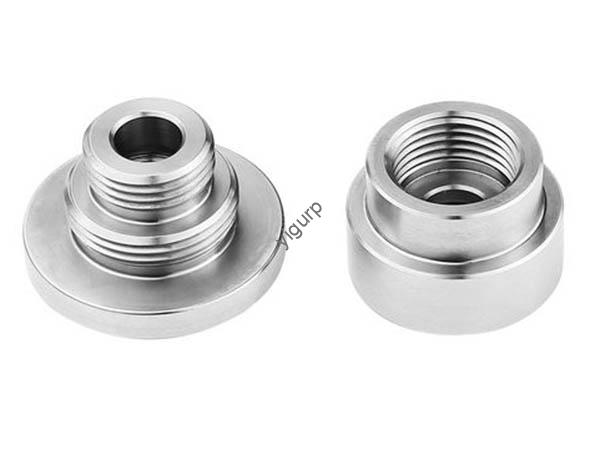
When you need an affordable, easy-to-machine tool steel for light to moderate wear applications, AISI O1 is a reliable choice that has served workshops for decades. As an oil-hardening cold-work steel, it offers a practical balance of hardness, machinability, and cost-effectiveness. This guide covers its key properties, common applications, manufacturing processes, and how it compares to other materials, helping you decide if it fits your tooling needs.
Introduction
Not every tooling project demands the extreme wear resistance of high-alloy steels like D2 or the complex heat treatment of air-hardening grades. For many workshops, small manufacturers, and hobbyists, the priority is finding a material that is easy to work with, affordable, and capable of delivering solid performance for light to moderate tasks. AISI O1 tool steel was developed precisely for this purpose. Its straightforward composition and forgiving heat treatment make it a favorite for producing cutting tools, small dies, woodworking blades, and prototype molds where budget and ease of fabrication matter as much as performance.
What Defines AISI O1 Tool Steel?
The characteristics of AISI O1 are rooted in its simple chemical makeup and the properties that result from it. Understanding these fundamentals explains why this grade remains a workshop staple.
Chemical Composition
AISI O1 achieves its performance through a basic combination of elements, avoiding the complex alloys found in more expensive tool steels. The table below outlines its typical composition.
| Element | Content Range (%) | Functional Role |
|---|---|---|
| Carbon (C) | 0.80–1.00 | The primary hardening element. It forms small carbides that provide adequate wear resistance for light cutting tasks. |
| Manganese (Mn) | 1.00–1.25 | Improves hardenability, ensuring even hardening in thin sections, and adds a measure of toughness. |
| Chromium (Cr) | 0.40–0.60 | Contributes modestly to wear resistance and aids in the steel’s response to heat treatment. |
| Silicon (Si) | 0.15–0.35 | Strengthens the steel during heat treatment and helps prevent surface oxidation. |
| Phosphorus (P) | ≤ 0.030 | Strictly controlled to avoid brittleness, which could cause cracking in small tools. |
| Sulfur (S) | ≤ 0.030 | Also kept low to maintain weldability and impact resistance. |
Mechanical Properties
The mechanical traits of AISI O1 are tailored for light-duty applications where extreme wear is not a requirement. Typical values after proper heat treatment are:
- Hardness: 57–60 HRC. This level provides sufficient edge retention for cutting wood, soft metals, and plastics.
- Tensile Strength: ≥ 1,800 MPa. Adequate strength for small tools like reamers and punches.
- Impact Toughness: 15–20 J. Moderate toughness that works for small tools but is not suited for heavy shock loads.
- Wear Resistance: Good for light tasks, but approximately 50% lower than that of AISI A2.
- Machinability: Excellent in the annealed condition, allowing for easy shaping with standard shop equipment.
How Does It Perform in Different Environments?
AISI O1 is designed for indoor, controlled environments where extreme conditions are not a factor. Its performance characteristics reflect this focus.
Corrosion Resistance
AISI O1 has low corrosion resistance. It rusts readily in humid or wet conditions. For tools used in dry workshops, this is rarely an issue. However, if the tool will be exposed to moisture, regular oiling or a protective coating is necessary to prevent rust.
Dimensional Stability
One of O1’s strengths is its dimensional stability during heat treatment. It experiences minimal warping or shrinkage, making it an excellent choice for precision tools like reamers, gauges, and small mold components where tight tolerances are critical.
Temperature Limitations
The tempering resistance of O1 is low. It begins to lose hardness above 250°C. This means it is not suitable for high-speed cutting applications where significant heat builds up at the cutting edge. It performs best in applications where tool temperatures remain moderate.
What Is the Heat Treatment Process?
The heat treatment of AISI O1 is straightforward and forgiving, which is one of the reasons it is so popular in small shops. The process does not require specialized equipment like vacuum furnaces.
| Process | Temperature Range | Purpose and Outcome |
|---|---|---|
| Annealing | 750–800°C, slow cool | Softens the steel to approximately 180–220 HBW, making it easy to machine into the desired shape. |
| Austenitizing | 820–860°C | Transforms the microstructure to austenite, preparing the steel for the hardening step. |
| Quenching | Oil quench | Rapid cooling in oil forms hard martensite. Oil is essential; water quenching causes cracking. |
| Tempering | 150–200°C, air cool | Relieves internal stresses from quenching while retaining a high hardness of 57–60 HRC. |
Key Considerations:
- The steel hardens effectively in sections up to approximately 25mm thick. For thicker cross-sections, hardenability becomes limited.
- Simple mineral oil is sufficient for quenching; no expensive or specialized quenchants are required.
- Tempering should be performed immediately after quenching to prevent cracking from residual stresses.
How Do You Machine and Fabricate O1?
The excellent machinability of AISI O1 in its annealed state is one of its primary advantages. This makes it accessible to workshops without advanced equipment.
Machining Guidelines
- Annealed Condition: All major machining should be performed while the steel is soft. Standard high-speed steel (HSS) tooling works well for turning, milling, and drilling.
- Speeds and Feeds: Conventional speeds and feeds for carbon steel apply. No special considerations are needed.
- Grinding: After heat treatment, the hardened steel can be ground using aluminum oxide wheels. Use light passes and coolant to prevent overheating and grinding burn.
Welding Considerations
Welding AISI O1 is possible but requires care. The high carbon content makes it prone to cracking in the heat-affected zone. If welding is necessary:
- Preheat the material to 200–300°C.
- Use a low-hydrogen welding process.
- Perform a post-weld heat treatment (tempering) to relieve stresses.
For most applications, it is simpler to avoid welding and instead machine the tool from a single piece of stock.
What Forms Are Available?
AISI O1 is widely available in forms that suit small-scale toolmaking and prototyping. This accessibility adds to its appeal for workshops and hobbyists.
| Product Form | Typical Dimensions | Common Applications |
|---|---|---|
| Round Bar | 3–100 mm diameter | Small punches, reamers, lathe tools, knife blades |
| Flat Bar | 3–50 mm thickness, up to 200 mm width | Planer blades, small dies, woodworking tools |
| Precision Ground Flat Stock | 1–25 mm thickness, ±0.05 mm tolerance | Gauges, small mold inserts, precision tooling |
| Sheet | 0.5–3 mm thickness | Small blades, shims, custom cutting tools |
Where Is AISI O1 Commonly Used?
The combination of low cost, ease of fabrication, and adequate hardness makes AISI O1 a practical choice for a wide range of light-duty applications.
- Woodworking Tools: Planer blades, router bits, chisels, and hand saw blades. The material holds a sharp edge well for working with softwoods and hardwoods.
- Metalworking Tools: Small lathe tools for turning soft metals like aluminum and brass, reamers, and low-volume broaches.
- Prototype Molds: Injection mold inserts and compression molds for short production runs of up to 10,000 cycles. The material is easy to modify if design changes are needed.
- Small Dies and Punches: Stamping dies for low-volume production of soft materials, and punches for creating holes in thin metal sheets.
- Hobbyist and Workshop Tools: A wide range of custom tools, jigs, and fixtures where performance requirements are moderate.
Case Studies: AISI O1 in Real-World Applications
Case Study 1: Woodworking Router Bits for a Hobby Shop
A small woodworking shop in the Midwest was using high-speed steel (HSS) router bits for shaping hardwood moldings. The HSS bits dulled after approximately 200 linear feet of cutting, requiring frequent replacement at a cost of $15 per bit. The shop switched to AISI O1 bits, which they could make themselves from flat stock. The O1 bits lasted for 500 linear feet before needing sharpening—2.5 times longer. More importantly, the bits were easy to resharpen on a standard bench grinder, extending their useful life. Annual tooling costs dropped from $180 to $70, and the shop gained the ability to create custom profiles on demand.
Case Study 2: Reamers for Aluminum Parts
A European machine shop was using expensive AISI M2 reamers to finish holes in aluminum components for small engine parts. The M2 reamers cost $50 each and lasted for 300 holes, but the shop recognized this was overkill for soft aluminum. They tested AISI O1 reamers costing $20 each. The O1 reamers lasted for 250 holes—only slightly less than the M2 tools—while costing 60% less. Annual reamer expenses dropped from $4,800 to $1,920, a savings of nearly $3,000. Hole quality and dimensional accuracy remained unchanged.
Case Study 3: Prototype Mold for Plastic Clips
A Canadian startup needed a mold to produce 5,000 prototype plastic clips for a consumer product. A conventional AISI P20 mold quoted at $3,000 was beyond their budget for a short-run project. They opted for an AISI O1 mold insert, which they machined in-house from precision ground flat stock. The total material and machining cost was $800. The mold lasted for 6,000 cycles—exceeding the prototype requirement. When the product design was revised after initial testing, the O1 mold was easy to modify with standard milling tools, saving the cost of building an entirely new mold.
How Does It Compare to Other Tool Steels?
Understanding where AISI O1 fits relative to other tool steels helps in selecting the right material for the job.
| Property | AISI O1 | AISI A2 | AISI D2 | AISI S7 | AISI M2 |
|---|---|---|---|---|---|
| Hardness (HRC) | 57–60 | 57–61 | 58–62 | 54–58 | 60–65 |
| Wear Resistance | Good | Very Good | Excellent | Very Good | Very Good |
| Impact Toughness | Moderate | Good | Moderate | Excellent | Moderate |
| Hardenability | Moderate (thin sections) | Excellent | Excellent | Excellent | Excellent |
| Machinability | Excellent | Good | Moderate | Good | Moderate |
| Relative Cost | Low | Medium | Medium-High | High | High |
| Heat Treatment | Simple oil quench | Air quench, more complex | Air quench, complex | Oil or air quench | Complex salt bath |
Key takeaway: AISI O1 is the most cost-effective and easiest to machine among these grades. It sacrifices some wear resistance and hardenability compared to A2 or D2, but for light-duty applications, these trade-offs are often acceptable given the significant cost savings and fabrication simplicity.
Conclusion
For workshops, small manufacturers, and prototyping environments where tooling demands are light to moderate, AISI O1 offers an ideal combination of affordability, ease of fabrication, and reliable performance. Its simple composition and forgiving heat treatment make it accessible to shops without specialized equipment, while its excellent machinability allows for rapid tool development and modification. While it lacks the wear resistance of higher-alloy tool steels and the corrosion resistance of stainless grades, it delivers exceptional value for its intended applications—woodworking tools, small reamers, prototype molds, and low-volume dies. When performance requirements grow, upgrading to a more advanced grade is always an option, but for everyday light tasks, AISI O1 remains a practical, dependable workhorse.
FAQ About AISI O1 Tool Steel
Can AISI O1 be used to cut hard metals like stainless steel?
It can cut soft steels and stainless steel for very short runs, but it is not recommended for production cutting of hard metals. Its wear resistance is insufficient, and the cutting edge will dull quickly. For cutting hard metals, AISI A2 or D2 are better choices.
Do I have to quench AISI O1 in oil, or can I use water?
Always use oil. Water quenching cools the steel too rapidly, creating high internal stresses that almost always cause cracking. Even simple mineral oil from a hardware store works effectively for quenching O1.
Is AISI O1 suitable for outdoor tools?
It is not ideal for outdoor use. AISI O1 has low corrosion resistance and will rust quickly when exposed to rain or humidity. If you must use it outdoors, apply a protective coating such as paint or oil, and store the tool in a dry place when not in use.
How does AISI O1 compare to AISI A2 for knife making?
AISI O1 is easier to heat treat with basic shop equipment and takes a very fine edge, making it popular among knife makers. AISI A2 offers better wear resistance and corrosion resistance but requires more controlled heat treatment (air quenching) and is more difficult to machine. For general-purpose shop knives and woodworking blades, O1 is an excellent choice.
Discuss Your Projects with Yigu Rapid Prototyping
Selecting the right tool steel for your project means balancing performance requirements against budget and fabrication capabilities. At Yigu Rapid Prototyping, we understand these trade-offs and can help you make the best choice for your specific application. Whether you need precision-ground flat stock for a custom tool, a machined component ready for heat treatment, or guidance on the most cost-effective material for your prototype, our team is here to assist.
We specialize in working with a wide range of tool steels, including AISI O1, A2, D2, and S7, and offer services including CNC machining, heat treatment, and surface finishing. If your project requires reliable tooling without over-engineering, we are ready to help. Contact us today to discuss your requirements and discover how our expertise can support your next tooling or prototyping project.