
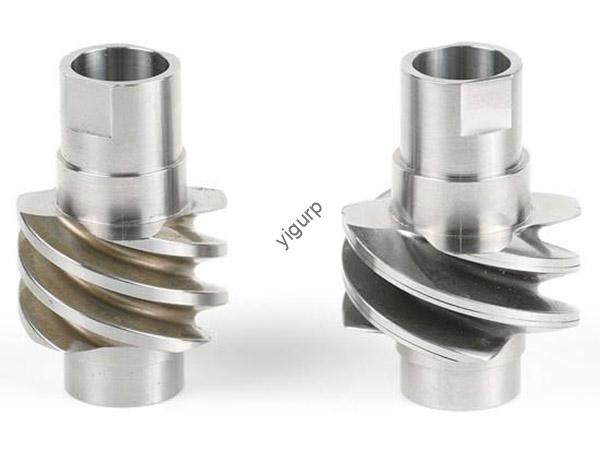
If you are an engineer, manufacturer, or buyer looking for a versatile low-carbon steel, 1018 cold rolled steel is likely on your radar. This material balances machinability, strength, and affordability, making it a top choice for countless industrial parts. From precision shafts to hydraulic components, its consistent properties and smooth finish make it a reliable workhorse. This guide will break down everything you need to know, from its basic definition to real-world applications, with data and examples to help you make informed decisions.
What Is 1018 Cold Rolled Steel?
Before choosing 1018 cold rolled steel, it is critical to understand its core properties and how it is made. Its classification as a low-carbon steel with a smooth, cold-finished surface defines its versatility.
Definition and Key Differences
1018 cold rolled steel is a low-carbon steel (with approximately 0.18% carbon content) processed through cold rolling—where metal is pressed at room temperature after initial hot rolling. Unlike hot rolled steel, cold rolling creates a smoother surface and tighter dimensional tolerances.
| Feature | Cold Rolled 1018 | Hot Rolled 1018 |
|---|---|---|
| Process | Rolled at room temperature (below recrystallization) | Rolled at high temperatures |
| Surface | Bright, smooth, scale-free | Rough, with a dark oxide scale |
| Tolerances | Tight (±0.05 mm for round bars) | Loose |
| Strength | Slightly higher due to work hardening | More ductile |
| Best For | Precision components, machined parts | Large structural parts, beams |
A manufacturer making small gears would typically choose CR 1018 over hot rolled because it requires less post-processing, such as grinding, to achieve a clean, precise finish.
How Is It Made?
The cold rolling process for 1018 steel involves several key steps to achieve its final properties:
- Hot Rolling: The steel is first heated and rolled into large coils or bars.
- Pickling: The hot rolled steel is dipped in acid to remove scale from the surface.
- Cold Rolling: The pickled steel is passed through rollers at room temperature to reduce thickness. This is where the cold reduction ratio (typically 50–90%) determines the final strength and thickness.
- Skin Pass Rolling: A final light rolling step improves surface smoothness and removes minor defects.
What Are the Mechanical and Physical Properties?
For engineers, properties like yield strength, tensile strength, and machinability determine if the material fits an application. 1018 CRS is known for its excellent balance of these traits.
| Property | Typical Value | Notes |
|---|---|---|
| Tensile Strength | 440 – 590 MPa | Higher than hot rolled 1018 (420–550 MPa). |
| Yield Strength | 370 – 480 MPa | Critical for parts under load, such as shafts and pins. |
| Elongation | 15 – 20% | Measures ductility; higher means more bendable. |
| Hardness (HRB) | 70 – 90 HRB | Easy to machine; hardness under 100 HRB is ideal. |
| Machinability Rating | 70% | Based on 1018 hot rolled = 100%; still excellent. |
| Modulus of Elasticity | 205 GPa | Stiffness is standard for carbon steels. |
Real-World Example: A hydraulic cylinder rod manufacturer uses 1018 CRS because its yield strength (370+ MPa) can handle high pressure without bending, while its elongation (15%) allows for minor adjustments during assembly.
What Are the Key Specifications and Forms?
To avoid inconsistencies, 1018 cold rolled steel must meet global standards. It is also available in a variety of forms to suit different applications.
Standards and Specifications
- AISI 1018 Specification: Defines chemical composition (0.15–0.20% carbon, 0.60–0.90% manganese).
- ASTM A108: Covers cold finished carbon steel bars for mechanical use.
- SAE J403: Matches AISI 1018’s chemical limits.
- UNS G10180: The unique identifier in the Unified Numbering System.
- DIN 1.0419 / EN 10277-2: European equivalents.
When buying, always ask for Special Bar Quality (SBQ) instead of merchant quality if you need precision. SBQ has stricter tolerances and fewer defects, which is critical for parts like automotive pins.
Common Forms and Sizes
| Form | Common Sizes | Tolerances | Typical Use |
|---|---|---|---|
| Round Bar | Diameter: 3 – 100 mm | ±0.05 mm | Shafts, spindles, pins |
| Flat Bar | Thickness: 1 – 20 mm | ±0.1 mm | Brackets, fixtures, plates |
| Square Bar | Side length: 5 – 80 mm | ±0.05 mm | Fasteners, handles |
| Hex Bar | Across flats: 6 – 60 mm | ±0.03 mm | Precision bolts, nuts |
| Strip Coil | Thickness: 0.3 – 3 mm | ±0.02 mm | Sheet metal parts, springs |
How Do You Work With 1018 Cold Rolled Steel?
1018 cold rolled steel is easy to fabricate, but following best practices ensures quality and maximizes its potential.
Machining and Welding
- CNC Machining: Perfect for precision parts. Use turning speeds of 150–250 m/min for HSS tools to avoid overheating.
- Drilling: Use a high-speed steel (HSS) drill bit with a 118° point angle. Lubricate with cutting oil to extend tool life.
- Welding: Unlike high-carbon steels, 1018 CRS requires no preheat. Use MIG or TIG welding with ER70S-6 wire for strong, crack-free joints. A manufacturer welding hydraulic cylinder rods uses this method to avoid warping.
Other Fabrication Techniques
- Case Hardening (Carburizing): This process boosts surface hardness from 70 HRB to 58 HRC for parts like gears. It involves heat treatment at 920°C for about 2 hours.
- Cold Heading: Ideal for fasteners like bolts. The material’s ductility allows it to be shaped without cracking.
- Bending Springback: Because of work hardening, expect 2–5° of springback when bending. Compensate by over-bending slightly.
1018 Cold Rolled Steel vs. Other Materials
Choosing the right low-carbon steel involves balancing machinability, strength, and cost. This comparison shows where 1018 CRS fits best.
| Material | Machinability Rating | Yield Strength (MPa) | Relative Cost | Best Application |
|---|---|---|---|---|
| 1018 Cold Rolled | 70% | 370 – 480 | Low | Precision shafts, pins, hydraulic rods |
| 12L14 (Free-Machining) | 100% | 300 – 350 | Medium | High-volume screw machine parts |
| 1045 (Medium Carbon) | 55% | 450 – 600 | Medium | High-strength shafts, axles |
| 4140 (Alloy) | 55% | 650 – 900 | High | Heavy-duty gears, high-stress components |
| 1018 Hot Rolled | 100% | 300 – 400 | Very Low | Structural parts, non-critical components |
Conclusion
1018 cold rolled steel is a versatile, reliable, and cost-effective material that serves as a cornerstone for countless precision industrial components. Its low carbon content (approximately 0.18%) provides an excellent balance of machinability and strength, while the cold rolling process yields a smooth, bright surface and tight dimensional tolerances (as precise as ±0.05 mm). With a yield strength of 370–480 MPa and a machinability rating of 70%, it is ideally suited for applications ranging from hydraulic cylinder rods and automotive pins to precision gears and machine spindles. While it lacks inherent corrosion resistance and cannot be through-hardened, its ability to be case hardened, welded easily with no preheat, and fabricated using standard methods makes it a practical and economical choice. For projects demanding precision, consistency, and value, 1018 cold rolled steel is a proven workhorse.
FAQ About 1018 Cold Rolled Steel
Is 1018 cold rolled steel rust-resistant?
No, it is not rust-resistant. As a low-carbon steel, it will oxidize when exposed to moisture. To prevent rust, you must apply a protective coating such as paint, zinc (galvanizing), or a light oil film, especially during storage.
Can 1018 CRS be heat-treated for higher strength?
Only for surface hardness. Because of its low carbon content, full heat treatment methods like quenching and tempering will not significantly increase its core strength. However, it is an excellent candidate for case hardening (carburizing) , which can create a hard, wear-resistant surface layer while maintaining a tough, ductile core.
What is the difference between 1018 cold rolled and 1018 cold drawn steel?
Both are cold-finished products with similar mechanical properties. The key difference is the manufacturing process and the resulting shapes. 1018 cold rolled steel is pressed through rollers, making it ideal for sheets, coils, and flat or square bars. 1018 cold drawn steel is pulled through a die, which allows for even tighter tolerances and is commonly used for precision round, square, and hex bars for shafts and fasteners.
What is the best welding method for 1018 cold rolled steel?
MIG and TIG welding are both excellent choices. Use ER70S-6 filler wire for MIG or an ER70S-2 filler rod for TIG. A key advantage of 1018 CRS is that it requires no preheating, which simplifies the welding process and reduces the risk of warping thin sections.
Discuss Your Projects with Yigu Rapid Prototyping
Selecting the right material for precision components is a critical first step. At Yigu Rapid Prototyping, we specialize in providing high-quality 1018 cold rolled steel in a variety of forms, from round bars to strip coils. We understand the importance of its consistent mechanical properties and machinability for your manufacturing processes. Our team can help you select the right form and quality grade (such as Special Bar Quality) for your specific application, ensuring you get the performance and value you need. Contact us today to discuss your project requirements.