
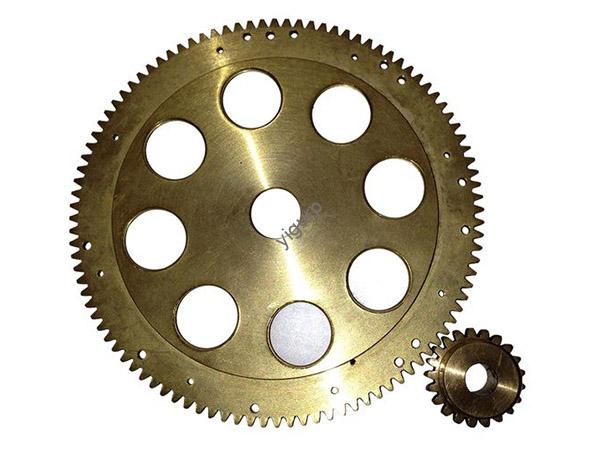
When your machining operations involve high-speed cutting of hard materials such as alloy steel or cast iron, you need a tool steel that maintains its cutting edge under extreme heat and pressure. T1 tool steel is engineered for these demanding conditions. As a high-carbon, tungsten-based high-speed steel, it offers exceptional red hardness, wear resistance, and thermal stability, making it the preferred choice for high-speed cutting tools and heavy-duty applications. In this guide, I will walk you through its properties, applications, and how to work with it based on real manufacturing experience.
Introduction
T1 tool steel is a member of the high-speed steel (HSS) family, defined by its high tungsten content (17.50–19.00%). The tungsten provides exceptional red hardness—the ability to maintain hardness at elevated temperatures—allowing tools to cut at speeds where other steels would soften. The composition also includes 0.70–0.80% carbon, 3.75–4.50% chromium, and 1.00–1.50% vanadium. The carbon combines with tungsten and vanadium to form hard carbides that provide wear resistance, while the chromium enhances hardenability. Unlike lower-alloy tool steels that soften at temperatures above 400°C, T1 retains useful hardness up to 600°C. Over the years at Yigu Rapid Prototyping, I have worked with machining shops, tool manufacturers, and industrial equipment builders who specify T1 for tools that must perform reliably in high-speed, high-temperature operations. Its combination of red hardness, wear resistance, and toughness makes it a go-to material for demanding cutting applications.
What Makes T1 a High-Performance Tool Steel?
T1 achieves its properties through its high tungsten content and specific heat treatment. The tungsten forms stable carbides that resist softening at high temperatures, while the vanadium refines the grain structure and provides additional wear resistance.
The Chemistry Behind the Performance
The chemical composition of T1 is defined by ASTM A600. The high tungsten content is the defining characteristic.
| Element | Content Range (%) | Why It Matters |
|---|---|---|
| Tungsten (W) | 17.50 – 19.00 | The core element. Provides red hardness. Forms stable carbides that resist softening at high temperatures. |
| Carbon (C) | 0.70 – 0.80 | Forms carbides with tungsten and vanadium. Provides wear resistance. |
| Chromium (Cr) | 3.75 – 4.50 | Enhances hardenability. Provides moderate corrosion resistance. |
| Vanadium (V) | 1.00 – 1.50 | Refines grain structure. Forms ultra-hard vanadium carbides for wear resistance. |
| Molybdenum (Mo) | ≤ 0.60 | Trace addition. Boosts red hardness and fatigue resistance. |
| Manganese (Mn) | 0.15 – 0.40 | Enhances hardenability. |
| Silicon (Si) | 0.20 – 0.40 | Aids deoxidation. Stabilizes high-temperature properties. |
| Sulfur (S) / Phosphorus (P) | ≤ 0.030 | Kept low to maintain toughness. |
Key Insight: The tungsten content of 17.50–19.00% is what distinguishes T1 from other high-speed steels. This high tungsten content allows T1 to retain approximately 60 HRC at 600°C, enabling cutting speeds of 400 meters per minute or more in steel.
Mechanical Properties That Matter
T1’s mechanical properties are achieved through a specific heat treatment cycle: austenitizing at high temperature (1,260–1,300°C), quenching, and multiple tempering cycles.
| Property | Typical Value | Significance |
|---|---|---|
| Hardness | 63 – 66 HRC | Provides excellent wear resistance for cutting tools. |
| Red Hardness | ~60 HRC at 600°C | Maintains cutting edge at high temperatures. Enables high-speed operation. |
| Tensile Strength | 2,400 – 2,600 MPa | Handles high cutting forces without failure. |
| Yield Strength | 2,000 – 2,200 MPa | Resists permanent deformation under heavy loads. |
| Elongation | 8 – 12% | Provides enough ductility to avoid brittle failure. |
| Impact Toughness | 25 – 35 J/cm² | Good for a high-speed steel. Reduces chipping risk. |
| Fatigue Strength | 900 – 1,000 MPa | Resists failure from repeated stress cycles. |
Case Study: A machining shop used M2 HSS for milling 4140 alloy steel parts. The M2 cutters dulled after 250 parts. They switched to T1 cutters. T1 extended tool life to 600 parts—a 140% increase. Regrinding time was cut by 50%, and the shop saved $48,000 annually in labor and tool costs.
Where Does T1 Deliver the Most Value?
This material is specified for cutting tools and heavy-duty applications that require high red hardness and wear resistance.
High-Speed Cutting Tools
T1 is widely used for cutting tools that operate at high speeds and temperatures.
- Milling cutters: End mills for heavy-duty milling of cast iron and stainless steel. Wear resistance handles 500+ parts per cutter.
- Lathe tools: Turning tools for automotive crankshafts and industrial gears. Tensile strength withstands high cutting forces.
- Broaches: Internal broaches for shaping gear teeth and keyways. Wear resistance maintains accuracy over 20,000+ cycles.
- Reamers: Precision reamers for tight-tolerance holes (±0.0005 mm) in aerospace components.
Case Study: A gear manufacturer used D2 tool steel for milling large industrial gears (4140 alloy steel). Tool wear occurred after 150 gears. They switched to T1 cutters. Tool life increased to 400 gears—a 167% improvement. Regrinding frequency was reduced by 60%, saving $30,000 annually. The higher cutting speed (350 m/min vs. 200 m/min) reduced milling time per gear by 43%.
Mechanical Engineering Components
T1 is used for high-stress components in industrial machinery.
- Shafts: Shafts for industrial compressors and turbine generators. Tensile strength handles rotational loads up to 10,000 RPM.
- Gears: Heavy-duty gears for mining equipment. Wear resistance reduces tooth wear by 60% vs. carbon steel.
- Machine parts: High-temperature components such as furnace conveyor rollers. Thermal stability retains strength at 500°C+.
Automotive and Heavy Equipment
T1 is used for automotive components requiring high strength and wear resistance.
- Engine components: Valve seats and camshafts. Thermal stability withstands 550°C+ engine heat.
- Transmission parts: Gears for heavy-duty trucks. Tensile strength handles torque up to 1,500 N·m.
- Axles: Heavy-duty trailer axles. Yield strength resists bending under 30+ ton loads.
Dies and Punches
T1 is used for forming tools that require high hardness and wear resistance.
- Cold-heading dies: Dies for fastener manufacturing. Hardness (65–66 HRC) creates precise fastener heads.
- Punches: High-speed punches for stamping thick steel sheets. Wear resistance handles 200,000+ stampings.
- Hot-forming molds: Molds for aluminum and brass. Thermal stability retains shape at 450°C+.
How Is T1 Tool Steel Manufactured and Processed?
Producing T1 requires precise control over chemistry, hot working, and heat treatment to achieve its red hardness and wear resistance.
Steelmaking
T1 is typically produced in an electric arc furnace (EAF) to allow precise control of alloying elements. For critical applications, vacuum arc remelting (VAR) is used to remove impurities and improve toughness.
Hot Working
- Hot rolling: Heated to 1,100–1,150°C and rolled into bars, plates, and tool blanks.
- Hot forging: For complex shapes, heated to 1,050–1,100°C and pressed into tool blanks.
- Annealing: After hot working, anneal at 850–900°C to soften to 240–280 HB for machining.
Heat Treatment
Heat treatment is critical for achieving T1’s properties.
- Austenitizing: Heat to 1,260–1,300°C, hold for 30–60 minutes. This high temperature dissolves tungsten carbides into the matrix.
- Quenching: Cool rapidly in oil or air. Hardens to 65–68 HRC.
- Tempering: Reheat to 540–580°C, hold for 1–2 hours. Repeat 2–3 times. This reduces brittleness while maintaining high hardness (63–66 HRC).
Machining and Finishing
- Machining: In the annealed condition, T1 can be machined with carbide tools. After heat treatment, grinding is required.
- Grinding: Diamond wheels achieve precision tolerances and sharp cutting edges.
- Coating: PVD coatings such as TiAlN reduce friction and extend tool life by up to 2.5 times.
How Does T1 Compare to Other Tool Steels?
Understanding the trade-offs between T1 and alternative materials helps in making an informed selection.
| Material | Hardness (HRC) | Red Hardness (600°C) | Relative Cost | Best For |
|---|---|---|---|---|
| T1 | 63 – 66 | ~60 HRC | 100% | High-speed cutting, heavy-duty tools |
| M2 | 62 – 65 | ~58 HRC | 60% | General-purpose high-speed steel |
| M42 | 65 – 68 | ~64 HRC | 150% | Very high-speed cutting, cobalt addition |
| D2 | 58 – 62 | ~30 HRC | 50% | Cold work, wear resistance without heat |
| Carbide | 70 – 75 | Excellent | 300% | Very high-speed, high-volume production |
Key Insights:
- Compared to M2, T1 offers higher red hardness and better wear resistance at a 40% cost premium. For high-speed cutting applications, this upgrade is often justified.
- Compared to M42, T1 is less expensive while still providing excellent red hardness. M42 is preferred for the most demanding high-speed applications.
- Compared to carbide, T1 is significantly less expensive and tougher. Carbide is the choice for very high-speed, high-volume production; T1 is preferred for applications requiring some toughness.
What About Weldability and Corrosion Resistance?
T1 has poor weldability due to its high carbon and tungsten content. Welding is not recommended for critical tools. For repairs, preheating to 600–700°C and post-weld tempering are required.
T1 has moderate corrosion resistance due to its chromium content. For wet machining or outdoor storage, apply a light oil coating to prevent rust.
Conclusion
T1 tool steel is a premium high-speed steel for the most demanding cutting applications. Its high tungsten content provides exceptional red hardness, allowing tools to maintain their cutting edge at temperatures up to 600°C. For milling cutters, lathe tools, broaches, and heavy-duty forming dies, T1 delivers the wear resistance and thermal stability required for high-speed, high-volume operations. When you need a tool steel that can handle the heat of high-speed cutting, T1 is a proven, trusted choice.
FAQ About T1 Tool Steel
Can T1 be used for machining non-metallic materials such as plastics or wood?
Yes, but it is overspecified. T1’s high red hardness and wear resistance are designed for metal cutting. For plastics and wood, lower-cost tool steels such as O1 or carbon steel are sufficient and more economical.
What is the best heat treatment for T1 tool steel?
The standard cycle is: austenitize at 1,260–1,300°C for 30–60 minutes, quench in oil or air, and temper at 540–580°C with 2–3 cycles. This achieves 63–66 HRC with good toughness. The high austenitizing temperature is necessary to dissolve tungsten carbides.
Is T1 more expensive than M2?
Yes. T1 typically costs 40–60% more than M2 due to its higher tungsten content. However, for high-speed cutting applications, the longer tool life and higher productivity often justify the premium.
What coatings work best with T1?
TiAlN (titanium aluminum nitride) coatings are preferred for T1 cutting tools. They provide high-temperature resistance, reduce friction, and extend tool life by up to 2.5 times. For aluminum cutting, TiCN (titanium carbonitride) coatings help prevent material buildup on the cutting edge.
Discuss Your Projects with Yigu Rapid Prototyping
Selecting the right tool steel for high-speed cutting applications requires balancing red hardness, wear resistance, toughness, and cost. At Yigu Rapid Prototyping, we help machining shops, tool manufacturers, and industrial equipment builders navigate these decisions with practical, experience-based guidance. Whether you need T1 for milling cutters, lathe tools, or heavy-duty forming dies, we can provide material sourcing, heat treatment, and coating recommendations. Contact us to discuss your project requirements and find the right solution.