
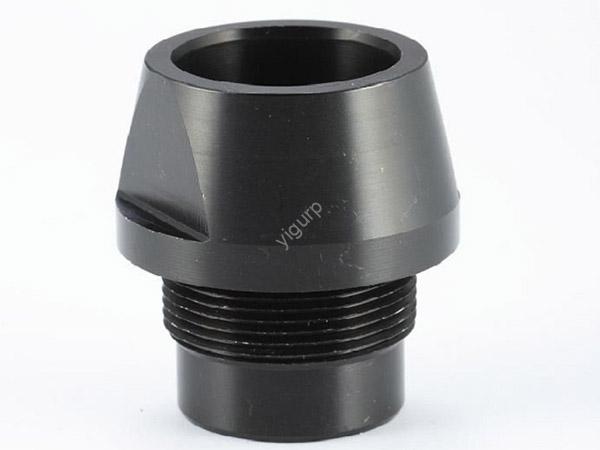
When your project demands a material that can handle dynamic loads, resist fatigue, and be formed into complex shapes without excessive cost, SCM415 structural steel is a proven solution. This chromium-molybdenum alloy steel delivers a balanced combination of high tensile strength, excellent toughness, and reliable workability. Unlike standard low-alloy steels, it excels in applications where components face repeated stress—such as automotive suspension arms, industrial gearbox shafts, and bridge beams. In this guide, I will walk you through its properties, applications, and how to work with it based on real manufacturing experience.
Introduction
SCM415 is a chromium-molybdenum alloy steel defined by its carefully controlled chemistry. The addition of chromium provides hardenability and moderate corrosion resistance, while molybdenum enhances fatigue strength and high-temperature stability. This combination allows SCM415 to achieve tensile strengths of 800–950 MPa after heat treatment—40–60% higher than standard structural steel like S355—while maintaining the ductility needed for forming and welding. Over the years at Yigu Rapid Prototyping, I have worked with automotive suppliers, heavy equipment manufacturers, and construction firms who rely on this material for components that must perform reliably under medium-to-high stress conditions. Its balance of strength, toughness, and cost-effectiveness makes it a versatile choice for a wide range of applications.
What Makes SCM415 Unique?
SCM415 achieves its performance through a specific chemical composition and heat treatment. The key is the combination of chromium and molybdenum, which work together to provide deep hardenability and resistance to fatigue.
The Chemistry Behind the Performance
The chemical composition of SCM415 is tightly controlled to ensure consistent properties across production batches.
| Element | Content Range (%) | Why It Matters |
|---|---|---|
| Carbon (C) | 0.38 – 0.43 | Provides core strength and hardenability. |
| Chromium (Cr) | 0.80 – 1.10 | Enhances hardenability and provides moderate corrosion resistance. |
| Molybdenum (Mo) | 0.15 – 0.30 | The key element for fatigue resistance and high-temperature stability. |
| Manganese (Mn) | 0.70 – 1.00 | Boosts tensile strength and hardenability. |
| Silicon (Si) | 0.15 – 0.35 | Aids deoxidation and stabilizes mechanical properties. |
| Phosphorus (P) | ≤ 0.030 | Strictly controlled to prevent cold brittleness. |
| Sulfur (S) | ≤ 0.030 | Kept low to maintain toughness and weldability. |
Key Insight: The combination of chromium and molybdenum allows SCM415 to achieve uniform hardness in sections up to 100 mm thick. This deep hardenability is critical for large components like axle shafts and heavy machinery frames.
Mechanical Properties That Matter
The mechanical properties of SCM415 are achieved through heat treatment, typically quenching and tempering. The table below shows typical values.
| Property | Typical Value | Significance |
|---|---|---|
| Tensile Strength | 800 – 950 MPa | Indicates ultimate load capacity before fracture. |
| Yield Strength | 550 – 700 MPa | The stress at which permanent deformation begins. |
| Elongation | 15 – 20% | Measures ductility; high values indicate good formability. |
| Fatigue Strength | 350 – 450 MPa | Critical for dynamic-load parts like suspension arms and shafts. |
| Impact Toughness (-20°C) | 70 – 90 J/cm² | Ensures reliability in temperate and mild cold climates. |
| Hardness (Brinell) | 180 – 230 HB | Soft enough for machining and welding in the annealed condition. |
Case Study: A U.S. construction firm was using S460 for a 75-meter highway overpass. Under heavy truck loads, the beams showed unacceptable deflection. They switched to SCM415 beams with the same span. The higher yield strength (550–700 MPa vs. 345–460 MPa for S460) allowed a 12% reduction in beam thickness while eliminating deflection. The change saved $35,000 in material costs and ensured compliance with load safety standards.
Where Does SCM415 Deliver the Most Value?
This material is best suited for applications that require a combination of strength, fatigue resistance, and workability. It is widely used in construction, automotive, mechanical engineering, and heavy equipment.
Construction and Infrastructure
SCM415 is used in structural components that must carry heavy loads while maintaining reasonable weight.
- Medium-span bridges: Beams for spans of 50–100 meters. The high yield strength allows 15% thinner cross-sections compared to S460, reducing material weight and transportation costs.
- Industrial buildings: Columns supporting heavy machinery. The tensile strength handles 30+ ton loads without excessive column size.
- Highway overpasses: In temperate regions, the material’s impact toughness at -20°C resists frost damage, extending service life by 20% compared to S355.
Case Study: A European bridge project required beams that could withstand heavy truck traffic in a region with winter temperatures down to -15°C. The original design using S460 required beam thickness that made transportation difficult. Switching to SCM415 allowed a 12% reduction in thickness, enabling two beams per truck instead of one, cutting shipping costs by 40%.
Automotive Industry
SCM415 is widely used in automotive components that face dynamic loads and require reliability over hundreds of thousands of miles.
- Vehicle frames: Truck frame rails made from SCM415 allow 10% weight reduction, improving fuel efficiency by about 5%.
- Suspension components: SUV suspension arms benefit from the material’s fatigue strength, which resists road vibrations and extends component life.
- Axles: Heavy-duty trailer axles use SCM415 for its tensile strength, handling 25+ ton loads without bending.
Case Study: A global automotive supplier was using S460 for heavy-duty truck axles. They experienced fatigue failures at 150,000 miles and faced high machining costs. They switched to SCM415. The molybdenum-enhanced fatigue strength extended axle life to 220,000 miles—a 47% improvement. Additionally, SCM415’s good formability allowed cold forming of axle shafts instead of hot forming, cutting machining time by 20% and saving $80,000 monthly in labor costs. Despite the material costing 18% more, the longer life and faster production saved the supplier $1.16 million annually.
Mechanical Engineering and Heavy Equipment
Industrial machinery components benefit from SCM415’s combination of strength, toughness, and fatigue resistance.
- Machine frames: Large lathe frames use SCM415 for its high rigidity, which supports precision machining with tolerances as tight as ±0.001 mm.
- Gears: Industrial gearbox gears use SCM415 for its toughness, which resists tooth wear, and its formability, which allows precision tooth shaping.
- Shafts: Crane winch shafts use SCM415 for its yield strength, which prevents deformation under 15+ ton lifting loads.
- Mining equipment: Conveyor rollers made from SCM415 resist fatigue from continuous 24/7 operation, reducing replacement frequency by 40%.
How Is SCM415 Manufactured and Processed?
Achieving the full potential of SCM415 requires careful control of manufacturing processes, particularly heat treatment and forming.
Steelmaking and Rolling
SCM415 is typically produced in an electric arc furnace (EAF) for medium batches or a basic oxygen furnace (BOF) for large-scale production. After steelmaking, the material is shaped through:
- Hot rolling: Slabs are heated to 1,100–1,200°C and rolled into plates, bars, or coils. This refines the grain structure and enhances toughness.
- Cold rolling: Used for thin sheets (1–6 mm thick) where surface finish and dimensional accuracy are critical. Post-rolling annealing at 650–700°C retains formability.
Heat Treatment
Heat treatment is where SCM415 gains its final properties. The cycle is tailored to the application.
| Treatment | Process | Result |
|---|---|---|
| Normalizing | Heat to 850–900°C, air cool | Reduces internal stress; delivers base strength (~800 MPa tensile) |
| Quenching and Tempering | Heat to 820–860°C, water quench; temper at 500–600°C | Boosts tensile strength to 950 MPa; enhances fatigue resistance |
| Stress Relief Annealing | Heat to 600–650°C after welding or cold forming | Reduces residual stress; prevents cracking |
Forming and Welding
SCM415 is designed to be workable with common fabrication methods.
- Cold bending: Plates up to 8 mm thick can be bent to 90° without cracking, eliminating the need for energy-intensive hot forming.
- Press forming: Hydraulic presses (3,000–8,000 tons) shape SCM415 into curved beams, brackets, and gear blanks at room temperature.
- Welding: MIG, TIG, and arc welding work with minimal preheating (150–200°C for thick sections). Welded joints retain 85–90% of the base steel’s strength.
Surface Treatment
For outdoor or corrosive environments, surface treatments extend service life.
- Painting: Epoxy or polyurethane paints protect outdoor structures like bridges and crane booms.
- Galvanizing: Hot-dip galvanizing (50–100 μm zinc coating) is used for undercarriage and marine components.
- Shot blasting: Removes surface contaminants before coating, ensuring adhesion.
How Does SCM415 Compare to Other Materials?
Understanding the trade-offs between SCM415 and alternative materials helps in making an informed selection.
| Material | Relative Cost | Tensile Strength (MPa) | Yield Strength (MPa) | Impact Toughness (-20°C) | Fatigue Strength (MPa) | Weldability |
|---|---|---|---|---|---|---|
| SCM415 | 100% | 800 – 950 | 550 – 700 | 70 – 90 J/cm² | 350 – 450 | Good |
| S355 | 65% | 355 – 510 | 235 – 355 | 40 – 60 J/cm² | 250 – 300 | Very Good |
| S460 | 80% | 460 – 560 | 345 – 460 | 50 – 70 J/cm² | 300 – 350 | Very Good |
| S690 | 130% | 690 – 790 | 550 – 650 | 40 – 60 J/cm² | 320 – 400 | Moderate |
| Aluminum (6061-T6) | 320% | 310 | 276 | 10 – 15 J/cm² | 110 – 140 | Moderate |
Key Insights:
- Compared to S355, SCM415 offers 40–60% higher tensile strength and significantly better fatigue resistance, making it suitable for dynamic-load applications where S355 would require excessive thickness.
- Compared to S460, SCM415 provides similar yield strength with better fatigue resistance (350–450 MPa vs. 300–350 MPa) and higher impact toughness at -20°C.
- Compared to S690, SCM415 is more weldable and less expensive, though S690 offers higher strength for extreme-load applications.
- Compared to aluminum, SCM415 is significantly stronger and more cost-effective for load-bearing components, though aluminum remains the choice for weight-critical applications.
What Quality Standards Should You Look For?
When sourcing SCM415, proper certification ensures material consistency.
- JIS G4105: The Japanese Industrial Standard for chromium-molybdenum steels. It defines the chemical composition and mechanical property requirements.
- Material Test Certificate (MTC): Reputable suppliers provide an MTC confirming the heat number, chemical analysis, and mechanical test results, including tensile strength, yield strength, elongation, and impact toughness.
Conclusion
SCM415 structural steel offers a compelling balance of strength, toughness, fatigue resistance, and workability. Its chromium-molybdenum chemistry provides deep hardenability and reliable performance under dynamic loads, while its moderate carbon content ensures good weldability and formability. For applications ranging from automotive axles and suspension components to bridge beams and industrial machinery, SCM415 delivers the performance needed for long service life at a reasonable cost. When you need a material that can handle medium-to-high stress without the complexity or expense of higher-alloy steels, SCM415 is a proven, reliable choice.
FAQ About SCM415 Structural Steel
Is SCM415 suitable for cold climate applications?
Yes, for temperate and mild cold climates. It maintains impact toughness of 70–90 J/cm² at -20°C, making it suitable for regions with winter temperatures down to -20°C. For arctic or extreme cold environments below -40°C, a nickel-alloyed steel like SNCM439 would be a better choice.
How does SCM415 compare to SCM440?
SCM415 has slightly lower carbon content (0.38–0.43%) than SCM440 (0.38–0.43% is similar, but SCM440 typically has slightly higher carbon and is often used at higher hardness). SCM415 is generally used in the quenched and tempered condition for structural components, while SCM440 is often specified for parts requiring higher hardness, such as gears and shafts. For most structural applications, SCM415 offers a good balance of strength and weldability.
Can SCM415 be welded without preheating?
For sections up to about 20 mm thick, preheating is often not required if using low-hydrogen welding processes. For thicker sections (above 20 mm), preheating to 150–200°C is recommended to prevent hydrogen-induced cracking. Always follow a qualified welding procedure specification (WPS) developed for the specific material thickness and joint configuration.
What heat treatment is best for SCM415 components?
It depends on the application. For general structural components requiring good strength and toughness, normalizing (850–900°C, air cool) is sufficient. For components subject to dynamic loads or requiring maximum strength, quenching and tempering (820–860°C water quench, then temper at 500–600°C) is recommended. For components that have been welded or cold formed, stress relief annealing at 600–650°C reduces residual stress.
Discuss Your Projects with Yigu Rapid Prototyping
Selecting the right structural steel for medium-to-high stress applications requires balancing strength, fatigue resistance, weldability, and cost. At Yigu Rapid Prototyping, we help engineering teams and manufacturers navigate these decisions with practical, experience-based guidance. Whether you need SCM415 for automotive components, bridge structures, or industrial machinery, we can provide material sourcing, heat treatment support, and fabrication assistance. Contact us to discuss your project requirements and find the right solution.