
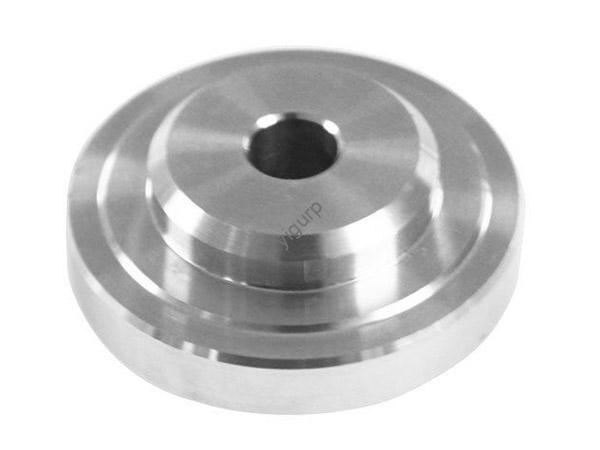
When your project involves extreme corrosion—from sulfuric acid to seawater—you need a stainless steel that goes far beyond standard alloys. AISI 904L is a super-austenitic stainless steel engineered for exactly these harsh environments. Its high nickel and molybdenum content provides a level of corrosion resistance that grades like 316L cannot match, making it a top choice for industries ranging from chemical processing to desalination. This guide will break down its key specs, performance traits, and real-world uses to help you select it for your most demanding high-corrosion projects.
What Makes AISI 904L a Super-Austenitic Grade?
The exceptional performance of 904L comes from its unique chemical composition and the global standards it meets. Its high nickel and molybdenum content are the keys to its superior corrosion resistance.
Chemical Composition and Standards
As a super-austenitic grade, 904L’s chemical composition stands out. Its high nickel content (23–28%) and high molybdenum (4–5%) are far more than what is found in 316L (2–3% molybdenum). These elements work together to form a highly stable protective layer against corrosion.
| Element | Content Range (%) | Key Role |
|---|---|---|
| Nickel (Ni) | 23 – 28 | Provides excellent stability and resistance to stress corrosion cracking. |
| Molybdenum (Mo) | 4 – 5 | Dramatically enhances resistance to pitting and crevice corrosion in chlorides. |
| Chromium (Cr) | 19 – 23 | Forms the passive layer, providing general corrosion resistance. |
| Copper (Cu) | 1 – 2 | Adds specific resistance to sulfuric and phosphoric acids. |
| Carbon (C) | ≤ 0.02 | Ultra-low to prevent carbide precipitation and maintain corrosion resistance. |
AISI 904L adheres to several global standards, ensuring consistent quality:
- UNS N08904 (Unified Numbering System)
- EN 1.4539 (European equivalent)
- ASTM A240 / ASME SA-240 (for plates, sheets, and strips)
Mechanical Properties
While 904L prioritizes corrosion resistance, it also delivers reliable strength for structural applications in harsh environments.
| Property | Value | Why It Matters |
|---|---|---|
| Minimum Yield Strength | 220 MPa | Provides sufficient strength for tanks, piping, and structural components under pressure. |
| Minimum Tensile Strength | 490 MPa | Offers a good safety margin for pressure-containing equipment. |
| Hardness | ≤ 217 HB | Maintains good machinability while being durable. |
| Density | 8.0 g/cm³ | Slightly lower than standard steel, beneficial for weight calculations. |
How Does 904L Perform Against Corrosion?
904L’s biggest advantage is its industry-leading corrosion resistance. Its Pitting Resistance Equivalent Number (PREN) of 34–36 is far higher than 316L’s PREN of approximately 24, meaning it is exceptionally resistant to localized attack in harsh fluids.
Key Corrosion-Resistant Traits
904L provides immunity or exceptional resistance to several common forms of corrosion.
- Pitting and Crevice Corrosion: It has exceptional resistance to pitting and a high threshold for crevice corrosion, even in tight gaps like heat exchanger gaskets.
- Stress Corrosion Cracking: It offers immunity to chloride stress corrosion cracking, a common failure mode for 304 and 316 stainless steels in high-chloride environments like seawater or brine.
- Chemical Resistance: It resists 50% sulfuric acid up to 60°C, handles phosphoric acid in fertilizer plants, and performs well in dilute nitric acid.
- Seawater and Brine: The seawater corrosion rate is ≤0.01 mm/year, making it ideal for desalination plants and offshore components.
Real-World Comparison: A Saudi desalination plant switched from 316L to 904L for its piping. Leaks from chloride pitting dropped by 90%. While 316L fails in 10% sulfuric acid after 6 months, 904L shows no corrosion after 5 years.
Can 904L Handle High Temperatures?
While 904L is primarily known for corrosion resistance, it also performs well in moderate high-temperature environments. However, it is not designed for extreme heat like some specialty alloys.
Critical High-Temperature Traits
- Oxidation Resistance: It resists rust up to 400°C, making it suitable for warm chemical processes like sulfuric acid evaporation at 350°C.
- Creep Strength: It can last 10,000+ hours at 300°C under light stress. For shorter tasks at 350°C, its tensile strength is about 350 MPa.
- Service Limits: The maximum continuous service temperature is 400°C. For intermittent service, it can be used up to 450°C, beyond which oxidation and strength decline.
- Thermal Shock Resistance: It handles moderate temperature changes, such as from 300°C to room temperature, without cracking.
Real-World Example: A U.S. power plant used 904L for flue-gas desulfurization (FGD) components operating at 350°C. After 8 years, there was no corrosion or deformation, unlike the previous 316L components that failed every 2 years.
How Is 904L Fabricated and Welded?
Working with 904L requires some adjustments to preserve its corrosion resistance, but it is a highly fabricable material.
Welding and Heat Treatment
Proper techniques are essential to maintain the alloy’s properties.
- Filler Metal: Always use matching filler metal like ER385 (904L) for TIG welding or 904L MIG wire. Matching the base metal composition is critical to avoid creating a weaker, corrosion-prone area in the weld.
- Preheat and Post-Weld Care: No preheat is required for most thicknesses. After welding, perform post-weld cleaning and passivation with nitric acid to restore the protective oxide layer and remove any heat tint.
- Solution Annealing: The standard heat treatment is solution annealing at 1050–1150°C, followed by a water quench. This step is critical to dissolve carbides and prevent sensitization, which would compromise corrosion resistance.
Machining and Forming
- Machining: Use coated carbide tools (e.g., TiAlN) and reduce machining speeds by 15–20% compared to carbon steel. Tool life with coated carbide is significantly longer than with uncoated tools.
- Forming: 904L has good formability for deep drawing operations, such as for chemical reactor heads. Use lubrication to avoid surface scratches, which can become initiation points for corrosion.
AISI 904L vs. Other Stainless Steels
Choosing the right stainless steel for a corrosive environment involves balancing performance and cost. This comparison shows where 904L fits best.
| Material | PREN (Pitting Resistance) | Resistance to Sulfuric Acid | Relative Cost | Best Application |
|---|---|---|---|---|
| AISI 904L | 34 – 36 | Excellent | High | Sulfuric/phosphoric acid, seawater, high-chloride environments |
| AISI 316L | ~24 | Good | Low | Mild chemical environments, food processing |
| AISI 317L | ~30 | Good | Medium | More aggressive than 316L, but less than 904L |
| AISI 310S | ~25 | Moderate | Medium | High-temperature applications up to 1100°C |
| Duplex 2205 | ~35 | Good | Medium | High-strength, offshore applications |
Conclusion
AISI 904L stainless steel is a high-performance, super-austenitic alloy engineered for the most demanding corrosive environments. Its defining features are a high nickel content (23–28%) and a high molybdenum content (4–5%), which give it a Pitting Resistance Equivalent Number (PREN) of 34–36 and immunity to chloride stress corrosion cracking. Real-world applications, from desalination plants where it cut leaks by 90% to chemical plants where it lasted 12 years in phosphoric acid service, demonstrate its unmatched durability. While it requires careful welding with matching filler metals and proper post-weld passivation, its resistance to a wide range of aggressive chemicals—including sulfuric acid, seawater, and high-chloride brines—makes it the superior, cost-effective choice over standard grades like 316L for any project where long-term reliability in a corrosive environment is paramount.
FAQ About AISI 904L Stainless Steel
When should I choose 904L over 316L?
Choose 904L if your project involves high chloride concentrations (seawater or brine), sulfuric or phosphoric acid, or has crevice-prone parts like heat exchanger gaskets. Its PREN of 34–36 and immunity to chloride stress corrosion cracking are the key advantages. Use 316L for milder environments, such as food processing, to save on material cost.
Do I need post-weld heat treatment (PWHT) for 904L?
No, PWHT is unnecessary and can actually be detrimental. Instead, after welding, you must perform post-weld cleaning and passivation using a 20% nitric acid solution. This step removes weld scale and heat tint, restoring the protective chromium oxide layer, which is critical for maintaining the material’s corrosion resistance.
Can 904L be used in high-temperature applications, such as 600°C?
No. 904L’s maximum continuous service temperature is 400°C. Above this temperature, its oxidation resistance and mechanical strength begin to decline rapidly. For applications at 600°C or above, you should select a heat-resistant alloy like 310S (resists up to 1100°C) or 347H (for better creep strength). 904L is designed for corrosion, not extreme heat.
Is 904L difficult to machine?
It is more challenging to machine than standard 304 or 316 stainless steels due to its higher alloy content and work-hardening rate. For best results, use sharp, coated carbide tools (such as TiAlN), reduce cutting speeds by 15–20% compared to carbon steel, and maintain a consistent feed rate with adequate coolant to prevent work hardening.
Discuss Your Projects with Yigu Rapid Prototyping
Selecting the right material for high-corrosion environments is critical for long-term reliability. At Yigu Rapid Prototyping, we specialize in providing AISI 904L stainless steel in various forms, from ASTM A240 plates to seamless pipes. We understand the importance of its high PREN value and the specific fabrication techniques—including welding with ER385 filler and post-weld passivation—that ensure its superior performance is fully realized. Whether you are building a chemical reactor, a desalination plant, or a seawater heat exchanger, our team can help you leverage the exceptional corrosion resistance of 904L. Contact us today to discuss your project requirements.