
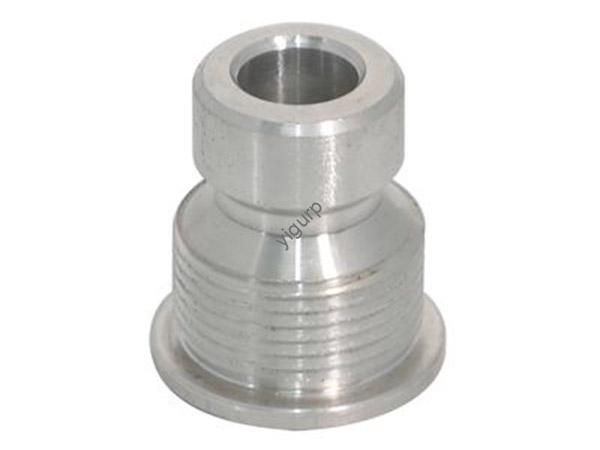
When you are designing components for chemical reactors, medical implants, or automotive exhaust systems, you need a material that does not force you to choose between corrosion resistance and strength. Micro alloy stainless steel offers a practical middle ground. It uses small additions of elements like nitrogen and molybdenum to boost performance without the high cost of specialty grades. In this guide, I will walk you through its properties, where it excels, and how to decide if it fits your project based on real manufacturing experience.
Introduction
Selecting the right stainless steel often feels like a balancing act. Standard grades like 304 offer good corrosion resistance but may lack the strength for demanding applications. High-alloy steels like 316L provide excellent chemical resistance but come with a significant cost premium. Micro alloy stainless steel was developed to bridge this gap. By adding tiny amounts of nitrogen, titanium, or niobium, manufacturers can create a material that is stronger, more formable, and often more cost-effective than conventional options. From my work at Yigu Rapid Prototyping, I have seen this material solve common design challenges, particularly where parts need to withstand both mechanical stress and corrosive environments.
What Exactly Is Micro Alloy Stainless Steel?
The term “micro alloy” refers to the practice of adding very small quantities of specific elements—often less than 0.2% by weight—to achieve significant improvements in material properties. Unlike conventional stainless steels that rely primarily on chromium and nickel, micro alloyed versions use these trace additions to refine the grain structure and create fine precipitates that strengthen the material without making it brittle.
How Chemistry Creates Balance
The core chemistry of micro alloy stainless steel is carefully controlled. The goal is to maximize strength and corrosion resistance while maintaining weldability and formability.
| Element | Typical Content | Why It Matters |
|---|---|---|
| Chromium (Cr) | 16 – 20% | Forms the passive oxide layer that prevents rust and corrosion. |
| Nickel (Ni) | 4 – 10% | Adds toughness and ductility, especially at low temperatures. |
| Molybdenum (Mo) | 1 – 3% | Boosts resistance to pitting in acidic and chloride-rich environments. |
| Nitrogen (N) | 0.1 – 0.2% | Increases tensile strength without reducing ductility. |
| Carbon (C) | < 0.08% | Kept low to prevent chromium carbide formation, which can weaken corrosion resistance. |
| Titanium (Ti) / Niobium (Nb) | Trace | Stabilizes the structure during welding to prevent cracking and maintain strength. |
For instance, a manufacturer of chemical processing valves I worked with was experiencing premature pitting failure with standard 304 stainless steel. By switching to a micro alloy grade with added molybdenum and nitrogen, they achieved the same corrosion resistance as 316L but at a 15% lower material cost.
Mechanical Properties That Matter
Micro alloy stainless steel strikes a balance that makes it suitable for a wide range of applications. Here are the key mechanical traits:
- Tensile Strength: 500 – 700 MPa. This is 15–30% higher than conventional 304 stainless steel, which typically offers around 515 MPa.
- Yield Strength: 250 – 400 MPa. This means it resists permanent deformation under load better than standard grades.
- Ductility: 25 – 35% elongation. It can be bent, stamped, or formed into complex shapes without cracking.
- Fatigue Resistance: 200 – 300 MPa. This makes it suitable for components that experience repeated stress, such as pump shafts or suspension parts.
Where Should You Use Micro Alloy Stainless Steel?
This material is a versatile workhorse. It performs well in applications that require a combination of corrosion resistance, moderate strength, and ease of fabrication. I often recommend it when a project falls into one of the categories below.
Chemical and Industrial Processing
In chemical plants, equipment is constantly exposed to acids, solvents, and temperature fluctuations. Micro alloy stainless steel is well-suited for piping systems, reactor vessels, and storage tanks. Its molybdenum content helps it resist pitting from chlorides, while its weldability simplifies on-site installation.
Case Study: A specialty chemical company in Texas was using carbon steel piping for a mildly acidic process. The pipes required replacement every 18 months due to internal corrosion. They upgraded to micro alloy stainless steel piping. After three years, inspection showed minimal corrosion, and the projected lifespan increased to over 10 years. The upfront cost was 40% higher, but the reduction in downtime and replacement labor paid for the upgrade within two years.
Automotive and Exhaust Systems
Automotive components face a harsh environment: heat, road salt, moisture, and vibration. Micro alloy stainless steel is commonly used for exhaust manifolds, mufflers, and sensor housings. Its high-temperature strength and oxidation resistance allow it to withstand the heat of exhaust gases, while its corrosion resistance prevents rust-through in snowy regions.
Case Study: A major automotive supplier was facing a high rate of warranty claims for exhaust mufflers failing in northern states. The original material was a standard ferritic stainless steel. After switching to a micro alloy grade with added titanium for high-temperature stability, field failure rates dropped by 25%. The new mufflers consistently lasted three years longer than the previous design.
Medical and Food Processing Equipment
Hygiene is critical in these industries. Equipment must be easy to clean, resistant to sterilization chemicals, and non-reactive. Micro alloy stainless steel is used for surgical instruments, food mixing tanks, and conveyor systems. Its low carbon content prevents sensitization during welding, which could otherwise create sites for bacterial growth.
Aerospace and Structural Components
Aerospace applications demand high strength-to-weight ratios and reliability. Micro alloy stainless steel is used for fasteners, fuel lines, and engine casings. Its combination of strength and corrosion resistance makes it a reliable choice for components that cannot fail.
Case Study: A European aerospace firm tested micro alloy stainless steel for aircraft fuel line components. Compared to conventional 304 stainless steel, the micro alloy version showed 20% better resistance to jet fuel corrosion and lasted twice as long in high-altitude, low-temperature conditions during accelerated life testing.
How Is Micro Alloy Stainless Steel Manufactured?
To realize the full potential of this material, the manufacturing process must be precise. The way it is melted, formed, and heat-treated directly impacts its final properties.
Melting and Forming Processes
The steel is typically produced in an Electric Arc Furnace (EAF) , which allows for precise control of the chemistry. This is especially important for achieving the tight tolerances required for micro alloy additions. After melting, the steel is formed into its initial shape through:
- Hot rolling: Used for thick plates and bars destined for structural or reactor applications.
- Cold rolling: Produces thin, smooth sheets with tight tolerances, ideal for food equipment or automotive panels.
- Forging: Creates high-strength components like valves, fittings, and fasteners.
The Importance of Heat Treatment
Heat treatment is where the micro alloying elements do their work. The specific cycle determines the final strength and corrosion resistance.
- Solution Treatment: The steel is heated to 1000–1100°C and then rapidly cooled. This dissolves any unwanted carbide precipitates and ensures the chromium is available to form the protective oxide layer.
- Precipitation Hardening: After solution treatment, the steel is heated to a lower temperature (450–550°C). This causes the micro alloying elements like titanium and niobium to form tiny, hard particles within the metal matrix. These particles act as obstacles to movement within the crystal structure, significantly increasing strength without sacrificing ductility.
Fabrication and Surface Finishing
Micro alloy stainless steel is generally easy to work with, but proper techniques are essential.
- Weldability: It welds well due to its low carbon and sulfur content. However, for critical applications, using a matching filler metal and post-weld heat treatment can restore full corrosion resistance at the weld joint.
- Passivation: This is a chemical treatment that removes free iron from the surface and strengthens the natural oxide layer. It is a standard final step for medical and food-grade components.
- Polishing: A smooth, polished surface is often required for architectural or sanitary applications. It reduces the chance of contamination and makes cleaning easier.
How Does It Compare to Other Materials?
Understanding the trade-offs is essential for making a confident material selection. Here is how micro alloy stainless steel stacks up against common alternatives.
Comparison with Other Stainless Steels
| Feature | Micro Alloy Stainless | 304 Stainless | 316L Stainless |
|---|---|---|---|
| Tensile Strength | 500 – 700 MPa | ~515 MPa | ~485 MPa |
| Corrosion Resistance | Good; moderate in chlorides | Good; limited in chlorides | Excellent; high in chlorides |
| Weldability | Excellent | Good | Good |
| Relative Cost | Moderate | Low | High |
| Typical Use Case | General purpose with higher strength | Basic corrosion resistance | Marine and strong chemical exposure |
Comparison with Non-Stainless Materials
- Versus Carbon Steel: Micro alloy stainless steel offers far superior corrosion resistance, eliminating the need for painting or coating. While carbon steel is cheaper upfront, the stainless option often has a lower total cost of ownership in corrosive environments due to reduced maintenance.
- Versus Aluminum Alloys: Aluminum is lighter, with a density of 2.7 g/cm³ compared to 7.8 g/cm³ for steel. However, micro alloy stainless steel is 2–3 times stronger and offers better resistance to a wider range of chemicals. Choose aluminum when weight is the primary constraint; choose stainless when durability and chemical resistance are more important.
- Versus Composites: Materials like carbon fiber offer excellent strength-to-weight ratios but are typically 50–60% more expensive and require specialized molds and processes. Micro alloy stainless steel is a more practical choice for high-volume, cost-sensitive industrial applications.
Conclusion
Micro alloy stainless steel occupies a valuable space in the material selection spectrum. It delivers improved strength over standard grades like 304, often matches the corrosion resistance of higher-end alloys like 316L in many environments, and does so at a more accessible price point. Its combination of properties—good corrosion resistance, high strength, excellent weldability, and ease of forming—makes it a versatile choice for industries ranging from automotive to medical. When you need a reliable material that performs well without over-engineering or overspending, micro alloy stainless steel is worth serious consideration.
FAQ About Micro Alloy Stainless Steel
Can micro alloy stainless steel be used in saltwater environments?
It offers moderate resistance to saltwater, making it suitable for near-shore applications like handrails or boat fittings. For continuous immersion or deep-sea use, a higher alloy grade like 316L is generally recommended.
Is it difficult to weld micro alloy stainless steel?
No, it welds easily. Its low carbon content helps prevent carbide precipitation, which can lead to corrosion. For optimal results, use a matching filler metal and consider post-weld annealing if the weld zone will be exposed to a highly corrosive environment.
How does the cost compare to standard 304 stainless steel?
Micro alloy stainless steel is typically about 10–15% more expensive than 304 due to the additional alloying elements. However, its higher strength often allows for thinner sections, which can offset the material cost increase.
What is the maximum service temperature for this material?
It maintains good oxidation resistance up to about 800°C. For continuous service at high temperatures, the precipitation-hardening versions with titanium or niobium offer the best stability.
Discuss Your Projects with Yigu Rapid Prototyping
Selecting the right stainless steel grade can be complex, and the wrong choice can lead to premature failure or unnecessary cost. At Yigu Rapid Prototyping, we help product designers and engineers navigate these decisions with practical, experience-based guidance. Whether you need a prototype to test a material’s performance or a production run of complex components, our team can help you balance performance, cost, and manufacturability. Contact us to discuss your project requirements and find the right solution.