
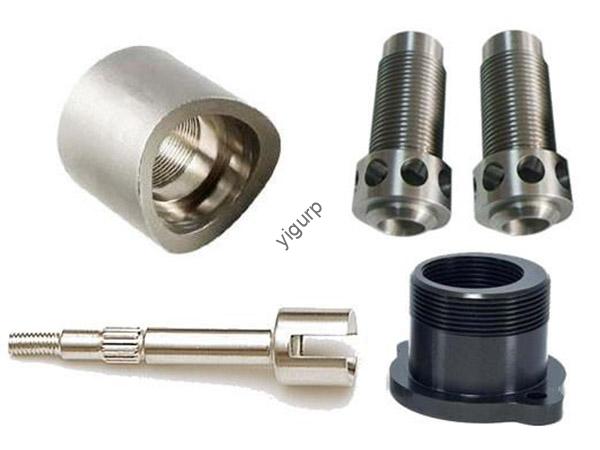
Tungsten structural steel is a specialized alloy that combines the exceptional properties of tungsten with the workability of steel. By adding tungsten (typically 1.5-18%) to a steel matrix, this material achieves a unique combination of high-temperature stability, extreme hardness, and excellent wear resistance. It retains significant strength at temperatures where standard steels would soften, and it can be heat-treated to achieve hardness levels suitable for demanding cutting and forming tools. This makes it the material of choice for high-performance applications such as cutting tools, forging dies, aerospace components, and industrial machinery that must operate in high-stress or high-temperature environments.
Introduction
For many demanding applications, standard structural steels simply are not enough. They lose strength at high temperatures, wear out quickly under abrasive conditions, and cannot achieve the hardness required for precision cutting tools. High-speed steels and cemented carbides can meet these demands, but they are often expensive and difficult to fabricate. Tungsten structural steel was developed to offer a balance. The addition of tungsten, a metal with the highest melting point of all elements (3422°C), dramatically improves the steel’s hot hardness and wear resistance. This allows tools and components to maintain their shape and cutting edge at temperatures where ordinary tool steels would soften. For applications that require a step up in performance without the cost of specialty materials, tungsten structural steel offers a proven and reliable solution.
What Are the Key Properties of Tungsten Structural Steel?
The performance of tungsten structural steel is defined by its chemical composition, particularly the tungsten content, and the mechanical properties achieved through heat treatment.
Chemical Composition
Tungsten is the key alloying element, working with carbon and other elements to create a hard, heat-resistant material.
| Element | Content Range (%) | Its Role in Performance |
|---|---|---|
| Tungsten (W) | 1.5 – 18.0 | The key element. Provides exceptional high-temperature stability and hot hardness. |
| Carbon (C) | 0.6 – 1.2 | Forms hard carbides with tungsten, enhancing wear resistance and hardness. |
| Manganese (Mn) | 0.2 – 0.8 | Improves machinability and toughness. |
| Silicon (Si) | 0.1 – 0.5 | Boosts heat resistance and structural stability. |
| Chromium (Cr) | 0.5 – 5.0 | Enhances corrosion resistance and hardenability. |
| Vanadium (V) | 0.5 – 5.0 | Refines grain structure and increases strength. |
| Sulfur (S) | ≤ 0.030 | Minimized to prevent brittleness. |
| Phosphorus (P) | ≤ 0.030 | Controlled to prevent cold cracking. |
Mechanical and Physical Properties
These properties make tungsten structural steel suitable for high-stress, high-temperature applications.
| Property | Typical Value | Why It Matters |
|---|---|---|
| Tensile Strength | 800 – 1500 MPa | Significantly higher than standard structural steel (400-550 MPa). |
| Yield Strength | ≥ 600 MPa | Resists permanent deformation under heavy loads. |
| Hardness | 250 – 400 HB (25-45 HRC) | Provides excellent wear resistance and the ability to cut other materials. |
| Elongation | 5 – 12% | Lower than standard steel, but acceptable for high-strength applications. |
| Impact Toughness | 20 – 40 J at -20°C | Maintains toughness in cold conditions. |
| Melting Point | 1450 – 1550°C | Much higher than standard steel, allowing for use in high-heat environments. |
| Density | 7.9 – 8.5 g/cm³ | Higher than standard steel, contributing to stability. |
- Hot Hardness: This is the standout feature. Tungsten structural steel retains significant strength and hardness at temperatures up to 800°C, where standard tool steels would soften.
- Weldability: It has fair weldability. Preheating to 200-300°C and the use of TIG welding are recommended to prevent cracking.
- Machinability: It is difficult to machine due to its high hardness. Carbide tools and slow speeds are required.
Where Is Tungsten Structural Steel Used?
Tungsten structural steel is used in demanding applications where high strength, wear resistance, and high-temperature stability are required.
Cutting Tools and Industrial Tooling
This is a primary application. Tungsten structural steel is used for drill bits, saw blades, milling cutters, and other cutting tools.
- Case Study: A U.S. tool manufacturer switched to tungsten structural steel for industrial drill bits used to cut hard metals.
- The new bits lasted 3 times longer than regular steel bits.
- This significantly reduced tool change downtime and replacement costs.
Forging Dies and Molds
Tungsten structural steel is used for dies that shape metal under high pressure and high temperature.
- Case Study: A German automotive parts manufacturer uses tungsten structural steel for forging dies to shape engine components.
- The dies withstand over 1,000 forging cycles without wear.
- This extended die life and reduced production downtime.
Aerospace and High-Performance Automotive
Tungsten structural steel is used for jet engine components, high-temperature valves, and racing engine parts.
- Case Study: A European aerospace company used tungsten structural steel for small turbine components in regional jets.
- The parts were required to withstand 750°C temperatures and constant vibration.
- The components passed 1,000+ hours of testing without wear or warping.
- Component lifespan was 4 times longer than parts made from high-speed steel (M2), reducing maintenance costs by 30% .
How Is Tungsten Structural Steel Manufactured?
The manufacturing process for tungsten structural steel is more complex than for standard steels due to the high melting point of tungsten.
Steelmaking and Forming
- Melting: Tungsten, iron, and other elements are melted in an Electric Arc Furnace (EAF) at 1600-1700°C. Careful control is required to ensure the tungsten is evenly distributed.
- Hot Rolling: The steel is hot rolled at 1100-1200°C into plates, bars, and other shapes.
- Forging: For complex parts like dies and gears, the steel is forged at 900-1000°C to refine the grain structure and increase density.
Heat Treatment
Heat treatment is critical to achieving the desired hardness and strength.
- Hardening: The steel is heated to 850-950°C and then rapidly cooled (quenched) in oil. This creates a very hard structure.
- Tempering: The hardened steel is then reheated to 200-500°C to reduce brittleness while maintaining high strength and hardness.
- Annealing: For machining operations, the steel can be annealed (heated to 700-800°C and slowly cooled) to soften it.
Finishing
- Grinding: After heat treatment, precision grinding is used to achieve the sharp edges and tight tolerances required for cutting tools.
- Coating: For cutting tools, a titanium nitride (TiN) coating is often applied to reduce friction and further extend tool life.
Tungsten Structural Steel vs. Other High-Performance Materials
Comparing tungsten structural steel to other materials helps clarify its position as a versatile, high-performance option.
| Material | Tensile Strength | Hot Hardness (600°C) | Relative Cost | Best For |
|---|---|---|---|---|
| Tungsten Structural Steel | 800 – 1500 MPa | Excellent | Medium-High | High-temp tools, dies, aerospace parts |
| High-Speed Steel (M2) | 1200 – 1400 MPa | Good | High | Cutting tools, high-speed machining |
| Alloy Steel (4140) | 655 – 965 MPa | Poor | Low | General machinery parts, moderate stress |
| Stainless Steel (316) | 515 MPa | Poor | Medium | Corrosive environments, low stress |
| Cemented Carbide | 3000 – 4000 MPa | Excellent | Very High | Ultra-hard tools, rock drilling |
Key Takeaway: Tungsten structural steel offers a unique combination of high strength, excellent hot hardness, and good wear resistance at a cost that is significantly lower than cemented carbide and often lower than high-speed steel. For applications that require performance beyond standard alloy steel but do not require the extreme hardness of carbide, it provides an optimal balance of performance and cost.
Conclusion
Tungsten structural steel is a high-performance material engineered for applications that demand exceptional strength, wear resistance, and high-temperature stability. Its unique combination of properties, derived from the addition of tungsten, makes it the material of choice for cutting tools, forging dies, and critical aerospace components. While it is more expensive and more difficult to work with than standard steel, its ability to withstand high stress and high heat—often outlasting standard materials by 3-4 times—makes it a cost-effective solution for demanding, mission-critical applications.
FAQ About Tungsten Structural Steel
Is tungsten structural steel suitable for outdoor use?
Yes, but with considerations. It has better corrosion resistance than regular carbon steel due to its chromium content. For mild outdoor conditions (e.g., industrial yards), it performs well. For coastal or saltwater environments, a protective coating is recommended to prevent rust.
Why is tungsten structural steel more expensive than regular steel?
There are two main reasons. First, tungsten is a rare, high-cost metal with a limited global supply. Second, manufacturing is more complex; the high melting point of tungsten requires specialized equipment and precise temperature control. However, its longer lifespan and superior performance often offset the higher initial cost.
Can tungsten structural steel be machined with standard tools?
No. It is very hard (250-400 HB) and will quickly dull standard high-speed steel tools. You must use carbide tools and slow machining speeds. For best results, the steel should be annealed (softened) before machining, and then heat-treated to achieve final hardness.
Discuss Your Projects with Yigu Rapid Prototyping
At Yigu Rapid Prototyping, we have extensive experience working with high-performance materials like tungsten structural steel. We understand that for demanding applications, material selection, heat treatment, and precision finishing are critical to success. We supply tungsten structural steel in bars, plates, and custom-machined components. Our team can provide guidance on heat treatment cycles, machining parameters, and finishing techniques to ensure your tools and components achieve the maximum possible service life. Whether you are manufacturing cutting tools, forging dies, or aerospace components, we are here to help. Contact us today to discuss your project requirements.