
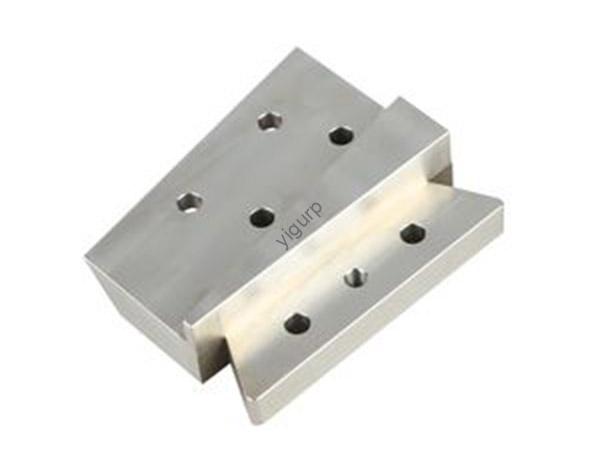
M2 tool steel is a premium high-speed steel (HSS) that has served as the industry standard for high-performance cutting and forming tools for decades. Its defining characteristic is its exceptional hot hardness—the ability to retain hardness and cutting edge integrity at elevated temperatures. Through a precise chemistry rich in tungsten (5.50-6.75%), molybdenum (4.75-5.50%), and vanadium (1.75-2.25%), it can be heat-treated to achieve a hardness of 62-68 HRC and maintain a hardness of approximately 60 HRC at 600°C. This combination of high hardness, excellent wear resistance, and good toughness makes M2 the material of choice for high-speed cutting tools, precision forming dies, and critical components in the aerospace and automotive industries where speed, precision, and durability are paramount.
Introduction
In modern manufacturing, productivity is driven by speed. The faster a cutting tool can operate, the more parts can be produced per hour. However, high cutting speeds generate intense heat at the tool edge. Standard tool steels soften rapidly at these elevated temperatures, losing their hardness and dulling. This requires slower speeds, more frequent tool changes, and higher costs. M2 tool steel was developed to overcome this limitation. Its high tungsten and molybdenum content provides exceptional red hardness, allowing it to maintain a sharp cutting edge even when red-hot from high-speed machining. For applications where productivity and tool life are critical, M2 offers a level of performance that standard tool steels cannot match.
What Are the Key Properties of M2?
The performance of M2 is defined by its rich alloy chemistry and the mechanical properties achieved through its specialized heat treatment.
Chemical Composition
The high content of tungsten, molybdenum, and vanadium is key to its hot hardness and wear resistance.
| Element | Content Range (%) | Its Role in Performance |
|---|---|---|
| Tungsten (W) | 5.50 – 6.75 | The core element for hot hardness. Forms stable carbides that resist softening at high temperatures. |
| Molybdenum (Mo) | 4.75 – 5.50 | Works with tungsten to boost hot hardness and reduce brittleness. |
| Vanadium (V) | 1.75 – 2.25 | Refines grain size, enhances toughness, and forms hard vanadium carbides for wear resistance. |
| Carbon (C) | 0.80 – 0.95 | Forms hard carbides with tungsten, molybdenum, and vanadium. |
| Chromium (Cr) | 3.75 – 4.25 | Enhances hardenability and provides some corrosion resistance. |
| Manganese (Mn) | 0.20 – 0.40 | Boosts hardenability. |
| Silicon (Si) | 0.15 – 0.35 | Aids in deoxidation. |
Mechanical and Physical Properties
After proper heat treatment (austenitizing, quenching, and tempering), M2 achieves the properties required for high-speed applications.
| Property | Typical Value | Why It Matters |
|---|---|---|
| Hardness | 62 – 68 HRC | Provides excellent wear resistance and the ability to cut hard materials. |
| Hot Hardness | ~60 HRC at 600°C | Maintains hardness and cutting edge integrity at high speeds. |
| Tensile Strength | 2000 – 2500 MPa | Withstands high cutting forces without failure. |
| Yield Strength | 1600 – 2000 MPa | Resists permanent deformation under heavy machining loads. |
| Impact Toughness | 35 – 45 J/cm² | Provides enough toughness to resist chipping, though lower than some cold-work steels. |
| Fatigue Strength | 800 – 1000 MPa | Withstands repeated stress cycles in interrupted cutting operations. |
| Density | ~7.85 g/cm³ | Standard for steel. |
- Wear Resistance: The hard carbides of tungsten, molybdenum, and vanadium provide exceptional resistance to abrasion, even at high speeds.
- Red Hardness: This is the standout feature. M2 retains its hardness at temperatures that would soften other tool steels, allowing for much higher cutting speeds.
- Machinability: In the annealed state (220-250 HB), it has good machinability with carbide tools.
Where Is M2 Used in the Real World?
M2 is used in the most demanding cutting and forming applications across many industries.
High-Speed Cutting Tools
This is the primary application. M2 is used for milling cutters, turning tools, broaches, and reamers.
- Case Study: A machining shop was using A2 tool steel for milling cutters used on carbon steel parts. The A2 cutters dulled after 800 parts , requiring frequent regrinding.
- They switched to M2 cutters .
- The M2 cutters lasted 3,200 parts , a 300% increase .
- Regrinding time was cut by 75% , saving $18,000 annually .
Precision Forming Tools
M2 is used for high-speed punches, cold-forming dies, and stamping tools.
- Case Study: An aerospace manufacturer was using ceramic tools for machining Inconel turbine blades. The ceramic tools had a 40% failure rate due to chipping.
- They switched to M2 cutting tools .
- Tool life increased from 60 cycles to 200 cycles .
- The chipping rate dropped to 8% , saving $50,000 annually in material waste.
Aerospace and Automotive Machining
M2 is used for cutting tools that machine high-temperature alloys like Inconel and titanium, as well as for high-speed machining of engine blocks and transmission components.
How Is M2 Manufactured?
The manufacturing process for M2 is designed to create a uniform distribution of hard carbides and achieve the necessary hot hardness.
Steelmaking and Forming
- Steelmaking: It is typically made in an Electric Arc Furnace (EAF) , allowing for precise control of the tungsten, molybdenum, and vanadium content.
- Hot Rolling: The steel is hot rolled into bars and plates.
- Annealing: The steel is annealed to a hardness of 220-250 HB to make it machinable.
Heat Treatment
Heat treatment is critical to achieving M2’s high hardness and hot hardness.
- Austenitizing: The steel is heated to a very high temperature, 1200-1250°C , to dissolve the alloy carbides into a solid solution. This step requires careful control.
- Quenching: The steel is rapidly cooled in oil or air, locking in the high-carbon, high-alloy structure.
- Tempering: The quenched steel is then reheated to 500-550°C . This high tempering temperature is essential to transform the retained austenite to martensite and to achieve the desired hot hardness.
Finishing
- Machining: Most machining is done in the annealed state.
- Grinding: After heat treatment, precision grinding with diamond wheels is used to achieve final dimensions and sharp cutting edges.
- Coating: For enhanced performance, PVD coatings like titanium aluminum nitride (TiAlN) are often applied to reduce friction and further extend tool life.
M2 vs. Other Tool Steels
Comparing M2 to other materials helps clarify its position as the standard high-speed steel.
| Material | Hardness | Hot Hardness (600°C) | Toughness | Relative Cost | Best For |
|---|---|---|---|---|---|
| M2 | 62 – 68 HRC | ~60 HRC | Moderate | Medium-High | High-speed cutting tools, precision forming dies |
| A2 | 52 – 60 HRC | ~35 HRC | High | Lower | General tooling, moderate wear, lower speeds |
| D2 | 60 – 62 HRC | ~30 HRC | Low | Medium | High-wear, dry, low-speed applications |
| H13 | 58 – 62 HRC | ~48 HRC | High | Medium | Hot-work tooling, forging dies |
| Ceramics | 70+ HRA | Excellent | Very Low | Very High | Ultra-high-speed machining of hard materials |
Key Takeaway: M2 offers the best combination of high hot hardness, good wear resistance, and adequate toughness for high-speed cutting applications. It is significantly more heat-resistant than cold-work steels like A2 and D2, and it is far more affordable and tougher than ceramic tools. For high-volume machining and precision forming, M2 is the standard and most reliable choice.
Conclusion
M2 tool steel is a high-performance material that has defined the standard for high-speed cutting and forming for generations. Its exceptional hot hardness, excellent wear resistance, and good toughness make it the ideal choice for applications where productivity, tool life, and precision are critical. For engineers and manufacturers seeking to maximize machining speeds and tool performance, M2 offers a proven, reliable, and cost-effective solution.
FAQ About M2 Tool Steel
Can M2 be used for machining non-ferrous metals like aluminum?
Yes, it can, and it will provide excellent tool life. However, for machining soft non-ferrous metals, the extreme hot hardness and wear resistance of M2 may be overkill. A lower-cost tool steel like A2 may be sufficient for aluminum. M2 is best utilized for machining harder materials like steel, stainless steel, cast iron, and high-temperature alloys.
What is the difference between M2 and M42 high-speed steel?
M2 is the standard general-purpose high-speed steel, offering a good balance of wear resistance, toughness, and cost. M42 is a cobalt-bearing high-speed steel (with 8% cobalt). M42 has higher hot hardness and wear resistance than M2, allowing for even higher cutting speeds, but it is also more expensive and more brittle. Choose M2 for most applications; choose M42 for machining the hardest materials at the highest speeds.
Is M2 tool steel suitable for cold-work applications?
Yes, M2 can be used for cold-work applications such as punches and dies. Its high hardness and wear resistance provide long tool life. However, its toughness is lower than that of dedicated cold-work steels like A2 or S1. For applications where impact resistance is critical, a cold-work steel may be a better choice. For high-wear, high-speed cold forming, M2 is an excellent option.
Discuss Your Projects with Yigu Rapid Prototyping
At Yigu Rapid Prototyping, we have extensive experience working with M2 and other high-performance tool steels for demanding cutting and forming applications. We understand that for high-speed machining, material selection, heat treatment, and precision finishing are critical to achieving maximum tool life and productivity. We supply M2 in bars, plates, and custom-machined components, with full heat treatment services to achieve the optimal hardness and hot hardness. Our team can provide guidance on heat treatment cycles, machining parameters, and PVD coatings. Whether you are manufacturing high-speed milling cutters, precision forming dies, or cutting tools for aerospace alloys, we are here to help. Contact us today to discuss your project requirements.