
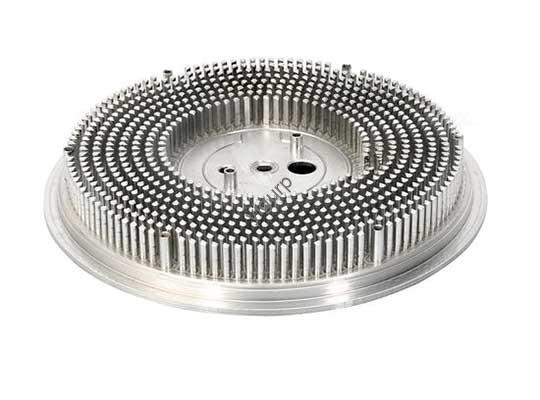
When you need a metal part that is strong, precise, and produced efficiently, the expertise of a metal forming company becomes essential. These specialists shape raw metal into functional components without cutting material away, which preserves strength and reduces waste. From automotive chassis parts to medical device enclosures, the right partner makes the difference between a part that performs and one that fails prematurely. In this guide, I will walk you through what these companies do, how to evaluate them, and what to look for based on real project experience.
Introduction
Metal forming is one of the oldest manufacturing techniques, but today it is also one of the most technologically advanced. Unlike machining, which removes material to create a shape, forming uses force—bending, stretching, or compressing—to reshape metal while keeping its structure intact. This approach often results in stronger parts with better material utilization. Over the years at Yigu Rapid Prototyping, I have worked with dozens of metal forming partners. I have seen projects succeed because of a great partnership and fail because of a poor one. Understanding how these companies operate is the first step to getting your project right.
What Exactly Do Metal Forming Companies Do?
At their core, metal forming companies take flat sheets, coils, or bars of metal and transform them into three-dimensional components. They act as a bridge between raw material suppliers and industries that need finished parts. Their work touches nearly everything around us, from the frame of your car to the housing of your computer.
Core Functions That Drive Value
A capable metal forming company provides more than just bending and cutting. Their core functions include:
- Shaping raw materials into precise geometries using processes like stamping, deep drawing, and roll forming.
- Maintaining dimensional accuracy across thousands or even millions of parts, often holding tolerances as tight as ±0.002 inches.
- Adding value through secondary services such as welding, finishing, and assembly to deliver ready-to-install components.
- Providing design feedback early in the development process to optimize parts for manufacturability, which reduces cost and lead time.
The Scale of Their Impact
The numbers tell the story. According to industry data, over 80% of all manufactured metal products go through at least one forming process. This means that whether you are building a satellite or a surgical tool, a metal forming company has likely played a role in its creation.
What Services Do Leading Metal Forming Companies Offer?
Not all metal forming companies are the same. Some specialize in massive structural components, while others focus on intricate, high-precision parts. Understanding the distinction helps you narrow your search.
Heavy Fabrication Services
Heavy fabrication deals with large, thick, or high-strength components. These are the parts that go into infrastructure, heavy machinery, and large-scale industrial equipment.
| Service | What It Does | Typical Application |
|---|---|---|
| Roll Forming | Passes metal through a series of rollers to create long, consistent profiles. | Structural framing, shelving systems, automotive rails. |
| Press Braking | Uses hydraulic or mechanical presses to bend thick sheets into precise angles. | Construction brackets, truck frames, industrial enclosures. |
| Large-Scale Stamping | Employs high-tonnage presses (up to 700 tons or more) to form large parts. | Chassis components, agricultural equipment panels. |
Heavy fabrication shops typically work with material thicknesses exceeding 0.25 inches and often handle steel, stainless steel, and high-strength alloys.
Light Fabrication Services
Light fabrication focuses on smaller, more intricate parts. Precision and speed are the priorities here.
- Precision Bending: Achieves bend angles within ±1 degree for small to medium-sized parts used in electronics and medical devices.
- Sheet Metal Stamping: Uses dies and presses to produce detailed parts from thin sheets, often at high volumes.
- Deep Drawing: Stretches metal over a die to create hollow, seamless shapes like battery housings or sink basins.
- Laser Cutting: Provides clean, precise cut edges before forming, allowing for complex geometries with minimal distortion.
Light fabrication shops typically work with materials thinner than 0.25 inches, including aluminum, brass, and thin-gauge stainless steel.
Value-Added Services That Matter
The best metal forming companies do not stop at shaping metal. They offer additional services that save you time and money by consolidating your supply chain.
- Finishing: Powder coating, anodizing, plating, and painting to improve corrosion resistance and appearance.
- Hardware Insertion: Installing nuts, studs, and other fasteners directly during production.
- Deburring and Polishing: Removing sharp edges and improving surface finish for safety and aesthetics.
- Assembly: Combining multiple formed components into a single sub-assembly ready for installation.
How Do You Choose the Right Metal Forming Partner?
Selecting a metal forming company is a strategic decision. The lowest quote rarely delivers the best long-term value. I have seen projects succeed when the selection process focused on these key areas.
Evaluate Technical Capabilities on Paper First
Before you send a drawing, assess whether the company has the equipment and expertise for your specific needs.
- Equipment Inventory: Look for modern machinery. A shop with CNC-controlled presses and automated material handling will offer better consistency than one relying on manual equipment.
- Material Expertise: Confirm they have experience with your required material. Forming 316 stainless steel is very different from forming 5052 aluminum. One requires much higher tonnage and different tooling.
- Process Capabilities: Ensure they offer the specific processes your project needs. If you need deep drawing for a seamless enclosure, make sure it is a core service, not an occasional side project.
Verify Quality Assurance Systems
Quality is not just about the final part. It is about consistency across every part in your order.
Case Study: A medical device company I worked with needed 10,000 stainless steel enclosures with tight tolerances. They chose a forming company based solely on price. The first 500 parts were fine, but the next 500 had significant variation due to inconsistent tooling wear. The project was delayed by three months. The lesson: always verify the quality control process.
Key things to look for:
- Certifications: ISO 9001 is the baseline. For aerospace, look for AS9100. For medical, ask about compliance with relevant standards.
- Inspection Protocols: Ask how they inspect parts. Do they use CMM (coordinate measuring machines) for random sampling, or do they rely on manual checks?
- Tolerance Capabilities: Get their standard tolerances in writing. For precision applications, confirm they can hold ±0.002 inches or tighter.
Assess Production Capacity and Lead Times
A company that is a great fit for a prototype may not be the right fit for production volumes of 100,000 units.
- Production Volume: Some companies specialize in low-volume, high-mix work. Others are optimized for high-volume, low-variety production. Make sure their model matches your needs.
- Lead Times: Ask about standard lead times and their ability to expedite. Some digital-first companies now offer custom parts in as little as 2 days.
- Scalability: Determine if they can scale production up or down as your project evolves from prototyping to full production.
Look Beyond Price to Total Value
Cost is important, but it should be weighed against quality, service, and long-term reliability.
Case Study: An automotive supplier was choosing between two forming companies for a high-volume suspension component. Company A quoted 15% lower per part. Company B quoted higher but offered finite element analysis (FEA) during the design phase to optimize the part and tooling. The supplier chose Company B. The FEA analysis identified a potential thinning issue that would have caused a 5% failure rate in production. Fixing it before tooling saved over $200,000 in scrap and rework.
What Technologies Are Transforming Metal Forming?
The metal forming industry is undergoing a significant shift driven by digital tools and automation. The most capable companies are investing heavily in these areas.
Simulation and Digital Design
Gone are the days of relying solely on trial and error to develop tooling. Modern metal forming companies use advanced software to predict outcomes before cutting steel.
- Finite Element Analysis (FEA): This software simulates the forming process digitally. It can predict where a part will thin, wrinkle, or crack. This allows engineers to adjust the tooling or part design before any metal is formed, saving months of development time.
- 3D Modeling and CAM: Detailed solid models are used to program CNC machinery directly, ensuring that the digital design matches the physical part with high fidelity.
Automation and CNC Precision
Automation has dramatically improved consistency and speed.
- CNC Press Brakes: These machines automatically adjust for material variations, ensuring that every bend is accurate to within a fraction of a degree.
- Robotic Material Handling: Robots load and unload parts, reducing human error and allowing for lights-out manufacturing.
- Automated Inspection: Vision systems and laser scanners check dimensions in real-time, catching defects early in the process.
What Trends Are Shaping the Future?
Several trends are driving change in how metal forming companies operate. Being aware of these can help you identify forward-thinking partners.
Sustainability and Material Efficiency
Environmental concerns are pushing companies to reduce waste. Modern forming processes now focus on near-net shaping, which means the formed part is very close to its final geometry, requiring less material and fewer secondary operations. Scrap metal from forming is also highly recyclable, and many companies now recycle 100% of their production waste.
The Rise of Digital Manufacturing
The demand for faster turnaround and custom parts has given rise to digital-first metal forming companies. These companies offer:
- Instant quoting through online portals where you upload a CAD file and receive a price within minutes.
- Automated design for manufacturability (DFM) feedback that flags potential issues before production.
- Shorter lead times by streamlining the workflow from quote to shipping.
More Customization, Smaller Batches
The market is shifting away from one-size-fits-all products. Industries like medical, aerospace, and consumer electronics require specialized components in smaller quantities. Metal forming companies are adapting by developing flexible manufacturing systems that allow for quick changeovers between jobs, making small-batch production economical.
Conclusion
Metal forming companies are essential partners in bringing products to life. They possess the equipment, expertise, and processes to transform raw metal into reliable, high-performance components. The key to a successful partnership lies in looking beyond the price per part. Evaluate technical capabilities, verify quality systems, and assess whether their production model aligns with your volume and timeline needs. A thoughtful selection process leads to fewer delays, lower long-term costs, and a final product that performs as intended.
FAQ About Metal Forming Companies
What is the difference between metal forming and metal fabrication?
Metal forming is a subset of fabrication that specifically uses force to reshape metal without removing material. Fabrication is a broader term that includes forming, cutting, welding, and assembly. A metal forming company specializes in the reshaping process, often as part of a larger fabrication workflow.
How do I know if a metal forming company can meet my tolerance requirements?
Ask for their standard tolerance specifications in writing. Reputable companies will provide tolerances for each process, such as ±0.002 inches for precision stamping. Also, request examples of similar work and ask about their inspection methods, including whether they use CMM machines for verification.
What materials can metal forming companies typically work with?
Most forming companies work with a range of materials including carbon steel, stainless steel (such as 304 and 316), aluminum alloys (like 5052 and 6061), copper, brass, and titanium. Advanced shops may also handle high-strength alloys and specialty materials. Always confirm that your specific material is within their expertise.
Is it better to choose a company that specializes in my industry?
Not necessarily. A company with deep expertise in a specific material or process—such as deep drawing stainless steel—can often deliver better results than a generalist with industry-specific marketing. Focus on matching their technical capabilities to your part requirements rather than industry labels.
Discuss Your Projects with Yigu Rapid Prototyping
Finding the right metal forming partner can be challenging, especially when balancing cost, quality, and lead time. At Yigu Rapid Prototyping, we bridge the gap between design and production. We work closely with a network of qualified metal forming specialists and can help you navigate the selection process based on your specific project needs. Whether you need a prototype to validate a design or a production partner for a high-volume run, we are here to help. Contact us to discuss your project and get started.