
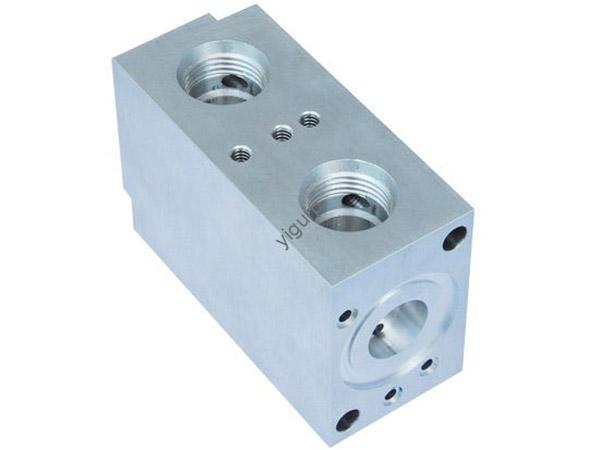
Rail steel is a specialized, high-carbon steel engineered specifically for the demanding conditions of railway infrastructure. It is defined by its exceptional wear resistance, high fatigue strength, and durability, far exceeding the capabilities of standard structural steels. With a typical tensile strength of 800-1000 MPa and a hardened rail head achieving 240-300 HB, it is designed to withstand the constant pounding of millions of train passes, the friction of steel wheels, and the stresses of heavy axle loads. Its carefully balanced chemistry, with controlled levels of carbon, manganese, chromium, and vanadium, combined with specialized heat treatment, makes it the essential material for mainline tracks, high-speed rail networks, and heavy freight lines where reliability and long service life are critical.
Introduction
The world’s railways are a testament to the demands placed on materials. A single rail line can see millions of train passes over its lifetime, each one applying a complex cycle of stress, impact, and friction. Standard structural steels, while adequate for buildings and bridges, are simply not designed for this. They would wear down rapidly, develop fatigue cracks, and fail prematurely. Rail steel was developed to meet these specific challenges. Its high carbon content provides the hardness to resist wear, its alloying elements enhance toughness and fatigue strength, and its specialized heat treatment creates a hard, wear-resistant surface on the rail head while maintaining a tough core to absorb impact. For any railway project, from high-speed passenger lines to heavy freight networks, rail steel is the proven, essential material.
What Are the Key Properties of Rail Steel?
The performance of rail steel is defined by its chemical composition and the mechanical properties achieved through its specialized manufacturing and heat treatment.
Chemical Composition
The elements in rail steel are carefully balanced to achieve high strength, wear resistance, and toughness.
| Element | Content Range (%) | Its Role in Performance |
|---|---|---|
| Carbon (C) | 0.60 – 0.80 | Provides high hardness and wear resistance on the rail head. |
| Manganese (Mn) | 1.00 – 1.60 | Enhances hardenability and toughness, preventing cracking from train impacts. |
| Chromium (Cr) | 0.20 – 0.50 | Boosts wear resistance and provides moderate corrosion protection. |
| Vanadium (V) | 0.02 – 0.10 | Refines grain structure, drastically improving fatigue strength for high-speed rail. |
| Silicon (Si) | 0.15 – 0.40 | Strengthens the steel matrix and improves heat resistance. |
| Nickel (Ni) | 0.10 – 0.30 | Enhances low-temperature toughness, preventing brittleness in winter. |
| Sulfur (S) | ≤ 0.030 | Minimized to prevent brittleness. |
| Phosphorus (P) | ≤ 0.035 | Controlled to maintain ductility. |
Mechanical and Physical Properties
These properties are critical for withstanding the dynamic stresses of railway operation.
| Property | Value Range | Why It Matters |
|---|---|---|
| Tensile Strength | 800 – 1000 MPa | Withstands the high pulling forces and stresses of train movement. |
| Yield Strength | ≥ 500 MPa | Resists permanent deformation under heavy axle loads. |
| Hardness (Rail Head) | 240 – 300 HB (25-32 HRC) | Provides excellent wear resistance against steel wheels. |
| Elongation | ≥ 10% | Maintains enough ductility to avoid brittle failure. |
| Impact Toughness | ≥ 25 J at -40°C | Remains tough in cold climates, resisting cracking in freezing conditions. |
| Fatigue Strength | ~350 MPa | Withstands millions of stress cycles from passing trains. |
| Wear Resistance | 3x better than Q345 | Lasts significantly longer under the friction of rolling wheels. |
| Density | 7.85 g/cm³ | Standard for steel, simplifying design. |
- Weldability: It has fair weldability. Preheating to 200-250°C and the use of low-hydrogen electrodes are required to prevent cracking when joining rail sections.
- Corrosion Resistance: It has good corrosion resistance. For coastal or highly humid environments, galvanizing or epoxy coating is applied to extend service life.
Where Is Rail Steel Used in the Real World?
Rail steel is used in all types of railway infrastructure, from high-speed passenger lines to heavy freight networks and urban transit systems.
High-Speed and Mainline Passenger Rail
Rail steel is used for tracks that must maintain precise alignment and withstand high speeds.
- Case Study: The French railway (SNCF) used rail steel for the TGV high-speed network, where trains operate at 320 km/h.
- The steel’s high fatigue strength (~350 MPa) prevented cracking.
- Its hardened rail head (30 HRC) withstood 12 million train passes before needing grinding.
- The network saw a 50% reduction in maintenance costs compared to using standard steel rails.
Heavy Freight and Mining Railways
Rail steel is used for lines that carry heavy loads, such as iron ore and coal trains with high axle loads.
- Case Study: An Australian mining company used rail steel for a 1,000 km iron ore rail line with 30-ton axle loads.
- Standard steel rails lasted 8 years .
- Rail steel’s 3x better wear resistance extended lifespan to 15 years .
- This saved $20 million in replacement costs and reduced train delays for transporting 100 million tons of iron ore annually.
Urban Light Rail and Transit Systems
Rail steel is used for light rail and tram lines that experience frequent stops, starts, and pedestrian traffic.
- Case Study: The city of Toronto used rail steel for its light rail system.
- Standard steel rails developed cracks after 6 years .
- Rail steel’s toughness (25 J at -40°C) prevented winter cracking, and its wear resistance handled 8 million passenger trips annually .
- The system required only annual maintenance, compared to bi-annual for standard steel.
How Is Rail Steel Manufactured?
The manufacturing process for rail steel is designed to create a complex profile with a hard, wear-resistant rail head and a tough web and base.
Steelmaking and Rolling
- Steelmaking: It is typically made in a Basic Oxygen Furnace (BOF) for large-scale production or an Electric Arc Furnace (EAF) for specialty grades. Alloying elements like chromium and vanadium are precisely controlled.
- Hot Rolling: Blooms are heated to 1150-1250°C and hot rolled into the standard rail profile. The rolling process itself is controlled to refine the grain structure.
- Heat Treatment: The rail head is subjected to a specialized quenching and tempering treatment. It is heated to 850-900°C, rapidly cooled (quenched), and then tempered at 500-550°C. This creates a hard, wear-resistant surface (up to 50 HRC) while keeping the rail body tough (25 HRC).
Finishing and Quality Control
- Rail Grinding: After production, the rail head is precision ground to ensure a smooth surface, which is critical for reducing noise and vibration, especially on high-speed lines.
- Non-Destructive Testing: Every rail is inspected using ultrasonic testing to detect internal defects and magnetic particle inspection to find surface cracks.
- Corrosion Protection: For lines in coastal or wet environments, rails can be galvanized or coated with epoxy paint (excluding the rail head) to provide long-term corrosion protection.
Rail Steel vs. Other Structural Materials
Comparing rail steel to other materials helps clarify its specialized role.
| Material | Wear Resistance | Fatigue Strength | Relative Cost | Best For |
|---|---|---|---|---|
| Rail Steel | Excellent (3x Q345) | ~350 MPa | Medium | Railway tracks, heavy conveyors |
| Q345 Steel | Good | ~200 MPa | Lower | Bridges, building structures |
| Q460 Steel | Very Good | ~230 MPa | Medium-Higher | Heavy machinery, high-stress structures |
| Stainless Steel (316L) | Good | ~180 MPa | Much Higher | Coastal components, corrosion-prone parts |
| Aluminum | Poor | ~90 MPa | 3x Higher | Lightweight rail vehicles, not for tracks |
Key Takeaway: Rail steel is specifically optimized for the unique demands of railway infrastructure. It offers significantly better wear resistance and fatigue strength than standard structural steels, making it the only practical choice for mainline tracks, high-speed rail, and heavy freight lines.
Conclusion
Rail steel is a specialized, high-performance material engineered for the unique and demanding conditions of railway infrastructure. Its combination of high hardness, excellent wear resistance, and superior fatigue strength provides the durability and reliability required for high-speed passenger lines, heavy freight networks, and urban transit systems. For any railway project where safety, longevity, and low maintenance are paramount, rail steel is the essential and proven solution.
FAQ About Rail Steel
Can rail steel be used in coastal areas with saltwater exposure?
Yes, but with protection. Rail steel has good corrosion resistance, but for long-term service in coastal or saltwater environments, a protective coating is required. Hot-dip galvanizing or epoxy coating (applied to the rail web and base, not the head) can extend service life to 15-20 years in coastal conditions, compared to 10 years for uncoated rails.
Is rail steel suitable for high-speed rail (250+ km/h)?
Absolutely. Rail steel’s high fatigue strength (~350 MPa) and precision-rolled profile are essential for maintaining the tight tolerances required for high-speed operation. All major high-speed networks, including the TGV, Shinkansen, and China’s high-speed rail, use rail steel for their mainlines.
How long does rail steel last in freight rail applications?
For heavy freight lines with 20-30 ton axle loads, rail steel typically lasts 12-15 years , which is double the lifespan of standard steel. Regular maintenance, including rail grinding every 3-5 years, can extend this life to 20 years , making it significantly more cost-effective over the long term.
Discuss Your Projects with Yigu Rapid Prototyping
At Yigu Rapid Prototyping, we have extensive experience supplying rail steel and other high-performance steels for demanding infrastructure projects. We understand that for railway applications, material quality, precise profiling, and reliable performance are critical. We supply rail steel in standard profiles for high-speed, freight, and light rail applications, with full mill test certificates including hardness and fatigue strength data. Our team can provide guidance on welding procedures, heat treatment, and corrosion protection to ensure your rail system meets its performance and longevity goals. Whether you are building a high-speed line, a heavy freight network, or an urban light rail system, we are here to help. Contact us today to discuss your project requirements.