
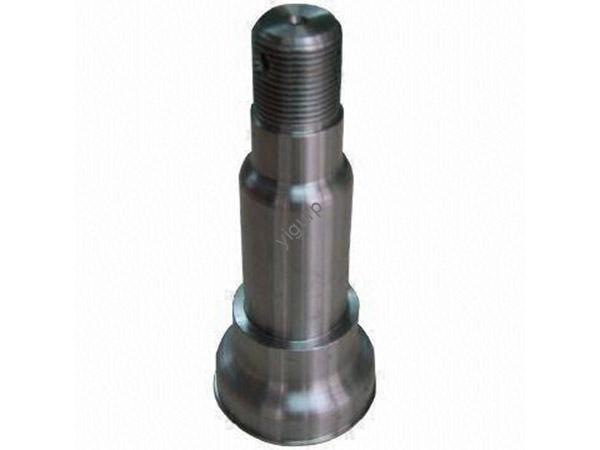
If you need a stainless steel that is extremely hard and wear-resistant—for knives, surgical tools, or industrial blades—JIS SUS440C stainless steel is the top choice. As a high-carbon martensitic steel, it delivers unmatched hardness (up to 60 HRC) after heat treatment, making it perfect for parts that need to stay sharp or resist wear. This guide will cover everything you need to use it effectively for your most demanding applications.
What Makes JIS SUS440C the Ultimate Hard Stainless Steel?
The superpower of SUS440C is its extreme hardness, driven by its unique material properties—especially its high carbon and chromium content. The “C” in its name stands for “high carbon,” which is the key to its exceptional performance.
Alloy Composition
The precise mix of elements in SUS440C is what allows it to achieve such high hardness after heat treatment.
| Element | Content Range | Key Role in Performance |
|---|---|---|
| Carbon (C) | 0.95% – 1.20% | Enables extreme hardness via heat treatment, forming a hard martensitic structure. |
| Chromium (Cr) | 16.0% – 18.0% | Forms a protective oxide layer, providing mild corrosion resistance. |
| Molybdenum (Mo) | 0.40% – 0.60% | Boosts wear resistance and hardenability, improving the steel’s response to heat treatment. |
| Manganese (Mn) | ≤ 1.0% | Improves workability during hot rolling. |
| Silicon (Si) | ≤ 1.0% | Reduces oxidation during manufacturing. |
Mechanical Properties After Heat Treatment
After proper heat treatment (hardening and tempering), SUS440C’s properties are unmatched for wear-resistant parts. This is where it truly shines.
| Property | Typical Value (Heat-Treated) | Practical Benefit |
|---|---|---|
| Hardness (HRC) | 58 – 60 | Extremely hard—stays sharp 3x longer than SUS410 or carbon steel. |
| Tensile Strength | ≥ 1900 MPa | Handles extreme loads, ideal for industrial blades and high-performance bearings. |
| Yield Strength | ≥ 1500 MPa | Resists bending, perfect for surgical scalpels or knife blades that must maintain a precise edge. |
| Elongation | ≥ 5% | Very stiff—good for rigid tools, but not suitable for forming or bending. |
| Wear Resistance | Excellent | Molybdenum and hard carbides create a surface that resists abrasion. |
Real-World Example: A premium knife maker in Japan uses SUS440C for high-end chef’s knives. After heat treatment, its 59 HRC hardness keeps blades sharp through months of heavy use, outperforming cheaper steels that would dull quickly.
Where Is JIS SUS440C Stainless Steel Used?
Thanks to its extreme hardness and mild corrosion resistance, SUS440C is used for precision tools and wear-resistant parts that must maintain their edge and shape under demanding conditions.
Cutlery and Knives
This is one of the most common applications for SUS440C. Its ability to hold a sharp edge is highly valued.
- High-End Knives: A U.S. knife brand uses SUS440C for its “lifetime” hunting knives. Customers report the blades stay sharp for years, even with regular use in the field.
- Chef’s Knives and Straight Razors: The combination of high hardness and good edge retention makes it a favorite for culinary professionals and traditional shaving razors.
Surgical Instruments and Industrial Tools
In medical and industrial settings, precision and durability are critical.
- Surgical Scalpels: A medical supply firm in Germany uses SUS440C for surgical scalpels. Its hardness ensures clean, precise cuts during operations, and its moderate corrosion resistance withstands repeated sterilization cycles.
- Industrial Blades: A factory in China uses SUS440C for paper cutter blades. The blades last 6 months before needing sharpening, compared to just 1 month for SUS410 blades.
Aerospace and Automotive Components
For high-performance parts that face extreme wear, SUS440C provides the necessary durability.
- Bearings and Gears: An aerospace supplier uses SUS440C for jet engine bearings. Its tensile strength of 1900 MPa resists extreme pressure at high speeds.
- Racing Brake Rotors: A racing team in Italy uses SUS440C for brake rotors. Its wear resistance handles the extreme friction of 200+ mph stops.
How Is JIS SUS440C Stainless Steel Manufactured?
SUS440C requires careful processing—especially heat treatment—to unlock its extreme hardness. The manufacturing steps are critical to its final performance.
Forming and Heat Treatment (The Key Step)
The process begins with shaping the steel and then applying the critical heat treatment.
- Hot Rolling and Annealing: The steel is hot rolled at 1050–1150°C into bars or coils. It is then annealed (heated to 800–850°C and cooled slowly) to soften it for initial machining. In its annealed state, it can be cut, drilled, and shaped.
- Hardening: This is the most important step. The machined part is heated to 1010–1070°C and then rapidly cooled (quenched) in oil. This process forms a very hard microstructure called martensite, which is the source of the steel’s extreme hardness.
- Tempering: The hardened part is then reheated to 150–200°C. This step reduces the brittleness that comes from hardening while maintaining the high hardness of 58–60 HRC.
Machining and Finishing
After heat treatment, the steel is extremely hard and can only be finished by grinding.
- Grinding and Sharpening: Final shaping and edge creation are done with diamond grinders. This is essential for achieving the ultra-sharp edges required for knives and surgical tools.
- Pickling: A nitric acid treatment removes scale from heat treatment and enhances the surface’s corrosion resistance.
JIS SUS440C vs. Other Materials
Choosing the right material involves balancing hardness, corrosion resistance, and cost. This comparison shows where SUS440C fits best.
| Material | Hardness (HRC) | Corrosion Resistance | Wear Resistance | Relative Cost | Best Application |
|---|---|---|---|---|---|
| JIS SUS440C | 58 – 60 | Mild | Excellent | Medium | Knives, surgical tools, industrial blades |
| SUS304 | ~20 | Excellent | Poor | Low | Food-contact parts like sinks and bowls |
| SUS316 | ~20 | Excellent (seawater) | Poor | Medium | Marine components |
| SUS410 | ~40 | Mild | Good | Low | Budget cutlery, fasteners |
| Carbon Steel (1095) | 55 – 60 | Poor | Good | Low | Low-cost, disposable tools |
Conclusion
JIS SUS440C stainless steel is a high-carbon martensitic steel engineered for applications where extreme hardness and wear resistance are paramount. Its unique composition, featuring 0.95–1.20% carbon and 0.40–0.60% molybdenum, allows it to achieve a working hardness of 58–60 HRC after a precise hardening and tempering heat treatment. This makes it the material of choice for premium knives that stay sharp for years, surgical scalpels that make clean cuts, and industrial blades that last six times longer than standard grades. While it has only mild corrosion resistance and poor weldability, its unmatched hardness and ability to maintain a sharp edge make it the superior, cost-effective solution for any rigid, wear-critical application where performance and longevity are essential.
FAQ About JIS SUS440C Stainless Steel
How hard is JIS SUS440C compared to other stainless steels?
It is extremely hard. After proper heat treatment, it reaches 58–60 HRC on the Rockwell scale. For perspective, standard SUS304 has a hardness of about 20 HRC (soft enough to bend easily), and SUS410 is around 40 HRC. SUS440C is as hard as industrial drill bits.
Can JIS SUS440C be bent or formed into shapes?
No, it cannot. Its low elongation (≥5%) means it will crack if bent or formed. It is designed for rigid parts like knife blades, scalpels, and bearings. If you need a stainless steel for forming complex shapes, you should choose a different grade like SUS304 or SUS316.
Does JIS SUS440C rust?
It can rust in moist or salty environments, such as seawater or exposure to acidic foods like citrus. However, it is much more corrosion-resistant than carbon steel. To keep tools and knives rust-free, you should clean and dry them after use and apply a light coat of oil. With this simple maintenance, SUS440C tools can remain rust-free for years.
Can JIS SUS440C be welded?
It has very poor weldability. The high carbon content makes it prone to cracking and brittleness in the heat-affected zone. If welding is absolutely necessary, you must use TIG welding with preheating to 300–400°C and mandatory post-weld heat treatment. The better alternative is to avoid welding altogether by machining parts from a single piece or using mechanical fasteners.
Discuss Your Projects with Yigu Rapid Prototyping
Selecting the right material for ultra-hard, wear-resistant parts is critical for performance and longevity. At Yigu Rapid Prototyping, we specialize in providing JIS SUS440C stainless steel and have deep expertise in its precise heat treatment to achieve the optimal hardness of 58–60 HRC. We understand the nuances of machining it in its annealed state and finishing it with diamond grinding to create the sharpest edges. Whether you are developing a premium knife, a surgical instrument, or an industrial blade, our team can help you leverage the extreme hardness of SUS440C. Contact us today to discuss your project requirements.