
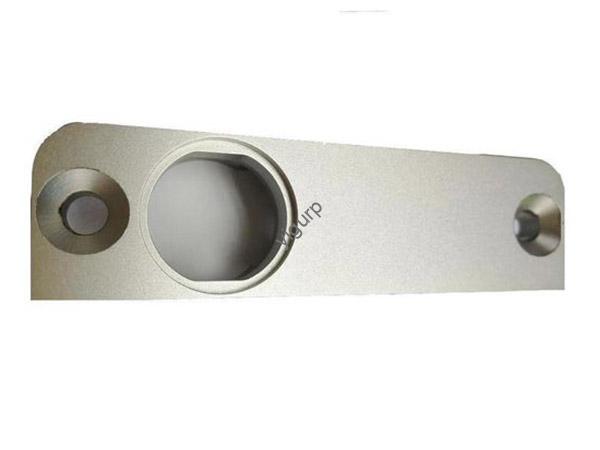
When your tools face repeated impact, sudden shocks, or high-stress cold working—and you are tired of chipped edges and cracked dies—S7 shock resistant tool steel offers the solution you need. Designed specifically for high-impact applications like stamping, shearing, and cold forming, this alloy delivers exceptional toughness without sacrificing the hardness required for wear resistance. This guide covers its key properties, real-world applications, manufacturing processes, and how it compares to other materials—helping you build tools that withstand heavy use and reduce costly downtime.
Introduction
In cold working operations, the failure mode of tools is often not gradual wear but sudden fracture. A stamping die that cracks after 50,000 cycles, a shear blade that chips on a hard spot, or a punch that breaks under an unexpected load—these failures stop production, require costly replacements, and create quality problems. Most tool steels prioritize hardness and wear resistance, but they become brittle at high hardness levels. S7 was developed to solve this problem. Its carefully balanced composition provides the impact toughness needed to absorb sudden forces while maintaining enough hardness for cold working applications. For tools that must take a hit and keep working, S7 is the material of choice.
What Defines S7 Shock Resistant Tool Steel?
The performance of S7 is rooted in its chemical composition and the heat treatment that develops its exceptional toughness. Understanding these fundamentals explains why this material outperforms conventional tool steels in impact applications.
Chemical Composition
S7 achieves its unique balance of properties through a precise combination of elements that promote toughness without sacrificing hardness.
| Element | Content Range (%) | Functional Role |
|---|---|---|
| Carbon (C) | 0.45–0.55 | Provides moderate hardness while maintaining flexibility for shock absorption. |
| Chromium (Cr) | 3.00–3.50 | Boosts wear resistance and hardenability; refines grain structure to support toughness. |
| Molybdenum (Mo) | 1.30–1.80 | The core element for shock resistance—prevents crack propagation under impact. |
| Manganese (Mn) | 0.20–0.50 | Improves hardenability and reduces brittleness during heat treatment. |
| Silicon (Si) | 0.20–0.45 | Enhances strength and resistance to oxidation in cold working environments. |
| Vanadium (V) | 0.10–0.30 | Refines grain structure, enhancing fatigue strength and dimensional stability. |
| Sulfur (S) | ≤ 0.030 | Minimized to avoid weakening the steel and reducing impact toughness. |
| Phosphorus (P) | ≤ 0.030 | Kept low to prevent brittleness, especially in cold or high-stress conditions. |
Mechanical Properties
The mechanical characteristics of S7 are optimized for shock resistance while maintaining useful hardness for cold working applications.
| Property | Typical Value | Practical Significance |
|---|---|---|
| Hardness | 45–50 HRC | Balanced hardness—tough enough for shock absorption, hard enough for stamping dies and shearing tools. |
| Impact Toughness | ≥ 120 J (Charpy V-notch at 20°C) | Exceptional—far higher than most tool steels; prevents chipping in high-impact tasks. |
| Tensile Strength | ≥ 1,800 MPa | Handles high impact forces without breaking—ideal for cold extrusion and stamping. |
| Yield Strength | ≥ 1,600 MPa | Resists permanent deformation, keeping tools dimensionally stable under load. |
| Elongation | ≥ 15% | High ductility allows the steel to bend, not crack, under impact. |
| Fatigue Strength | ~750 MPa (10⁷ cycles) | Resists failure from repeated impact, critical for high-cycle cold forming tools. |
Physical Properties
The physical characteristics of S7 are consistent with its role as a high-performance tool steel.
| Property | Typical Value | Practical Significance |
|---|---|---|
| Density | 7.85 g/cm³ | Standard for tool steels, simplifying weight calculations for tool designs. |
| Thermal Conductivity | 28 W/(m·K) | Good heat transfer, helping dissipate friction heat during cold working operations. |
| Coefficient of Thermal Expansion | 12.0 × 10⁻⁶/°C (20–600°C) | Low expansion reduces warping during heat treatment. |
| Hardenability | Excellent | Hardens evenly across thick sections (up to 80 mm), ensuring consistent performance in large tools. |
Why Is It Called Shock Resistant Tool Steel?
S7 earned its reputation as a shock resistant tool steel because its properties are specifically optimized to withstand the forces that cause other tool steels to fail.
Understanding Impact Toughness
Impact toughness measures a material’s ability to absorb energy without fracturing. In tool steel terms, it is the difference between a punch that cracks on a hard spot and one that deflects or deforms without failure. S7 achieves impact toughness values of 120 J or higher—approximately 3–4 times greater than D2 and 5–6 times greater than high-speed steels.
The Role of Molybdenum
The 1.30–1.80% molybdenum content in S7 is critical to its shock resistance. Molybdenum:
- Prevents crack propagation by creating a tough, ductile matrix around hard carbides
- Improves hardenability, allowing for consistent properties through thick sections
- Enhances tempering resistance, maintaining toughness at operating temperatures
Balanced Hardness
Unlike shock-resistant steels that sacrifice all hardness for toughness, S7 maintains 45–50 HRC. This balance allows it to:
- Resist wear in stamping and shearing applications
- Maintain dimensional accuracy through extended production runs
- Provide a stable base for surface treatments like nitriding when additional wear resistance is needed
Where Is S7 Commonly Used?
The combination of shock resistance, good wear resistance, and balanced hardness makes S7 suitable for demanding cold working applications across multiple industries.
- Stamping and Forming Dies:
- Stamping dies for high-strength steel automotive components, electrical contacts, and metal washers.
- Forming dies for complex shapes in cold working operations.
- Progressive dies where multiple operations occur in a single tool.
- Shearing and Cutting Tools:
- Shear blades for cutting thick metal sheets (up to 10 mm) and bars in industrial fabrication.
- Slitter blades for metal processing and coil slitting.
- Trimming dies for removing flash from forged or stamped parts.
- Cold Extrusion and Cold Heading:
- Cold extrusion tools for forming metal into shapes like bolts, nuts, and aluminum tubes.
- Cold heading dies for manufacturing fasteners and precision components.
- Punches and High-Impact Dies:
- Punches for creating holes in metal parts where impact loading is severe.
- High-impact dies for forming complex shapes in cold working operations.
- Backing plates and tool holders that support cutting and forming tools.
- Industrial Applications:
- Chisels and hammers for metalworking and fabrication.
- Cutter blades for recycling and scrap processing.
- Mining and quarrying tools requiring impact resistance.
How Is S7 Manufactured?
The manufacturing process for S7 is designed to preserve its shock-resistant properties while enabling efficient fabrication.
Steelmaking and Forging
S7 is produced in an Electric Arc Furnace (EAF) at 1,550–1,650°C, with precise additions of chromium, molybdenum, and vanadium to achieve the target composition. For critical applications, Vacuum Arc Remelting (VAR) may be used to improve cleanliness and uniformity.
Forging at 1,100–1,200°C is essential for large tools. The forging process aligns the grain structure, significantly improving toughness and shock resistance compared to cast or rolled material.
Heat Treatment
Heat treatment is critical to developing S7’s balanced properties:
| Process | Temperature Range | Purpose |
|---|---|---|
| Annealing | 800–850°C, slow cool | Softens the steel (HRC 22–26) for machining operations. |
| Austenitizing | 900–950°C, hold 1–2 hours | Prepares the steel for hardening. |
| Quenching | Oil quench | Hardens the steel to HRC 55–58. |
| Tempering | 400–500°C, hold 2–3 hours | Reduces brittleness and sets final hardness (45–50 HRC). Critical for balancing toughness and wear resistance. |
Fabrication
- Machining: Most shaping operations are performed in the annealed condition using carbide tooling. The material machines similarly to medium-carbon alloy steel.
- Grinding: After heat treatment, tools are ground to precise dimensions (±0.005 mm) to remove surface defects and ensure sharp edges.
- Surface Treatment: Optional nitriding creates a hard surface layer (HRC 60–65) to boost wear resistance for high-wear applications.
How Does It Compare to Other Tool Steels?
Understanding where S7 fits relative to other tool steels helps clarify its value for specific applications.
| Material | Hardness (HRC) | Impact Toughness (J) | Wear Resistance | Relative Cost | Best Applications |
|---|---|---|---|---|---|
| S7 | 45–50 | ≥ 120 | Good | 100% | Stamping dies, shearing tools, cold extrusion |
| D2 | 58–62 | 25–35 | Excellent | 80% | High-wear cold cutting tools, no impact |
| A2 | 57–60 | 30–40 | Very Good | 70% | General cold work with moderate impact |
| O1 | 57–60 | 15–25 | Good | 60% | Light-duty tools, no impact |
| 4140 (Q&T) | 30–35 | 50–70 | Fair | 50% | Structural components, not tooling |
| H13 (Hot Work) | 45–50 | 50–60 | Good | 90% | Hot forging, die casting (not cold work) |
Key takeaways:
- S7 offers dramatically higher impact toughness than D2, A2, or O1—making it the only choice for applications involving heavy impact.
- While D2 provides superior wear resistance, its low impact toughness makes it unsuitable for high-impact applications.
- For cold working tools that experience both wear and impact, S7 occupies a unique position that other tool steels cannot fill.
Case Studies: S7 in Real-World Applications
Case Study 1: Automotive Bracket Stamping Dies
A Korean automotive parts manufacturer was producing engine brackets using alloy steel stamping dies. The dies were cracking after 50,000 cycles due to the repeated impact of stamping high-strength steel. Each failure caused production stoppages and costly die replacements. The manufacturer switched to S7 shock resistant tool steel dies with proper heat treatment (tempered to 45–48 HRC for maximum toughness). The S7 dies lasted 250,000 cycles—a 400% improvement—with no cracking. The molybdenum content prevented crack propagation, while the chromium provided enough wear resistance to handle the high-strength steel. Production downtime for die changes was reduced by 80%, and overall tooling costs decreased significantly.
Case Study 2: Cold Shear Blades for Metal Fabrication
A German metal fabricator was using D2 shear blades for cutting thick steel plates. The D2 blades were chipping on hard spots and required replacement every 2–3 months, causing production delays. The fabricator switched to S7 shear blades, tempered to 46 HRC. The S7 blades lasted over 12 months—a 400% increase in service life—and showed no chipping. The high ductility of S7 allowed the blades to deflect rather than crack when encountering hard inclusions in the steel.
Case Study 3: Cold Heading Punches
A Japanese precision parts manufacturer was producing fasteners using alloy steel punches. The punches were breaking after 100,000 cycles due to fatigue from repeated impact. The manufacturer switched to S7 punches with optimized tempering (470°C) to maximize toughness. The S7 punches lasted 200,000 cycles—double the previous life—with no breakage. The improved fatigue strength of S7 (750 MPa at 10⁷ cycles) allowed the punches to withstand the repeated loading of high-volume production.
Conclusion
S7 shock resistant tool steel occupies a unique and essential position in the family of tool steels. Its exceptional impact toughness—achieved through precise chemistry and optimized heat treatment—allows it to withstand the repeated shocks, sudden loads, and demanding conditions of cold working operations that would crack or chip other materials. While it does not match the wear resistance of D2 or the red hardness of H13, its combination of toughness, balanced hardness, and good wear resistance makes it the material of choice for stamping dies, shear blades, cold extrusion tools, and punches where impact resistance is critical. For manufacturers seeking to reduce downtime, extend tool life, and improve production reliability, S7 delivers performance that lower-toughness steels simply cannot match.
FAQ About S7 Shock Resistant Tool Steel
Can S7 be used for hot working applications like hot forging dies?
No, S7 is designed for cold working applications where operating temperatures remain below approximately 400°C. It lacks the red hardness and high-temperature strength required for hot forging, die casting, or other hot working operations. For hot working applications, choose H13 or other hot-work tool steels specifically designed for elevated temperature service.
What is the best tempering temperature for S7 to maximize shock resistance?
For maximum shock resistance, temper S7 at 450–500°C. This tempering range reduces hardness slightly to 45–48 HRC but increases impact toughness to 130 J or higher. This combination is ideal for applications like heavy stamping, cold extrusion, and high-impact punches where crack prevention is the primary concern. For applications requiring higher wear resistance, lower tempering temperatures (350–400°C) can be used, though this reduces impact toughness.
Is S7 more expensive than carbon steel, and is it worth the extra cost?
Yes, S7 typically costs approximately 150% more than carbon steel grades like 1095. However, for high-impact applications, the investment is justified. S7 tools typically last 3–5 times longer than carbon steel tools in demanding applications, reducing downtime, labor costs for tool changes, and material costs for replacements. For high-volume production, the return on investment is substantial.
Can S7 be surface treated to improve wear resistance?
Yes. While S7 has good inherent wear resistance for most cold working applications, it can be nitrided to create a hard surface layer (HRC 60–65) that significantly improves wear resistance for high-wear applications like stamping abrasive materials or long-run production. The nitriding layer does not compromise the core toughness of the material, maintaining shock resistance where it matters most.
Discuss Your Projects with Yigu Rapid Prototyping
Selecting the right tool steel for high-impact applications requires balancing shock resistance, wear resistance, and hardness. At Yigu Rapid Prototyping, we combine deep expertise in shock-resistant steels like S7 with advanced manufacturing capabilities to deliver tools that withstand the toughest conditions. Whether you need stamping dies, shear blades, cold extrusion tools, or custom punches, our team can guide you from material selection through forging, heat treatment, and finishing.
We specialize in working with S7 and other high-performance tool steels, offering services including precision forging, custom heat treatment, nitriding, and precision grinding. If your next project demands tools that can take a hit and keep working, we are ready to help. Contact us today to discuss your requirements and discover how our expertise can support your high-impact tooling needs.