
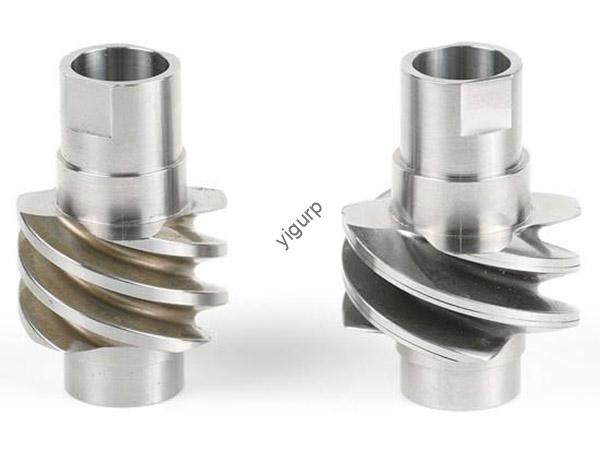
When your project involves automotive transmission gears, heavy machinery shafts, or high-strength bolts—components that require a balance of strength, toughness, and cost-effectiveness—GB 40Cr alloy steel is a proven solution. As a widely used Chinese standard alloy defined by GB/T 3077, it offers excellent hardenability and good mechanical properties at a reasonable cost. In this guide, I will walk you through its properties, applications, and how to work with it based on real manufacturing experience.
Introduction
GB 40Cr is a chromium-based alloy steel that occupies a practical place in the material landscape. Its composition includes 0.37–0.44% carbon for strength, 0.80–1.10% chromium for hardenability and wear resistance, and controlled levels of manganese and silicon. Unlike higher-alloy steels that contain expensive elements such as nickel or molybdenum, 40Cr achieves its properties through chromium alone, making it cost-effective for volume production. The material can be heat-treated through quenching and tempering to achieve tensile strengths of 980 MPa or higher while maintaining good toughness. Over the years at Yigu Rapid Prototyping, I have worked with automotive suppliers, machinery manufacturers, and industrial equipment builders who specify GB 40Cr for components that must perform reliably under moderate to high stress. Its combination of strength, hardenability, and affordability makes it a versatile choice for a wide range of applications.
What Makes GB 40Cr a Reliable Alloy Steel?
GB 40Cr achieves its properties through its chromium content and heat treatment. The chromium provides hardenability and wear resistance, while the carbon provides strength.
The Chemistry Behind the Performance
The chemical composition of GB 40Cr is specified in GB/T 3077. The chromium content is the key to its hardenability and wear resistance.
| Element | Content Range (%) | Why It Matters |
|---|---|---|
| Carbon (C) | 0.37 – 0.44 | Provides core strength and hardness. Essential for achieving high tensile strength after heat treatment. |
| Chromium (Cr) | 0.80 – 1.10 | Enhances hardenability and wear resistance. Provides moderate corrosion resistance. |
| Manganese (Mn) | 0.50 – 0.80 | Improves machinability and refines grain structure. Reduces brittleness. |
| Silicon (Si) | 0.17 – 0.37 | Acts as a deoxidizer. Strengthens the alloy without sacrificing flexibility. |
| Sulfur (S) / Phosphorus (P) | ≤ 0.035 | Kept low to prevent brittleness and maintain toughness. |
Key Insight: The chromium content of 0.80–1.10% gives GB 40Cr its hardenability. Unlike carbon steels that require rapid quenching to achieve hardness, 40Cr can be oil-quenched to achieve uniform hardness in sections up to 50 mm thick.
Mechanical Properties That Matter
GB 40Cr’s mechanical properties are achieved through quenching and tempering. The material is typically supplied in the annealed condition and heat-treated to final properties.
| Property | Typical Value | Significance |
|---|---|---|
| Tensile Strength | ≥ 980 MPa | Handles high loads in gears, shafts, and bolts. |
| Yield Strength | ≥ 785 MPa | Resists permanent deformation under load. |
| Elongation | ≥ 9% | Provides enough ductility for forming and to absorb energy. |
| Impact Toughness | ≥ 47 J | Ensures reliability under sudden impact. |
| Hardness | 207 – 269 HB (21 – 28 HRC) | Provides good machinability in the annealed condition; can be hardened for wear resistance. |
| Fatigue Strength | ~500 MPa | Resists failure from repeated stress cycles. |
Case Study: A Chinese automotive factory used carbon steel for transmission gears. The gears failed after 180,000 km due to low fatigue strength. They switched to GB 40Cr gears with carburizing, quenching, and tempering. Gear life increased to 360,000 km—double the previous life—and breakdowns dropped from 5% to 1%.
Where Does GB 40Cr Deliver the Most Value?
This material is specified for applications that require higher strength than carbon steel, without the complexity or higher cost of high-alloy steels.
Automotive Components
GB 40Cr is widely used in automotive drivetrain and structural components.
- Drive shafts: Shafts that transmit power from engines to wheels. Yield strength (≥ 785 MPa) handles 20-ton loads without bending.
- Transmission gears: Gears that transfer power in manual and automatic transmissions. Fatigue strength (~500 MPa) extends gear life.
- Bolts and fasteners: High-strength bolts for engine mounts and suspension components. Tensile strength (≥ 980 MPa) resists vibration loosening.
Case Study: A commercial truck manufacturer used GB 40Cr for transmission gears. The gears lasted 25% longer than carbon steel gears, and warranty claims related to transmission failure dropped significantly.
Mechanical Engineering and Heavy Machinery
Industrial equipment components benefit from GB 40Cr’s combination of strength and wear resistance.
- Bearings: Bearings for conveyor systems and industrial equipment. Wear resistance reduces maintenance time.
- Springs: Springs for excavators and construction equipment. Elasticity from tempering handles 7,000+ compression cycles.
- Rollers: Rolling mill rollers that must resist deformation under hot metal. Hardness (207–269 HB) prevents surface wear.
Structural Components
GB 40Cr is used for heavy-duty structural components requiring high strength.
- Crane shafts: Shafts for port cranes that lift heavy loads. Impact toughness (≥ 47 J) prevents breakage when lifting 35-ton containers.
- Bridge fasteners: High-strength bolts for bridges and highway structures. With anti-rust coating, they remain stable outdoors for years.
How Is GB 40Cr Manufactured and Processed?
Working with GB 40Cr requires attention to its chromium content, particularly for heat treatment and welding.
Steelmaking
GB 40Cr is produced in an electric arc furnace (EAF) for medium batches or a basic oxygen furnace (BOF) for large-scale production. Chromium is added during melting to achieve the target 0.80–1.10% range.
Forming
- Forging: Heat to 1,100–1,200°C and forge into shapes. Forging aligns grain structure, increasing strength by approximately 10% compared to cast parts.
- Hot rolling: For bars, sheets, and structural shapes.
- Extrusion: For complex shapes such as hollow shafts.
Heat Treatment
Heat treatment is critical for achieving GB 40Cr’s properties.
| Treatment | Process | Result |
|---|---|---|
| Annealing | Heat to 830–850°C, slow cool | Softens for machining. Reduces tool wear. |
| Quenching | Heat to 840–860°C, oil quench | Hardens to achieve tensile strength ≥ 980 MPa. |
| Tempering | Heat to 500–550°C, air cool | Reduces brittleness while maintaining strength. |
| Carburizing (optional) | Heat to 900–950°C in carbon-rich environment | Adds a hard outer layer for wear resistance. |
Machining
GB 40Cr machines well in the annealed condition.
- Turning: For cylindrical parts such as shafts. Use cutting fluid to prevent overheating.
- Milling: For gear teeth and complex shapes. Carbide tools are recommended for precision.
- Drilling: High-speed drills (900–1,300 RPM) work well.
- Grinding: For final finishing and tight tolerances (±0.01 mm).
Surface Treatment
For outdoor applications, surface treatment is required.
- Zinc plating: Provides corrosion protection for bolts and outdoor components.
- Painting: Epoxy or polyurethane paints protect against moisture.
How Does GB 40Cr Compare to Other Materials?
Understanding the trade-offs between GB 40Cr and alternative materials helps in making an informed selection.
| Material | Tensile Strength (MPa) | Corrosion Resistance | Relative Cost | Best For |
|---|---|---|---|---|
| GB 40Cr | ≥ 980 | Moderate | 100% | Gears, shafts, bolts, high-stress parts |
| 45# Carbon Steel | ≥ 600 | Low | 50% | Low-stress parts such as brackets |
| 35CrMo | ≥ 980 | Moderate | 110% | High-temperature parts such as rollers |
| 304 Stainless | ≥ 515 | Excellent | 160% | Corrosive environments |
| 6061-T6 Aluminum | 310 | Good | 120% | Lightweight applications |
Key Insights:
- Compared to 45# carbon steel, GB 40Cr offers approximately 60% higher tensile strength for a 100% cost premium. For high-stress applications, this upgrade is often justified.
- Compared to 35CrMo, GB 40Cr offers similar tensile strength at approximately 10% lower cost. For most applications, GB 40Cr is the more cost-effective choice.
- Compared to 304 stainless steel, GB 40Cr offers higher strength at lower cost, though stainless steel provides superior corrosion resistance.
What About Cold Climate Performance?
GB 40Cr maintains impact toughness of at least 47 J at room temperature. For applications below -15°C, tempering adjustments (cooling to 480–500°C) can improve low-temperature toughness. For temperatures below -20°C, consider higher-alloy steels such as 35CrMo or nickel-alloyed steels.
Conclusion
GB 40Cr alloy steel is a versatile, cost-effective material for high-stress components requiring a balance of strength, toughness, and hardenability. Its chromium content provides good hardenability and wear resistance, while its carbon content allows heat treatment to achieve tensile strengths of 980 MPa or higher. For automotive gears and shafts, heavy machinery components, and high-strength fasteners, GB 40Cr delivers reliable performance at a price that fits production budgets. When you need an alloy steel that balances strength, hardenability, and cost, GB 40Cr is a proven, reliable choice.
FAQ About GB 40Cr Alloy Steel
Can GB 40Cr be used in cold climates?
Yes. Its impact toughness (≥ 47 J) allows it to work in temperatures as low as -15°C. For colder areas (below -20°C), adjust the tempering process (cool to 480–500°C) to increase toughness. For extreme cold, consider higher-alloy steels with nickel additions.
What is the difference between GB 40Cr and GB 42CrMo?
GB 42CrMo contains molybdenum (Mo) and slightly higher carbon, giving it approximately 10% higher tensile strength and better high-temperature resistance. Choose GB 42CrMo for extreme stress applications such as 30-ton truck shafts; choose GB 40Cr for moderate stress applications where cost is a priority.
How do I make GB 40Cr easier to machine?
Anneal it first. Heat to 830–850°C and cool slowly, which softens the steel to 207–230 HB. Use carbide tools with cutting fluid such as mineral oil, and set cutting speed to 80–100 m/min to reduce tool wear.
What heat treatment is recommended for GB 40Cr gears?
For gears requiring wear resistance, carburize at 900–950°C, quench in oil, then temper at 500–550°C. This creates a hard, wear-resistant surface with a tough core. For gears requiring high strength throughout, quench and temper without carburizing.
Discuss Your Projects with Yigu Rapid Prototyping
Selecting the right alloy steel for high-stress components requires balancing strength, hardenability, machinability, and cost. At Yigu Rapid Prototyping, we help automotive suppliers, machinery manufacturers, and industrial equipment builders navigate these decisions with practical, experience-based guidance. Whether you need GB 40Cr for gears, shafts, or high-strength fasteners, we can provide material sourcing, heat treatment, and fabrication support. Contact us to discuss your project requirements and find the right solution.