
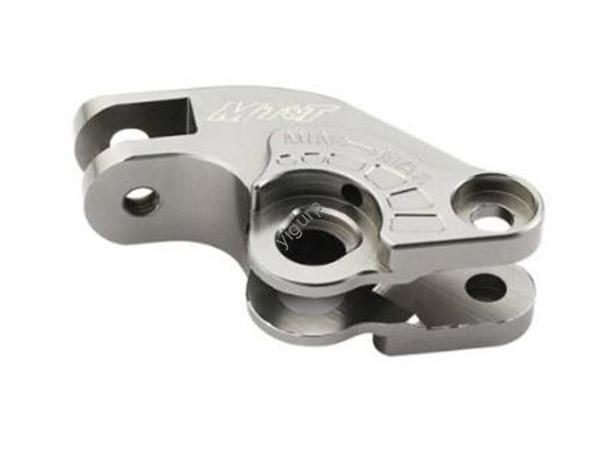
DP980 dual phase steel is an advanced high-strength steel (AHSS) that represents the upper tier of dual-phase grades. Its defining characteristics are a minimum tensile strength of 980 MPa and a dual-phase microstructure consisting of a soft ferrite matrix with a high proportion of hard martensite (typically 50-60%). This structure provides an exceptional combination of ultra-high strength and sufficient formability for complex stamping operations. As the automotive industry pushes for lighter vehicles with improved crash safety, and as other industries seek stronger, lighter materials, DP980 has emerged as a critical solution for applications where maximum strength and weight reduction are paramount.
Introduction
In the pursuit of lighter, stronger, and more fuel-efficient vehicles, engineers are constantly seeking materials that can deliver higher strength without sacrificing the ability to form complex shapes. Traditional high-strength low-alloy (HSLA) steels, while stronger than mild steel, often lack the formability needed for intricate parts. Higher-strength dual-phase grades like DP980 were developed to address this challenge. By precisely controlling the ratio of soft ferrite to hard martensite, DP980 achieves a level of strength that was once only possible with much more expensive and less formable materials. For applications where maximum crash protection and weight reduction are critical—such as the safety cages of electric vehicles—DP980 offers a proven and cost-effective solution.
What Are the Key Properties of DP980?
The performance of DP980 is defined by its unique dual-phase microstructure and the mechanical properties that result from it.
Chemical Composition
The chemistry of DP980 is precisely tuned to create a high martensite content for maximum strength while retaining formability.
| Element | Content Range (%) | Its Role in Performance |
|---|---|---|
| Carbon (C) | 0.12 – 0.18 | Promotes martensite formation, providing ultra-high strength. |
| Manganese (Mn) | 1.80 – 2.50 | Enhances hardenability and helps create the dual-phase structure. |
| Silicon (Si) | 0.60 – 1.10 | Strengthens the ferrite matrix and prevents carbide formation. |
| Chromium (Cr) | 0.25 – 0.70 | Improves corrosion resistance and high-temperature stability. |
| Molybdenum (Mo) | 0.15 – 0.35 | Refines grain structure and enhances fatigue resistance. |
| Nickel (Ni) | 0.15 – 0.35 | Improves low-temperature impact toughness. |
| Sulfur (S) | ≤ 0.010 | Kept ultra-low for good weldability and toughness. |
Mechanical Properties
The table below compares DP980 to a common HSLA steel, highlighting its performance advantages.
| Property | DP980 | HSLA 50 | Why It Matters |
|---|---|---|---|
| Tensile Strength | ≥ 980 MPa | 450 – 620 MPa | Provides 58-118% higher strength for maximum crash protection. |
| Yield Strength | 650 – 800 MPa | ≥ 345 MPa | Resists permanent deformation under very high loads. |
| Elongation | 12 – 18% | 18 – 22% | Maintains sufficient formability for complex stamping. |
| Impact Toughness | 45 – 60 J at -40°C | 34 J at -40°C | Remains tough in cold climates, critical for vehicle safety. |
| Fatigue Resistance | 420 – 480 MPa | 250 – 300 MPa | Withstands repeated stress, 68-92% better than HSLA. |
| Hardness | 280 – 320 HB | 130 – 160 HB | Provides excellent wear resistance. |
- Formability: Despite its ultra-high strength, DP980 maintains 12-18% elongation, allowing it to be stamped into complex shapes like curved B-pillars and door rings.
- Weight Efficiency: Its high strength allows for 30-40% thinner sections compared to traditional steel, significantly reducing component weight.
Where Is DP980 Used in the Real World?
DP980 is used in the most demanding applications where maximum strength and weight reduction are required.
Automotive Crash Structures and Body Components
This is the primary application. DP980 is used for safety-critical components that must absorb high impact energy.
- Case Study: A leading electric vehicle (EV) manufacturer used DP980 for the B-pillars and side impact beams of its sedan.
- The switch from HSLA 50 reduced the body-in-white (BIW) weight by 14 kg, a 9% reduction.
- This extended the vehicle’s driving range by 12 km.
- Side-impact crash scores improved by 22% in NHTSA tests.
- The material’s formability allowed for slimmer A-pillars, reducing blind spots by 15% .
- Common applications include B-pillars, door rings, side impact beams, bumpers, and crash boxes.
Lightweight Construction and Heavy Machinery
DP980 is used for thin-walled beams, columns, and structural components where high strength and low weight are critical.
- Case Study: An agricultural equipment maker used DP980 for plow blades and tractor frame reinforcements.
- The new blades lasted 40% longer than HSLA steel versions, resisting wear and denting.
- The lighter frame improved fuel efficiency by 7% , a major cost saver for farmers.
How Is DP980 Manufactured?
The manufacturing process for DP980 is designed to create its high-strength dual-phase microstructure.
Steelmaking and Heat Treatment
- Steelmaking: It is typically made in a Basic Oxygen Furnace (BOF) for large-scale production or an Electric Arc Furnace (EAF) for smaller batches.
- Intercritical Annealing: This is the defining process. The steel is heated to 750-830°C (the intercritical region where ferrite and austenite coexist), held briefly, and then rapidly cooled.
- The ferrite remains soft and ductile.
- The austenite transforms into hard martensite upon cooling.
- For DP980, the process is controlled to achieve a martensite content of 50-60% , resulting in its ultra-high strength.
Forming and Finishing
- Cold Rolling: The steel is cold rolled into thin sheets (0.6-3.2 mm thick) for automotive stamping.
- Stamping: The cold-rolled sheets are stamped into complex shapes. Due to its high strength, DP980 requires higher press tonnage than lower-strength steels, but its formability allows for deep draws and tight bends.
- Galvanizing: To protect against corrosion, especially for exposed automotive parts, a zinc or zinc-nickel coating is applied.
DP980 vs. Other High-Strength Materials
Comparing DP980 to other materials helps clarify its position as a high-performance, cost-effective solution.
| Material | Tensile Strength | Formability | Relative Cost | Best For |
|---|---|---|---|---|
| DP980 | ≥ 980 MPa | Good (12-18% Elong.) | High | Ultra-high-strength crash parts, lightweighting |
| DP780 | ≥ 780 MPa | Better (15-22% Elong.) | 12% Lower | High-strength structural parts |
| DP1000 | ≥ 1000 MPa | Good (12-18% Elong.) | 30% Higher | Extreme crash parts, niche applications |
| HSLA Steel | 450 – 620 MPa | Good | Lower | General structural parts, lower stress |
| Carbon Steel (A36) | 400 – 550 MPa | Excellent | Low | Non-critical, low-stress parts |
| Aluminum (6061) | 310 MPa | Good | 40% Higher | Lightweight parts where strength is secondary |
Key Takeaway: DP980 offers a unique combination of ultra-high strength and sufficient formability at a cost that is significantly lower than exotic materials. It is 26% stronger than DP780, making it the better choice for critical crash parts where maximum strength is required. While DP1000 is slightly stronger, it is 30% more expensive, making DP980 the more cost-effective option for most applications.
Conclusion
DP980 dual phase steel is a high-performance material engineered for the most demanding structural and safety applications. Its ultra-high tensile strength and good formability make it an essential tool for automotive lightweighting, allowing manufacturers to reduce vehicle weight while improving crash safety. For applications in electric vehicles, construction, and heavy machinery where strength and weight reduction are critical, DP980 offers a proven, cost-effective solution.
FAQ About DP980 Dual Phase Steel
Can DP980 be used for cold-climate automotive or construction parts?
Yes. Its guaranteed impact toughness of 45-60 J at -40°C makes it suitable for cold climates. It is commonly used for A-pillars, B-pillars, bridge guardrails, and tractor frames in regions like Northern Canada, Scandinavia, and Alaska.
Is DP980 difficult to stamp into complex shapes?
No, but it requires appropriate equipment. Its formability (12-18% elongation) allows it to be stamped into complex shapes like curved door rings and B-pillars. However, due to its ultra-high strength, it requires higher press tonnage than lower-strength steels. Many automakers use it for one-piece door rings, as it has minimal springback, reducing post-stamping adjustments by 20-25%.
What is the difference between DP980 and DP780?
The main differences are strength and cost. DP980 has a minimum tensile strength of 980 MPa, which is 26% higher than DP780’s 780 MPa. DP980 also has a higher yield strength (650-800 MPa vs. 350-500 MPa). However, DP980 has slightly lower elongation (12-18% vs. 15-22%) and is about 12% more expensive. Choose DP980 for critical crash parts where maximum strength is required; choose DP780 for high-strength structural parts where slightly lower strength is acceptable.
Discuss Your Projects with Yigu Rapid Prototyping
At Yigu Rapid Prototyping, we specialize in providing advanced high-strength steels for demanding applications. We have extensive experience with DP980 and other dual-phase grades for automotive, construction, and heavy machinery projects. We supply DP980 in cold-rolled sheets with full mill test certificates, including tensile and forming data. Our team can provide guidance on stamping, welding, and coating processes to ensure your components meet their performance targets. Whether you are designing EV crash structures, lightweight construction components, or high-strength machinery parts, we are here to help. Contact us today to discuss your project requirements.