
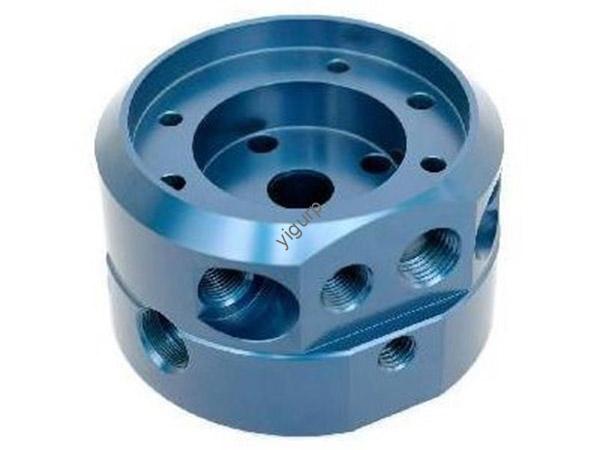
If you are designing equipment for the deep sea, the oil rig, or a chemical plant, you face a constant challenge. You need a material that can withstand corrosive saltwater and harsh chemicals. But it must also be strong enough to handle high stress and wear. Standard stainless steel often fails in one area or the other. UNS N05500 Monel K500 is designed to solve this problem. It is a nickel-copper alloy that builds on the excellent corrosion resistance of Monel 400. By adding aluminum, it gains the ability to be age-hardened, achieving strength levels comparable to many steels while retaining its legendary resistance to seawater and acids. This guide explains its properties, applications, and how it compares to other high-performance alloys.
Introduction
For engineers in marine, oil and gas, and aerospace industries, material selection is about finding a reliable partner for harsh environments. Monel K500 is a precipitation-hardenable nickel-copper alloy that offers a unique combination of properties. Its base, Monel 400, is famous for its outstanding resistance to seawater and a wide range of corrosive media. The addition of aluminum and titanium to Monel K500 allows it to be strengthened through a heat treatment process called age hardening. This transforms it from a soft, ductile material into one with a tensile strength of over 1100 MPa. This blend of high strength and exceptional corrosion resistance makes it a top choice for critical components that must last for decades in the most unforgiving conditions.
What Makes Monel K500 So Unique?
The performance of Monel K500 is a direct result of its carefully balanced chemistry and the specialized heat treatment it undergoes. It is designed to be tough, strong, and virtually immune to the corrosive attacks that destroy lesser metals.
What Is in the Alloy?
The chemical composition of Monel K500 is precisely controlled. The key addition is aluminum, which enables the age-hardening process.
| Element | Content Range (%) | Its Role in the Alloy |
|---|---|---|
| Nickel (Ni) | 63 – 67 | The base element. It provides ductility and excellent resistance to stress-corrosion cracking. |
| Copper (Cu) | 27 – 33 | Adds strong resistance to seawater, sulfuric acid, and organic acids. |
| Aluminum (Al) | 2.3 – 3.1 | The key to high strength. It forms intermetallic compounds during age hardening that dramatically boost hardness and strength. |
| Titanium (Ti) | 0.35 – 0.85 | Works with aluminum to enhance the age-hardening response and improve strength. |
| Iron (Fe) | ≤ 2.0 | Adds a small amount of toughness without harming corrosion resistance. |
| Carbon (C) | ≤ 0.25 | Provides some strength while keeping the alloy workable in its annealed state. |
What Are Its Critical Mechanical Properties?
Monel K500’s strength is its standout feature. The values below are for the age-hardened condition, which is how it is used for most high-strength applications.
| Property | Age-Hardened Value | Why This Matters |
|---|---|---|
| Tensile Strength | Min 1100 MPa | This is roughly twice the strength of Monel 400. It can handle very high loads and stresses. |
| Yield Strength | Min 760 MPa | The point where it starts to permanently deform. This high value ensures components like shafts remain straight under heavy loads. |
| Elongation | Min 15% | Good ductility for a material this strong. It can withstand some impact and shock without fracturing. |
| Hardness (Brinell) | Min 300 HB | High hardness gives it excellent resistance to wear, galling, and erosion from fast-moving seawater or abrasive particles. |
| Fatigue Resistance | 380 MPa (10⁷ cycles) | It can withstand millions of cycles of stress, which is critical for rotating parts like pump shafts and propeller shafts. |
A shipyard in Japan used Monel 400 for the propeller shafts on a luxury cruise ship. The shafts lasted eight years before showing signs of corrosion and wear. When they built a new ship, they upgraded to Monel K500 shafts. After 15 years of service in the same conditions, the shafts showed no corrosion and no wear. This is the power of the age-hardening process, which more than doubles the material’s usable strength and wear resistance.
Where Is Monel K500 Used in the Real World?
Monel K500 is the material of choice for the most demanding applications across several industries.
Marine and Offshore
This is the alloy’s natural habitat. Its resistance to seawater is legendary, and its high strength makes it ideal for critical components.
- Propeller Shafts and Fasteners: As seen in the Japanese cruise ship example, Monel K500 is the premium choice for shafts, bolts, and nuts that are constantly submerged in saltwater.
- Seawater Pump Components: A coastal desalination plant in Australia used Monel 400 for its seawater pump shafts. They failed after six years due to wear and corrosion. Switching to Monel K500 shafts extended the life to over ten years. Maintenance costs dropped by 60%, and the higher strength even reduced vibration, improving pump efficiency by 8%.
- Valve Stems and Wellhead Components: On offshore oil rigs, valves controlling high-pressure wellheads are exposed to both seawater and corrosive natural gas. Monel K500 resists both, cutting maintenance costs significantly.
Oil and Gas Industry
In the North Sea, where conditions are among the harshest on Earth, Monel K500 is a trusted material.
- Wellhead Valves and Components: These parts must withstand high pressure, corrosive hydrogen sulfide, and saltwater spray. Monel K500’s resistance to stress-corrosion cracking (SCC) makes it far superior to high-strength stainless steels in this environment.
Aerospace and Chemical Processing
- Aerospace Fasteners: A U.S. aerospace company uses Monel K500 for engine fasteners. The alloy maintains its high strength at temperatures up to 480°C, ensuring reliable performance in jet engines.
- Chemical Processing Equipment: A German chemical plant uses Monel K500 for pipework handling sulfuric acid. Unlike stainless steel, the alloy resists corrosion, preventing dangerous leaks and unplanned shutdowns.
How Is Monel K500 Manufactured?
Producing components from Monel K500 requires specialized knowledge to manage its unique properties and achieve the required strength through heat treatment.
Forming and Machining
- Hot Forging: The alloy is hot forged at temperatures between 980°C and 1150°C. This process shapes the metal into strong, dense parts like pump shafts and valve bodies, improving the grain structure.
- Machining: In its annealed (soft) state, Monel K500 can be machined, but it requires care. It work-hardens quickly. Using sharp carbide tools and a constant, heavy feed with plenty of coolant is essential to prevent the surface from becoming too hard to cut.
The Critical Heat Treatment
The high strength of Monel K500 is not present in the raw material. It is created through a precise two-step heat treatment.
- Annealing: The component is first heated to 760-870°C and then slowly cooled. This softens the alloy, making it easier to form and machine.
- Age Hardening: This is the key step. The component is heated to around 650°C for 3 to 5 hours and then cooled in air. At this temperature, the aluminum and titanium atoms combine with nickel to form tiny, uniformly dispersed particles. These particles block the movement of dislocations within the metal, dramatically increasing its strength and hardness.
Welding
Welding Monel K500 is possible but requires careful technique to maintain its properties.
- Method: Gas Tungsten Arc Welding (GTAW) is the preferred method.
- Filler Metal: A matching filler metal like ERNiCu-7 must be used.
- Precautions: To avoid cracking, the component is often annealed before welding. After welding, the entire part must undergo a full post-weld age hardening heat treatment to restore the alloy’s high strength in the heat-affected zone.
How Does Monel K500 Compare to Other Materials?
Choosing the right material often means comparing Monel K500 to its alternatives. The table below provides a clear breakdown.
| Material | Tensile Strength (MPa) | Seawater Corrosion Resistance | Max Service Temp (°C) | Relative Cost | Best Application |
|---|---|---|---|---|---|
| Monel K500 | 1100 | Excellent | 480 | Medium-High | High-strength marine and oil & gas components |
| Monel 400 | 550 | Excellent | 480 | Medium | General corrosion-resistant marine parts |
| Stainless Steel 316 | 515 | Good | 870 | Low | General-purpose corrosion resistance in less severe environments |
| Titanium (Ti-6Al-4V) | 860 | Excellent | 400 | Very High | Aerospace and high-strength, lightweight marine applications |
| Inconel 625 | 930 | Very Good | 980 | High | Extremely high-temperature applications |
Analysis: For a high-stress marine component like a propeller shaft, Monel K500 is the superior choice. It is stronger than stainless steel and Monel 400, and more cost-effective than titanium or Inconel for this specific application. For a static, non-stressed marine pipe, the cheaper Monel 400 or a coated stainless steel might suffice.
Conclusion
UNS N05500 Monel K500 occupies a unique and valuable position in the world of engineering materials. It offers a rare combination of properties that are hard to find elsewhere. Its exceptional resistance to seawater, stress-corrosion cracking, and a wide range of chemical agents is inherited from its Monel 400 base. But through the addition of aluminum and a precise age-hardening heat treatment, it achieves a tensile strength of over 1100 MPa—more than double that of its predecessor. This makes it the ideal choice for critical components like pump shafts, propeller shafts, and wellhead valves that must withstand both high stress and a corrosive environment for decades. While its initial cost is higher than standard stainless steel, its unparalleled longevity and reliability make it a cost-effective solution for the most demanding industrial and marine applications.
FAQ
What is the main difference between Monel K500 and Monel 400?
The main difference is strength. Monel K500 contains aluminum and titanium, which allow it to be age-hardened. This heat treatment gives it a tensile strength of 1100 MPa, compared to Monel 400’s 550 MPa. Both have excellent seawater corrosion resistance, but K500 is used for high-stress components where greater strength and wear resistance are required.
Can Monel K500 be used in freshwater applications?
Yes, it can. Its corrosion resistance is excellent in freshwater as well. However, it is typically chosen for harsher environments like seawater or chemical processing where its superior properties justify the higher cost. It can be a good choice for high-strength freshwater pumps or valves.
How long does Monel K500 last in marine environments?
In seawater applications such as propeller shafts and pump components, Monel K500 has a proven service life of 10 to 15 years or more. This is typically twice as long as Monel 400 and three times longer than stainless steel in similar high-stress, corrosive conditions.
Is Monel K500 difficult to machine?
In its annealed state, it is machinable but requires the right approach. It work-hardens quickly. For best results, use sharp carbide tools, a constant and heavy feed rate, and plenty of coolant to prevent the material from hardening as it is cut. Experienced machinists familiar with nickel alloys are recommended.
Does Monel K500 require painting or coating?
No, it does not require a coating for corrosion protection. Its natural surface forms a protective film that resists corrosion in seawater, acids, and other harsh environments. Painting or coating is not needed and is rarely applied.
Discuss Your Projects with Yigu Rapid Prototyping
Selecting the right high-performance alloy is critical for applications where failure is not an option. At Yigu Rapid Prototyping, we have extensive experience with Monel K500 and other advanced nickel alloys. Whether you need a custom-machined pump shaft, a forged valve component, or guidance on heat treatment, our team is here to help. Contact us to discuss your next project.