
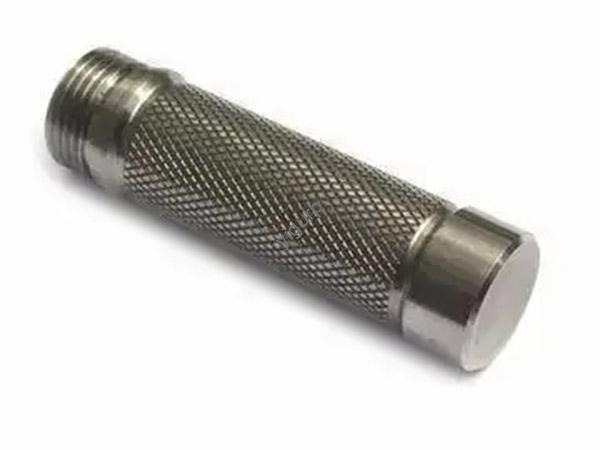
When your project demands a material that can maintain its strength for years at extreme temperatures—think jet engines, nuclear reactors, or gas turbines—you need a superalloy built for the task. UNS N07750 (Inconel X-750) is designed to do exactly that. Through a specialized heat aging process, it develops exceptional creep resistance, fatigue strength, and corrosion resistance, outperforming many other materials where they soften and fail. This guide will break down its key properties, real-world applications, manufacturing steps, and how it compares to alternatives, helping you build components that deliver reliable, long-term service in the most demanding high-temperature environments.
What Makes UNS N07750 a True Superalloy?
The performance of UNS N07750 comes from its unique aging mechanism. During heat treatment, it forms microscopic precipitates that dramatically boost its strength without compromising its corrosion resistance.
Chemical Composition
Every element in UNS N07750 is carefully selected to enable this age-hardening process. The combination of nickel, titanium, aluminum, and niobium is key to its high-temperature strength.
| Element | Content Range (%) | Key Role |
|---|---|---|
| Nickel (Ni) | 70.0 – 75.0 | The base element, providing high-temperature stability and resistance to chloride stress cracking. |
| Chromium (Cr) | 14.0 – 17.0 | Forms a protective oxide layer, resisting oxidation and general corrosion from jet fuel or seawater. |
| Titanium (Ti) | 2.25 – 2.75 | The core aging element, forming γ’ (Ni₃Ti) precipitates—the primary source of high-temperature strength. |
| Niobium (Nb) | 0.70 – 1.20 | Forms γ” (Ni₃Nb) precipitates, which boost strength and creep resistance and prevent over-aging. |
| Aluminum (Al) | 0.40 – 1.00 | Aids in γ’ precipitate formation and improves oxidation resistance. |
| Iron (Fe) | 5.0 – 9.0 | Enhances workability and balances cost without reducing aging performance. |
Mechanical Properties After Age Hardening
The true potential of UNS N07750 is unlocked only after a specific aging heat treatment. The values below are for the age-hardened condition.
| Property | Typical Value | Why It Matters for Your Project |
|---|---|---|
| Tensile Strength | ≥ 1100 MPa | It can handle extreme pressure in applications like combustion chambers and reactor vessels. |
| Yield Strength | ≥ 790 MPa | It resists permanent deformation at 650°C, which is critical for long-term creep resistance. |
| Hardness (HRC) | 35 – 40 | Provides a balance of strength for high stress and enough toughness to avoid brittle failure. |
| Elongation | ≥ 15% | Offers enough ductility to be formed into complex shapes like turbine blades without cracking. |
| Creep Resistance | 172 MPa at 650°C (10⁵ hours) | The key figure: it can withstand constant stress at high temperatures for over 100,000 hours without deforming. |
| Fatigue Strength | ~480 MPa (10⁷ cycles) | Resists failure from repeated thermal and mechanical stress cycles, such as turbine rotation. |
Where Is UNS N07750 Superalloy Used?
UNS N07750 is the material of choice for industries where long-term, high-temperature reliability is non-negotiable, and component failure could lead to major safety risks or costly downtime.
Aerospace and Jet Engines
This is one of the most critical applications for the alloy. Components inside a jet engine operate at extreme temperatures for thousands of hours.
- Turbine Blades and Fasteners: A U.S. aerospace manufacturer replaced Inconel 625 turbine blades with UNS N07750. The result was a dramatic 450% increase in blade life, as the age-hardened alloy resisted creep and oxidation at 650+°C far better than its predecessor. High-temperature fasteners made from UNS N07750 also maintain their clamp load, preventing loosening in the hottest engine zones.
Nuclear Reactors
The nuclear industry demands materials that can withstand intense radiation and high temperatures for decades.
- Control Rod Tubes: A U.S. nuclear power plant experienced failures with Inconel 600 control rod tubes after 12 years due to creep and radiation embrittlement. They switched to UNS N07750. After the switch, the tubes lasted over 20 years—a 67% improvement—with no creep deformation or embrittlement after 85,000 hours of operation. This improved reactor safety margins and saved the plant an estimated $600,000 per year in maintenance and unplanned shutdown costs.
Gas Turbines and Power Generation
Industrial gas turbines run for long periods at high temperatures, making creep resistance essential.
- Stator Vanes: A German energy firm used UNS N07750 for stator vanes in a natural gas power plant. The vanes, which are exposed to 1000+°C exhaust gases, achieved an 18-year service life, compared to just 10 years for the Inconel 718 parts they replaced.
Oil and Gas Industry
Downhole tools face a combination of high pressure, high temperature, and corrosive hydrogen sulfide.
- Downhole Tools: A Saudi Arabian oil company used UNS N07750 for tools in a high-temperature, high-pressure reservoir. The tools operated reliably for 11 years without failure, a significant improvement over the 3-year lifespan of standard stainless steel tools.
How Is UNS N07750 Superalloy Manufactured?
Manufacturing UNS N07750 is a precise process, with the aging heat treatment being the most critical step to achieve its final properties.
Melting and Forming
The process begins with creating a clean, uniform material and shaping it.
- Melting: To ensure ultra-low impurities, the alloy is melted in a Vacuum Induction Furnace (VIF) followed by Vacuum Arc Remelting (VAR) . This dual-melting process is critical for consistent precipitate formation.
- Hot Forging and Rolling: The ingots are hot-forged at 980–1150°C to align the grain structure, maximizing creep resistance. Hot rolling creates plates, bars, and tubes for further fabrication.
Heat Treatment (The Key to Strength)
This is the most critical stage, where the alloy’s strength is developed through a series of controlled heating steps.
- Solution Annealing: The material is heated to 980–1065°C and then water-quenched. This dissolves any existing precipitates, preparing the alloy for the aging process.
- Final Aging: The material is heated to 620–650°C for 16–24 hours and then air-cooled. This step forms the γ’ and γ” precipitates that are the source of the alloy’s exceptional high-temperature strength and creep resistance.
Machining and Welding
Due to its work-hardening nature, UNS N07750 requires careful machining and welding practices.
- Machining: The alloy work-hardens rapidly. It is best machined with sharp carbide tools at slow cutting speeds (6–9 m/min) and with high-pressure coolant to prevent work hardening and tool wear.
- Welding: The alloy is weldable but requires preheating to 200–300°C. After welding, the component must undergo a full post-weld heat treatment (solution annealing + aging) to restore its strength in the heat-affected zone.
UNS N07750 vs. Other Superalloys
Selecting the right superalloy involves balancing creep resistance, temperature stability, and cost. This comparison shows where UNS N07750 excels.
| Material | Creep Resistance (MPa at 650°C, 10⁵h) | High-Temp Stability (Max °C) | Tensile Strength (MPa) | Relative Cost | Best Application |
|---|---|---|---|---|---|
| UNS N07750 (Inconel X-750) | 172 | 870 | ≥ 1100 | 100% | Long-term high temp (nuclear, aerospace fasteners) |
| UNS N07718 (Inconel 718) | 207 | 700 | ≥ 1240 | 90% | High stress, shorter-term turbine blades |
| UNS N06625 (Inconel 625) | 138 | 1095 | ≥ 827 | 80% | Very high heat where creep is less critical |
| Hastelloy C276 | 90 | 1010 | ≥ 690 | 150% | Extreme corrosion environments |
| 316 Stainless Steel | 10 | 870 | ≥ 515 | 20% | Mild heat, no long-term creep requirement |
Conclusion
UNS N07750 (Inconel X-750) is a premier superalloy engineered for the most demanding long-term, high-temperature applications. Its unique age-hardening mechanism, driven by titanium, aluminum, and niobium, forms γ’ and γ” precipitates that deliver exceptional creep resistance of 172 MPa at 650°C for over 100,000 hours, along with a high yield strength of 790 MPa. Real-world case studies from the nuclear and aerospace industries demonstrate its ability to extend component life by 67% to 450% over alternative alloys. While it requires precise heat treatment and careful machining due to its work-hardening nature, its unparalleled combination of long-term strength, oxidation resistance up to 870°C, and good corrosion resistance makes it the ideal, reliable choice for critical components in nuclear reactors, jet engines, gas turbines, and high-temperature downhole tools.
FAQ About UNS N07750 (Inconel X-750) Superalloy
What is the maximum service temperature for UNS N07750?
It can operate continuously at temperatures up to 870°C (1600°F) . At this temperature, it maintains good oxidation resistance. However, its peak creep resistance and mechanical strength are optimized for service in the 650–700°C range. For short-term exposure, it can withstand slightly higher temperatures.
How does the aging heat treatment work, and why is it so critical?
Aging is the process that creates the alloy’s strength. The material is held at a precise temperature (620–650°C) for an extended period (16–24 hours). This allows nanoscale γ’ (Ni₃Ti) and γ” (Ni₃Nb) precipitates to form uniformly throughout the nickel matrix. These precipitates act as obstacles to dislocation movement, dramatically increasing the material’s strength, especially at high temperatures.
Is UNS N07750 difficult to machine?
Yes, it is considered to have fair machinability because it work-hardens rapidly. To machine it successfully, you should use sharp carbide tools with a negative rake angle, maintain slow, consistent cutting speeds, and apply high-pressure coolant to prevent heat build-up and re-cutting of chips.
What is the difference between UNS N07750 and Inconel 718?
Both are nickel-based superalloys strengthened by precipitates. The key difference lies in their optimal service temperature. Inconel 718 has higher tensile strength at room temperature and is excellent for high-stress applications up to 700°C. UNS N07750 is designed for superior long-term creep resistance at slightly lower stress levels, making it the better choice for components that must maintain integrity for decades at 650–700°C, such as in nuclear reactors and long-life aerospace fasteners.
Discuss Your Projects with Yigu Rapid Prototyping
Working with advanced superalloys like UNS N07750 requires deep expertise in their unique manufacturing requirements. At Yigu Rapid Prototyping, we specialize in the precise heat aging, machining, and fabrication of this material. We understand the critical importance of the solution annealing and aging cycles to achieve the correct precipitate structure for maximum high-temperature strength. Whether you are developing components for a nuclear reactor, a gas turbine, or a high-performance aerospace application, our team can help you engineer a solution that delivers the long-term reliability your project demands. Contact us today to discuss your project requirements.