
If you work in industries like mining, agriculture, or construction, you know how quickly equipment wears down from gravel, dirt, or rocks. That’s where AR200 abrasion resistant steel comes in—it’s designed to stand up to constant rubbing and impact, extending the life of your machines. This guide covers everything you need to know about AR200, from available products to welding tips, with real-world examples to help you make smart choices.
What AR200 products are available?
AR200 steel comes in a range of forms to fit different equipment and projects. Choosing the right product saves time and ensures your parts hold up under pressure.
| Product Type | Key Features | Common Uses |
|---|---|---|
| Plate | Thick (3–50 mm), high wear resistance | Dump truck bed liners, mining bucket floors |
| Sheet and coil | Thin (1–3 mm), flexible for forming | Light-duty chutes, agricultural tool blades |
| Strip and flat bar | Narrow (10–100 mm width), precise edges | Conveyor belt scrapers, small wear parts |
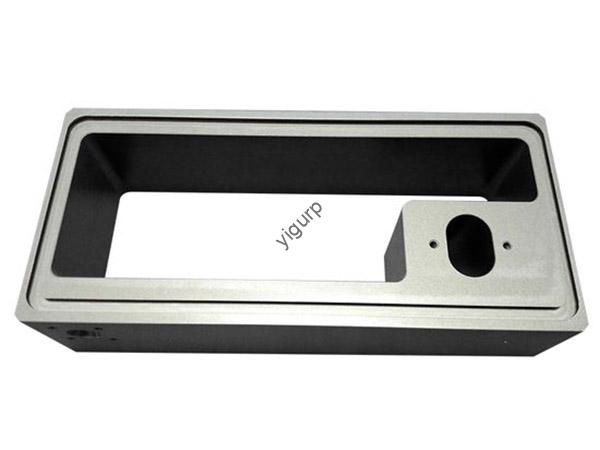
| Precision-cut parts | Custom-shaped (blades, liners) | Bulldozer edge protectors, crusher components |
| Custom-profiled components | Tailored to equipment specs | Industrial mixer liners, grain elevator parts |
A mining company replaced standard steel dump truck bed liners with AR200 plate. Liners that used to last 6 months now last 18 months—cutting replacement costs by 60%.
What makes AR200 resist wear?
AR200’s strength comes from its carefully balanced chemistry and heat-treated structure. Its quenched and tempered microstructure delivers consistent wear resistance across the entire steel thickness.
Chemical composition
The elements work together to boost hardness without making the steel too brittle.
| Element | Content Range | Role |
|---|---|---|
| Carbon (C) | 0.15 – 0.25% | Boosts hardness without brittleness |
| Manganese (Mn) | 1.20 – 1.60% | Improves tensile strength and wear resistance |
| Chromium (Cr) | 0.40 – 0.60% | Forms hard carbides that fight abrasion |
| Boron (B) | 0.0005 – 0.0030% | Enhances hardenability |
| Silicon (Si) | 0.30 – 0.50% | Supports heat treatment, improves toughness |
Microstructure: quenched and tempered
AR200 goes through a quenched and tempered process. First, it’s heated to 850–900°C and quickly cooled to form a hard martensite structure. Then, it’s tempered at 500–600°C to reduce brittleness while keeping hardness. The result is a uniform, fine-grained microstructure with through-thickness hardness uniformity—no weak spots.
What are the mechanical properties of AR200?
AR200’s mechanical properties make it perfect for high-wear jobs. Here’s how it compares to standard carbon steel.
| Property | AR200 | A36 Carbon Steel |
|---|---|---|
| Hardness (BHN) | 200 ±20 | 110 – 130 |
| Tensile strength | 700 – 850 MPa | 400 – 550 MPa |
| Yield strength | ≥ 550 MPa | ≥ 250 MPa |
| Impact toughness at -20°C | ≥ 30 J | ≥ 27 J |
| Fatigue resistance (10⁶ cycles) | 280 – 320 MPa | 180 – 220 MPa |
Standout performance traits
- Work-hardening characteristics: When AR200 is hit or rubbed by gravel in a truck bed, its surface gets even harder—up to 250 BHN. This self-strengthening makes it more resistant as it’s used.
- Sub-zero impact toughness: Even in cold weather down to -20°C, AR200 stays tough. A construction company in Canada uses AR200 bulldozer blades in winter—they don’t crack when pushing frozen dirt.
- Abrasion resistance: Tests show AR200 resists wear 3 times better than A36 steel. Agricultural tillage tools made from AR200 can plow 3 times more acres before needing sharpening.
What standards ensure you’re getting real AR200?
Not all wear-resistant steel is created equal. Stick to these standards to make sure you’re buying genuine AR200.
| Standard/Grade | Region | Key Requirements |
|---|---|---|
| ASTM A514 Grade AR200 equivalent | USA | Meets abrasion resistance and toughness specs |
| MIL-DTL-12560 Class 1 | Military | Strict quality controls for defense equipment |
| EN 10051 | Europe | Ensures uniform hardness and composition |
| ISO 4952 | Global | Harmonized standard for wear-resistant steels |
| OEM proprietary specs | Equipment makers | Custom tweaks for specific machines |
Pro tip: Always ask for a Mill Test Report (MTR). It confirms hardness values of 200 BHN ±20 and chemical composition.
Where does AR200 perform best?
AR200 is a workhorse in industries where wear destroys equipment.
Mining
Mining bucket liners made from AR200 stand up to rocks and ore. A gold mine in Australia reports that AR200 liners last twice as long as standard steel, reducing downtime for replacements.
Construction
Construction bulldozer blades and dump truck bed liners use AR200. It resists abuse from gravel, sand, and concrete debris.
Agriculture
Agricultural tillage tools like plows and harrows and grain elevator parts rely on AR200. It handles dirt, crop residue, and hard soil without wearing down.
Material handling
Material handling chutes and hoppers for coal, gravel, or grain use AR200. The smooth, hard surface prevents material from sticking and wearing the metal.
Waste management
Garbage truck floors and recycling plant conveyors use AR200 to resist damage from glass, metal, and sharp debris.
How should you work with AR200?
AR200 is stronger than standard steel, so it needs specific fabrication techniques. Follow these guidelines to avoid mistakes.
Cutting AR200
- Plasma cutting: Best method. Use 80–120 amps for 3–10 mm plates, 150–200 amps for 10–50 mm plates. This ensures clean cuts without weakening the steel.
- Oxy-fuel cutting: Works for plates over 10 mm. Preheat to 150–200°C first for a smooth edge.
Welding AR200
| Step | Specification |
|---|---|
| Preheat temperature | 150–250°C, especially for plates over 15 mm |
| Consumables | Low-hydrogen rods (AWS E7018) or wires (ER70S-6) |
| Post-weld stress relief | Heat to 550–600°C, cool slowly to relieve tension |
Cold forming
AR200 has limited cold forming ability. Don’t bend thick plates over 10 mm more than 15°. For tighter bends, heat the steel to 300–400°C first to avoid cracking.
Conclusion
AR200 abrasion resistant steel delivers reliable wear protection for equipment facing constant abrasion from gravel, dirt, and rocks. Its quenched and tempered structure provides hardness up to 200 BHN with work-hardening properties that increase resistance during use. For mining buckets, construction blades, agricultural tools, and material handling equipment, it offers a cost-effective solution that extends service life and reduces replacement costs.
FAQ
Can AR200 steel be painted?
Yes, though painting isn’t necessary for wear resistance. For aesthetics or corrosion protection in wet areas, clean the surface with a degreaser first, then use a high-adhesion primer and industrial paint.
Is AR200 suitable for outdoor use?
AR200 resists wear well but can rust in wet, salty environments like coastal areas. For outdoor use, add a corrosion-resistant coating like zinc plating or choose a weathering plus abrasion-resistant steel if rust is a major concern.
How does AR200 compare to higher-grade AR steel like AR400?
AR200 is softer at 200 BHN but more flexible than AR400 at 400 BHN. Use AR200 for parts needing both wear resistance and some flexibility like chutes that bend slightly. AR400 is better for extreme wear like crusher jaws but is more brittle.
Does AR200 require special welding techniques?
Yes. Preheat to 150–250°C before welding, especially for plates over 15 mm. Use low-hydrogen consumables like AWS E7018. Post-weld stress relief at 550–600°C helps maintain toughness.
What’s the typical service life for AR200 liners in mining applications?
In mining dump trucks, AR200 liners typically last 2–3 times longer than standard carbon steel. Actual service life depends on the type of material being hauled, operating conditions, and liner thickness. Proper installation and maintenance extend life further.
Discuss Your Projects with Yigu Rapid Prototyping
At Yigu Rapid Prototyping, we supply AR200 abrasion resistant steel for mining, construction, and agricultural equipment. We offer precision-cut wear parts tailored to your specifications, with Mill Test Reports to verify quality. Contact us to discuss your next wear-resistant application.