
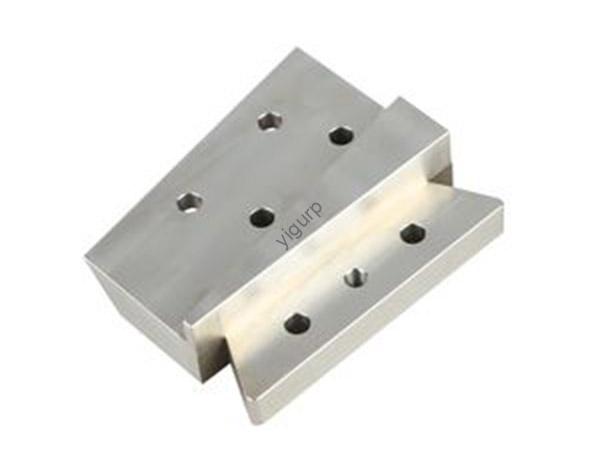
When your tooling needs require a material that balances toughness, wear resistance, and practical workability, AISI A2 tool steel offers a versatile solution. As a cold-work tool steel, it is designed for tools that cut, shape, or form materials without breaking or wearing out prematurely—making it a trusted choice across metalworking, plastic molding, and automotive industries. This guide explores its key properties, real-world applications, manufacturing processes, and how it compares to other materials, helping you determine if this balanced alloy is right for your tooling requirements.
Introduction
Selecting the right tool steel often involves navigating competing priorities. High wear resistance usually means lower toughness. Maximum toughness often sacrifices hardness. Materials that excel in one area typically fall short in others. AISI A2 was developed to occupy the middle ground. Through its precise chromium-molybdenum-vanadium composition, it achieves a combination of properties that works for the majority of cold-work tooling applications. It is tough enough to resist chipping under moderate impact, hard enough to maintain sharp edges and wear surfaces, and stable enough to hold precision dimensions through heat treatment. For tool rooms and manufacturing shops seeking a reliable, versatile material, AISI A2 has become a standard choice.
What Defines AISI A2 Tool Steel?
The performance of AISI A2 is defined by its chemical composition and the heat treatment that develops its balanced properties. Understanding these fundamentals explains why this material behaves differently from both lower-alloy and higher-alloy tool steels.
Chemical Composition
AISI A2 achieves its properties through a balanced combination of carbon for hardness, chromium for wear resistance and hardenability, and molybdenum and vanadium for toughness and grain refinement.
| Element | Content Range (%) | Functional Role |
|---|---|---|
| Carbon (C) | 0.95–1.05 | Forms small, hard carbides that provide wear resistance for cutting and forming tools. |
| Chromium (Cr) | 4.75–5.50 | Enhances hardenability so the steel hardens evenly; contributes to wear resistance. |
| Molybdenum (Mo) | 0.90–1.20 | Boosts toughness and reduces brittleness after quenching—key for tools that face impacts. |
| Vanadium (V) | 0.15–0.30 | Refines grain structure, making the steel more durable and less likely to crack. |
| Manganese (Mn) | 0.30–0.50 | Improves machinability and helps the steel respond better to heat treatment. |
| Silicon (Si) | 0.20–0.40 | Strengthens the steel during heat treatment and prevents oxide formation on the surface. |
| Phosphorus (P) | ≤ 0.030 | Controlled to prevent brittleness, especially in cold or high-stress conditions. |
| Sulfur (S) | ≤ 0.030 | Minimized to maintain toughness and avoid cracking during forming or machining. |
Mechanical Properties
The mechanical characteristics of AISI A2 are optimized for balanced performance across a range of cold-work applications.
| Property | Typical Value | Practical Significance |
|---|---|---|
| Hardness | 57–61 HRC | Hard enough for cutting and wear applications, but not so hard that it becomes brittle. |
| Tensile Strength | ≥ 2,200 MPa | Handles cutting and stamping forces without failure. |
| Yield Strength | ≥ 1,800 MPa | Resists permanent deformation, maintaining tool geometry under load. |
| Impact Toughness | 25–35 J at room temperature | One of its best traits—tougher than D2 or D3, so it resists breaking from accidental impacts. |
| Elongation | 8–12% | Provides enough ductility to absorb minor shocks without cracking. |
| Fatigue Strength | ~850 MPa | Withstands repeated stress cycles, ideal for high-cycle tools like stamping dies. |
| Wear Resistance | Very Good | Approximately 2× better than O1, due to chromium carbides, though less than D2. |
Physical Properties
The physical characteristics of AISI A2 are consistent with its role as a versatile tool steel.
| Property | Typical Value | Practical Significance |
|---|---|---|
| Density | ~7.85 g/cm³ | Standard for tool steels, simplifying weight calculations. |
| Thermal Conductivity | ~30 W/(m·K) | Dissipates heat better than higher-chromium steels like D2—good for tools that warm up during use. |
| Coefficient of Thermal Expansion | 11.5 × 10⁻⁶/°C | Minimizes warping when heated, keeping tools precise. |
| Magnetic Properties | Ferromagnetic | Works with magnetic tool holders in CNC machines and bench grinders. |
Why Is It Considered a Balanced Tool Steel?
AISI A2 has earned its reputation as a balanced tool steel because its properties are optimized for the majority of cold-work applications—neither over-specialized nor under-performing.
Good Wear Resistance
The chromium content of 4.75–5.50% forms chromium carbides that provide wear resistance significantly better than lower-alloy grades like O1. In practical terms, an A2 cutting tool can last 2× longer than an O1 tool in similar applications, reducing sharpening frequency and downtime.
Excellent Impact Toughness
With impact toughness values of 25–35 J, A2 is substantially tougher than D2 or D3. This means it can withstand the occasional shock, hard spot, or misalignment that would cause higher-hardness steels to chip or crack. For tools used in general-purpose manufacturing, this toughness translates to reliability.
Excellent Hardenability
A2 hardens evenly even in thick sections—up to 100 mm or more. This makes it suitable for large dies, long blades, and complex tooling where uniform properties through the entire section are essential.
Good Dimensional Stability
The air-quenching nature of A2 minimizes distortion during heat treatment. Combined with its low thermal expansion, this dimensional stability is critical for precision tools like injection mold inserts and complex stamping dies.
Where Is AISI A2 Commonly Used?
The combination of wear resistance, toughness, and dimensional stability makes AISI A2 suitable for a wide range of applications across multiple industries.
- Metalworking Industry:
- Cutting tools like lathe tools, milling cutters, and broaches for general-purpose machining.
- Shear blades for cutting metal sheets and bars.
- Forming tools for bending and shaping metal components.
- Plastic Molding Industry:
- Injection mold inserts for high-volume production (300,000+ cycles) where dimensional stability is critical.
- Compression molds for shaping plastic parts under pressure.
- Mold bases and tooling components requiring consistent properties.
- Woodworking Industry:
- Planer blades for hardwoods like oak and maple—stay sharp longer than high-speed steel blades.
- Router bits that handle knots without breaking.
- Saw blades for thick wood planks, reducing blade changes.
- Automotive Industry:
- Stamping dies for forming body panels, brackets, and structural components.
- Punches for creating holes in metal parts.
- Forming tools for shaping high-strength steel components.
- General Engineering:
- Cold work tools like bending dies, forming tools, and shear blades.
- Cold extrusion tools for shaping metal profiles.
- Jigs and fixtures requiring wear resistance and dimensional stability.
How Is AISI A2 Manufactured?
The manufacturing process for AISI A2 is designed to achieve its balanced properties through precise control of composition and heat treatment.
Steelmaking and Forming
AISI A2 is produced in an Electric Arc Furnace (EAF) at 1,600–1,700°C, with precise additions of chromium, molybdenum, and vanadium. After casting, the steel is hot rolled at 1,100–1,200°C into bars, plates, and sheets. For complex tools, drop forging or press forging aligns grain structure and improves toughness.
Heat Treatment
Heat treatment is critical to unlocking A2’s balanced properties:
| Process | Temperature Range | Purpose |
|---|---|---|
| Annealing | 800–850°C, slow cool | Softens the steel (approximately 200–220 HB) for machining operations. |
| Austenitizing | 850–900°C, hold 1–2 hours | Prepares the steel for hardening. |
| Quenching | Air quench | Air cooling transforms the structure to martensite, creating hardness without the distortion risk of oil quenching. |
| Tempering | 180–250°C, hold 2–4 hours | Reduces brittleness while maintaining hardness and boosting toughness. |
| Cryogenic Treatment | -80 to -196°C (optional) | Eliminates retained austenite, improving dimensional stability and wear resistance. |
Fabrication
- Machining: In the annealed condition, A2 machines well with carbide tooling. The material is softer than D2, allowing for cleaner cuts and less tool wear.
- Grinding: After heat treatment, tools are ground to final dimensions with aluminum oxide or CBN wheels.
- Coating: Options like titanium nitride (TiN) or diamond-like carbon (DLC) can boost wear resistance by 20–30% for high-cycle tools.
How Does It Compare to Other Tool Steels?
Understanding where AISI A2 fits relative to other tool steels helps clarify its value for specific applications.
| Material | Hardness (HRC) | Wear Resistance | Impact Toughness | Cost | Best Applications |
|---|---|---|---|---|---|
| AISI A2 | 57–61 | Very Good | Good | Medium | Balanced cold-work tooling |
| AISI D2 | 58–62 | Excellent | Moderate | Medium-High | High-wear applications, no impact |
| AISI O1 | 57–60 | Good | Low | Low | Light-duty tools, woodworking |
| AISI S7 | 54–58 | Good | Excellent | High | High-impact applications |
| AISI M2 | 60–65 | Very Good | Moderate | Medium-High | High-speed cutting |
| AISI D3 | 60–65 | Excellent | Moderate | Medium-High | Extreme wear, no impact |
Key takeaways:
- A2 offers significantly better impact toughness than D2 or D3, making it less prone to cracking.
- It provides substantially better wear resistance than O1, extending tool life in demanding applications.
- Compared to S7, A2 offers better wear resistance at a lower cost, though with lower impact toughness.
- For the majority of cold-work applications where neither extreme wear nor extreme impact is the primary concern, A2 delivers the best balance.
Case Studies: AISI A2 in Real-World Applications
Case Study 1: Metalworking Milling Cutters
A U.S. machine shop was using AISI O1 milling cutters to machine steel parts for furniture. The cutters dulled after 400 parts, requiring sharpening at a cost of $120 per sharpening, eight times per month. The shop switched to AISI A2 cutters with a titanium nitride (TiN) coating. The A2 cutters lasted 1,100 parts—2.75 times longer. Monthly sharpening costs dropped from $960 to $436, saving $6,288 annually. Machining time also decreased by 12% due to fewer tool changes, allowing the shop to increase production capacity.
Case Study 2: Plastic Injection Mold Inserts
A German plastic parts manufacturer was using AISI P20 mold inserts for toy components. The inserts wore out after 200,000 cycles, requiring replacement at $1,800 per insert, five times per year. The company switched to AISI A2 inserts. The A2 inserts lasted 500,000 cycles—2.5 times longer. Annual replacement costs dropped from $9,000 to $720, saving $8,280 per year. Part defect rates also fell from 5% to 1%, reducing scrap costs by an additional $2,000 annually.
Case Study 3: Automotive Stamping Dies
A Mexican automotive supplier was using AISI D2 stamping dies for car fenders. The D2 dies cracked after 30,000 cycles due to low toughness, requiring repairs at $3,000 per repair, four times per year. The company switched to AISI A2 dies. The A2 dies lasted 80,000 cycles with no cracking—2.6 times longer. Annual repair costs dropped from $12,000 to $0, saving $12,000 per year. Downtime for repairs was eliminated, increasing production capacity by 15%.
Conclusion
AISI A2 tool steel occupies a unique position in the family of tool steels. It is not the hardest, nor the toughest, nor the most wear-resistant. But it combines these properties in a way that makes it the most versatile choice for the majority of cold-work tooling applications. Its good wear resistance handles cutting and forming operations. Its excellent impact toughness prevents premature failure from shocks and hard spots. Its excellent hardenability ensures consistent properties through thick sections. Its good dimensional stability maintains precision through heat treatment. For tool rooms, machine shops, and manufacturing facilities seeking a material that delivers reliable performance without the compromises of more specialized grades, AISI A2 remains a trusted standard.
FAQ About AISI A2 Tool Steel
Can AISI A2 be used for high-speed cutting?
A2 works well for moderate-speed cutting operations up to approximately 180 m/min for steel. For high-speed cutting (above 300 m/min) where significant heat is generated at the cutting edge, high-speed steels like M2 or carbide tooling are better choices. These materials maintain their hardness at elevated temperatures, while A2 begins to soften above 280°C.
Is AISI A2 easier to machine than AISI D2?
Yes. A2 has lower chromium content than D2, which makes it softer in the annealed condition (approximately 200–220 HB vs. 240–260 HB for D2). This allows for machining with standard carbide tools, cleaner cuts, and less tool wear. For shops that do their own tool fabrication, the improved machinability of A2 is a significant advantage.
Does AISI A2 need to be quenched in oil, or can I use water?
A2 is designed for air quenching. Air cooling after austenitizing is the recommended method and produces the desired properties with minimal distortion. Water quenching would harden the steel but significantly increase the risk of cracking due to rapid cooling. Oil quenching is not necessary and may introduce more distortion than air cooling while providing no property benefits.
What is the best tempering temperature for A2 to balance hardness and toughness?
For most applications, tempering at 180–250°C produces a hardness of 57–61 HRC with good toughness. Tempering at lower temperatures (180–200°C) maximizes hardness (60–61 HRC) for wear-critical applications. Tempering at higher temperatures (230–250°C) increases toughness while maintaining 57–59 HRC for applications where impact resistance is more critical.
Discuss Your Projects with Yigu Rapid Prototyping
Selecting the right tool steel for your application requires balancing wear resistance, toughness, machinability, and cost. At Yigu Rapid Prototyping, we combine deep expertise in tool steels like AISI A2 with advanced manufacturing capabilities to deliver tooling that meets your specific requirements. Whether you need milling cutters, injection mold inserts, stamping dies, or custom tooling, our team can guide you from material selection through heat treatment and finishing.
We specialize in working with A2 and other cold-work tool steels, offering services including precision machining, custom heat treatment, and surface coating. If your next project demands reliable, balanced performance, we are ready to help. Contact us today to discuss your requirements and discover how our expertise can support your tooling needs.