
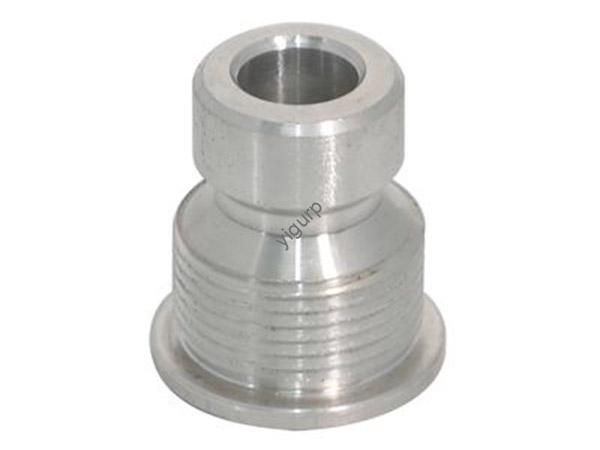
When your application involves bearings, camshafts, or other components that face repeated stress and wear—such as electric motors, automotive transmissions, or industrial machinery—you need a material that delivers exceptional durability and fatigue resistance. JIS SUJ2 bearing steel is engineered for these demanding conditions. As a high-carbon chromium alloy defined by Japanese Industrial Standard JIS G4805, it offers outstanding hardness, wear resistance, and fatigue strength, making it the global benchmark for bearing applications. In this guide, I will walk you through its properties, applications, and how to work with it based on real manufacturing experience.
Introduction
JIS SUJ2 is a high-carbon chromium bearing steel that forms the foundation of the bearing industry. Its composition includes 0.95–1.05% carbon and 1.30–1.65% chromium. The high carbon content provides the hardness needed for wear resistance, while the chromium enhances hardenability and fatigue strength. Unlike stainless steels that prioritize corrosion resistance, or tool steels that prioritize red hardness, SUJ2 is optimized for the specific demands of rolling element bearings: the ability to withstand millions of stress cycles without failure. Over the years at Yigu Rapid Prototyping, I have worked with bearing manufacturers, automotive suppliers, and industrial equipment builders who specify SUJ2 for components that must perform reliably under high loads and repeated stress. Its combination of properties makes it the most widely used bearing steel globally.
What Makes JIS SUJ2 the Global Standard for Bearings?
JIS SUJ2 achieves its properties through its high carbon and chromium content. The carbon forms hard carbides that provide wear resistance, while the chromium provides hardenability and ensures uniform properties throughout the component.
The Chemistry Behind the Performance
The chemical composition of JIS SUJ2 is specified in JIS G4805. The high carbon and chromium content are the keys to its performance.
| Element | Content Range (%) | Why It Matters |
|---|---|---|
| Carbon (C) | 0.95 – 1.05 | Provides hardness and forms chromium carbides for wear resistance. |
| Chromium (Cr) | 1.30 – 1.65 | Enhances hardenability and fatigue strength. Forms carbides with carbon. |
| Manganese (Mn) | 0.25 – 0.45 | Boosts tensile strength and toughness. |
| Silicon (Si) | 0.15 – 0.35 | Aids deoxidation during steelmaking. |
| Nickel (Ni) | ≤ 0.25 | Trace amount for minor strength enhancement. |
| Copper (Cu) | ≤ 0.25 | Trace amount. No major performance impact. |
| Sulfur (S) / Phosphorus (P) | ≤ 0.025 | Kept low to prevent brittleness and maintain toughness. |
Key Insight: The combination of 0.95–1.05% carbon and 1.30–1.65% chromium creates a high volume of chromium carbides that provide exceptional wear resistance. The chromium also ensures deep hardenability, allowing SUJ2 to achieve uniform properties in components up to 50 mm thick.
Mechanical Properties That Matter
JIS SUJ2’s mechanical properties are achieved through quenching and tempering. The material is heat-treated to achieve high hardness while maintaining adequate toughness.
| Property | Typical Value | Significance |
|---|---|---|
| Hardness | 60 – 64 HRC | Provides wear resistance for rolling and sliding contact. |
| Tensile Strength | ≥ 2,000 MPa | Handles high loads without failure. |
| Yield Strength | ≥ 1,800 MPa | Resists permanent deformation under load. |
| Elongation | ≤ 8% | Limited ductility is typical for high-hardness bearing steels. |
| Impact Toughness | ≥ 15 J | Provides enough toughness to resist shock loading. |
| Fatigue Strength | Excellent | Withstands millions of load cycles. Critical for bearing applications. |
Case Study: An industrial electric motor manufacturer was experiencing bearing failures after 8,000 hours of operation. They switched from a low-grade steel to JIS SUJ2 bearings. Bearing life increased to 20,000 hours, and maintenance costs dropped by 40%.
Where Does JIS SUJ2 Deliver the Most Value?
This material is specified for applications where rolling contact fatigue and wear resistance are the primary requirements.
Bearings and Rolling Elements
SUJ2 is the standard material for rolling element bearings.
- Ball bearings: Bearings for electric motors, automotive wheels, and industrial equipment.
- Roller bearings: Cylindrical and tapered roller bearings for heavy-load applications.
- Needle bearings: Compact bearings for automotive transmissions and engines.
- Races: Inner and outer rings that guide rolling elements.
Case Study: A Japanese carmaker noticed bearing failures in compact car engines after 60,000 km. Testing revealed the original bearings used a non-standard steel. Switching to JIS SUJ2 bearings cut failure rates by 75%, with bearings lasting 150,000 km.
Automotive Components
Beyond bearings, SUJ2 is used for other high-wear automotive components.
- Camshafts: Lobes that open and close engine valves.
- Valve lifters: Components that transfer motion from camshaft to valves.
- Gearbox parts: Gears and shafts that handle high torque.
- Fuel injection components: Parts that must maintain precise clearances.
Industrial Machinery
Industrial equipment uses SUJ2 for components that face continuous operation.
- Gearboxes: Gears and bearings in speed reducers and transmissions.
- Conveyor systems: Bearings and rollers for material handling.
- Pumps: Bearings and shafts for fluid handling equipment.
Aerospace and Medical Applications
Specialized applications use SUJ2 where reliability is critical.
- Aircraft bearings: Small bearings in landing gear and engine accessories.
- Medical devices: Precision bearings in MRI machines and surgical tools.
How Is JIS SUJ2 Manufactured and Processed?
Producing JIS SUJ2 requires precise control over chemistry and heat treatment to achieve its high hardness and fatigue strength.
Steelmaking
JIS SUJ2 is produced in an electric arc furnace (EAF) for small batches or a basic oxygen furnace (BOF) for large-scale production. For critical applications, vacuum arc remelting (VAR) or electroslag remelting (ESR) may be used to remove impurities and improve fatigue life.
Rolling and Forming
- Hot rolling: Heated to 1,100–1,200°C and rolled into bars, billets, and wire.
- Cold rolling: For precision components requiring smooth surfaces and tight tolerances.
Heat Treatment
Heat treatment is critical for achieving SUJ2’s properties.
- Quenching: Heat to 820–860°C, then rapidly cool in oil. This hardens the steel to 62–64 HRC.
- Tempering: Reheat to 150–200°C to reduce brittleness while maintaining high hardness (60–64 HRC).
- Carburizing (optional): For parts requiring a hard outer layer such as gear teeth, carburizing adds carbon to the surface.
Machining and Finishing
- Turning: For cylindrical parts such as bearing races.
- Grinding: For ultra-smooth surfaces. Essential for bearing performance. Surface finishes as smooth as Ra 0.1 μm are achieved.
Surface Treatment
Optional surface treatments enhance performance in specific environments.
- Nitriding: Adds a hard surface layer for additional wear resistance.
- Blackening: Creates a protective oxide layer for minor rust protection.
- Zinc plating: Provides corrosion protection for wet environments.
How Does JIS SUJ2 Compare to Other Bearing Materials?
Understanding the trade-offs between JIS SUJ2 and alternative materials helps in making an informed selection.
| Material | Hardness (HRC) | Fatigue Strength | Corrosion Resistance | Relative Cost | Best For |
|---|---|---|---|---|---|
| JIS SUJ2 | 60 – 64 | Excellent | Moderate | 100% | General bearings, automotive, industrial |
| AISI 52100 | 60 – 64 | Excellent | Moderate | 100% | U.S. market equivalent |
| 100Cr6 | 60 – 64 | Excellent | Moderate | 100% | European market equivalent |
| AISI 440C Stainless | 58 – 60 | Good | Excellent | 180% | Wet and corrosive environments |
| Silicon Nitride (Ceramic) | 75 – 80 | Very Good | Excellent | 500% | High-speed, high-temperature applications |
| PTFE Plastic | N/A | Poor | Excellent | 80% | Low-load, low-speed applications |
Key Insights:
- Compared to AISI 52100 and 100Cr6, JIS SUJ2 is functionally equivalent. The choice depends on regional standards and supply chain requirements.
- Compared to stainless steel bearing grades such as 440C, SUJ2 offers higher hardness and better fatigue strength at lower cost. For wet environments, stainless steel or coated SUJ2 is recommended.
- Compared to ceramic bearings, SUJ2 is significantly less expensive and easier to manufacture. Ceramic is reserved for extreme high-speed or high-temperature applications.
What About Corrosion Resistance?
JIS SUJ2 has moderate corrosion resistance. For dry indoor applications, no additional protection is needed. For wet or corrosive environments, surface treatment is required:
- Zinc plating: Provides corrosion protection for bearings in humid or wet environments.
- Nitriding: Adds a hard surface layer and provides some corrosion resistance.
- Blackening: Low-cost protection for minor rust prevention.
Conclusion
JIS SUJ2 bearing steel is the global standard for rolling element bearings and high-wear components. Its high carbon and chromium content provide exceptional hardness (60–64 HRC), wear resistance, and fatigue strength, making it the preferred material for electric motors, automotive transmissions, industrial machinery, and precision equipment. When you need a bearing steel that balances wear resistance, fatigue strength, and cost, JIS SUJ2 is a proven, trusted choice.
FAQ About JIS SUJ2 Bearing Steel
Can JIS SUJ2 be used in wet or corrosive environments?
JIS SUJ2 has moderate corrosion resistance. For wet or harsh environments such as marine or food processing applications, apply a protective coating such as zinc plating or nitriding to prevent rust. For continuous immersion in water or chemicals, stainless steel bearing grades such as AISI 440C are recommended.
What surface treatments work best for JIS SUJ2?
Nitriding enhances wear resistance for high-cycle applications. Zinc plating boosts corrosion resistance for wet environments. Blackening is a low-cost option for minor rust protection in dry environments. For bearing races and rolling elements, grinding to a smooth finish is essential for performance.
How does JIS SUJ2 compare to 100Cr6?
They are nearly identical. JIS SUJ2 is the Japanese standard (JIS G4805), and 100Cr6 is the European standard (EN). Both have the same carbon content (0.95–1.05%) and chromium content (1.30–1.65%). They are interchangeable in most applications, with the choice depending on regional standards and supply chain requirements.
What is the typical hardness of JIS SUJ2 after heat treatment?
After proper quenching and tempering, JIS SUJ2 achieves a hardness of 60–64 HRC. This hardness level provides the wear resistance and fatigue strength required for bearing applications. For components requiring higher toughness with slightly lower hardness, tempering at higher temperatures (200–250°C) may be used.
Discuss Your Projects with Yigu Rapid Prototyping
Selecting the right bearing steel for your application requires balancing hardness, fatigue strength, corrosion resistance, and cost. At Yigu Rapid Prototyping, we help bearing manufacturers, automotive suppliers, and industrial equipment builders navigate these decisions with practical, experience-based guidance. Whether you need JIS SUJ2 for electric motor bearings, transmission components, or precision machinery, we can provide material sourcing, heat treatment, and precision finishing services. Contact us to discuss your project requirements and find the right solution.