
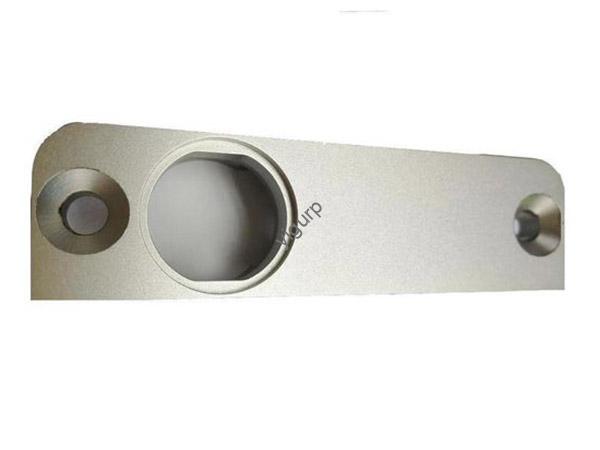
When your project involves welded stainless steel equipment that must maintain its corrosion resistance—particularly in food processing, pharmaceutical, or chemical applications—EN 1.4307 stainless steel is a proven solution. As the low-carbon version of EN 1.4301 (AISI 304), it offers the same general corrosion resistance but with one critical advantage: immunity to intergranular corrosion after welding. In this guide, I will walk you through its properties, how to work with it, and where it delivers the most value based on real project experience.
Introduction
Stainless steel grades are often selected for their corrosion resistance, but the welding process can create a hidden vulnerability. When standard austenitic stainless steels like EN 1.4301 are heated to welding temperatures, chromium carbides can form at grain boundaries. This leaves the adjacent areas depleted of chromium and susceptible to intergranular corrosion—a form of attack that occurs along the grain boundaries. EN 1.4307 solves this problem with its ultra-low carbon content (≤ 0.03%), which prevents carbide formation during welding. Over the years at Yigu Rapid Prototyping, I have worked with food processing equipment manufacturers, pharmaceutical companies, and brewery engineers who specify EN 1.4307 for welded tanks, piping, and vessels. Its combination of corrosion resistance, weldability, and fabricability makes it a practical choice for applications where hygiene and reliability are critical.
What Makes EN 1.4307 the Choice for Welded Applications?
EN 1.4307 achieves its superior weldability through a simple but critical modification to the standard 304 chemistry: reducing carbon content from a maximum of 0.07% to 0.03%. This small change has a significant impact on performance.
The Chemistry Behind the Performance
The chemical composition of EN 1.4307 is specified in EN 10088-2 and is nearly identical to EN 1.4301 except for the lower carbon content.
| Element | Content Range (%) | Why It Matters |
|---|---|---|
| Carbon (C) | ≤ 0.03 | Ultra-low carbon prevents chromium carbide formation during welding. |
| Chromium (Cr) | 18.0 – 20.0 | Forms the passive oxide layer that provides corrosion resistance. |
| Nickel (Ni) | 8.0 – 12.0 | Stabilizes the austenitic structure, ensuring toughness and ductility. |
| Manganese (Mn) | ≤ 2.0 | Aids in steelmaking and provides some strength. |
| Silicon (Si) | ≤ 1.0 | Acts as a deoxidizer. |
| Phosphorus (P) / Sulfur (S) | ≤ 0.045 / ≤ 0.015 | Kept low to maintain corrosion resistance and toughness. |
Key Insight: The carbon content of EN 1.4307 is less than half that of EN 1.4301. This eliminates the risk of sensitization—the formation of chromium-depleted zones at grain boundaries—during welding. This means welded components can be used in the as-welded condition without post-weld heat treatment.
Mechanical Properties That Matter
EN 1.4307 offers mechanical properties similar to EN 1.4301, with excellent ductility and good strength.
| Property | Typical Value | Significance |
|---|---|---|
| Yield Strength | ≥ 200 MPa | Adequate for most pressure-containing and structural applications. |
| Tensile Strength | 520 – 720 MPa | Indicates ultimate load capacity. |
| Elongation | ≥ 40% | High ductility allows for deep drawing and forming into complex shapes. |
| Hardness (Brinell) | ≤ 215 HB | Soft enough for easy machining and forming. |
| Impact Toughness | Excellent | Maintains toughness down to cryogenic temperatures (-196°C). |
Case Study: A dairy processor uses EN 1.4307 stainless steel for milk storage tanks. The material’s low-carbon austenitic structure resists corrosion from milk acids, and its smooth surface is easy to clean, meeting food safety standards. The tanks are welded on-site, and the welds remain corrosion-free after years of service.
Where Does EN 1.4307 Deliver the Most Value?
This material is specified for applications where welding is required and corrosion resistance must be maintained in the welded condition.
Food and Beverage Processing
The food and beverage industry requires equipment that resists corrosion from acidic foods, is easy to clean, and does not impart metallic tastes.
- Dairy processing: Milk tanks, pipelines, and pasteurizers. EN 1.4307 resists corrosion from lactic acid and is easy to sanitize.
- Brewery tanks: Fermentation tanks, bright beer tanks, and piping. The material does not affect beer flavor and resists corrosion from hops and yeast.
- Fruit juice processing: Tanks and pipes handling citrus juices and other acidic products.
- Kitchen equipment: Commercial sinks, countertops, and food preparation surfaces.
Case Study: A brewery uses EN 1.4307 stainless steel for 10,000-liter fermentation tanks. The tanks are welded, and the material’s sensitization prevention ensures no rust forms in the weld areas. After five years of use, the tanks still look new and produce consistent-tasting beer.
Pharmaceutical and Biotechnology
Pharmaceutical equipment must meet strict hygiene standards and resist corrosion from cleaning agents and drug formulations.
- Mixing tanks: Tanks for drug formulations that must not leach metal ions.
- Piping systems: Transfer lines for sterile fluids and solvents.
- Storage vessels: Containers for active pharmaceutical ingredients (APIs) and intermediates.
Case Study: A pharmaceutical company uses EN 1.4307 stainless steel for drug mixing tanks. The tanks are welded, and the material’s intergranular corrosion immunity ensures no rust forms in weld areas—critical for maintaining drug purity. The tanks have been in service for eight years with no corrosion issues.
Chemical and Industrial Applications
EN 1.4307 is used in chemical processing where mild corrosives are handled and welded construction is required.
- Storage tanks: Tanks for mild acids, alkalis, and solvents.
- Heat exchangers: Equipment that transfers heat between fluids.
- Piping systems: Pipelines for process fluids.
Architectural and Structural Applications
For outdoor architectural elements, EN 1.4307 provides good atmospheric corrosion resistance and can be welded without losing performance.
- Cladding and facades: Building exteriors that require a durable, attractive finish.
- Handrails and balustrades: Structural elements that are welded on-site.
- Structural supports: Frames and supports in corrosive environments.
How Does EN 1.4307 Resist Corrosion?
EN 1.4307’s corrosion resistance comes from its chromium content, which forms a passive oxide layer on the surface. The low carbon content ensures this layer remains intact after welding.
Intergranular Corrosion Immunity
The most important corrosion characteristic of EN 1.4307 is its immunity to intergranular corrosion after welding. When EN 1.4301 is heated to 450–850°C (the sensitization range), carbon combines with chromium to form chromium carbides at grain boundaries. This depletes the adjacent areas of chromium, making them vulnerable to corrosion. EN 1.4307’s low carbon content means there is insufficient carbon to form these carbides, so the material remains fully corrosion-resistant in the as-welded condition.
Pitting and Crevice Corrosion
EN 1.4307 has a Pitting Resistance Equivalent Number (PREN) of approximately 18. This means:
- It handles mild chloride environments such as indoor plumbing and urban atmospheric exposure.
- It resists pitting in clean, low-chloride water.
- For saltwater environments or high-chloride conditions, EN 1.4404 (316L) is recommended.
Atmospheric Corrosion
EN 1.4307 provides excellent resistance to atmospheric corrosion in dry, humid, and urban environments. It is widely used for architectural cladding that remains rust-free for decades.
How Is EN 1.4307 Heat Treated and Fabricated?
Proper heat treatment and fabrication techniques ensure EN 1.4307 achieves its full corrosion resistance.
Solution Annealing
Solution annealing restores corrosion resistance after hot working or if the material has been heated into the sensitization range.
- Process: Heat to 1,000–1,100°C, hold until the temperature is uniform, then rapidly cool (water quench or rapid air cool).
- Purpose: Dissolves any carbides that may have formed and restores the uniform chromium distribution.
For most welded applications, solution annealing is not required because the low carbon content prevents carbide formation. However, for severe corrosive service, it may be specified.
Stress Relief Annealing
If residual stress from welding or cold working is a concern, stress relief annealing can be performed at 300–500°C. This reduces stress without affecting corrosion resistance.
Welding
EN 1.4307 has excellent weldability, rated 9 out of 10.
- No preheat required: Unlike martensitic stainless steels, EN 1.4307 does not require preheating, saving time and cost.
- Filler metal: Use ER308L for TIG and MIG welding. This low-carbon filler matches the base metal’s corrosion resistance. Avoid high-carbon fillers such as ER308.
- Post-weld cleaning: Passivation with nitric or citric acid is recommended to remove heat tint and restore the passive oxide layer. This can improve general corrosion resistance by 30–40%.
Machining and Forming
EN 1.4307 machines and forms well due to its high ductility.
- Machining speeds: For turning, use 150–250 m/min with carbide tools. Feeds of 0.1–0.3 mm/rev are typical.
- Tool life: Carbide tools last 2–3 times longer than high-speed steel (HSS) when machining EN 1.4307.
- Formability: Excellent. The material can be deep-drawn into shapes such as sink basins and food cans without cracking.
- Distortion control: Use clamps during welding and uniform heating during forming to minimize distortion.
How Does EN 1.4307 Compare to Other Stainless Steels?
Understanding the trade-offs between EN 1.4307 and alternative materials helps in making an informed selection.
| Material | Carbon Max (%) | Intergranular Corrosion Risk | Relative Cost | Best For |
|---|---|---|---|---|
| EN 1.4307 (304L) | 0.03 | Very low | 100% | Welded applications in food, pharma, mild chemical |
| EN 1.4301 (304) | 0.07 | Moderate if welded | 95% | Non-welded applications, mild environments |
| EN 1.4404 (316L) | 0.03 | Very low | 130% | Welded applications with chloride exposure |
| EN 1.4016 (430) | 0.08 | High | 70% | Non-welded, non-corrosive applications |
Key Insights:
- Compared to EN 1.4301, EN 1.4307 offers intergranular corrosion immunity after welding for a small cost premium (approximately 5%). For welded equipment, this premium is essential.
- Compared to EN 1.4404, EN 1.4307 is approximately 30% less expensive but offers lower resistance to chlorides. For food, dairy, and pharmaceutical applications without saltwater exposure, EN 1.4307 is the more cost-effective choice.
What Forms and Sizes Are Available?
EN 1.4307 is available in a wide range of product forms to suit different applications.
| Product Form | Typical Sizes | Applications |
|---|---|---|
| Plate | 3 – 200 mm thick | Chemical storage tanks, structural components |
| Sheet | 0.45 – 4.0 mm thick | Kitchen equipment, pharmaceutical enclosures |
| Seamless Pipe (EN 10216-5) | ½ – 24 inches | Pharmaceutical and food processing piping |
| Welded Tube (EN 10217-7) | ½ – 12 inches | Plumbing, brewery lines |
| Round Bar | 5 – 300 mm diameter | Fasteners, shafts, fittings |
| Angle Iron | 20x20x3 mm to 100x100x10 mm | Structural supports in food facilities |
| Flat Bar | Tolerances ±0.1 mm | Precision parts for pharmaceutical equipment |
Conclusion
EN 1.4307 stainless steel is a practical, cost-effective choice for welded equipment in the food processing, pharmaceutical, and chemical industries. Its ultra-low carbon content provides immunity to intergranular corrosion after welding, eliminating the need for post-weld heat treatment and ensuring reliable performance in corrosive environments. With excellent weldability, formability, and mechanical properties, it is a versatile material that meets the hygiene and durability requirements of demanding applications. For projects involving welded stainless steel equipment, EN 1.4307 is a proven, trusted solution.
FAQ About EN 1.4307 Stainless Steel
Is EN 1.4307 stainless steel magnetic?
No, in the annealed condition. Its austenitic structure is non-magnetic. Heavy cold working such as bending or stamping can induce some magnetism, but this does not affect corrosion resistance or mechanical properties.
When should I use EN 1.4307 instead of EN 1.4301?
Use EN 1.4307 whenever your project involves welding. EN 1.4307’s intergranular corrosion immunity ensures that welds remain corrosion-resistant. EN 1.4301 can become sensitized in the heat-affected zone of welds, leading to intergranular corrosion in service.
Can EN 1.4307 be used in high-temperature applications?
Yes, it has good oxidation resistance up to 870°C. It is used for heat exchanger tubes, oven parts, and exhaust components. For prolonged service above 900°C, strength may decrease, and alternative grades should be considered.
What filler metal should I use for welding EN 1.4307?
Use ER308L for TIG and MIG welding. This low-carbon filler matches the base metal’s corrosion resistance. Avoid ER308, which has higher carbon content and can reduce corrosion resistance in the weld zone.
Discuss Your Projects with Yigu Rapid Prototyping
Selecting the right stainless steel for welded applications requires balancing corrosion resistance, fabricability, and cost. At Yigu Rapid Prototyping, we help food processors, pharmaceutical manufacturers, and chemical engineers navigate these decisions with practical, experience-based guidance. Whether you need EN 1.4307 for welded tanks, piping systems, or structural components, we can provide material sourcing, custom fabrication, and certification documentation. Contact us to discuss your project requirements and find the right solution.