
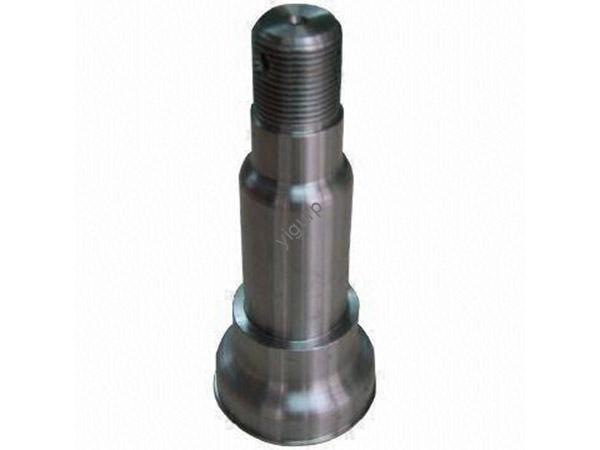
AISI 316 stainless steel is the standard choice for applications that demand superior corrosion resistance. Its defining feature is the addition of molybdenum, which gives it a significant advantage over standard 304 in harsh environments. Whether it is saltwater, industrial chemicals, or coastal air, this material is engineered to resist pitting and rust. This guide will cover its key properties, how to work with it, and where it performs best, helping you select it for your most demanding projects.
Introduction
For many applications, standard 304 stainless steel offers good corrosion resistance. However, in environments with chlorides—like seawater, de-icing salts, or chemical processing—304 can fail due to pitting corrosion. AISI 316 was developed to solve this problem. By adding 2-3% molybdenum, its resistance to chlorides increases dramatically. This simple change makes it the preferred material for marine equipment, chemical tanks, and coastal architecture. Understanding its capabilities and how to fabricate it correctly is essential for long-term success.
What Defines AISI 316 Stainless Steel?
The identity and performance of AISI 316 are defined by its precise chemistry and adherence to international standards.
Chemical Composition
Every element in AISI 316 plays a role in its performance, but molybdenum is the key differentiator.
| Element | Content Range | Its Role in Performance |
|---|---|---|
| Chromium (Cr) | 16.0 – 18.0% | Forms the protective passivation layer that fights rust. |
| Nickel (Ni) | 10.0 – 14.0% | Stabilizes the austenitic structure, ensuring ductility. |
| Molybdenum (Mo) | 2.0 – 3.0% | The critical addition. It boosts resistance to pitting and chloride corrosion. |
| Carbon (C) | ≤ 0.08% | Provides strength while minimizing the risk of sensitization. |
| Manganese (Mn) | ≤ 2.0% | Enhances formability for bending and shaping. |
- Key Specifications: It is identified by the UNS designation S31600. For industrial use, it is covered under ASTM A240 for sheets and plates and ASME SA-240 for pressure vessel applications.
Physical and Mechanical Properties
These properties make AISI 316 suitable for structural and pressure-containing applications.
| Property | Typical Value | Why It Matters |
|---|---|---|
| Density | 8.0 g/cm³ | Slightly heavier than 304, which is important for weight calculations. |
| Melting Point | 1,400°C | Withstands high heat, such as in exhaust systems. |
| Tensile Strength | 515 MPa | Strong enough for pressure vessels and structural components. |
| Yield Strength | 205 MPa | Resists deformation in high-use items like pipes and fasteners. |
| Hardness | 217 HB | Tough enough for wear, yet machinable with proper tools. |
How Does It Resist Corrosion So Well?
AISI 316’s standout feature is its exceptional performance in chloride-rich and chemical environments. The molybdenum content is the key to this superiority.
Corrosion Resistance in Key Environments
| Environment | Performance | Advantage Over 304 |
|---|---|---|
| Chloride Environments | Excellent | The PREN value is 24.2 (vs. 304’s 18), meaning it resists pitting from saltwater and de-icing salts. |
| Marine Environments | Superior | Shows no rust in seawater for 5+ years, while 304 may rust in 1-2 years. |
| Chemical Solutions | Great | Resists sulfuric acid (up to 50% concentration) and phosphoric acid. |
| Salt Spray Tests | Passes 1,000+ hours | No red rust after weeks of continuous salt spray, making it ideal for outdoor hardware. |
- Case Study: A desalination plant originally used 304 piping. The pipes developed pitting after just 6 months. They switched to AISI 316. The new pipes have operated rust-free for 4 years, saving the plant an estimated $200,000 in annual replacement costs.
Comparison with 304 and 316L
Understanding the differences between 316, 304, and the low-carbon 316L is crucial for proper selection.
| Trait | AISI 304 | AISI 316 | AISI 316L |
|---|---|---|---|
| Molybdenum Content | 0% | 2.0 – 3.0% | 2.0 – 3.0% |
| Carbon Content | ≤ 0.08% | ≤ 0.08% | ≤ 0.03% |
| Corrosion Resistance | Good in mild environments | Excellent in chlorides | Excellent, with better weldability |
| Best For | Indoor architecture, kitchen equipment | Marine hardware, chemical tanks | Welded chemical equipment, pharmaceutical reactors |
How Do You Properly Work with AISI 316?
To ensure AISI 316 retains its corrosion resistance, it must be fabricated correctly. This is especially true for welding.
Heat Treatment: Solution Annealing
Solution annealing is the key heat treatment for this material. The steel should be heated to 1,010-1,120°C, held for 30-60 minutes, and then rapidly cooled (quenched) in water. This process:
- Dissolves carbide precipitates, preventing a condition called intergranular corrosion.
- Resets the microstructure, restoring ductility after cold working.
- Strengthens the passive layer for optimal corrosion resistance.
- Pro Tip: A chemical plant once skipped solution annealing on welded 316 tanks. Within 6 months, the welds developed intergranular corrosion. They re-annealed the tanks, which resolved the issue and extended the equipment’s life by 8 years.
Welding Best Practices
Welding is a critical step where corrosion resistance can be compromised if not done correctly.
- Filler Metal: Always use low-carbon fillers like ER316L for TIG welding or E316L for stick welding. This prevents sensitization (carbide formation) in the weld area.
- Post-Weld Cleaning: After welding, the surface has a heat tint that disrupts the passive layer. You must clean the weld with a stainless steel brush (never use a carbon steel brush) and then passivate it, typically with a nitric acid bath. This restores the corrosion resistance.
- Preheat: For thick sections over 25mm, a preheat of 100-150°C is recommended to prevent cold cracking.
Machining and Forming
AISI 316 can be machined and formed effectively with the right approach.
- Machining: Use sharp carbide inserts with a TiAlN coating. Use soluble oil as a coolant. The material has a tendency to galling (sticking to the tool), so proper lubrication is essential.
- Forming: It has excellent formability. For deep drawing operations, use a die radius that is at least 2 times the material thickness to prevent cracking.
Where Is AISI 316 Used in Industry?
AISI 316 is found in a wide range of industries where corrosion resistance is a top priority.
Marine and Offshore
This is the classic application. AISI 316 is used for boat fittings, propeller shafts, offshore platform fasteners, and marine exhaust systems. A boat manufacturer reports that 316 exhaust systems last 3 times longer than those made from 304.
Chemical and Pharmaceutical
The material’s resistance to acids makes it ideal for chemical storage tanks, piping, and pharmaceutical reactors. A chemical plant uses 316 tanks to store 50% sulfuric acid; they have operated leak-free for 7 years.
Food and Beverage
AISI 316 is used for brewery heat exchangers, food processing conveyors, and mixing bowls. Its smooth, non-reactive surface is easy to clean and meets FDA standards. A brewery uses 316 heat exchanger tubes because they resist the acidic content of beer, preventing contamination.
Architecture and Outdoor
For buildings in coastal areas, AISI 316 is used for facade cladding, handrails, and window frames. It is also standard for swimming pool hardware, as it resists chlorine corrosion far better than 304.
Conclusion
AISI 316 stainless steel is a proven, high-performance material for challenging environments. Its molybdenum content provides a critical advantage in corrosion resistance, particularly against chlorides found in seawater and industrial chemicals. While it requires careful attention during welding, including the use of low-carbon fillers and post-weld passivation, its long-term durability in harsh conditions makes it a cost-effective choice. For any application where standard 304 is not sufficient, AISI 316 is the reliable next step.
FAQ About AISI 316 Stainless Steel
Can AISI 316 be used in very high-temperature applications above 900°C?
No. Its strength decreases significantly above 870°C. For continuous service above 900°C, you should consider a high-carbon grade like 316H or a nickel-based superalloy like Inconel. AISI 316 is best suited for high-heat applications up to 800°C, such as exhaust systems.
Is AISI 316 magnetic?
In its annealed state, it is nearly non-magnetic. However, cold working processes like bending or stamping can induce a small amount of magnetism. This does not affect its corrosion resistance or mechanical properties.
Is post-weld passivation really necessary for AISI 316?
For applications in corrosive environments, yes. Welding removes the protective passive layer and leaves a heat tint. Passivation (typically with a nitric or citric acid bath) is required to restore that layer and ensure the weld area resists corrosion at the same level as the base metal. For non-critical indoor applications, a thorough cleaning with a stainless steel brush may be sufficient.
Discuss Your Projects with Yigu Rapid Prototyping
At Yigu Rapid Prototyping, we specialize in providing high-quality AISI 316 for demanding applications. We supply sheets, pipes, bars, and custom components, all certified to ASTM A240/ASME SA-240 standards. Every shipment includes mill test reports verifying molybdenum content and, for marine projects, salt spray test results. Our team also offers technical support on welding and passivation to ensure your fabricated parts perform reliably. Contact us today to discuss your project requirements and let us help you select the right solution for your toughest environments.