
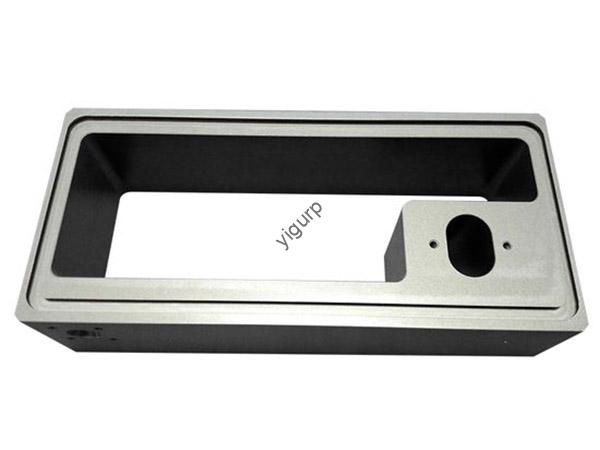
GM190 cast steel is a medium-carbon, low-alloy steel specifically designed for applications requiring complex shapes that are difficult or expensive to fabricate by other methods. It is engineered to provide an excellent balance of castability, strength, and toughness. Unlike wrought steels, which are shaped by rolling or forging, GM190 is poured into a mold as a liquid, allowing it to form intricate geometries, internal channels, and integrated features in a single step. With a typical tensile strength of 600-750 MPa and good ductility, it offers reliable mechanical performance for a wide range of industrial components. For applications such as engine housings, gearboxes, and mining equipment parts where complex shapes and cast-in features are required, GM190 provides a proven and cost-effective solution.
Introduction
For many mechanical components, the shape is as important as the material. Complex geometries, internal passages, and integrated mounting points are often essential for function. Fabricating these shapes from wrought steel—by welding, forging, or machining from solid stock—can be time-consuming, expensive, and can introduce weak points. Casting offers an alternative. By pouring molten metal into a mold, complex shapes can be produced in a single operation. GM190 cast steel was developed to optimize this process. Its chemistry is formulated to have good fluidity when molten, allowing it to fill intricate molds, and to have a predictable solidification that minimizes internal defects. Its mechanical properties, after appropriate heat treatment, provide the strength, wear resistance, and toughness needed for demanding industrial applications. For components where shape complexity is a primary design driver, GM190 offers a practical and efficient solution.
What Are the Key Properties of GM190?
The performance of GM190 is defined by its chemical composition and the mechanical properties achieved through its manufacturing and heat treatment processes.
Chemical Composition
The chemistry of GM190 is tailored to provide good castability and balanced mechanical properties.
| Element | Content Range (%) | Its Role in Performance |
|---|---|---|
| Carbon (C) | 0.20 – 0.30 | Provides moderate strength without causing brittleness. |
| Manganese (Mn) | 0.80 – 1.20 | Enhances castability and ductility. |
| Silicon (Si) | 0.40 – 0.80 | Improves fluidity during casting, critical for complex shapes. |
| Chromium (Cr) | 0.50 – 0.80 | Boosts wear resistance and toughness. |
| Nickel (Ni) | 0.30 – 0.60 | Enhances impact resistance, especially at low temperatures. |
| Molybdenum (Mo) | 0.15 – 0.25 | Improves hardenability and fatigue resistance. |
| Sulfur (S) | ≤ 0.040 | Minimized to avoid casting defects like porosity. |
| Phosphorus (P) | ≤ 0.040 | Controlled to prevent cracking during cooling. |
Mechanical and Physical Properties
After proper heat treatment (normalizing or quenching and tempering), GM190 achieves reliable mechanical properties.
| Property | Value Range | Why It Matters |
|---|---|---|
| Tensile Strength | 600 – 750 MPa | Provides good strength for load-bearing cast components. |
| Yield Strength | ≥ 350 MPa | Resists permanent deformation under load. |
| Elongation | ≥ 18% | Provides enough ductility to avoid brittle failure. |
| Impact Toughness | ≥ 40 J at -20°C | Remains tough in cold conditions, important for outdoor equipment. |
| Hardness | 180 – 240 HB | Balances strength with good machinability. |
| Density | 7.85 g/cm³ | Standard for steel. |
| Castability | Excellent | Fluidity allows for complex shapes and thin sections. |
- Wear Resistance: The chromium content provides good resistance to abrasion, making it suitable for mining and material handling components.
- Machinability: After annealing or normalizing, it has good machinability, allowing for precision finishing of cast surfaces.
- Weldability: It has fair weldability. Preheating to 150-200°C is recommended for welding to prevent cracking.
Where Is GM190 Used in the Real World?
GM190 is used in applications where complex shapes, cast-in features, and good mechanical properties are required.
Automotive and Engine Components
GM190 is used for oil pump housings, gear selector housings, and other complex castings.
- Case Study: A Japanese carmaker used GM190 to cast oil pump housings for its compact cars.
- Using investment casting, they integrated oil channels and mounting points into a single part , compared to 3 separate parts with carbon steel.
- This reduced assembly time by 25% .
- The per-unit cost was reduced by $3 , saving $1.5 million annually for 500,000 cars.
Industrial and Mining Equipment
GM190 is used for gear housings, crusher jaws, excavator bucket teeth, and other heavy-duty components.
- Case Study: An Australian mining equipment maker switched to GM190 for excavator bucket teeth.
- Previous carbon steel teeth wore out after 2 months in iron ore mines.
- The GM190 teeth lasted 4 months , a 100% increase in service life.
- This saved $120,000 per mine annually in replacement costs.
Construction and Infrastructure
GM190 is used for custom-shaped brackets, cast columns for restorations, and other structural components where complex shapes are required.
- Case Study: A Chinese construction firm used GM190 for custom beam connectors in a skyscraper.
- The castability of GM190 allowed them to create unique shapes to fit tight spaces, which would have been difficult to fabricate with rolled steel.
How Is GM190 Manufactured?
The manufacturing process for GM190 is centered on casting, followed by heat treatment and finishing.
Casting Processes
- Sand Casting: The most common method. Molten GM190 is poured into sand molds. Suitable for large, simple parts like gear housings and crusher jaws.
- Investment Casting: Used for complex, precise parts. A wax pattern is coated in ceramic, the wax is melted out, and the cavity is filled with molten GM190. This allows for tight tolerances and complex internal features.
Heat Treatment
Heat treatment is used to refine the as-cast structure and achieve final properties.
- Annealing: Heated to 800-850°C and slowly cooled. Reduces internal stress from casting and softens the steel for machining.
- Normalizing: Heated to 850-900°C and air-cooled. Improves strength and uniformity for load-bearing parts.
- Quenching and Tempering: Heated to 830-860°C, quenched in oil, and then tempered at 500-600°C. Increases hardness for wear-prone parts.
Finishing and Quality Control
- Machining: Cast parts are machined to final dimensions using milling and turning.
- Welding: For repairs or joining, preheating to 150-200°C is required.
- Inspection: Ultrasonic testing checks for internal porosity. Magnetic particle inspection finds surface cracks. Dimensional inspection ensures the casting meets specifications.
GM190 vs. Other Common Materials
Comparing GM190 to other materials helps clarify its value for complex, cast components.
| Material | Castability | Tensile Strength | Relative Cost | Best For |
|---|---|---|---|---|
| GM190 Cast Steel | Excellent | 600 – 750 MPa | Medium | Complex shapes, heavy-duty castings |
| Wrought Carbon Steel (A36) | Poor | 400 – 550 MPa | Lower | Simple shapes, structural beams |
| Alloy Steel (EN19) | Poor | 620 – 780 MPa | Medium-Higher | Simple, high-strength wrought parts |
| Cast Iron | Excellent | 200 – 400 MPa | Lower | Low-stress, vibration-damping parts |
| Aluminum | Good | 200 – 300 MPa | Higher | Lightweight, low-load castings |
Key Takeaway: GM190 offers the best combination of castability, strength, and toughness for complex, load-bearing cast components. It is significantly stronger than cast iron and more castable than wrought steels. For parts requiring complex shapes, integrated features, and good mechanical properties, GM190 is a cost-effective and reliable choice.
Conclusion
GM190 cast steel is a versatile material engineered for applications where shape complexity is as important as strength. Its excellent castability allows for the production of intricate components with integrated features in a single operation, reducing assembly time and cost. Its balanced mechanical properties—good strength, toughness, and wear resistance—make it suitable for demanding industrial applications. For components such as engine housings, mining equipment parts, and complex structural castings, GM190 offers a proven, reliable, and cost-effective solution.
FAQ About GM190 Cast Steel
Can GM190 be cast into very complex shapes?
Yes. Its excellent fluidity in the molten state makes it ideal for complex shapes with internal channels, thin walls, and intricate details. Investment casting with GM190 can achieve tolerances as tight as ±0.1 mm for small precision parts.
Is GM190 suitable for high-temperature applications?
It is suitable for moderate temperatures up to 300°C , such as engine components and factory machinery. For continuous service above 400°C (e.g., furnace parts), a heat-resistant cast steel with higher chromium content would be required.
How does GM190 compare to wrought steel for mechanical parts?
The choice depends on shape complexity and production volume. GM190 is superior for complex shapes that would require extensive welding or machining from solid stock. It allows for the integration of multiple features in a single casting. Wrought steel (e.g., EN19) typically has higher tensile strength and is better for simple shapes like straight shafts. For complex, custom parts, GM190 is often more cost-effective.
Discuss Your Projects with Yigu Rapid Prototyping
At Yigu Rapid Prototyping, we have extensive experience with GM190 and other cast steels for complex industrial components. We understand that for cast parts, material selection, mold design, and heat treatment are critical to achieving the desired properties. We offer custom casting services, including sand casting and investment casting, with full heat treatment and machining capabilities. Our team can provide guidance on alloy selection, casting design, and post-casting processing to ensure your components meet their performance requirements. Whether you need engine housings, mining equipment parts, or complex structural castings, we are here to help. Contact us today to discuss your project requirements.