
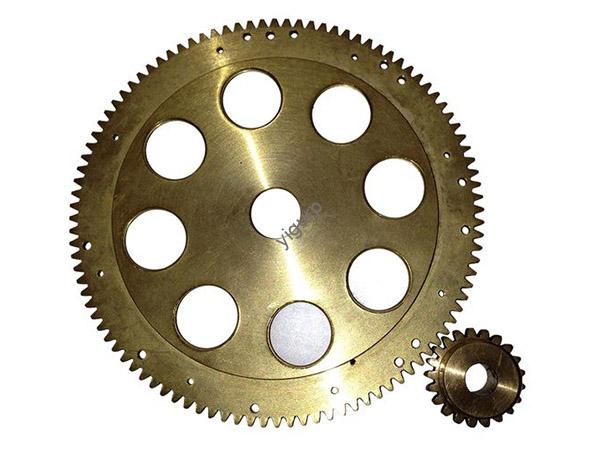
When your application involves components that must combine a hard, wear-resistant surface with a tough, impact-resistant core—such as transmission gears, camshafts, or drive shafts—EN 16MnCr5 case hardening steel is a proven solution. As a European standard alloy defined by EN 10084, it is specifically designed for carburizing, a heat treatment process that creates a hard outer case while maintaining a ductile core. In this guide, I will walk you through its properties, applications, and how to work with it based on real manufacturing experience.
Introduction
EN 16MnCr5 is a low-carbon chromium-manganese alloy steel engineered for case hardening. Its carbon content of 0.14–0.19% is low enough to maintain a tough, ductile core after heat treatment, while its chromium (0.80–1.10%) and manganese (1.00–1.30%) content provide hardenability and wear resistance. During carburizing, carbon diffuses into the surface layer, creating a high-carbon case that can be hardened to 58–62 HRC. The result is a component with a hard, wear-resistant surface that can withstand friction and contact stress, combined with a tough core that resists impact and fatigue. Over the years at Yigu Rapid Prototyping, I have worked with automotive manufacturers, gear makers, and heavy equipment builders who specify EN 16MnCr5 for components that must perform reliably under high stress and wear. Its balance of surface hardness, core toughness, and cost-effectiveness makes it a go-to material for case-hardened components.
What Makes EN 16MnCr5 Ideal for Case Hardening?
EN 16MnCr5 achieves its properties through a combination of low carbon content and alloying elements that promote deep, uniform case hardening while maintaining core toughness.
The Chemistry Behind the Performance
The chemical composition of EN 16MnCr5 is designed to respond predictably to carburizing and to provide a tough core after heat treatment.
| Element | Content Range (%) | Why It Matters |
|---|---|---|
| Carbon (C) | 0.14 – 0.19 | Low carbon content keeps the core tough and ductile after heat treatment. |
| Manganese (Mn) | 1.00 – 1.30 | Enhances hardenability and machinability. Strengthens the core. |
| Chromium (Cr) | 0.80 – 1.10 | Forms carbides in the case, improving wear resistance. Promotes uniform carburizing. |
| Silicon (Si) | 0.15 – 0.35 | Acts as a deoxidizer. Prevents oxidation during heat treatment. |
| Sulfur (S) | ≤ 0.035 | Kept low to prevent cracking in case-hardened parts. |
| Phosphorus (P) | ≤ 0.035 | Limited to prevent cold brittleness. |
| Trace Elements | ≤ 0.10 each | Nickel, molybdenum, and vanadium in small amounts provide minor improvements. |
Key Insight: The low carbon content (0.14–0.19%) of EN 16MnCr5 is the foundation of its case hardening capability. The core remains tough and ductile (28–32 HRC) after heat treatment, while the carburized case achieves 58–62 HRC. This combination is ideal for components that must withstand both wear and impact.
Mechanical Properties That Matter
EN 16MnCr5’s mechanical properties are achieved after carburizing, quenching, and tempering.
| Property | Typical Value | Significance |
|---|---|---|
| Case Hardness | 58 – 62 HRC | Provides excellent wear resistance for surfaces that contact other components. |
| Core Hardness | 28 – 32 HRC | Tough core absorbs impact and resists fatigue. |
| Tensile Strength | ≥ 900 MPa | Handles high loads in gears, shafts, and transmission components. |
| Yield Strength | ≥ 650 MPa | Resists permanent deformation under load. |
| Elongation | ≥ 12% | Provides enough ductility for the core to absorb energy. |
| Impact Toughness (-20°C) | ≥ 60 J | Ensures reliability in cold climates and under sudden impact. |
| Fatigue Strength | ~500 MPa | Resists failure from repeated stress cycles. Critical for rotating components. |
| Case Hardening Depth | 0.8 – 1.2 mm (typical) | Sufficient for most gear and shaft applications. |
Case Study: A European automotive parts manufacturer was using non-case-hardened steel for manual transmission gears. The gears failed after 150,000 km due to tooth wear, causing a 7% failure rate. They switched to EN 16MnCr5 gears with a 1.0 mm case hardened to 59 HRC. Gear life increased to 300,000 km—double the previous life. Transmission efficiency improved by 6%, and recall costs were reduced by €250,000 annually.
Where Does EN 16MnCr5 Deliver the Most Value?
This material is specified for components that require a combination of surface wear resistance and core toughness.
Automotive and Transmission Components
EN 16MnCr5 is widely used in automotive powertrain and drivetrain components.
- Transmission gears: Gears for manual and automatic transmissions. Wear resistance (58–62 HRC case) extends gear life by 40% compared to non-case-hardened steel.
- Camshafts: Camshafts for diesel and gasoline engines. Hard case resists wear from valve lifters; tough core handles constant mechanical stress.
- Drive shafts: Shafts for electric vehicle (EV) and conventional drivetrains. Fatigue strength of approximately 500 MPa withstands continuous torque.
- Differential pinions: Pinions that transfer power to wheels. Case depth of 0.8–1.2 mm ensures long-term durability under heavy loads.
Case Study: A manufacturer of compact car transmissions used EN 16MnCr5 for gear components. The case-hardened gears achieved 300,000 km service life with no tooth wear. The components were forged, annealed for machining, carburized at 920°C for five hours, quenched, and tempered to achieve 59 HRC case hardness and 30 HRC core hardness.
Mechanical Engineering and Industrial Machinery
Industrial equipment components benefit from EN 16MnCr5’s combination of surface hardness and core toughness.
- Bearings: Bearing races for conveyor systems and industrial equipment. Hard surface reduces friction; tough core handles impact loads.
- Rollers: Printing press rollers and material handling rollers. Uniform case hardness ensures consistent surface pressure.
- Fasteners: High-strength bolts and studs for machine tools. Tensile strength of 900 MPa resists vibration loosening.
Case Study: A factory using EN 16MnCr5 for conveyor bearing races reported a 25% reduction in maintenance downtime. The hard surface reduced wear, and the tough core absorbed impact from material loading.
Heavy Machinery and Construction Equipment
Large-scale equipment requires components that can withstand heavy loads and abrasive conditions.
- Excavator bucket springs: Springs that maintain tension in bucket linkages. Tempered core retains elasticity; hard case resists scratch wear from debris.
- Crane hooks: Hooks that lift heavy loads. Tough core (28–32 HRC) handles 30-ton loads; hard case resists surface damage from chains and slings.
- Structural components: Pins, bushings, and linkages in heavy equipment.
How Is EN 16MnCr5 Manufactured and Processed?
The case hardening process is critical to achieving EN 16MnCr5’s properties. The material is supplied in a soft, machinable condition and achieves its final properties through carburizing and heat treatment.
Steelmaking and Forming
EN 16MnCr5 is typically produced in an electric arc furnace (EAF) for medium batches, or a basic oxygen furnace (BOF) for large-scale production. After steelmaking, the material is:
- Forged at 1,100–1,200°C to align grain structure and increase strength.
- Hot rolled into bars, sheets, and rods.
- Cold drawn for precision components requiring tight tolerances.
Case Hardening Process
The case hardening process is the key to EN 16MnCr5’s performance.
- Annealing: Heat to 820–850°C, slow cool. Softens the steel to 180–220 HB for machining.
- Machining: All machining is performed in the annealed condition.
- Carburizing: Heat to 900–950°C in a carbon-rich atmosphere (natural gas or propane) for 4–6 hours. Carbon diffuses into the surface, creating a high-carbon case.
- Quenching: Cool rapidly in oil from 830–850°C. Hardens the case to 58–62 HRC while keeping the core tough.
- Tempering: Heat to 180–220°C, cool in air. Reduces brittleness in the case without losing hardness.
- Nitriding (optional): For additional wear resistance, heat to 500–550°C in a nitrogen atmosphere to create a 0.1–0.2 mm super-hard layer (65–70 HRC).
| Process Parameter | Typical Range | Why It Matters |
|---|---|---|
| Carburizing Temperature | 900 – 950°C | High enough for carbon diffusion without excessive grain growth. |
| Carburizing Time | 4 – 6 hours | Controls case depth. Longer time = deeper case. |
| Case Depth | 0.8 – 1.2 mm | Typical for gears and shafts. Adjustable by varying time. |
| Tempering Temperature | 180 – 220°C | Balances case hardness and toughness. |
Machining
Machining is performed in the annealed condition, where EN 16MnCr5 is relatively soft (180–220 HB).
- Turning: Use carbide tools with cutting fluid.
- Milling: Carbide tools achieve precision tolerances (±0.02 mm).
- Drilling: High-speed drills (1,000–1,500 RPM) work well.
- Grinding: After case hardening, grinding achieves final tolerances (±0.01 mm) for precision surfaces.
How Does EN 16MnCr5 Compare to Other Case Hardening Steels?
Understanding the trade-offs between EN 16MnCr5 and alternative materials helps in making an informed selection.
| Material | Case Hardness (HRC) | Core Hardness (HRC) | Case Depth (mm) | Relative Cost | Best For |
|---|---|---|---|---|---|
| EN 16MnCr5 | 58 – 62 | 28 – 32 | 0.8 – 1.2 | 100% | General case-hardened parts (gears, shafts) |
| EN 20MnCr5 | 58 – 62 | 30 – 34 | 0.6 – 1.0 | 110% | Higher-stress parts (heavy-duty shafts) |
| EN 18CrNiMo7-6 | 60 – 64 | 32 – 36 | 1.0 – 1.4 | 180% | High-performance parts (aerospace gears) |
| SAE 8620 | 58 – 62 | 28 – 32 | 0.8 – 1.2 | 115% | North American market parts |
| JIS SCM420 | 58 – 62 | 25 – 30 | 0.7 – 1.1 | 105% | Asian market parts (EV drive shafts) |
| Carbon Steel (S45C) | N/A | 20 – 25 | N/A | 50% | Low-stress parts (brackets) |
Key Insights:
- Compared to EN 20MnCr5, EN 16MnCr5 offers similar case hardness with slightly lower core hardness at 10% lower cost. For most gear and shaft applications, EN 16MnCr5 is sufficient.
- Compared to EN 18CrNiMo7-6, EN 16MnCr5 is significantly less expensive while providing adequate properties for most automotive and industrial applications. Choose the higher-grade alloy for extreme loads or aerospace requirements.
- Compared to SAE 8620, EN 16MnCr5 offers similar properties at lower cost in European markets. The choice depends on regional standards and availability.
What About Cold Climate Performance?
EN 16MnCr5 maintains impact toughness of at least 60 J at -20°C. For colder climates (below -30°C), the tempering temperature can be adjusted to 200–220°C to increase toughness to 70 J or more.
Conclusion
EN 16MnCr5 case hardening steel is a versatile, cost-effective material for components that require a hard, wear-resistant surface combined with a tough, impact-resistant core. Its low carbon content and chromium-manganese alloying provide the hardenability needed for uniform case hardening, while its core retains the toughness required for demanding applications. For automotive transmission gears, camshafts, drive shafts, and industrial machinery components, EN 16MnCr5 delivers reliable performance at a reasonable cost. When you need a material that can be case hardened to achieve both wear resistance and toughness, EN 16MnCr5 is a proven, trusted choice.
FAQ About EN 16MnCr5 Case Hardening Steel
Can EN 16MnCr5 be used in low-temperature environments?
Yes. EN 16MnCr5 maintains impact toughness of at least 60 J at -20°C, making it suitable for most temperate and cold climates. For environments below -30°C, adjust the tempering temperature to 200–220°C to increase toughness to 70 J or more.
How do I adjust the case hardening depth of EN 16MnCr5?
Case depth is controlled by carburizing time and temperature. To increase case depth for thicker components such as large shafts, extend carburizing time to 7–8 hours. To decrease case depth for thin gears, shorten time to 3–4 hours. Always test hardness after processing to verify results.
Is EN 16MnCr5 compatible with welding?
Yes, but with precautions. EN 16MnCr5 has acceptable weldability. Preheat to 250–300°C before welding. Use low-hydrogen electrodes such as E7018. After welding, perform post-weld annealing at 820–850°C to relieve stress and maintain the material’s properties.
What is the typical case depth for EN 16MnCr5 gears?
For automotive transmission gears, typical case depth is 0.8–1.2 mm. This depth provides sufficient wear resistance while maintaining core toughness. For larger gears or components with higher wear requirements, case depth can be increased by extending carburizing time.
Discuss Your Projects with Yigu Rapid Prototyping
Selecting the right case hardening steel for your application requires balancing surface hardness, core toughness, and cost. At Yigu Rapid Prototyping, we help automotive manufacturers, gear makers, and industrial equipment builders navigate these decisions with practical, experience-based guidance. Whether you need EN 16MnCr5 for transmission gears, camshafts, or heavy machinery components, we can provide material sourcing, heat treatment, and fabrication support. Contact us to discuss your project requirements and find the right solution.