
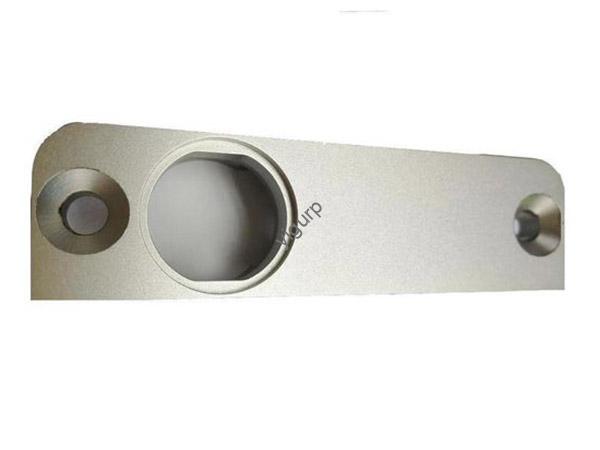
If you are building a coastal canopy, a tractor frame, or an outdoor conveyor system, you need a material that can handle both heavy loads and constant exposure to moisture. Standard high-strength steel like S350 will rust quickly in these conditions, requiring frequent painting or replacement. Stainless steel offers corrosion resistance but at a much higher cost and with lower strength. S350GD galvanized structural steel offers the best of both worlds. It combines the high strength of S350 steel with a durable zinc coating, providing long-term corrosion protection without sacrificing load-bearing capacity. This guide explains its properties, where to use it, and how it compares to other materials.
Introduction
For engineers and fabricators working on outdoor or high-humidity projects, material selection is a constant compromise. You need a steel that is strong enough for structural or mechanical loads. But you also need it to survive rain, salt spray, and chemical exposure without rusting away. S350GD was developed to solve this problem. It starts with a high-strength S350 steel base, which provides a minimum yield strength of 350 MPa. This makes it suitable for medium-to-heavy load applications like building frames, agricultural equipment, and machinery. The steel then undergoes a hot-dip galvanizing process, where it is coated with a layer of zinc. This zinc layer acts as a physical barrier and, more importantly, as a sacrificial anode. If the coating is scratched, the zinc corrodes first, protecting the underlying steel. This “two-in-one” design delivers both strength and exceptional durability.
What Makes S350GD Unique?
The performance of S350GD comes from the synergy between its high-strength steel core and its protective zinc coating. It is designed to be strong, formable, and long-lasting.
What Is in the Steel and Coating?
The material consists of two distinct parts: the S350 steel base and the zinc galvanized layer. Both are engineered to work together.
| Component | Details | Key Function |
|---|---|---|
| Steel Base | High-strength low-alloy (HSLA) steel with carbon, manganese, and microalloys like vanadium | Provides a yield strength of at least 350 MPa for structural and mechanical loads. |
| Zinc Coating | Applied via hot-dip galvanizing; coating weight from 60 to 275 g/m² | Forms a physical barrier and acts as a sacrificial anode to protect the steel from rust. |
| Microalloys | Vanadium (0.05-0.15%) and chromium (0.30-0.80%) in the steel base | Refine the grain structure, boosting strength and toughness without reducing weldability. |
What Are Its Key Mechanical Properties?
S350GD retains the excellent mechanical properties of its steel base, making it suitable for demanding structural applications.
| Property | Typical Value | Why This Matters |
|---|---|---|
| Yield Strength | ≥ 350 MPa | High enough for load-bearing frames, equipment supports, and vehicle chassis. |
| Tensile Strength | 510 – 650 MPa | Provides a wide safety margin before failure. |
| Elongation | ≥ 20% | Good ductility, meaning it can be bent and formed into complex shapes. |
| Impact Toughness | ≥ 34 J at -20°C | Remains tough in cold climates, resisting brittle fracture. |
| Hardness (Steel Base) | 140 – 190 HB | Soft enough for standard machining with carbide tools. |
How Well Does It Resist Corrosion?
This is where S350GD truly shines. The zinc coating provides a level of protection that uncoated steel cannot match.
- Salt Spray Testing: It passes 1000-hour salt spray tests with less than 5% rust. Uncoated S350 would fail in under 200 hours.
- Outdoor Lifespan: In typical outdoor environments, the coating protects the steel for 20 to 30 years without maintenance.
- 5x Better: The corrosion resistance of S350GD is roughly five times better than uncoated S350.
A Spanish construction firm used S350GD for an outdoor dining canopy at a coastal hotel. The structure faced constant salt spray. Uncoated S350 would have required repainting every five years. The S350GD canopy lasted 15 years with no rust-related repairs, saving the hotel €20,000 in maintenance costs.
Where Is S350GD Used in the Real World?
The combination of strength and corrosion resistance makes S350GD a versatile material for many industries.
Construction and Infrastructure
This is a primary market for S350GD. It is used wherever steel is exposed to the elements.
- Outdoor Canopies and Building Frames: As seen in the Spanish hotel example, it is ideal for structures that need to resist rain and salt spray.
- Bridge Components: A Polish transportation authority used S350GD for bridge railings. The steel handled impacts from 12-ton trucks and withstood rain and snow for 20 years without rust repairs.
- Industrial Buildings: A German dairy factory used S350GD for exterior supports. The steel resisted the high humidity and cleaning chemicals common in food processing environments.
Automotive and Agricultural Machinery
For vehicles and equipment that work in mud, rain, and soil, S350GD provides a durable solution.
- Tractor and Off-Road Chassis: A French tractor maker switched to S350GD for their chassis. The galvanized coating withstood muddy fields and rain for eight years, double the life of uncoated steel. This led to a 40% reduction in warranty claims.
- Plow Frames: A Hungarian farm equipment brand used S350GD for plow frames. Farmers reported that the frames lasted four seasons in wet soil and fertilizer, compared to just two seasons for uncoated steel. Replacement costs dropped by 50%.
Mechanical Engineering and Offshore
For industrial equipment and structures in harsh environments, S350GD is a cost-effective choice.
- Outdoor Conveyor Frames: A South African mine used S350GD for conveyor frames exposed to rain and abrasive ore dust. The frames lasted five years, compared to two years for uncoated S350, cutting replacement costs by 60%.
- Offshore Wind Turbine Brackets: A Danish wind energy firm used S350GD for minor support brackets. With the galvanized coating and an additional paint topcoat, the brackets lasted 25 years, outperforming 304 stainless steel, which typically lasted 15 years. This saved the company €50,000 per turbine across a 200-turbine farm.
How Is S350GD Manufactured?
Producing S350GD involves making a high-strength steel base and then applying the protective zinc coating through a precise process.
Making the Steel Base
The S350 steel base is made in an electric arc furnace (EAF) or basic oxygen furnace (BOF). Microalloys like vanadium and chromium are added to achieve the required strength and toughness. The molten steel is continuously cast into billets or slabs.
Hot Rolling and Forming
The steel is heated to 1150-1250°C and hot-rolled into its final shape, such as sheets, bars, or coils. This rolling process refines the grain structure, contributing to the steel’s strength.
The Galvanizing Process
This is the critical step that gives S350GD its corrosion resistance.
- Cleaning: The steel is thoroughly cleaned to remove any rust, oil, or mill scale. This is essential for the zinc to bond properly.
- Fluxing: The steel is dipped in a flux solution to remove any remaining oxides.
- Hot-Dip Galvanizing: The clean steel is dipped into a bath of molten zinc at 440-460°C for several minutes. A metallurgical bond forms between the zinc and the steel.
- Cooling and Passivation: The coated steel is cooled, and a thin passivation layer is often applied to enhance the coating’s durability and prevent “white rust” during storage.
The coating weight can range from 60 g/m² for light-duty indoor applications to 275 g/m² for severe outdoor or marine environments.
How Does S350GD Compare to Other Materials?
Choosing the right material often means comparing S350GD to its alternatives. The table below provides a clear breakdown.
| Material | Yield Strength | Corrosion Resistance (Outdoor) | Relative Cost | Best Application |
|---|---|---|---|---|
| S350GD | ≥ 350 MPa | Excellent (20-30 years) | 100% (Baseline) | Outdoor medium-to-heavy load structures |
| S350 (Uncoated) | ≥ 350 MPa | Moderate (5-8 years) | 85% | Indoor or short-term outdoor use |
| 304 Stainless Steel | ≥ 205 MPa | Excellent (30+ years) | 400% | Coastal or corrosive environments requiring a specific finish |
| Q460 Galvanized | ≥ 460 MPa | Excellent (20-30 years) | 120% | Outdoor applications requiring even higher strength |
Analysis: For a coastal building canopy or an agricultural tractor frame, S350GD is the most cost-effective choice. It provides the necessary strength and offers excellent corrosion protection at a fraction of the cost of stainless steel. Uncoated S350 is cheaper upfront but will require costly painting or replacement within a few years. For applications needing even higher strength than 350 MPa, a galvanized Q460 steel might be a better option.
Conclusion
S350GD galvanized structural steel offers a practical and cost-effective solution for outdoor and high-humidity applications. It solves the common problem of standard high-strength steel rusting prematurely. By combining a robust S350 steel base with a durable, sacrificial zinc coating, it delivers the best of both worlds: the strength to handle medium-to-heavy loads and the corrosion resistance to last for decades without maintenance. While it requires some care during welding, its overall performance in coastal, agricultural, and industrial environments is proven and reliable. For any project where strength and weather resistance are both critical, S350GD is a smart, value-driven choice.
FAQ
Can S350GD be welded without damaging the galvanized coating?
Yes, but the coating must be removed near the weld. Grind off the zinc coating for about 50-100 mm from the weld area to prevent zinc fumes and ensure a clean weld. After welding, the exposed steel must be protected. Apply a zinc-rich cold galvanizing spray or paint to the welded area to restore full corrosion protection.
How long does the galvanized layer last in a saltwater environment?
In moderate saltwater environments, such as a coastal area 1-5 km from the ocean, the standard galvanized layer lasts 15 to 20 years. For direct saltwater exposure, such as on an offshore platform, adding a high-quality paint topcoat over the galvanized layer can extend the lifespan to 25 years or more.
What is the difference between S350GD and standard galvanized steel?
S350GD is a specific grade of galvanized steel. The “S350” refers to the minimum yield strength of the steel base, which is 350 MPa. Standard galvanized steel often has a lower yield strength (e.g., 250 MPa or 300 MPa). S350GD is chosen when the application requires higher structural strength in addition to corrosion protection.
Can S350GD be used for indoor applications?
Yes, it can. However, for indoor use where corrosion is not a concern, the cheaper, uncoated S350 is often a more cost-effective choice. S350GD is generally specified for applications where moisture, humidity, or chemicals are present.
Does the galvanized coating require any maintenance?
Under normal outdoor conditions, the coating requires no maintenance. Over very long periods (20-30 years), the zinc layer will slowly corrode. In extreme environments, such as direct saltwater spray, periodic inspection and touch-up with zinc-rich paint at scratches or damaged areas can help maximize its lifespan.
Discuss Your Projects with Yigu Rapid Prototyping
Selecting the right material for outdoor applications is critical for long-term performance. At Yigu Rapid Prototyping, we have extensive experience with S350GD and other galvanized structural steels. Whether you need custom-fabricated frames for agricultural equipment, structural components for a coastal building, or guidance on post-weld coating repair, our team is here to help. Contact us to discuss your next project.