
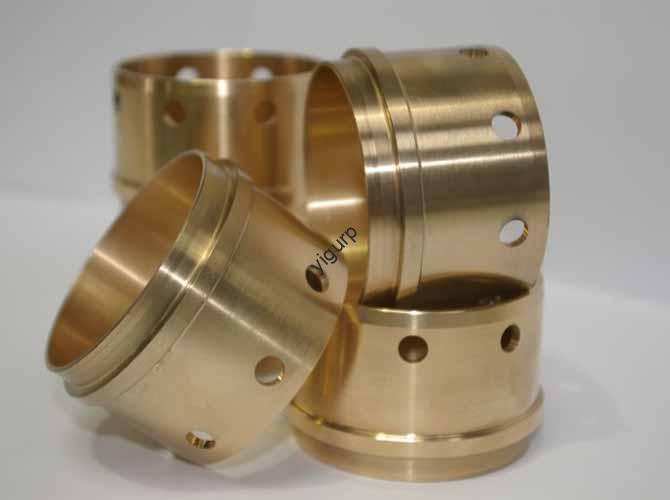
When your project demands a material that combines exceptional electrical conductivity, outstanding thermal performance, and long-term durability, C110 copper alloy stands as a proven choice. Known as electrolytic tough pitch (ETP) copper, this alloy is a cornerstone across industries ranging from electronics and power distribution to construction and industrial manufacturing. Its unique properties—including 101% IACS conductivity, natural corrosion resistance, and complete recyclability—make it a preferred material for critical applications where performance and reliability cannot be compromised. This guide explores its core properties, real-world applications, fabrication methods, and environmental benefits, helping you understand why it remains an indispensable material for modern engineering.
Introduction
Copper has been used by human civilization for thousands of years, yet its relevance in today’s high-tech world has never been greater. Among the various copper grades available, C110 electrolytic tough pitch copper stands out as the industry standard for applications requiring the highest possible conductivity. From the wiring that powers our homes and cities to the heat exchangers that cool industrial equipment and the bus bars that distribute electricity in data centers, C110 delivers performance that few other metals can match. Its combination of conductivity, workability, and sustainability makes it a material that engineers return to again and again.
What Defines C110 Copper Alloy?
The performance of C110 copper alloy is rooted in its high purity and the specific manufacturing process that gives it its characteristic properties. Understanding these fundamentals explains why this grade has become the benchmark for electrical and thermal applications.
Chemical Composition
C110 is defined by its exceptional purity, consisting of at least 99.9% copper with carefully controlled oxygen content. The table below outlines its typical composition.
| Element | Content Range (%) | Functional Role |
|---|---|---|
| Copper (Cu) | ≥ 99.90 | Base element providing exceptional electrical conductivity and thermal conductivity. |
| Oxygen (O) | 0.02–0.04 | Trace oxygen content improves conductivity and ductility compared to oxygen-free grades. |
| Silver (Ag) | ≤ 0.004 | Trace impurity with minimal effect on performance. |
| Iron (Fe) | ≤ 0.005 | Strictly controlled to maintain conductivity and prevent embrittlement. |
| Lead (Pb) | ≤ 0.005 | Minimized to preserve ductility and prevent hot shortness during fabrication. |
| Sulfur (S) | ≤ 0.005 | Controlled to avoid embrittlement at elevated temperatures. |
Electrical and Thermal Conductivity
The defining feature of C110 copper alloy is its industry-leading conductivity. These properties directly translate to real-world performance benefits.
| Property | Value | Practical Significance |
|---|---|---|
| Electrical Conductivity | 101% IACS | Transfers electricity more efficiently than nearly all other commercial metals, minimizing energy loss in power systems. |
| Thermal Conductivity | 226 BTU/(sq.ft./hr/°F) | Dissipates heat rapidly, making it ideal for cooling applications, heat exchangers, and thermal management. |
| Electrical Resistivity | 1.68 × 10⁻⁸ Ω·m | Low resistance reduces heat generation in high-current applications like bus bars and connectors. |
Mechanical Properties
C110 balances its exceptional conductivity with mechanical properties that make it practical for fabrication and installation.
| Property | Typical Value | Practical Significance |
|---|---|---|
| Tensile Strength (Annealed) | 220–250 MPa | Soft enough for bending and forming without cracking. |
| Tensile Strength (Hard) | 310–380 MPa | Cold working increases strength for applications requiring rigidity. |
| Yield Strength (Annealed) | 70–90 MPa | Low yield strength allows for easy forming into complex shapes. |
| Elongation (Annealed) | 20–50% | High ductility enables drawing into thin wires and bending into tight radii. |
| Hardness (Annealed) | 40–65 HV | Soft enough for machining with standard tools. |
| Hardness (Hard) | 80–110 HV | Cold working increases hardness for wear resistance in connectors and terminals. |
Physical Properties
The physical characteristics of C110 make it suitable for a wide range of environmental conditions and applications.
| Property | Value | Practical Significance |
|---|---|---|
| Density | 8.94 g/cm³ | Higher than aluminum but lower than many other conductive metals. |
| Melting Point | 1,083°C | High enough for most thermal applications, with adequate margin for brazing and soldering. |
| Coefficient of Thermal Expansion | 17.6 × 10⁻⁶/°C | Matches many insulating materials, reducing thermal stress in electrical assemblies. |
| Electrical Resistivity Temperature Coefficient | 0.00393/°C | Predictable resistance change with temperature, useful for sensor applications. |
Why Is It the Standard for Electrical Applications?
C110 copper alloy has become the default choice for electrical and thermal management applications because its properties directly address the requirements of these systems.
Unmatched Electrical Conductivity
With conductivity rated at 101% IACS, C110 outperforms aluminum (61% IACS) and all common copper alloys. This means that for a given current, C110 conductors generate less heat and waste less energy. In power distribution systems, this translates to lower operating costs. In electric vehicles, it means more of the battery’s energy reaches the motors.
Excellent Thermal Performance
The thermal conductivity of C110—226 BTU/(sq.ft./hr/°F)—allows it to move heat efficiently away from critical components. This property is essential for heat exchangers, radiators, and LED lighting systems where managing temperature directly affects performance and lifespan.
High Ductility for Fabrication
C110’s elongation of up to 50% in the annealed state means it can be drawn into wires as thin as 0.001 inches, bent into complex shapes for custom fittings, and formed into intricate bus bar configurations without cracking. This workability simplifies manufacturing and reduces production costs.
Natural Corrosion Resistance
When exposed to air, C110 forms a protective oxide layer that resists further corrosion. In most atmospheric, water, and soil environments, it performs reliably for decades. Copper plumbing systems have demonstrated service lives exceeding 50 years, and copper roofing can last over a century.
Where Is C110 Copper Alloy Commonly Used?
The combination of conductivity, workability, and corrosion resistance makes C110 suitable for a wide range of applications across multiple industries.
- Electrical and Power Distribution:
- Building wiring for residential, commercial, and industrial electrical systems.
- Bus bars in switchgear, transformers, and data centers that distribute high currents.
- Power cables for utility transmission and distribution networks.
- Connectors and terminals for electronics, appliances, and electric vehicles.
- Thermal Management:
- Heat exchangers in refrigeration, air conditioning, and industrial cooling systems.
- Radiators for automotive, heavy machinery, and stationary engines.
- LED heat sinks that extend the lifespan of high-power lighting systems.
- Solar thermal collectors that transfer heat from sunlight to water or air.
- Construction and Plumbing:
- Potable water piping that resists corrosion and does not leach chemicals.
- Roofing and flashing that develops an attractive patina while lasting over 100 years.
- Architectural details such as skylight frames, handrails, and decorative elements.
- HVAC components including refrigerant lines and heat pump connections.
- Industrial Manufacturing:
- Electromagnets for MRI machines, industrial cranes, and particle accelerators.
- Automotive components including spark plug electrodes and wiring harnesses.
- Industrial valves for chemical plants and refineries.
- Welding electrodes for resistance welding applications.
- Renewable Energy:
- Solar panel interconnects that carry current between photovoltaic cells.
- Wind turbine generators where high conductivity reduces energy loss.
- Electric vehicle battery connections requiring both conductivity and reliability.
How Is C110 Copper Alloy Fabricated?
Working with C110 copper alloy requires understanding its behavior under different fabrication methods. With proper techniques, it is one of the most workable conductive materials available.
Machining
C110 has moderate machinability, rated at approximately 20% compared to free-cutting brass. For optimal results:
- Tool Selection: Carbide tools provide the best durability. High-speed steel (HSS) tools work for lighter operations.
- Cutting Speeds: 200–400 feet per minute for carbide tools; 100–200 FPM for HSS.
- Feed Rates: 0.002–0.004 inches per revolution to prevent tool wear and built-up edge.
- Lubrication: Water-soluble or sulfurized oils reduce friction and heat buildup.
- Workholding: Use soft jaws or pads to prevent surface scratches on finished parts.
Forming and Bending
C110’s high ductility makes it suitable for both hot and cold forming:
| Technique | Temperature Range | Applications |
|---|---|---|
| Cold Working | Room temperature | Wire drawing, tube bending, sheet metal stamping, connector forming. |
| Hot Working | 1,400–1,600°F | Forging large components, forming thick sections, shaping complex geometries. |
| Annealing | 700–1,200°F | Restores ductility after cold working, prevents cracking in subsequent operations. |
Joining and Welding
C110 can be joined using several methods, each with specific considerations:
- Soldering: The most common joining method for electrical connections. Use rosin-core solder for electrical applications; acid flux for plumbing.
- Brazing: Provides stronger joints for high-temperature applications like refrigeration lines.
- TIG Welding (GTAW): Preferred for precision welding of thick sections. Use argon shielding gas and clean surfaces thoroughly.
- MIG Welding (GMAW): Faster than TIG, suitable for larger components like roofing panels.
Critical Preparation Steps:
- Clean surfaces thoroughly to remove oxides (use sandpaper, wire brush, or chemical cleaners).
- Preheat thick sections to 500°F to minimize thermal shock.
- Use post-weld heat treatment for stress relief when necessary.
How Does It Compare to Other Conductive Materials?
Understanding where C110 fits relative to alternatives helps clarify its value for specific applications.
| Material | Electrical Conductivity (% IACS) | Thermal Conductivity (BTU/sq.ft./hr/°F) | Density (g/cm³) | Relative Cost | Best Applications |
|---|---|---|---|---|---|
| C110 Copper | 101 | 226 | 8.94 | $$ | Electrical wiring, bus bars, heat exchangers |
| Silver | 106 | 247 | 10.49 | $$$$$ | High-end electronics, specialized contacts |
| Aluminum | 61 | 136 | 2.70 | $ | Lightweight electrical transmission, power lines |
| Gold | 70 | 172 | 19.32 | $$$$$$ | Corrosion-resistant connectors, aerospace |
| Brass (C260) | 28 | 70 | 8.53 | $–$$ | Decorative hardware, low-conductivity fittings |
| Bronze (C510) | 15 | 40 | 8.80 | $$–$$$ | Bearings, springs, corrosion-resistant hardware |
Key takeaways:
- C110 offers the highest conductivity of any commercially practical metal, second only to silver at a fraction of the cost.
- While aluminum is lighter and less expensive, C110 provides significantly higher conductivity, allowing for smaller conductor sizes.
- For applications requiring both conductivity and mechanical strength, copper alloys like beryllium copper may be considered, but they sacrifice conductivity.
- The combination of conductivity, workability, and corrosion resistance makes C110 the most versatile choice for the majority of electrical and thermal applications.
Case Study: C110 in Electric Vehicle Battery Connections
A major electric vehicle manufacturer was experiencing energy loss in the connections between battery cells. The existing aluminum connectors had acceptable conductivity but required larger cross-sections to handle the current, adding weight and occupying valuable space within the battery pack. The manufacturer switched to C110 copper connectors with a nickel-plated finish for corrosion protection.
Results:
- Connector cross-section was reduced by 40%, freeing space for additional battery cells.
- Energy loss in the connection system dropped by 5%, extending vehicle range by approximately 8 miles per charge.
- The higher conductivity of C110 reduced heat generation in the battery pack, improving thermal management and extending battery life.
- Despite the higher material cost of copper versus aluminum, the overall system cost was comparable due to reduced connector size and simplified assembly.
Conclusion
C110 copper alloy remains the benchmark against which other conductive materials are measured. Its 101% IACS electrical conductivity and 226 BTU/(sq.ft./hr/°F) thermal conductivity deliver performance that engineers rely on for critical applications. Its high ductility allows for fabrication into complex shapes, from thin wires to intricate bus bars. Its natural corrosion resistance provides decades of reliable service in plumbing, roofing, and industrial environments. And its complete recyclability—with 10–15% of the energy required for primary production—makes it a sustainable choice for projects where environmental impact matters. From the wiring in our homes to the connections in electric vehicles, C110 copper alloy continues to play an essential role in modern technology and infrastructure.
FAQ About C110 Copper Alloy
How does C110 copper alloy differ from pure copper?
C110 is 99.9% pure copper with a controlled oxygen content of 0.02–0.04%. This trace oxygen enhances conductivity and ductility compared to oxygen-free copper grades. For most electrical and thermal applications, C110 provides the best combination of performance and cost. Oxygen-free copper (C101) is used only when hydrogen embrittlement during welding in reducing atmospheres is a concern.
Can C110 copper alloy be used in high-temperature applications?
Yes. C110 performs reliably in applications up to approximately 400°F (200°C) for continuous service. Its thermal conductivity and resistance to thermal stress make it ideal for heat exchangers, radiators, and automotive components. For hot working operations like forging, temperatures of 1,400–1,600°F are appropriate. Avoid prolonged exposure to reducing atmospheres at high temperatures, which can cause hydrogen embrittlement.
Is C110 copper alloy safe for drinking water systems?
Absolutely. C110 is approved by the EPA and NSF International for potable water applications. It does not leach harmful chemicals into the water supply and naturally inhibits bacterial growth. Copper plumbing systems have demonstrated service lives exceeding 50 years with minimal maintenance. For residential and commercial plumbing, C110 remains the standard for reliability and safety.
How does C110 copper alloy compare to aluminum for electrical applications?
C110 offers significantly higher electrical conductivity (101% IACS vs. 61% IACS for aluminum). This means a copper conductor can be smaller than an aluminum conductor carrying the same current. Copper also has higher tensile strength, better creep resistance, and superior corrosion resistance in most environments. While aluminum is lighter and less expensive per pound, copper’s higher conductivity often results in comparable or lower total system costs when conductor size, installation labor, and energy losses are considered.
Discuss Your Projects with Yigu Rapid Prototyping
Selecting the right conductive material for your application requires balancing conductivity, mechanical properties, corrosion resistance, and cost. At Yigu Rapid Prototyping, we combine deep expertise in materials like C110 copper alloy with advanced fabrication capabilities to deliver components that meet demanding performance requirements. Whether you need bus bars for power distribution, custom heat exchangers for thermal management, or precision connectors for electric vehicle applications, our team can guide you from material selection through final fabrication.
We specialize in working with high-conductivity copper alloys, offering services including precision machining, forming, welding, and surface finishing. If your next project demands exceptional conductivity and reliable performance, we are ready to help. Contact us today to discuss your requirements and discover how our expertise can support your critical electrical and thermal management applications.