
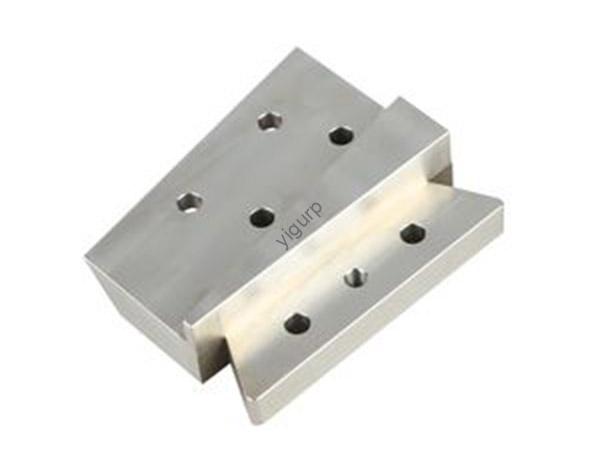
JIS SUS440C stainless bearing steel is a high-carbon, chromium-alloyed martensitic stainless steel defined by the Japanese Industrial Standard (JIS) G4303. It is specifically engineered for applications that demand both high hardness and excellent corrosion resistance. With a carbon content of 0.95-1.20% and chromium content of 16.00-18.00% , it can be heat-treated to achieve a hardness of 58-62 HRC, comparable to standard bearing steels, while its high chromium content provides superior resistance to rust and corrosion. This unique combination makes it the material of choice for bearings and precision components used in wet, corrosive, and sanitary environments such as food processing, marine, and chemical industries.
Introduction
Standard bearing steels like JIS SUJ2 or AISI 52100 are exceptionally hard and wear-resistant, making them ideal for dry industrial applications. However, they have a critical weakness: they rust. In environments with water, steam, or chemicals, these steels fail rapidly, leading to bearing seizure, contamination, and costly downtime. For decades, engineers working in food processing, marine, or chemical plants faced a difficult choice: accept the corrosion failure of standard steel or switch to expensive, non-magnetic, or less wear-resistant alternatives. JIS SUS440C was developed to solve this problem. It is a martensitic stainless steel that can be hardened to the levels required for bearing applications while retaining the corrosion resistance of high-chromium stainless steel. For any application where bearings must survive in wet or corrosive conditions, this material offers a proven, reliable solution.
What Are the Key Properties of JIS SUS440C?
The performance of JIS SUS440C is defined by its high carbon and chromium content and the mechanical properties achieved through precise heat treatment.
Chemical Composition
The combination of high carbon for hardness and high chromium for corrosion resistance is the defining feature.
| Element | Content Range (%) | Its Role in Performance |
|---|---|---|
| Carbon (C) | 0.95 – 1.20 | Provides high hardness and excellent wear resistance. |
| Chromium (Cr) | 16.00 – 18.00 | Forms a protective oxide layer for superior corrosion resistance. |
| Molybdenum (Mo) | 0.40 – 0.60 | Enhances corrosion resistance, especially against chemicals. |
| Manganese (Mn) | ≤ 1.00 | Improves workability during manufacturing. |
| Silicon (Si) | ≤ 1.00 | Aids in deoxidation during steelmaking. |
| Sulfur (S) | ≤ 0.030 | Minimized to avoid brittleness. |
| Phosphorus (P) | ≤ 0.040 | Controlled to prevent cracking. |
Mechanical Properties
After proper heat treatment (quenching and tempering), JIS SUS440C achieves the hardness required for bearing applications.
| Property | Typical Value | Why It Matters |
|---|---|---|
| Hardness | 58 – 62 HRC | Provides excellent wear resistance for rolling elements and races. |
| Tensile Strength | ≥ 1700 MPa | Withstands high compressive and tensile stresses. |
| Yield Strength | ≥ 1500 MPa | Resists permanent deformation under load. |
| Fatigue Limit | ≥ 750 MPa | Withstands millions of stress cycles without failure. |
| Elongation | ≥ 5% | Low but sufficient for the application; hardness is the priority. |
| Impact Toughness | ≥ 12 J | Provides enough toughness for most bearing applications. |
- Corrosion Resistance: It offers excellent resistance to water, salt spray, and mild chemicals. This is the key advantage over standard bearing steels.
- Magnetic Properties: Unlike austenitic stainless steels, SUS440C is ferromagnetic (magnetic). This is important for applications where magnetic properties are required.
Where Is JIS SUS440C Used in the Real World?
JIS SUS440C is used in any application where bearings must operate in wet, corrosive, or sanitary environments. Its ability to resist rust while maintaining high hardness makes it indispensable in several industries.
Food and Beverage Processing
Bearings in food processing equipment must withstand frequent water washing, steam cleaning, and exposure to food acids.
- Case Study: A bakery was experiencing monthly bearing failures in their dough mixers. The original bearings were made of JIS SUJ2 (standard bearing steel), which rusted after daily water cleaning.
- They switched to JIS SUS440C bearings with a passivation treatment.
- The new bearings lasted 12 months , a 1200% increase in service life.
- Maintenance costs were cut by 80% , and production downtime was eliminated.
Marine and Offshore Applications
Saltwater is highly corrosive to standard steels. SUS440C provides the necessary corrosion resistance for bearings in marine environments.
- Case Study: A boat builder was experiencing propeller shaft bearing failures every 6 months due to saltwater corrosion.
- They switched to JIS SUS440C bearings.
- The new bearings now last 3 years , saving $20,000 per boat in replacement costs.
Chemical and Pharmaceutical Processing
Bearings in chemical plants and pharmaceutical equipment must resist corrosive chemicals and be easy to clean.
- SUS440C is used in pumps handling acids, chemical mixers, and pharmaceutical agitators. Its corrosion resistance prevents contamination, and its hard surface withstands abrasive wear.
How Is JIS SUS440C Manufactured?
The manufacturing process for JIS SUS440C is designed to achieve a hard, wear-resistant structure while preserving the material’s corrosion resistance.
Steelmaking and Forming
- Steelmaking: It is made in an Electric Arc Furnace (EAF) with Argon Oxygen Decarburization (AOD) . This process precisely controls carbon and chromium levels.
- Hot Rolling: The steel is hot rolled into bars and billets.
- Forging: For complex parts like custom bearing rings, forging is used to refine the grain structure and enhance strength.
Heat Treatment
Heat treatment is critical to achieving the desired hardness and corrosion resistance.
- Quenching: The steel is heated to 950-1000°C and then rapidly cooled in oil. This creates a hard, strong martensitic structure.
- Tempering: The quenched steel is then reheated to 150-200°C. This reduces brittleness while maintaining the high hardness (58-62 HRC) required for bearing applications.
Finishing and Surface Treatment
- Grinding: After heat treatment, bearing components are precision ground to achieve the smooth surfaces and tight tolerances required for low friction and long life.
- Passivation: A nitric acid treatment is often used to strengthen the chromium oxide layer, further enhancing corrosion resistance.
- Polishing: For food and medical applications, a mirror polish is applied to create a surface that is easy to clean and resists bacterial buildup.
JIS SUS440C vs. Other Bearing Materials
Comparing SUS440C to other materials clarifies its unique position as a hard, corrosion-resistant bearing steel.
| Material | Hardness | Corrosion Resistance | Magnetic | Relative Cost | Best For |
|---|---|---|---|---|---|
| JIS SUS440C | 58 – 62 HRC | Excellent | Yes | High | Wet, corrosive, sanitary applications |
| JIS SUJ2 (52100) | 58 – 62 HRC | Poor | Yes | Medium | Dry industrial bearings |
| AISI 440C | 58 – 62 HRC | Excellent | Yes | High | U.S. standard equivalent |
| EN 1.4125 | 58 – 62 HRC | Excellent | Yes | High | European standard equivalent |
| Ceramic (Si₃N₄) | 75+ HRA | Excellent | No | Very High | Ultra-high-speed, non-magnetic applications |
| Plastic (PTFE) | Low | Excellent | No | Medium | Low-load, light-duty applications |
Key Takeaway: JIS SUS440C is the standard choice for applications that require the hardness and wear resistance of a high-carbon bearing steel combined with the corrosion resistance of a stainless steel. It is interchangeable with AISI 440C and EN 1.4125, making it a globally recognized material. For dry applications, standard SUJ2 is sufficient and cheaper. For extreme environments, ceramics or plastics may be used, but SUS440C offers the best balance of hardness, corrosion resistance, and cost for the vast majority of wet, high-wear applications.
Conclusion
JIS SUS440C stainless bearing steel is a specialized material engineered for the demanding conditions where standard bearing steels fail. Its unique combination of high hardness (58-62 HRC) and excellent corrosion resistance makes it the ideal choice for bearings and precision components in food processing, marine, chemical, and other wet environments. While it is more expensive than standard bearing steel, its ability to resist rust and wear significantly extends service life, reduces maintenance costs, and prevents costly downtime. For any application where bearings must survive in water, steam, or chemicals, JIS SUS440C is a proven, reliable solution.
FAQ About JIS SUS440C Stainless Bearing Steel
Is JIS SUS440C magnetic?
Yes. It is a martensitic stainless steel, which means it is ferromagnetic (attracts magnets). This distinguishes it from austenitic stainless steels like AISI 304, which are non-magnetic. The magnetic property is often important for applications where magnetic inspection or magnetic handling is used.
Can JIS SUS440C handle saltwater environments?
Yes. Its high chromium content (16-18%) provides excellent resistance to saltwater corrosion. It is commonly used in marine applications such as boat engine bearings, propeller shafts, and deck equipment. A passivation treatment can further enhance its resistance to saltwater.
What is the difference between JIS SUS440C and EN 1.4125?
They are virtually identical. Both are martensitic stainless bearing steels with similar chemical compositions and mechanical properties. JIS SUS440C is the Japanese standard designation, while EN 1.4125 is the European standard. They are generally interchangeable for most applications.
Discuss Your Projects with Yigu Rapid Prototyping
At Yigu Rapid Prototyping, we have extensive experience working with JIS SUS440C and other high-performance stainless bearing steels. We understand that in wet, corrosive environments, material selection is critical to reliability and uptime. We supply SUS440C in bars and custom-machined components, with full mill test certificates verifying chemical composition and hardness. Our team can provide guidance on heat treatment, precision grinding, and passivation to ensure your bearings meet the demands of your application. Whether you are in food processing, marine, or chemical industries, we are here to help you select the right material for your toughest, wettest conditions. Contact us today to discuss your project requirements.