
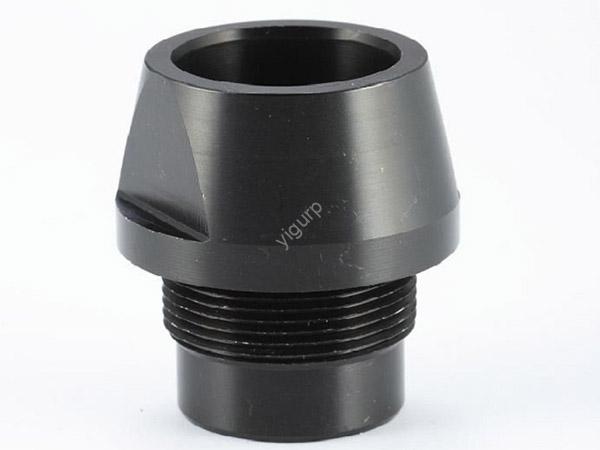
Stainless steel premium grade represents the highest tier of corrosion-resistant alloys, engineered for applications where standard stainless steels are not sufficient. It is defined by a combination of high chromium content (18-25%) , the addition of elements like molybdenum and nitrogen, and ultra-low carbon levels. This precise chemistry results in exceptional resistance to pitting, crevice corrosion, and stress corrosion cracking, along with higher tensile strength and better toughness than standard grades. These materials are essential in critical industries such as aerospace, medical technology, offshore energy, and chemical processing, where failure is not an option.
Introduction
For many applications, standard stainless steels like 304 and 316 provide a reliable balance of corrosion resistance and cost. However, in more aggressive environments—such as hot seawater, concentrated acids, or the human body—these grades can fail due to pitting, cracking, or corrosion. Engineers facing these challenges often turn to higher-cost alternatives like titanium or nickel alloys. Stainless steel premium grades were developed to fill this gap. They offer a significant step up in performance from standard grades while remaining more cost-effective than exotic alloys. Through advanced metallurgy, including higher alloy content and specialized melting processes, they provide the durability and reliability required for the most demanding applications.
What Are the Key Properties of Stainless Steel Premium Grade?
The performance of stainless steel premium grade is defined by its optimized chemistry and the resulting mechanical and physical properties.
Chemical Composition
The higher content of key alloying elements and ultra-low impurities are what distinguish premium grades.
| Element | Content Range (%) | Its Role in Performance |
|---|---|---|
| Chromium (Cr) | 18 – 25 | Forms a thick, stable oxide layer for exceptional corrosion resistance. |
| Nickel (Ni) | 8 – 20 | Stabilizes the austenitic structure for ductility and enhances corrosion resistance. |
| Molybdenum (Mo) | 2 – 6 | Critical for pitting resistance in chloride-rich environments like seawater. |
| Carbon (C) | ≤ 0.03 | Ultra-low to prevent intergranular corrosion, especially after welding. |
| Nitrogen (N) | 0.10 – 0.30 | Boosts tensile strength without reducing corrosion resistance. |
| Sulfur (S) | ≤ 0.01 | Ultra-low to maintain high purity and corrosion resistance. |
Mechanical and Physical Properties
Premium grades offer higher strength and better toughness than standard stainless steels.
| Property | Typical Value (e.g., 316L, 2507) | Why It Matters |
|---|---|---|
| Tensile Strength | 550 – 900 MPa | Higher than standard 304 (515 MPa), providing greater strength for critical parts. |
| Yield Strength | 200 – 500 MPa | Duplex grades (e.g., 2507) offer significantly higher yield strength. |
| Elongation | 30 – 45% | Maintains excellent ductility for forming complex shapes. |
| Impact Toughness | 100 – 200 J | Far higher than standard grades, resisting cracking from sudden impacts. |
| Fatigue Strength | 250 – 400 MPa | Withstands repeated stress, ideal for aerospace and marine components. |
| Hardness | 150 – 250 HB | Balances strength with good machinability. |
| Density | 7.9 g/cm³ | Similar to standard steel, simplifying design. |
- Corrosion Resistance: This is the defining feature. Premium grades offer excellent resistance to pitting, crevice corrosion, and stress corrosion cracking in aggressive environments like seawater, acids, and industrial chemicals.
- Purity: For critical applications like medical implants, premium grades are produced using Vacuum Arc Remelting (VAR) , resulting in ultra-pure material with minimal non-metallic inclusions.
Where Is Stainless Steel Premium Grade Used?
Premium grades are used in the most demanding applications across critical industries.
Aerospace and High-Temperature Applications
- Case Study: An aerospace manufacturer switched from standard 304 to Grade 316L premium stainless steel for aircraft fuel lines. The new lines lasted 3 times longer (15,000 flight hours vs. 5,000) and eliminated fuel leak risks from corrosion.
- Nickel-based premium grades (e.g., Grade 625) are used for turbine blades and engine components that must withstand temperatures up to 1000°C.
Offshore and Marine Engineering
Seawater is one of the most corrosive natural environments. Premium grades are essential for long-term reliability.
- Case Study: An offshore wind farm experienced corrosion failure in standard 316 stainless steel seawater cooling systems after just 2 years, costing $500,000 per turbine to replace.
- They switched to Grade 2507 super duplex premium steel.
- After 5 years, the new systems showed no pitting or rust.
- Cooling efficiency remained at 98% (compared to 85% for 316 after 2 years).
- The wind farm saved $2 million annually by eliminating frequent replacements.
- Grade 904L is used for seawater piping and heat exchangers where its high molybdenum content provides superior resistance to pitting and crevice corrosion.
Medical and Food Industries
- Medical Implants: Grade 316LVM (vacuum-melted) is the standard for hip and knee implants, bone screws, and surgical instruments. Its ultra-purity ensures biocompatibility and reduces infection risk.
- Food Processing: Grade 316L is used for mixing tanks, conveyors, and sanitary fittings. It resists food acids (e.g., citrus, tomato), meets FDA standards, and is easy to clean.
How Is Stainless Steel Premium Grade Manufactured?
The manufacturing process for premium grades is more rigorous than for standard stainless steels, with a focus on purity and consistency.
Steelmaking and Remelting
- Electric Arc Furnace (EAF) : The initial melting process, where alloying elements are added.
- Vacuum Arc Remelting (VAR) : This secondary melting process is critical for premium grades used in medical and aerospace applications. It occurs in a vacuum, removing gases and non-metallic inclusions to create an ultra-pure, homogeneous material.
- Electroslag Remelting (ESR) : Used to improve microstructure uniformity for large components like turbine blades.
Heat Treatment and Finishing
- Solution Annealing: The steel is heated to 1050-1150°C and then rapidly cooled (water quenched). This dissolves any carbides and restores the material’s full corrosion resistance.
- Pickling and Passivation: After fabrication, parts are treated to remove surface scale and enhance the protective chromium oxide layer.
- Electropolishing: For medical and food applications, this process creates a smooth, microbe-resistant surface finish.
Premium Grade vs. Other Materials
Comparing premium grades to other materials clarifies their value proposition.
| Material | Tensile Strength | Corrosion Resistance (Seawater) | Relative Cost | Best For |
|---|---|---|---|---|
| 316L (Premium) | 550 – 650 MPa | Excellent | 100% | Medical implants, food processing, general premium use |
| 2507 (Duplex) | 620 – 800 MPa | Excellent | 150% | Offshore platforms, seawater systems |
| 625 (Nickel-based) | 830 – 1000 MPa | Excellent | 300% | Aerospace turbines, extreme heat |
| 304 (Standard) | 515 MPa | Good | 60% | General-purpose, mild environments |
| Carbon Steel | 400 – 550 MPa | Poor | 30% | Non-corrosive, low-cost structures |
| Titanium (Ti-6Al-4V) | 860 MPa | Excellent | 400% | Aerospace, high-performance medical implants |
Key Takeaway: Stainless steel premium grades offer a compelling balance of high strength, excellent corrosion resistance, and cost that lies between standard stainless steels and exotic alloys like titanium or nickel-based superalloys. For applications where standard grades fail, premium grades provide a cost-effective upgrade that can extend service life by 2-5 times.
Conclusion
Stainless steel premium grade represents a significant advancement in corrosion-resistant materials. Through higher alloy content, ultra-low impurities, and advanced processing techniques, it delivers the exceptional corrosion resistance, high strength, and reliable toughness required for the most demanding applications in aerospace, offshore energy, medical technology, and chemical processing. While it carries a higher upfront cost than standard grades, its superior performance and longer service life make it a cost-effective investment for critical projects where failure is not an option.
FAQ About Stainless Steel Premium Grade
What makes stainless steel premium grade “premium” compared to standard grades?
Premium grades are defined by higher chromium content (18-25%) , ultra-low carbon (≤0.03%) , and additional alloying elements like molybdenum and nitrogen. They are also produced using advanced melting processes like Vacuum Arc Remelting (VAR) to achieve ultra-purity, free from non-metallic inclusions. This results in significantly better corrosion resistance, higher strength, and greater toughness.
Is stainless steel premium grade suitable for medical implants?
Yes. Grade 316LVM (vacuum-melted) is specifically designed for medical implants. It is biocompatible (non-reactive with bodily fluids), ultra-pure (low sulfur and non-metallic inclusions), and easy to sterilize. It meets ISO 10993 standards for medical device biocompatibility.
How do I choose the right stainless steel premium grade for my application?
The choice depends on your primary requirement:
- Medical/food processing: Choose 316L for biocompatibility and resistance to food acids.
- Marine/offshore: Choose 2507 super duplex for superior saltwater pitting resistance and high strength.
- High-temperature aerospace: Choose 625 or other nickel-chromium grades for heat resistance up to 1000°C.
- General premium use: Choose 316L for a balance of excellent corrosion resistance and cost.
Discuss Your Projects with Yigu Rapid Prototyping
At Yigu Rapid Prototyping, we specialize in providing high-performance materials for critical applications. We have extensive experience with stainless steel premium grades, including 316L, 2507, and 625, for industries ranging from medical technology to offshore energy. We understand that for these applications, material purity and certification are as important as mechanical properties. We supply premium grades with full mill test certificates, including chemical analysis and mechanical test results. Our team can provide guidance on material selection, welding procedures, and finishing techniques to ensure your project meets its performance and safety goals. Whether you are designing medical implants, offshore equipment, or aerospace components, we are here to help. Contact us today to discuss your project requirements.