
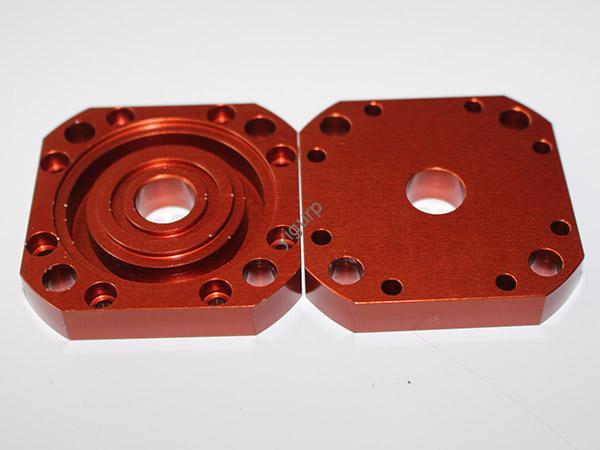
If you work in industries like petroleum and natural gas, chemical processing, power generation, or industrial manufacturing, you need a material that combines pressure resistance, weldability, and cost-effectiveness. WCB structural steel—a common grade of carbon steel defined by ASTM A216—is designed for exactly these applications. It excels in pressure-containing and structural roles, offering a practical balance of strength, ductility, and ease of fabrication. This guide breaks down its key properties, real-world uses, production techniques, and how it compares to other materials, helping you select it for projects that demand reliability and compatibility with high-pressure environments.
What Defines WCB Structural Steel?
WCB is a low-to-medium carbon steel specifically formulated for pressure-containing and structural applications. Its performance comes from a straightforward composition and controlled processing that prioritize weldability, ductility, and pressure resistance. Unlike high-alloy steels, WCB keeps material costs low while delivering reliable performance in demanding industrial environments.
The Chemistry of Pressure Resistance and Weldability
WCB’s formula prioritizes pressure resistance and weldability. The table below shows typical ranges for key elements per ASTM A216 standards.
| Element | Content Range (%) | Key Role |
|---|---|---|
| Carbon (C) | 0.25 – 0.35 | Medium content to support tensile strength while retaining weldability. Critical for pressure vessels and pipelines. |
| Manganese (Mn) | 0.60 – 1.05 | Enhances hardenability and tensile strength without compromising ductility. |
| Silicon (Si) | 0.15 – 0.40 | Aids deoxidation during steelmaking and stabilizes high-temperature mechanical properties. |
| Phosphorus (P) | ≤ 0.035 | Strictly controlled to prevent cold brittleness. Essential for low-temperature applications like offshore pipelines. |
| Sulfur (S) | ≤ 0.040 | Limited to avoid hot cracking during welding and ensure uniform forming. |
| Chromium & Molybdenum | ≤ 0.30 / ≤ 0.15 | Trace impurities, not intentionally added. Keeps material cost low while maintaining performance. |
Key Mechanical Properties
After standard annealing per ASTM A216, WCB delivers reliable performance for pressure and structural applications.
| Property | Typical Value | Why It Matters |
|---|---|---|
| Yield Strength | ≥ 275 MPa | Ensures parts resist permanent deformation under high pressure, such as chemical reactor shells. |
| Tensile Strength | 485 – 655 MPa | Ideal for pressure vessels, pipelines, and boiler components handling up to 10,000 psi. |
| Elongation | ≥ 22% | Excellent ductility for forming complex shapes like curved pipeline sections or pressure vessel heads. |
| Impact Toughness | ≥ 27 J at 0°C | Good for mild cold environments. Prevents brittle failure in winter-use pipelines or refinery equipment. |
| Hardness | ≤ 197 HB (annealed) | Soft enough for machining. Can be increased to 220-240 HB via tempering for wear-resistant parts. |
| Fatigue Resistance | 240 – 300 MPa (10⁷ cycles) | Critical for dynamic-pressure parts like pump casings or turbine inlet pipes. |
A real-world example: An oil company used stainless steel for 8-inch natural gas transmission pipelines but faced high material costs. Switching to WCB with epoxy coating cut material costs by 40% . Over 20 years, the company saved $2.8 million for a 500-km pipeline, with no increase in maintenance or leak incidents.
Where Is WCB Used?
WCB’s balance of pressure resistance, weldability, and cost-effectiveness makes it a staple across industries where safe handling of fluids or gases under high pressure is critical.
Petroleum and Natural Gas
- Pipelines: Transmission pipelines for oil or natural gas use WCB. Its pressure resistance (handles up to 10,000 psi) and weldability enable seamless jointing of long pipeline sections, reducing leak risks.
- Storage Tanks: Above-ground or underground oil storage tanks use WCB. Ductility supports tank expansion and contraction with temperature changes.
- Refinery Equipment: Oil refinery distillation columns and pressure vessels use WCB. Tensile strength withstands high-temperature (300-400°C) and high-pressure conditions during refining.
- Gas Processing Plants: Natural gas compression cylinders and separator vessels use WCB. Impact resistance (≥27 J at 0°C) prevents failure in cold offshore environments.
Chemical Processing
- Chemical Reactors: Batch or continuous chemical reactors use WCB. It offers chemical compatibility with non-aggressive chemicals like ethanol or water and pressure resistance up to 8,000 psi.
- Storage Vessels: Chemical storage tanks for dilute acids or solvents use WCB with epoxy coating. Ductility allows tank customization for different chemical volumes.
- Piping Systems: Chemical plant piping for water, steam, or non-corrosive fluids uses WCB. Weldability simplifies on-site installation, and machinability enables precise threading of pipe joints.
- Heat Exchangers: Shell-and-tube heat exchangers use WCB for shell components. Thermal conductivity (45 W/(m·K)) supports efficient heat transfer.
Power Generation
- Power Plant Components: Coal-fired or natural gas power plant boiler tubes (non-high-temperature sections) use WCB. Heat resistance up to 400°C and pressure resistance withstand steam pressure up to 9,000 psi.
- Boiler Components: Boiler drums and feedwater heaters use WCB. Ductility allows forming of large-diameter drum shells, and weldability enables attachment of tubes and nozzles.
- Turbine Casings: Low-pressure turbine casings use WCB. Fatigue resistance (240-300 MPa) handles cyclic steam pressure changes, extending turbine life by 20+ years.
- Pressure Vessels: Power plant steam accumulators and condensate tanks use WCB. Cost-effectiveness reduces capital expenditure without compromising safety.
Industrial Manufacturing and Infrastructure
- Industrial Equipment: Hydraulic press cylinders and air compressor tanks use WCB. Pressure resistance supports high-pressure fluid or air storage.
- Machinery Frames: Heavy-duty manufacturing machinery frames use WCB. Tensile strength supports 50+ ton pressing forces.
- Bridges: Small highway or pedestrian bridge support beams use WCB. Tensile strength supports traffic loads, and weldability simplifies on-site assembly.
- Water Treatment: Water treatment plant storage tanks and sewage pipelines use WCB. Corrosion resistance with coating withstands moisture, and ductility supports pipeline bending.
How Is WCB Manufactured?
Producing WCB requires straightforward processes to control carbon content and ensure pressure resistance. No specialized alloy handling is needed, making it cost-effective for large-scale industrial production.
| Stage | Common Method | Why It Matters |
|---|---|---|
| Steelmaking | Basic Oxygen Furnace (BOF) or Electric Arc Furnace (EAF) | BOF is primary for large-scale production. EAF is used for small batches. Both ensure carbon content is controlled to 0.25-0.35%. |
| Casting | Sand casting or investment casting | Ensures uniform thickness for pressure-containing parts, avoiding weak points. |
| Forming | Hot rolling (1100-1200°C) or forging | Hot rolling refines grain structure and shapes steel into plates, bars, or pipes. Forging improves density for pressure-containing parts like valve bodies. |
| Heat Treatment | Annealing (815-870°C) mandatory | Reduces hardness to ≤197 HB, improves ductility, and relieves internal stress. Mandatory to meet ASTM A216 toughness requirements. |
| Welding | MIG, TIG, or arc welding | Excellent weldability. Preheating to 150-200°C recommended for thick sections. |
| Surface Treatment | Painting, galvanizing, or epoxy coating | Protects against corrosion. Galvanizing boosts corrosion resistance by 8-10x vs. uncoated WCB. |
How Does WCB Compare to Other Materials?
Choosing the right material for pressure-containing applications means balancing strength, corrosion resistance, weldability, and cost. This comparison helps clarify where WCB fits.
| Material | Relative Cost | Tensile Strength (MPa) | Pressure Resistance (Max psi) | Corrosion Resistance | Weldability |
|---|---|---|---|---|---|
| WCB | 100% | 485 – 655 | 10,000 | Moderate (needs coating) | Excellent |
| Low-Carbon Steel (A36) | ~85% | 400 – 550 | 6,000 | Low (needs coating) | Very Good |
| Stainless Steel (316L) | ~350% | 515 – 620 | 12,000 | Excellent | Good |
| Alloy Steel (A387 Gr. 11) | ~220% | 515 – 690 | 15,000 | Good | Fair |
| Aluminum (6061-T6) | ~280% | 310 | 3,000 | Good | Moderate |
Key takeaways:
- vs. Low-Carbon Steel (A36): WCB offers higher tensile strength and better pressure resistance (10,000 psi vs. 6,000 psi). It costs about 15-20% more but is the standard for pressure vessel applications where A36 is not rated.
- vs. Stainless Steel (316L): WCB is roughly one-third the cost of stainless steel and offers comparable strength. Use WCB with coatings for non-corrosive or mild chemical environments; use stainless only when superior corrosion resistance is required.
- vs. Alloy Steel: WCB is more affordable and easier to weld. It is the better choice for applications where high-temperature strength beyond 400°C is not needed.
Conclusion
WCB structural steel is a versatile, cost-effective workhorse material for pressure-containing and structural applications across petroleum, chemical, power generation, and industrial manufacturing. Its combination of ≥275 MPa yield strength, ≥22% elongation, and excellent weldability makes it a reliable choice for pipelines, pressure vessels, reactors, and boiler components. While it requires protective coatings for corrosive environments, its proven performance in applications like natural gas pipelines and chemical reactors demonstrates its value. For projects that demand reliability under pressure without the cost of high-alloy steels, WCB offers a trusted, ASTM-standard solution.
FAQ About WCB Structural Steel
Can WCB be used for high-temperature applications?
WCB performs reliably up to 400°C. For temperatures above 400°C, creep resistance decreases. For higher-temperature service (up to 550°C), consider alloy steels like A387 Grade 11. For cryogenic or sub-zero applications, WCB’s impact toughness is rated at 0°C; for colder conditions, consider LCB or LCC grades.
Is WCB suitable for corrosive chemical environments?
WCB has only moderate corrosion resistance. For exposure to dilute acids, saltwater, or aggressive chemicals, it requires a protective coating such as epoxy, galvanizing, or fusion-bonded epoxy (FBE) . With proper coating, WCB can last 15+ years in mild chemical environments.
What welding methods work best for WCB?
WCB has excellent weldability with common methods: MIG, TIG, and stick welding. For thin sections (<12 mm), no preheating is required. For thicker sections (>12 mm), preheating to 150-200°C is recommended to prevent cracking. Post-weld heat treatment (stress relieving) is recommended for pressure vessel applications.
What is the difference between WCB and low-carbon steel like A36?
The main differences are strength and pressure ratings. WCB has a minimum yield strength of 275 MPa (vs. 250 MPa for A36) and is specifically rated for pressure-containing applications up to 10,000 psi. A36 is not certified for pressure vessel use. WCB also has more controlled carbon content (0.25-0.35%) and stricter limits on impurities to ensure reliable performance under pressure.
Discuss Your Projects with Yigu Rapid Prototyping
Selecting the right material for pressure-containing and structural applications is a critical decision. At Yigu Rapid Prototyping, we have extensive experience supplying WCB structural steel for petroleum, chemical, power generation, and industrial projects. Our team can help you determine if WCB is the right fit for your specific pressure, temperature, and corrosion requirements—or if a coated or higher-grade alternative is needed. We offer WCB in castings, forgings, plates, and custom-fabricated components with full ASTM A216 material certification. Contact us today to discuss your project and find a cost-effective, reliable material solution.