
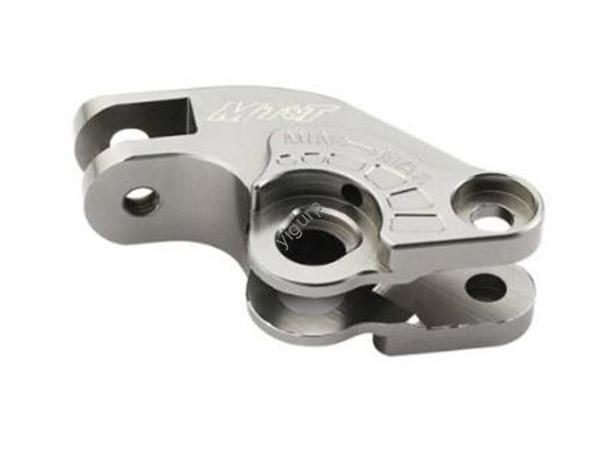
Grade 8 structural steel is a high-strength, low-alloy steel engineered for the most demanding load-bearing applications. It is defined by a minimum yield strength of 550 MPa, which is significantly higher than standard structural grades. This exceptional strength, combined with good toughness and weldability, makes it the material of choice for critical components in ultra-tall skyscrapers, long-span bridges, offshore wind turbines, and heavy industrial machinery. This guide will cover its properties, applications, and how to work with it effectively.
Introduction
As structures grow taller and spans grow longer, the demands on the materials used to build them increase exponentially. Standard structural steels often require very thick, heavy sections to support these loads, which adds cost and consumes valuable space. Grade 8 was developed to address this challenge. Its higher yield strength allows engineers to use thinner, lighter sections while maintaining the same load-bearing capacity. This results in more efficient designs, reduced material costs, and, in the case of buildings, more usable floor space. For projects where strength is the primary requirement, Grade 8 offers a clear performance advantage.
What Are the Key Properties of Grade 8?
The performance of Grade 8 is rooted in its carefully balanced chemistry and the mechanical properties achieved through precise heat treatment.
Chemical Composition
Grade 8 is a low-alloy steel with specific additions to boost strength, toughness, and durability.
| Element | Content Range (%) | Its Role in Performance |
|---|---|---|
| Carbon (C) | 0.20 – 0.30 | Provides high tensile strength and hardness. |
| Manganese (Mn) | 1.20 – 1.80 | Enhances toughness and prevents cracking during forming. |
| Chromium (Cr) | 0.80 – 1.50 | Boosts corrosion resistance and high-temperature strength. |
| Nickel (Ni) | 0.50 – 1.20 | Improves low-temperature ductility and toughness. |
| Molybdenum (Mo) | 0.20 – 0.50 | Increases yield strength and creep resistance. |
| Vanadium (V) | 0.03 – 0.10 | Refines the grain structure for improved durability. |
Mechanical and Physical Properties
These properties define Grade 8’s suitability for high-stress applications.
| Property | Typical Value | Why It Matters |
|---|---|---|
| Yield Strength | ≥ 550 MPa | Resists permanent deformation under very high loads. |
| Tensile Strength | 650 – 800 MPa | Provides a strong safety margin against failure. |
| Elongation | ≥ 16% | Offers enough ductility for forming and bending. |
| Impact Toughness | ≥ 40 J at -40°C | Remains tough in extremely cold climates. |
| Hardness | 190 – 230 HB | Balances strength with good machinability. |
| Density | 7.85 g/cm³ | Standard for steel, simplifying design calculations. |
- Corrosion Resistance: It has very good corrosion resistance, outperforming basic and mid-grade steels. For harsh coastal or marine environments, a protective coating like marine-grade epoxy or hot-dip galvanizing is recommended.
- Weldability: It has good weldability, but requires care. For sections thicker than 25mm, preheating to 200-250°C is necessary to prevent cracking. Post-weld heat treatment is also recommended.
Where Is Grade 8 Used in the Real World?
Grade 8 is used in the most critical, load-intensive applications across construction, energy, and heavy industry.
Ultra-Tall Skyscrapers and Long-Span Bridges
This is a primary application. The high strength allows for smaller columns and lighter girders.
- Case Study: A developer in Dubai used Grade 8 for a 70-story luxury tower.
- The steel’s high yield strength allowed for 35% thinner columns compared to using Grade 5 steel.
- This increased usable floor space by 22% .
- The tower was completed 20% faster than planned, and material costs were 15% lower than using ultra-high-strength steel.
- After 10 years, the structure has withstood sandstorms and high temperatures with no issues.
- Case Study: A transportation authority in Canada used Grade 8 for a 300-meter long-span highway bridge in Ontario.
- They used thinner hot-rolled girders, reducing material weight by 35% .
- This cut construction costs by 25% due to lower transport and handling costs.
- After 12 years, the bridge shows no rust or wear, even through heavy snow and -40°C winters.
Offshore Wind Energy and Heavy Industry
Grade 8 is ideal for structures that must withstand high stress and harsh environmental conditions.
- Case Study: A renewable energy company used Grade 8 for 150-meter offshore wind turbine towers in the North Sea.
- Forged base sections provided extra strength where it was needed most.
- A marine-grade epoxy coating protected against saltwater corrosion.
- The towers have withstood 160 km/h winds and salt spray for 15 years with no structural damage. Turbine downtime due to tower issues dropped to 0.2% annually.
Heavy Machinery and Automotive
It is used for frames of large industrial presses, mining excavators, and heavy-duty truck frames where high strength is critical for supporting extreme loads.
How Is Grade 8 Manufactured?
The manufacturing process for Grade 8 is designed to create a consistent, high-strength product. Heat treatment is critical.
Steelmaking and Forming
- Steelmaking: It is typically made in a Basic Oxygen Furnace (BOF) or Electric Arc Furnace (EAF) , with precise control of alloying elements.
- Hot Rolling: The steel is hot rolled at 1150-1250°C into plates, beams, and bars. This process refines the grain structure.
- Forging: For critical components like wind turbine bases, forging is used to further refine the grain structure and enhance durability.
Heat Treatment: Quenching and Tempering
This is the critical step that gives Grade 8 its high strength.
- Quenching: The steel is heated to 840-880°C and then rapidly cooled (quenched) in water. This creates a very hard, strong microstructure.
- Tempering: The quenched steel is then reheated to 580-620°C. This reduces brittleness while retaining the high strength, resulting in the final balanced properties.
Fabrication Considerations
- Cutting and Bending: Standard cutting methods like plasma and oxy-fuel are used. Bending thick sections may require heat assistance.
- Welding: Preheating to 200-250°C is required for sections over 25mm thick. Low-hydrogen welding electrodes are mandatory. Post-weld heat treatment is recommended to relieve residual stress.
Grade 8 vs. Other Structural Materials
Comparing Grade 8 to other materials helps clarify its role as a high-strength, cost-effective solution.
| Material | Yield Strength | Corrosion Resistance | Relative Cost | Best For |
|---|---|---|---|---|
| Grade 8 | ≥ 550 MPa | Very Good (with coating) | Medium-High | Ultra-tall buildings, long-span bridges, offshore wind |
| Grade 5 | ≥ 450 MPa | Good (with coating) | Medium | Mid-rise buildings, medium-span bridges |
| Stainless Steel (304) | 205 MPa | Excellent | Very High | Food processing, low-load coastal parts |
| Aluminum (6061) | 276 MPa | Good | Medium | Lightweight parts, automotive bodies |
| Carbon Fiber Composite | 700+ MPa | Excellent | Very High | High-performance, lightweight aerospace parts |
Key Takeaway: Grade 8 offers a 22% higher yield strength than Grade 5 at a 27% higher cost, making it a very efficient upgrade for projects where strength is critical. It is significantly stronger and more cost-effective than stainless steel for structural applications, though it requires coating for corrosion protection.
Conclusion
Grade 8 structural steel is a high-performance material designed for the most demanding engineering challenges. Its high yield strength, good toughness, and excellent fatigue resistance make it the ideal choice for skyscrapers, long-span bridges, and offshore wind turbines. While it requires careful welding procedures and corrosion protection for harsh environments, its ability to create lighter, stronger, and more efficient structures makes it a cost-effective and reliable solution for projects where failure is not an option.
FAQ About Grade 8 Structural Steel
Can Grade 8 be used in offshore environments?
Yes, but it requires a robust coating system. A marine-grade epoxy or hot-dip galvanizing with a sealant is recommended to resist saltwater corrosion. With proper coating, Grade 8 has a proven service life of over 35 years in offshore applications.
Is Grade 8 suitable for extremely cold climates like -40°C?
Yes. Its guaranteed impact toughness of ≥40 J at -40°C makes it well-suited for cold climates. For projects in even colder regions, a modified version with higher nickel content (up to 1.5%) can be specified to further enhance low-temperature ductility.
What is the main difference between Grade 8 and ultra-high-strength steel (UHSS)?
The main difference is yield strength and cost. Grade 8 has a minimum yield strength of 550 MPa. Ultra-high-strength steels can reach 700 MPa or higher, but they are typically 40-60% more expensive and are more difficult to weld and form. For most large-scale structural applications, Grade 8 provides the best balance of high strength, workability, and cost.
Discuss Your Projects with Yigu Rapid Prototyping
At Yigu Rapid Prototyping, we specialize in providing high-strength structural steels for the most demanding applications. We have extensive experience supplying Grade 8 for skyscrapers, bridges, and offshore projects. We provide certified materials with full mill test reports, including verification of yield strength and impact toughness at -40°C. Our team can also offer guidance on welding procedures, preheating requirements, and corrosion protection strategies to ensure your project’s success. Whether you are designing a new landmark tower or a critical infrastructure project, we are here to help. Contact us today to discuss your requirements.